What the numbers say before the market admits it
We read balance sheets, multiples, credit, and capital allocation to spot where the public narrative no longer matches the financial structure carrying a company or a sector.
What we are watching
Quarterly results, debt, private credit, turnarounds, stretched valuations, and corporate moves where the relevant fact is rarely the most repeated headline.
Where it is being decided
In liquidity, exposure, concentration of profits, the ability to finance a recovery, and the distance between a seductive story and the patience capital is actually willing to show.
Why it matters
Because finance does not just describe the past. It also shows how much room a company still has to keep promising, correcting, or holding the line before the market demands something else.
Featured
Finance
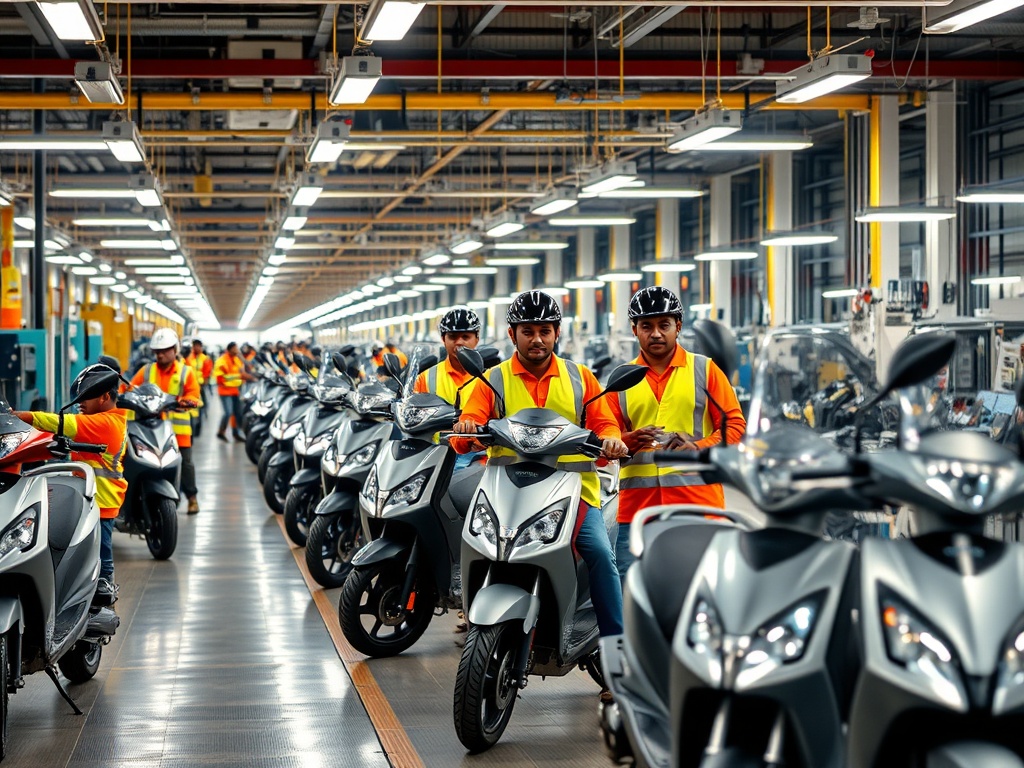
Ola Electric Rises 93% from Lows, But the Real Question Is What's Sustaining the Recovery
The stock market forgave Ola Electric in a matter of weeks. From its all-time low of 22.25 rupees per share, recorded in March 2026, the Indian electric scooter manufacturer accumulated a 93% recovery in just two months, reaching 42.88 rupees on the National Stock Exchange of India by late May. But there is an inconvenient gap that no stock market rebound can hide: Ola Electric's all-time high was 157.40 rupees per share.
 Francisco Torres9 min
Latest articles
SBA Loans Reach $10 Million and Reveal Which Small Businesses Have Real Scale Potential
Starting July 4, 2026, the U.S. Small Business Administration (SBA) doubles the combined guaranteed financing limit a single borrower can receive: from $5 million to $10 million. It's the highest cap in the agency's history. And while the news may seem like a simple ceiling adjustment, what lies beneath the surface is something more uncomfortable for many small business owners: a line that separates those who can grow through the federal financing system from those who simply aren't in that game.
Spotify Bets on Charging More, Not Growing More
There comes a moment in the life of every digital platform when the game changes completely. You stop obsessing over how many users you have and start asking how much money you can extract from the ones already there. Spotify just announced it has reached that moment, and Bank of America is cheering from the front row.
Two Companies With No Employees, No Office, and Valued at Over Half a Million Euros Each
There is one figure that explains almost everything: €585,000 collected in the first business, valued at €900,000, without a single client meeting and without hiring anyone. The second business followed the same pattern. By 2022, its valuation reached €560,000 with €90,000 raised.
Tata Sons Bets ₹29 Billion Without Proving Market Demand
On May 26, 2026, at Bombay House, the neoclassical building in Mumbai where the Tata Group has made its most important decisions for over a century, the six members of Tata Sons' board of directors met for approximately six hours. There were no public statements upon leaving. What is documented is this: the unlisted companies of the Tata Group accumulated losses of ₹10,905 crore in fiscal year 2025, and internal estimates suggest that figure could climb to ₹29,000 crore as investment accelerates in aviation, digital, and electronics.
Most Popular
Most voted on this page
Why Indian Fintechs Fell Harder Than the Market and What Structurally Explains It
The Nifty 50 has lost 11.60% so far in 2026. MOS Utility lost 70%. Pine Labs, 47.6%. That gap is not market noise or random volatility: it is the clearest signal that something in the valuation model of these companies was never as solid as it appeared.
92
When Agents Pay on Their Own, Governance Arrives Too Late
In a week in May 2026, enterprise AI infrastructure crossed a boundary that audit, compliance, and insurance frameworks had not yet drawn. On May 7, AWS previewed Amazon Bedrock AgentCore Payments, a system built with Coinbase and Stripe that allows artificial intelligence agents to make autonomous payments during execution. Two announcements in seven days, from two of the largest technology infrastructure platforms on the planet, describe the same behavior: an agent that decides to spend money on its own.
91
When European Factories Become China's Cheapest Asset
There is a pattern that repeats itself when an industry enters forced transition: the assets that once defined the strength of a sector end up being acquired by those who arrived later, with less history and structurally different costs. The European automotive industry is living through that sequence now, not as a metaphor, but as a concrete movement of capital and productive capacity. What The Telegraph headline captures — China taking control of Europe's decaying factories — does not describe just a one-off transaction.
90
Extracting Lithium Without Destroying the Desert Now Has a Technical Architecture
The promise of electric mobility rests on a mineral that, to extract it, demands flooding the desert with water that desert does not have. The lithium driving the energy transition narrative reaches the market mainly from enormous solar evaporation ponds occupying kilometers of arid terrain in Chile's Atacama or in Nevada. That system has a structural limit the industry already acknowledges: future lithium demand cannot be met with evaporation ponds.
89

KBank Bets on SME Lending as the Rest of Thailand's Banking System Keeps Contracting
In the first quarter of 2026, Kasikornbank expanded its small and medium-sized enterprise loan portfolio by 0.5% compared to the end of the previous year. That number may not impress by its magnitude. What impresses is the context in which it occurs: the bank's total loans contracted 1.1% in the same period, and SME credit across the Thai banking system as a whole fell 4%, marking fifteen consecutive quarters of decline.

CDP Raises Its Stake in Nexi and Redefines Who Controls Italian Digital Payments
The Italian state did not privatize Nexi only to forget about it. What CDP Equity S.p.A., the investment arm of Cassa Depositi e Prestiti, has just done is a clear signal that Rome has a very defined stance on who controls the country's payments infrastructure — and it is prepared to defend that stance with capital. The board of CDP Equity approved in late May 2026 the possibility of increasing its stake in Nexi S.p.A. to a maximum of 29.9 percent.

Extracting Lithium Without Destroying the Desert Now Has a Technical Architecture
The promise of electric mobility rests on a mineral that, to extract it, demands flooding the desert with water that desert does not have. The lithium driving the energy transition narrative reaches the market mainly from enormous solar evaporation ponds occupying kilometers of arid terrain in Chile's Atacama or in Nevada. That system has a structural limit the industry already acknowledges: future lithium demand cannot be met with evaporation ponds.
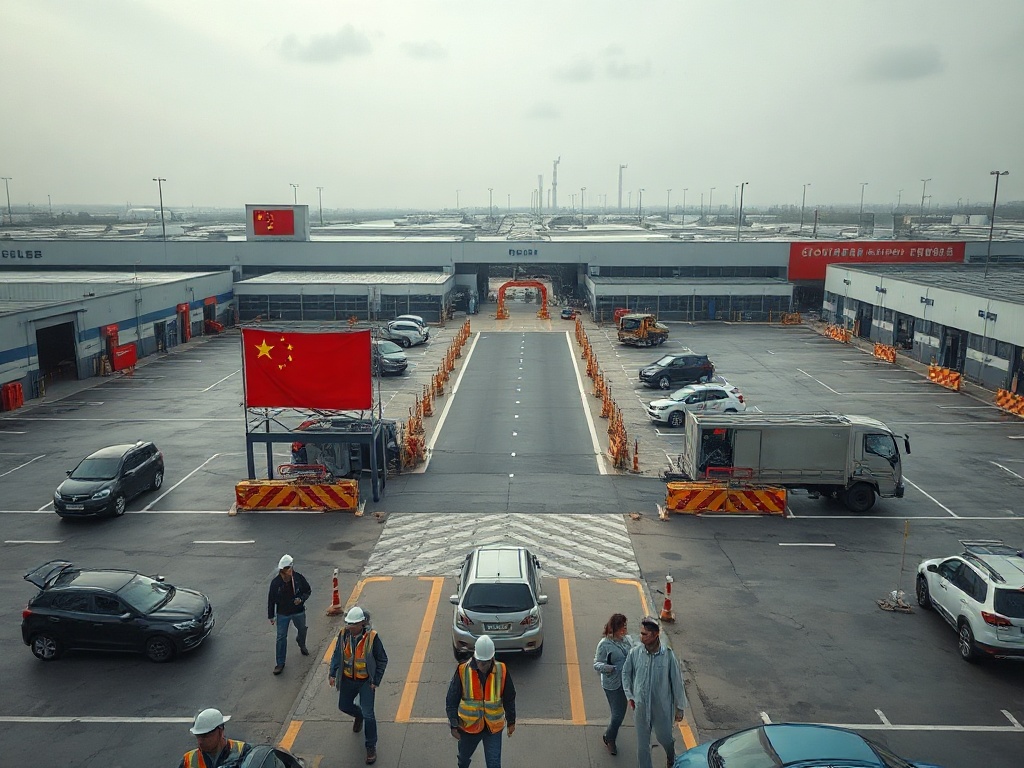
When European Factories Become China's Cheapest Asset
There is a pattern that repeats itself when an industry enters forced transition: the assets that once defined the strength of a sector end up being acquired by those who arrived later, with less history and structurally different costs. The European automotive industry is living through that sequence now, not as a metaphor, but as a concrete movement of capital and productive capacity. What The Telegraph headline captures — China taking control of Europe's decaying factories — does not describe just a one-off transaction.

Why the AI Boom Is Making the Usual Suspects Richer — And How That Could Change
In 2025, artificial intelligence companies absorbed 61% of all global venture capital investment, according to the OECD. That amounts to $258.7 billion out of a total $427.1 billion. The question that number inevitably raises is who is capturing that value.

When Data Stops Speaking for Itself in Private Markets
Private markets have spent a decade promising sophistication without always delivering it on the operational side. Funds are growing in size, structural complexity, and number of investors. Evergreen and semi-liquid vehicles are proliferating.
 Valeria Cruz9 min

Stellantis Bets €60 Billion to Recover from the Worst Loss in Its History
Stellantis bets 60 billion euros to recover from the worst loss in its history When a company loses 22.3 billion euros in a single year, the next move cannot be incremental.
 Mateo Vargas10 min
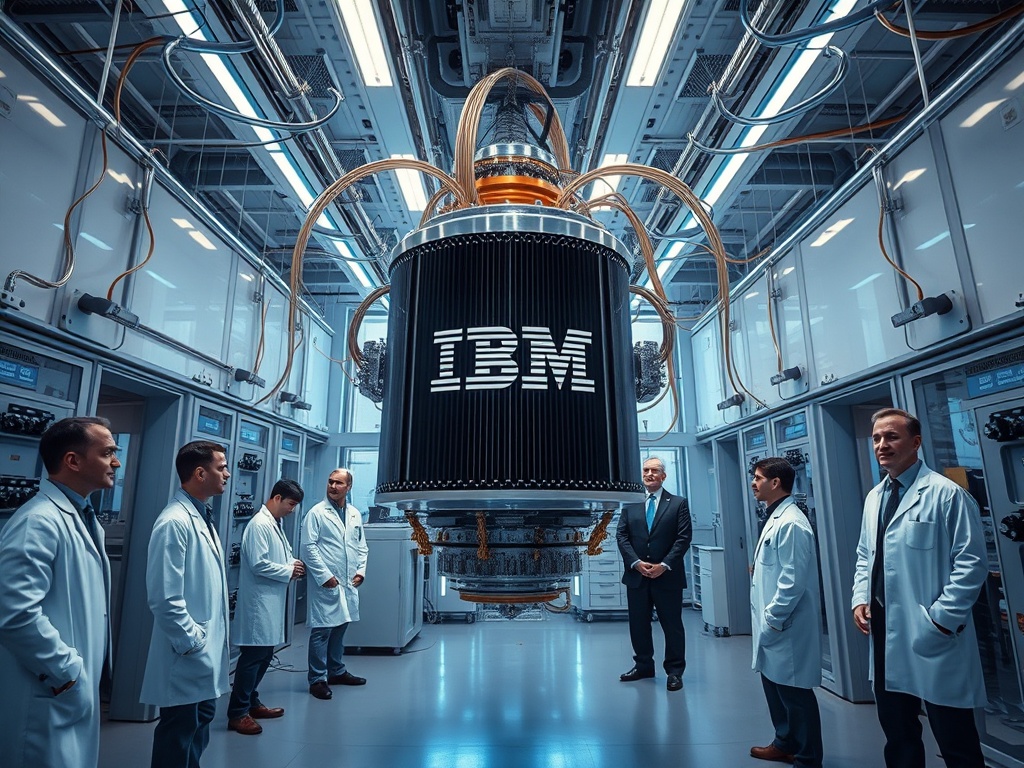
The United States Bets $2 Billion on Quantum Computing and Reveals What Kind of Industrial Policy It Is Building
On May 21, 2026, the U.S. Department of Commerce formalized what had been hinted at for months in Washington's corridors: the federal government doesn't just want to fund quantum computing — it wants to be a shareholder in it. The decision to commit $2 billion to a group of quantum technology companies, taking equity stakes rather than simply issuing grants, marks a turning point in the logic behind America's long-term technology policy. This is not a check. It is a declaration of industrial architecture.
 Gabriel Paz8 min

Why Indian Discretionary Consumption Is Punishing Fast Food Chains and Rewarding Jewellery Retailers
India's most comfortable macroeconomic phase in years has just come to an end. Ambit Institutional Equities states it plainly in its latest sector report: FY27 arrives with two simultaneous pressures on discretionary consumption — slower demand and margin compression from crude-linked input inflation. What follows is not merely a portfolio rotation, but a diagnosis of which business models have the structural architecture to withstand that double blow.
 Javier Ocaña9 min
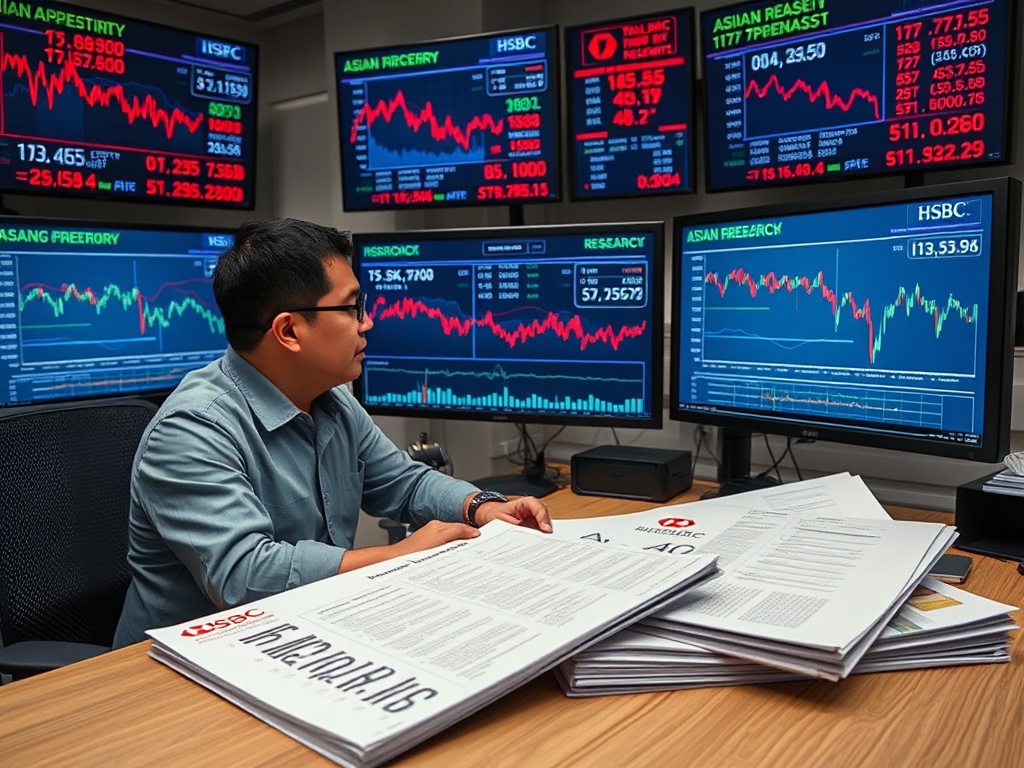
Why the AI Rally in Asia Hides a Concentration Trap That Few Are Naming
Since late 2022, Asian markets have undergone a silent but profound reconfiguration. The emergence of generative artificial intelligence not only transformed the narrative of global markets, but reordered the specific weight of regional indices around a handful of names. Three companies — Taiwan Semiconductor Manufacturing Company, Samsung Electronics, and SK Hynix — came to explain more than half of the returns of the FTSE Asia ex-Japan index.
 Sofía Valenzuela9 min

Why Anthropic's Accounting AI Enters a Market That Has Already Learned to Distrust Itself
On May 13, 2026, Anthropic launched Claude for Small Businesses, a version of its AI assistant connected directly to the operational tools of small businesses: email, calendar, and — this is what's new — accounting software. The concrete promise is that Claude can perform reconciliations, generate profit and loss statements, and categorize transactions without the owner having to touch a spreadsheet. But the reaction from the specialized market was not one of unqualified enthusiasm: it was a cautious welcome, with a warning that has been echoing through this sector for some time.
 Clara Montes9 min

Why Indian Fintechs Fell Harder Than the Market and What Structurally Explains It
The Nifty 50 has lost 11.60% so far in 2026. MOS Utility lost 70%. Pine Labs, 47.6%. That gap is not market noise or random volatility: it is the clearest signal that something in the valuation model of these companies was never as solid as it appeared.
Mateo Vargas7 min
Eclipse Made $2.5 Billion Betting on What Nobody Wanted to Touch
When Lior Susan founded Eclipse Ventures in 2015, the prevailing logic in Silicon Valley was simple: software scales without factories, inventory, or workers. SaaS companies captured the attention of the best funds and the best engineers. Betting on semiconductors, industrial robotics, or physical computing infrastructure was, at best, an oddity.
 Martín Soler7 min
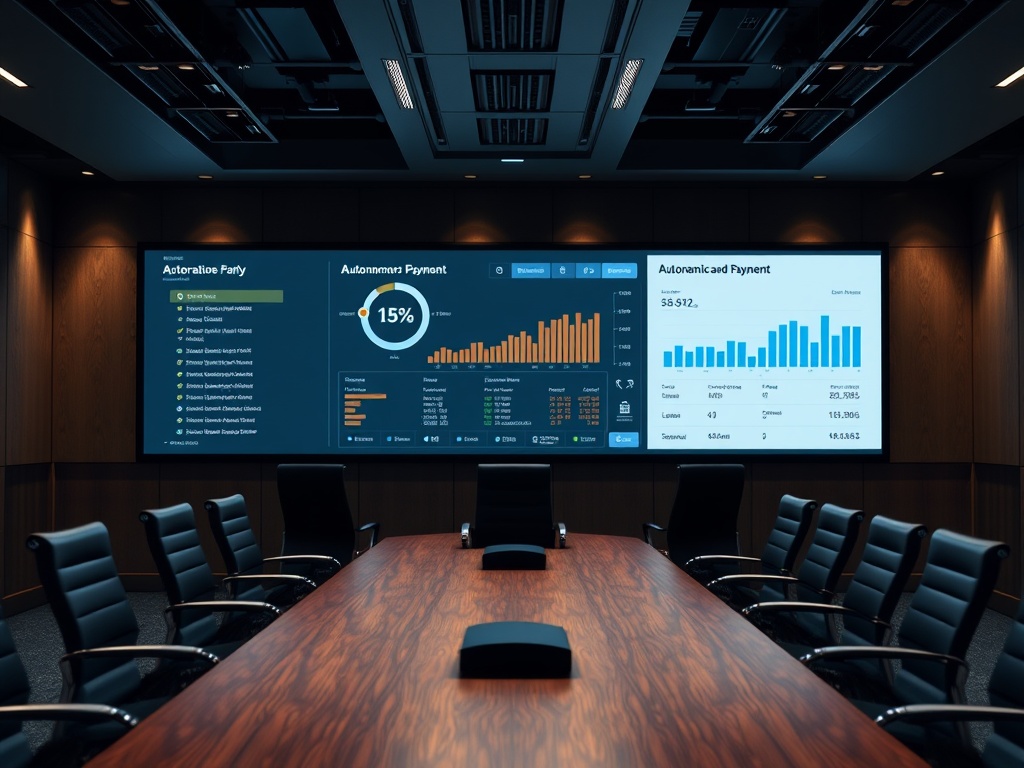
When Agents Pay on Their Own, Governance Arrives Too Late
In a week in May 2026, enterprise AI infrastructure crossed a boundary that audit, compliance, and insurance frameworks had not yet drawn. On May 7, AWS previewed Amazon Bedrock AgentCore Payments, a system built with Coinbase and Stripe that allows artificial intelligence agents to make autonomous payments during execution. Two announcements in seven days, from two of the largest technology infrastructure platforms on the planet, describe the same behavior: an agent that decides to spend money on its own.
 Isabel Ríos9 min

Millions of Abandoned Wells Could Be Worth More as Assets Than Liabilities
For decades, the oil industry drilled into the American subsurface with a simple logic: extract, sell, abandon. What was left behind is a legacy that is difficult to quantify and nearly impossible to manage: millions of inactive wells scattered across the country, many without an official owner, leaking methane into the atmosphere and contaminants into groundwater. Oklahoma, to cite the most illustrative case, has more than 20,000 of these wells identified.
Gabriel Paz8 min
Why Business Schools Are Entering the Territory Where Private Banks Charged Without Competition
There is a particular moment in the life of a business family that private banks learned to recognize before anyone else: the instant when the founder starts looking at their children with a mix of pride and concern. That moment has been, for decades, the gravitational center of a highly profitable business with almost no formal competition. Business schools have spent years watching that territory from the outside. Now they are inside.
 Ricardo Mendieta7 min

Indian exporting SMEs are optimistic, but their numbers tell a different story
The Trade Confidence Index for Indian family-owned exporting SMEs reached 74.3 out of 100. Taken alone, that number describes a sector with conviction: two in three companies expect their export sales to grow over the next six to twelve months. But the Net Trade Confidence Score, which incorporates the current risk environment, comes in at 56.4, leaving a gap of 17.9 points that is no minor technical adjustment.
Javier Ocaña9 min
Burberry Made Money Again, and the Market Gave It a Thumbs Down
There is a type of financial result that confuses more than a loss: one that confirms something improved, but not enough to matter. Burberry published its annual results on May 14, 2026, for the year ending March 28, and the reading is exactly that. The company swung from a pre-tax loss of £66 million to a profit of £49 million.
Francisco Torres8 min
Karooooo Sacrificed Margin to Buy Subscription Speed and the Numbers Justify It
There is a simplified version of Karooooo's fiscal Q4 2026 results that circulated in financial headlines: the company reported record subscription revenue growth, operating profit fell, earnings per share declined and the dividend rose. That version is not wrong, but it tells us nothing useful about the quality of the business model. The version that matters is more interesting and more uncomfortable.
Mateo Vargas8 min