What the numbers say before the market admits it
We read balance sheets, multiples, credit, and capital allocation to spot where the public narrative no longer matches the financial structure carrying a company or a sector.
What we are watching
Quarterly results, debt, private credit, turnarounds, stretched valuations, and corporate moves where the relevant fact is rarely the most repeated headline.
Where it is being decided
In liquidity, exposure, concentration of profits, the ability to finance a recovery, and the distance between a seductive story and the patience capital is actually willing to show.
Why it matters
Because finance does not just describe the past. It also shows how much room a company still has to keep promising, correcting, or holding the line before the market demands something else.
Featured
Finance
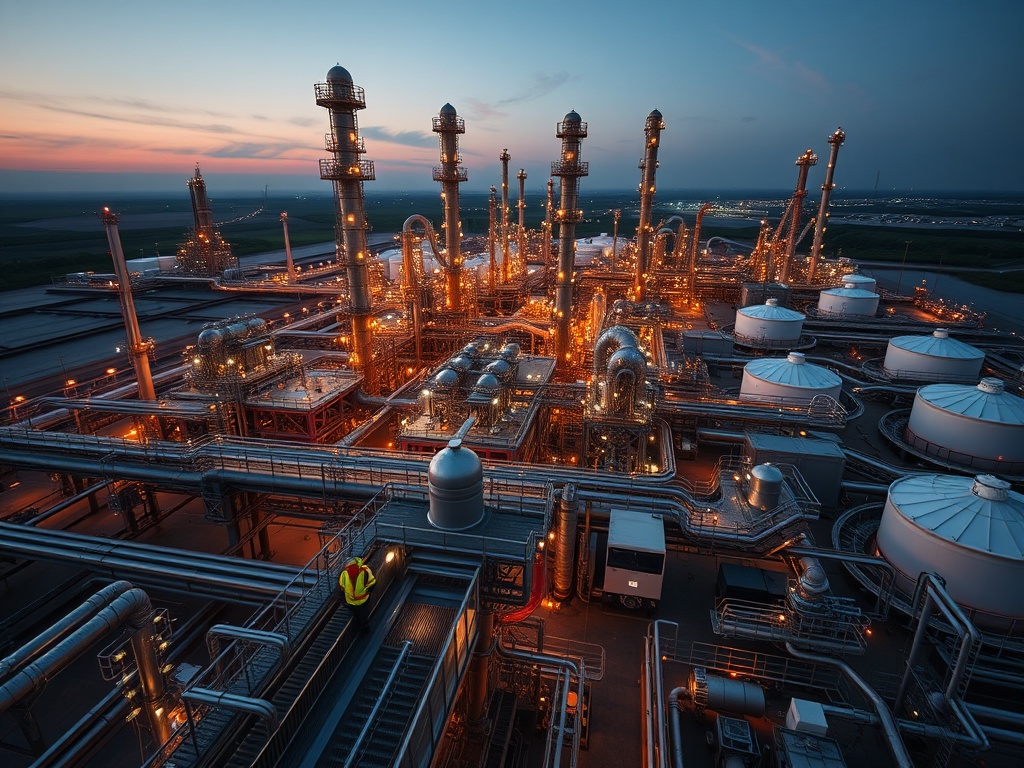
Refining Margins Under Price Controls: What the Arithmetic Says Before Politics Does
Thailand has just tripled the economic pressure on its refineries. The government raised the mandatory refining margin reduction from 2 to 5 baht per liter, a move that ostensibly protects consumers but in reality redistributes the cost of global volatility onto the most capital-intensive segment of the entire energy chain. The decision does not occur in a vacuum: WTI crude is trading between $102 and $107 per barrel in May 2026, with intraday swings of more than 8 percentage points tied to US-Iran tensions in the Strait of Hormuz.
 Javier Ocaña9 min
Latest articles
A 24-Year-Old Founder Who Doubles Her Valuation in Weeks and What That Reveals About Conviction Capital
Lachy Groom made a twenty-million-dollar decision in less time than it takes a board meeting to agree on the agenda. That, in itself, is not the most interesting part of the story. What's interesting is what that speed says about how capital is moving in India, what kind of structural bet lies behind it, and how much the whole system depends on the weight of a single person to function.
Before Signing a Loan for Your SME, There Are Four Questions Nobody Asks You
For nearly half of small businesses in the United States, cash flow is not a temporary challenge — it is a permanent operating condition. The Intuit QuickBooks Small Business Insights 2026 survey confirmed that figure hovers around 50%, and while the data comes from the North American market, the mechanics it describes apply with equal precision in the UK, Australia, Canada, or any market where an SME depends on credit to bridge the gap between what it produces and what it collects.
AngloGold Ashanti Generated $2.9 Billion in Free Cash Flow and Is Now Betting Everything on Nevada
Gold broke 53 price records during 2025. AngloGold Ashanti capitalized on every single one — and then went further. At its Annual General Meeting held on May 5, 2026, the company presented figures few miners have ever been able to show in their history: $2.9 billion in free cash flow, adjusted EBITDA of $6.3 billion, and dividends of $1.8 billion, equivalent to 62% of the cash generated.
China and Southeast Asia's Green Alliance as a Laboratory for Climate Governance
While major multilateral forums accumulate declarations without financial architecture behind them, a region representing more than 30% of the global population has spent a decade building something different: a climate cooperation network with functioning projects, committed capital, and transferred capabilities. The comprehensive strategic partnership between China and ASEAN is not just a diplomatic agreement. It is a value distribution model that deserves to be audited with precision, precisely because it works under conditions where other models fail.
Most Popular
Most voted on this page
Shareholder Activism Does Not Destroy Value, It Redistributes It
Shareholder activism reached historic highs in 2025, reshaping corporate dynamics and prompting crucial questions about value distribution.
93
When Fuel Doubles in Price and the Model Can't Hold Up
On the afternoon of Saturday, May 2, 2026, Spirit Airlines issued a statement that left no room for ambiguity: total cessation of operations, zero flights, an express instruction to passengers not to approach airports. Seventeen thousand employees lost their jobs within hours. The airline that had spent decades fighting for the cheapest seat in the American market closed with no successor, no merger, no bailout.
91
Samsung SDS and KKR: When Idle Capital Becomes an Expansion Engine
Samsung SDS accumulated 6 trillion won in cash without moving it. KKR's entry is not just a capital injection; it highlights a strategic oversight the market has read.
91
When the Business Model Wins and the Customer Loses
Between 2021 and 2025, electricity bills in the United States rose by an average of 40%. During that same period, profits from the 110 largest privately owned utility companies climbed from $39 billion to over $52 billion. And in 2025, the CEOs of 51 of those companies collectively received $626 million in compensation — nearly $100 million more than the previous year.
89
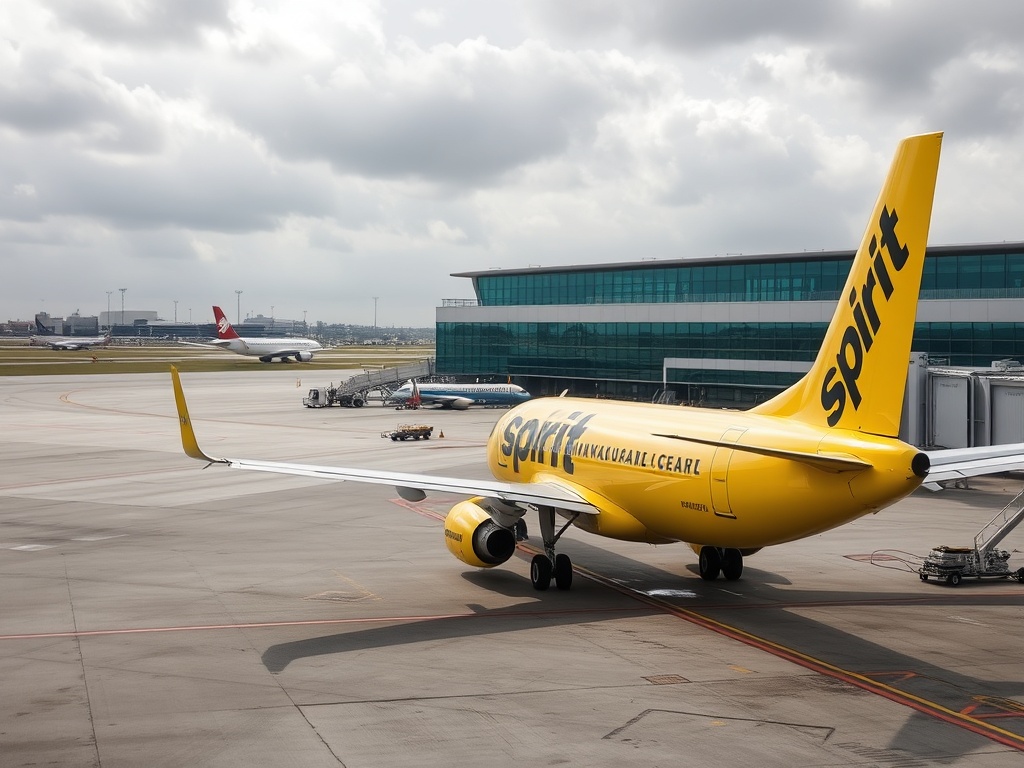
When Fuel Doubles in Price and the Model Can't Hold Up
On the afternoon of Saturday, May 2, 2026, Spirit Airlines issued a statement that left no room for ambiguity: total cessation of operations, zero flights, an express instruction to passengers not to approach airports. Seventeen thousand employees lost their jobs within hours. The airline that had spent decades fighting for the cheapest seat in the American market closed with no successor, no merger, no bailout.
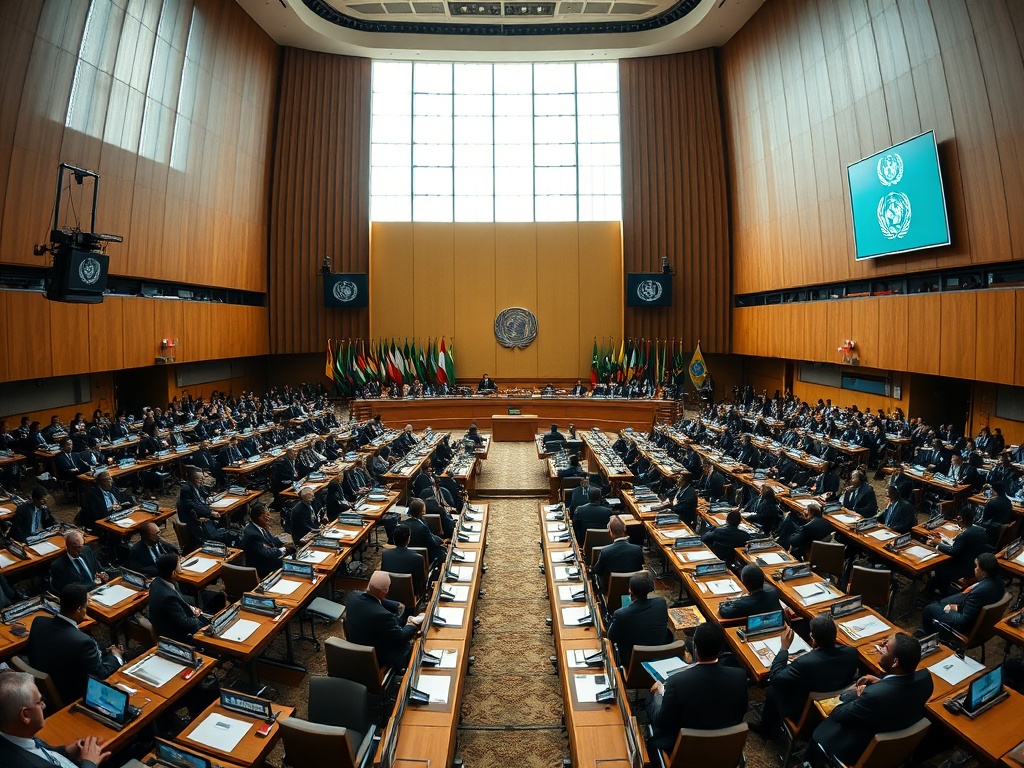
Africa Adopted the Addis Ababa Declaration and Exposed a Broken Financing System
On May 1, 2026, more than 1,500 participants from 48 countries closed the Twelfth African Regional Forum on Sustainable Development with a document carrying more political than financial weight: the Addis Ababa Declaration on 'Turning the Tide'. Ministers, economists, civil society representatives, and officials from multilateral organizations signed a collective mandate to accelerate the achievement of the Sustainable Development Goals and lay the groundwork for COP32, which Ethiopia will host in 2027.

Datadog, Block and Lumentum Head Into Earnings With the Wind at Their Backs
The S&P 500 earnings season doesn't end with the big names. When Apple, Meta or Alphabet publish their figures, the market closes that chapter and moves on. What comes next — the 121 index companies reporting the week of May 4–8, 2026 — is usually read as background noise.

When the Business Model Wins and the Customer Loses
Between 2021 and 2025, electricity bills in the United States rose by an average of 40%. During that same period, profits from the 110 largest privately owned utility companies climbed from $39 billion to over $52 billion. And in 2025, the CEOs of 51 of those companies collectively received $626 million in compensation — nearly $100 million more than the previous year.
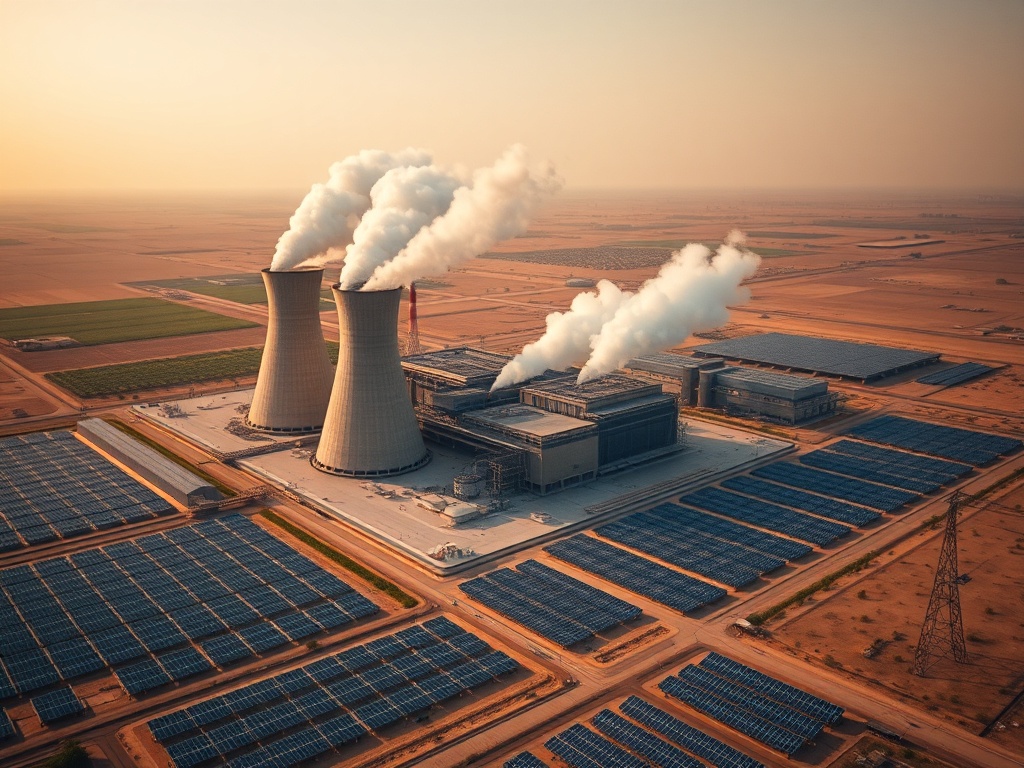
India Burns More Coal While Promising Clean Energy
The world has grown accustomed to the contradictions of major emerging powers, but the one India presents deserves special executive attention. The country has one of the most ambitious renewable energy programs on the planet: 500 gigawatts of non-fossil capacity by 2030, with renewables already surpassing 50% of total installed capacity. At the same time, coal generates around 75% of the electricity consumed by 1.4 billion people.

SiriusXM Grew 20% While Losing Subscribers — And That Explains Everything
The first reaction to reading SiriusXM's Q1 2026 results is almost paradoxical: the company reported a loss of 111,000 paid subscribers and, at the same time, its net income rose 20% to $245 million. For anyone who reads financial statements like blueprints of a structure, that figure is not contradictory — it's revealing. The company isn't growing despite losing users; it's quietly redesigning how much weight each part of its model carries so the main beam holds more with less mass.
 Sofía Valenzuela7 min
Why the Federal Pivot on Cannabis and Psychedelics Is Reshaping the Board for Mental Health Startups
The Trump administration signed two of the most significant drug policy reforms in decades in April 2026. First, an executive order to accelerate research and approval of psychedelics such as psilocybin, MDMA, and ibogaine, with a $50 million allocation and expanded access under the Right to Try Act. Days later, the Department of Justice reclassified state-licensed medical cannabis from Schedule I to Schedule III, effectively eliminating enforcement of Section 280E of the tax code, which had imposed effective tax rates above 70% on industry operators.
 Francisco Torres7 min
SME D Bank Bets on Manufacturing and Reveals Where the Money Is in Thailand
Thailand's SME Development Bank (SME D Bank) has just made a move that few analysts outside Southeast Asia are reading correctly. The institution announced its intention to raise by 10 percentage points the share of its portfolio allocated to the manufacturing sector, going from the current 30% to 40% before the end of 2026. Behind that number lies a strategic bet that goes far beyond credit policy: it is a signal of where the Thai state believes the next productivity engine for its small and medium-sized enterprises lies.
 Diego Salazar8 min
Meta Records Its Highest Revenue Growth Since 2021 and Still Loses 7% on the Stock Market
The arithmetic of Meta Platforms' first quarter of 2026 looks, on paper, impressive: $56.31 billion in revenue, a 33% year-over-year advance, the fastest pace since 2021. Adjusted earnings per share came in at $7.31 versus the $6.79 expected. And yet, shares fell nearly 7% in after-hours trading.
 Mateo Vargas8 min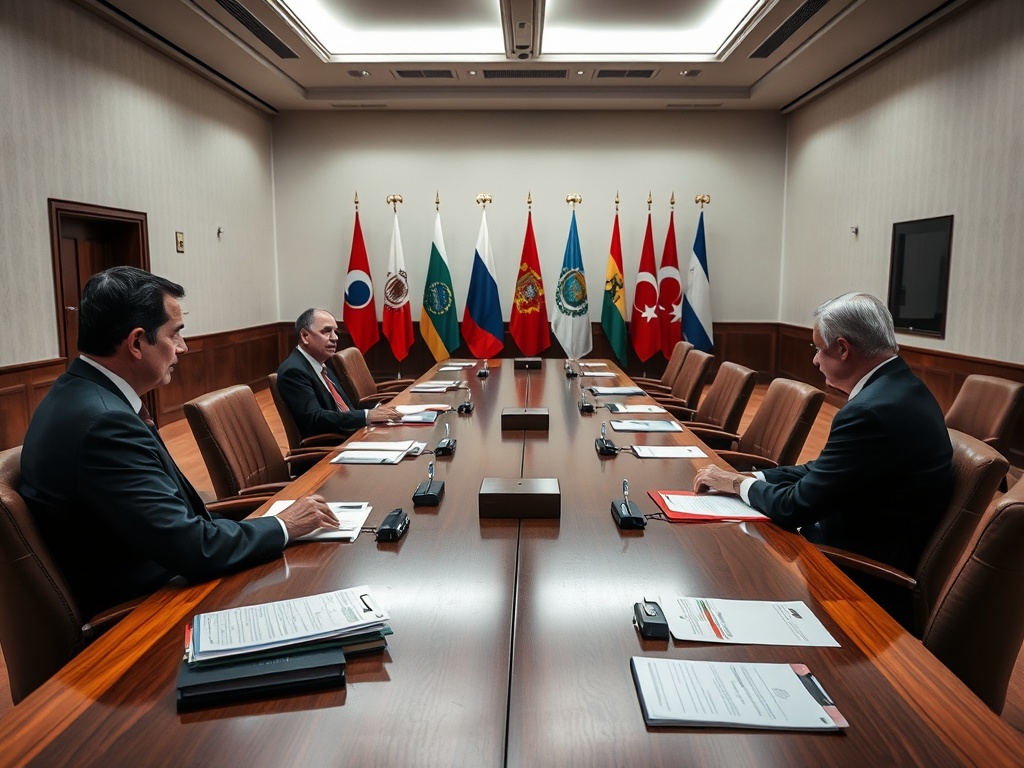
When the Negotiating Table Becomes the Most Expensive Asset
Diplomacy has its own economy. Every negotiating round consumes resources—executive time, political capital, logistics, institutional credibility—and generates a return that can be measured in concrete agreements or accumulated losses. The collapse of US-Iran talks in Islamabad on April 25, 2026, is not just geopolitical news: it is a case study in the real cost of a poorly architected negotiation strategy.
Javier Ocaña7 min
Coins.ph Turns Stablecoins Into Everyday Currency in the Philippines
For years, holding USDT or USDC in a Filipino digital wallet meant roughly the same as keeping dollars under a mattress: an asset that accumulates but never circulates. On April 21, 2026, Coins.ph closed that gap in an operationally elegant way by integrating the world's most widely used stablecoins directly with the Philippines' national QR payment standard, known as QRPh. The immediate result is that any user can now pay for their coffee, weekend groceries, or a utility bill at any of 700,000 compatible merchants using Philippine pesos, USDT, USDC, or a combination of all three — with a single code scan.
 Ignacio Silva5 min
The Robot That Beat Kiplimo Reveals Honor's Biggest Bet
On April 19, 2026, in the corridor of the Beijing Economic-Technological Development Area, a deep red robot named Lightning crossed the finish line of a half marathon in 50 minutes and 26 seconds. It surpassed the human record of 57 minutes and 20 seconds set weeks earlier by Ugandan Jacob Kiplimo in Lisbon. What did not appear in that coverage was the financial mechanics behind the achievement.
Javier Ocaña6 min
CoreWeave and Jane Street: When a Quantitative Fund Finances the Cloud It Needs
Jane Street isn't just signing a technology infrastructure contract. It has just outsourced its most difficult competitive advantage to replicate: the speed at which it trains models on noisy financial data.
 Clara Montes6 min
Samsung SDS and KKR: When Idle Capital Becomes an Expansion Engine
Samsung SDS accumulated 6 trillion won in cash without moving it. KKR's entry is not just a capital injection; it highlights a strategic oversight the market has read.
Sofía Valenzuela7 min
Gucci Falls Twice as Much as Expected, Kering Faces Financial Strain
Kering's first-quarter 2026 results reveal a struggling conglomerate as Gucci’s profitability declines and the new CEO races against time.
Francisco Torres6 min
OptimizeRx and the Price of Selling Smoke as a Managed Service
OptimizeRx ended 2025 with 19% growth and exceeded estimates. Three months later, its stock trades at a third of its value due to unmet client expectations.
Diego Salazar7 min
Shareholder Activism Does Not Destroy Value, It Redistributes It
Shareholder activism reached historic highs in 2025, reshaping corporate dynamics and prompting crucial questions about value distribution.
 Martín Soler7 min
Trust as a Business Model: What Augusta Teaches About Fear Money
In a high-risk financial sector with zero complaints in three years, Augusta Precious Metals reveals a unique approach that prioritizes client assurance over profits.
Clara Montes7 min
Banks and Private Credit: $123 Billion Reasons Not to Panic
The financial sector has dropped 7.3% amid fears of a systemic crisis from private credit. The numbers tell a colder, more useful story.
Javier Ocaña7 min