What changes when AI enters a business
We follow AI once it stops being novelty and starts changing cost structures, workflows, control, technological dependence, and competitive advantage.
What we are watching
Compute infrastructure, agents, enterprise software, restricted model distribution, and decisions that turn AI into a layer of power, not just productivity.
Where it is being decided
In the cloud, inside workflows, in the relationship between provider and client, in model governance, and at the point where automation starts changing who gets to decide.
Why it matters
Because adopting AI is not just adding a tool. It means accepting new dependencies, new costs, and a new way of organising judgment, speed, and control.
Featured
Artificial Intelligence

Mercury Gives Credit Cards to AI Agents and That Changes the Architecture of Corporate Spending
The average founding team of a startup used to have two people and three engineers. Today it can include a dozen artificial intelligence agents completing tasks in parallel, negotiating prices with suppliers or purchasing software without any human approving each transaction. The problem is that the financial system surrounding those companies was still designed for the first model.
 Clara Montes8 min
Latest articles
Why Ackman Bet $2.4 Billion That the Market Misunderstood Microsoft
There is a difference between buying a stock because it is rising and buying a stock because the market does not yet know what it is worth. Bill Ackman, founder of Pershing Square Capital Management, built a $2.4 billion position in Microsoft doing exactly the latter. The distinction is not semantic: it defines who assumes structural risk and who simply rides a trend.
AI Spending Rose 110% and the Underlying Systems Couldn't Keep Up
ServiceNow has been measuring AI maturity in large enterprises for three years. In 2026, the index they build from surveys of more than 4,500 executives and 2,000 employees worldwide recorded a notable improvement: a 16-point advance, reaching 51 out of 100. That sounds promising until you read the next line: while corporate AI spending grew 110% year-over-year, the foundational capabilities that AI needs to function at scale simply did not keep pace.
Measure to Scale: The Problem Blocking Enterprise AI
Two years ago, most executives I know were debating which language model to choose. Today, those who already made that decision—and still can't justify a second round of investment—are starting to understand that the problem was never the model. It was measurement. The enterprise sector has been adopting artificial intelligence at an accelerated pace for several years, but only one third of organizations have begun scaling it consistently.
AMD Enters the Robotics Business with a Platform that Challenges Nvidia on Its Own Turf
Autonomous robotics has been promising an industrial-scale breakthrough for years — one that never quite arrives. Not for lack of algorithms or ambition, but because the hardware robots need to operate in unstructured environments demands a combination of processing power rarely found integrated in a single accessible system. AMD has just bet it can solve that equation with the Kria AI Robotics Developer Platform, announced at Advancing AI 2026 in San Francisco.
Most Popular
Most voted on this page
The AI Triathlete and the Problem Nobody Wants to Name in the Boardroom
There is a phrase that repeats in almost every executive committee meeting where artificial intelligence projects are reviewed: 'the pilot was successful.' And then, silence. Nobody asks why the pilot never became anything else. The organization celebrates the experiment, files away the learnings, and three months later launches another pilot.
91
Companies Spend Trillions on AI and Reap Pennies
There is a number that should be on the desk of every CFO signing an artificial intelligence budget today: 40%. That is the proportion of companies that, according to a recent Bain & Company survey of 951 large global corporations, measured their real AI savings and found them in the range of zero to ten percent. Not because the technology failed in production. But because the promised value never managed to become captured value.
91
The Tax Nobody Budgeted For Is Sinking Corporate AI Agents
There is a particular moment in enterprise technology adoption where enthusiasm turns into an accounting obligation. With artificial intelligence agents embedded in corporate products, that moment arrived sooner than most technical teams anticipated, and the mechanism that triggered it was not the wrong language model or a lack of data. It was an architectural decision that nobody presented as a decision.
90
Oracle Bet Everything on AI and Now Pays the Price for Not Being Amazon
A 19% drop in a single week is not market noise. It is the market reading aloud something the numbers had been trying to say for months. Oracle just recorded its worst stock market week since August 2001, when the dot-com bubble was deflating and the share prices of many tech companies reflected nothing but the collapse of their business models.
90
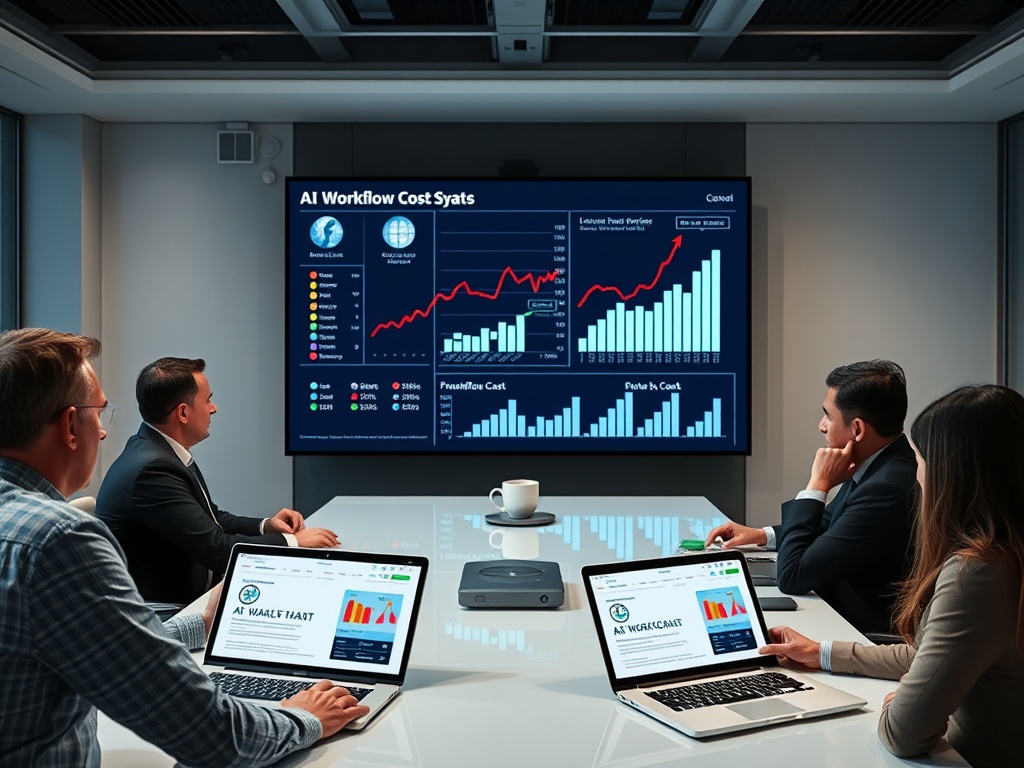
AI Agents Are Already a Line on the Income Statement
There is a distinction that few organizations have fully processed: an AI assistant waits to be spoken to. An agent acts on its own. That difference, which seems technical, carries economic and psychological consequences that are redefining how executives think about their technology budgets and, more quietly, how their teams feel about work.

Why Venture Capital Ignores Retail Technology
The retail industry moves trillions of dollars a year and faces operational problems it has failed to solve for decades: unreliable product data, returns logistics that bleed margins, and inventory systems that operate on assumptions rather than real-time information. Yet venture capital allocates just $300 million annually to the startups trying to fix these problems. To put that in perspective: a single mid-sized AI startup round frequently surpasses that figure.

Millions in Funding, Undefined Transformation: The Structural Problem of AI in the C-Suite
There is a line in almost every corporate budget right now. It has a name like 'AI transformation' or 'intelligent automation.' But behind that line, in many organisations, there is no clear definition of what success looks like, who is responsible, or how progress will be measured. This is the structural problem of AI at the top level of leadership.

The Map of Global Financial Power Is No Longer Drawn Where It Used to Be
The fintech sector generated $650 billion in revenue during 2025, a 21% increase from the previous year. The broader financial services industry, meanwhile, grew at 6% on a $15 trillion base that same year. The arithmetic of that contrast needs no embellishment: capital, regulatory talent, and institutional attention are shifting toward companies built on software, not branch networks.

Enterprise AI Pipelines Don't Lose Money on Tokens: They Lose It Before
There comes a moment when the accumulation of artificial intelligence pilots stops looking like ambition and starts looking like disorder. That moment arrived for many large enterprises in 2026, and the clearest signal wasn't a technological collapse or a model failure. It was something more mundane and harder to defend in a board meeting: token consumption ran ahead of budget without generating proportional value.
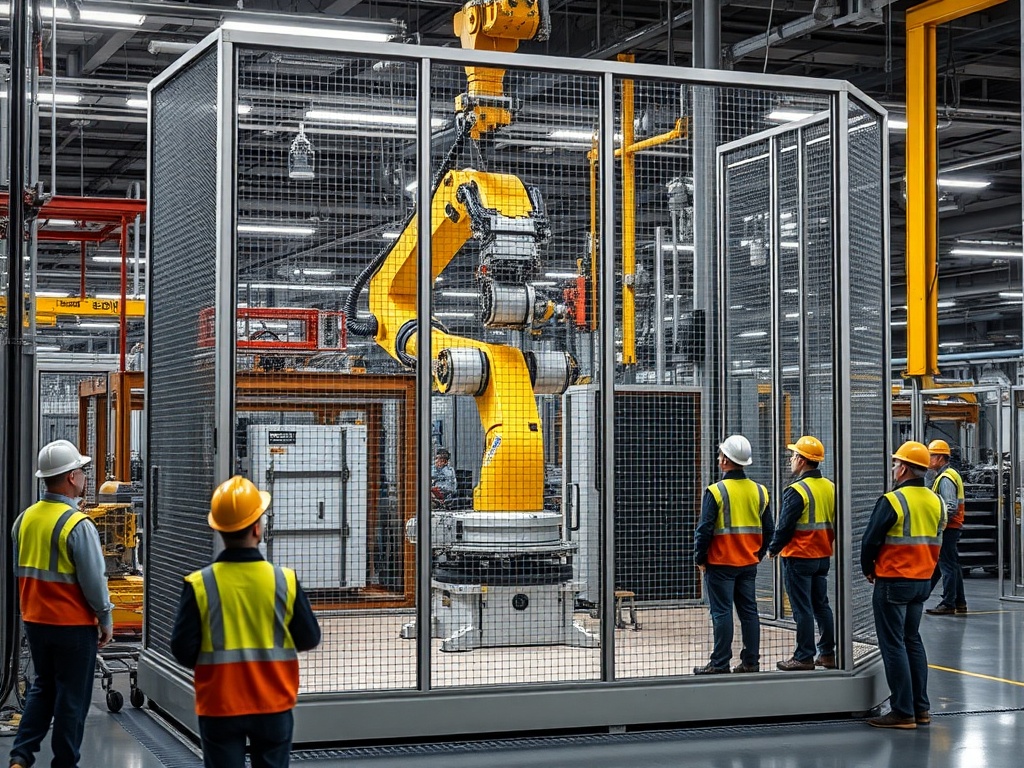
89% of Industrial Robots Are Still Caged and Artificial Intelligence Is Not the Solution
For decades, the image of the industrial robot has remained the same: a machine with powerful, fast metal arms, locked behind a steel cage while humans watched from the outside. That image is not a metaphor for backwardness. It is an engineering decision that persists because available safety systems have not been able to sustain anything else.
 Isabel Ríos8 min
Databricks Is Worth $188 Billion and Its Next Bet Could Reshape Enterprise AI
In five months, Databricks added $54 billion to its valuation without listing on any stock exchange. It went from $134 billion in February 2026 to $188 billion in July, led by a new strategic funding round headed by Coatue Management. What stands out is not just the number, but the speed at which the power structure of the enterprise data market is shifting.
 Elena Costa7 min
Broadcom Has Contracts Until 2031, But the Market Still Doesn't Believe It
Morgan Stanley published on Tuesday, July 14, a defense note on Broadcom that deserves careful reading — not for what it says about the stock, but for what it reveals about the value architecture underpinning the semiconductor maker and why that architecture has yet to convince investors. The starting point is the concern that took hold in the market following a report by The Information in March: MediaTek, the Taiwanese chip manufacturer, would be collaborating with Alphabet to develop the next generation of Tensor Processing Units (TPUs) used by Google in its data centers.
 Martín Soler9 min
California Captures $335 Billion in Venture Capital While Texas Receives a Fortieth of That
Silicon Valley isn't going anywhere. The billionaires, some of them are. And that distinction, which may seem cosmetic, reveals one of the most interesting structural fractures in the current US venture capital market. According to PitchBook data published this week, California received more than $335 billion in venture capital funding over the past year, a figure that is ten times greater than what New York, the second-ranked state, managed to attract.
 Sofía Valenzuela9 min
The AI Triathlete and the Problem Nobody Wants to Name in the Boardroom
There is a phrase that repeats in almost every executive committee meeting where artificial intelligence projects are reviewed: 'the pilot was successful.' And then, silence. Nobody asks why the pilot never became anything else. The organization celebrates the experiment, files away the learnings, and three months later launches another pilot.
 Ricardo Mendieta9 min
The Tax Nobody Budgeted For Is Sinking Corporate AI Agents
There is a particular moment in enterprise technology adoption where enthusiasm turns into an accounting obligation. With artificial intelligence agents embedded in corporate products, that moment arrived sooner than most technical teams anticipated, and the mechanism that triggered it was not the wrong language model or a lack of data. It was an architectural decision that nobody presented as a decision.
 Camila Rojas9 min
Agent Gateways Are Concentrating Power Over All Enterprise AI
There is a pattern that repeats every time a technology moves from experiment to critical infrastructure: at some point, a control layer emerges that no one had formally planned, but which ends up being the place where the most important decisions are made. It happened with load balancers on the web, with control planes in the cloud, and with service meshes in the microservices era. Now it is happening with artificial intelligence agents, and the name that layer is taking is agent gateway.
Isabel Ríos9 min
Sterling Stock Picker and the Permanent Discount Economy in AI Investment Tools
There is a pattern that repeats with enough consistency in the retail financial software market to deserve specific attention: the discount that never ends. Sterling Stock Picker, a stock analysis tool presented as powered by OpenAI, has been circulating for months on deal platforms like StackSocial, AppSumo, Dealify, and Pick Your Plum with prices ranging from $48 to $68 for lifetime access, against a list price of $486. The product itself is not what matters to analyze. What matters is the business model it reveals.
 Tomás Rivera8 min
Companies Spend Trillions on AI and Reap Pennies
There is a number that should be on the desk of every CFO signing an artificial intelligence budget today: 40%. That is the proportion of companies that, according to a recent Bain & Company survey of 951 large global corporations, measured their real AI savings and found them in the range of zero to ten percent. Not because the technology failed in production. But because the promised value never managed to become captured value.
 Valeria Cruz8 min
Oracle Bet Everything on AI and Now Pays the Price for Not Being Amazon
A 19% drop in a single week is not market noise. It is the market reading aloud something the numbers had been trying to say for months. Oracle just recorded its worst stock market week since August 2001, when the dot-com bubble was deflating and the share prices of many tech companies reflected nothing but the collapse of their business models.
 Francisco Torres9 min
Why AI Contracts Keep Paying for Hours When the Value Lies Elsewhere
The greatest friction in enterprise AI adoption is not technical. It's not in the models, the data quality, or the computing capacity. It's in the contract. While organizations invest hundreds of millions in AI implementations expecting structural returns, most are still signing agreements that reward time spent, not impact generated.
 Lucía Navarro8 min
Cybersecurity in the Age of AI and Quantum Computing: Who Pays for the Transition
There is a pattern that repeats every time a technology changes the rules of the game fast enough: the first to absorb the cost are those with the least margin to do so. The convergence of artificial intelligence and quantum computing is following that pattern with uncomfortable precision. Attackers benefit from tools that reduce the time and cost of their operations.
Martín Soler9 min
Enterprise AI Has Been Deployed for Years and Barely One in Five Executives Knows What They Have
More than half of the world's large organizations already have generative artificial intelligence operating somewhere in their business. That is a documented fact. What is not so easily documented is what lies beneath that statistic: systems processing sensitive data without anyone having defined who oversees them, autonomous agents making decisions within workflows that no security team has audited, and governance layers that arrived late or never arrived at all.
 Simón Arce9 min
When Building Is Easy, Winning Customers Becomes the Business
Ten years ago, founding a software company required engineers, own infrastructure, months of development, and a budget most founders simply didn't have. Today, a single person can have a functional product in a weekend using AI-assisted programming tools. The bottleneck has shifted entirely, and that shift changes the structure of almost every business model in technology.
Sofía Valenzuela9 min