
Why Robot Diagnostics Are Worth More Than the Robots Themselves
The robotics industry has spent two decades promising the replacement of human labor at industrial scale. What no one had resolved with sufficient seriousness is what happens after deployment: the moment when the machine stops, production grinds to a halt, and an engineer begins reading logs for entire days trying to find a fault that, more often than not, had already occurred before. Alloy Robotics, a company founded in Sydney just over a year ago, has just closed a round of 8 million dollars led by Square Peg at a valuation of 80 million dollars, betting that this moment — the moment of failed diagnostics and lost time — is where a disproportionate share of the real cost of operating robotic fleets is concentrated. The bet is not a small one: if they are right, the market for robotic observability infrastructure could be as large as the automation market itself.
What makes the argument more than a neatly packaged investment thesis is that the data supports it from the demand side, not from promise alone. At Advanced Navigation, a navigation company that already uses the platform, field test analysis that used to consume an entire working day is now completed in under ten minutes. At DroneForge, an engineering team was diagnosing the wrong component until the platform showed that both state estimators were functioning normally and pointed to the real fault. These are not hypothetical use cases constructed for a pitch: they are the arguments with which Square Peg, Blackbird, Airtree, and Skip Capital justified their investment, and the same ones with which engineers and executives from OpenAI, Anthropic, Tesla, and Waymo decided to put in their own money.
The Hidden Cost That No One Had Placed at the Center
There is a study cited in the round announcement that deserves more attention than this type of analysis usually receives. The construction scheduling platform Planera examined 30 of the most common jobs in the United States and calculated how much it costs to replace a worker with a machine for a year, accounting for hardware, integration, maintenance, and the human supervisors who remain necessary after deployment. The results are uncomfortable for the narrative that automation reduces the cost of productive processes: replacing a nursing assistant costs 375,000 dollars per year compared to a salary of 42,200 dollars. A construction worker — one of the segments Alloy already serves — costs six times their salary to automate. Only the self-checkout kiosk in retail turns out cheaper than the worker it replaces.
What the study reveals, and what Alloy's analysis places at the center, is that a significant portion of that multiple is not in the hardware. It lies in integration, maintenance, and above all in the engineers who diagnose faults when the machine stops working. That cost is recurring, scales with the size of the fleet, and does not improve linearly over time: the more robots a company operates, the more frequently faults recur with variations, and the more expensive each investigation becomes when carried out manually. What Alloy is monetizing is not the technological novelty of AI-assisted diagnostics. It is the structural inefficiency of a sector that has invested massively in building machines and almost nothing in building the institutional memory of how they fail.
Tesla and Waymo solved that problem internally, investing years in fleet data infrastructure that allows them to learn from every mission. That transformed their fleets into systems that improve with use, not merely systems that operate. The problem is that this capability is not available to the rest of the market. Alloy's bet is that it can offer that infrastructure as a shared service, in the same way that software observability tools stopped being internal projects of large tech companies and became standard purchasing categories. Datadog, New Relic, and their competitors did not sell the idea of monitoring systems: they sold the possibility of doing so without having to build the platform from scratch. The analogy is direct, and Alloy's leadership makes it explicit without equivocation.
What the Technical Architecture Reveals About the Real Strategy
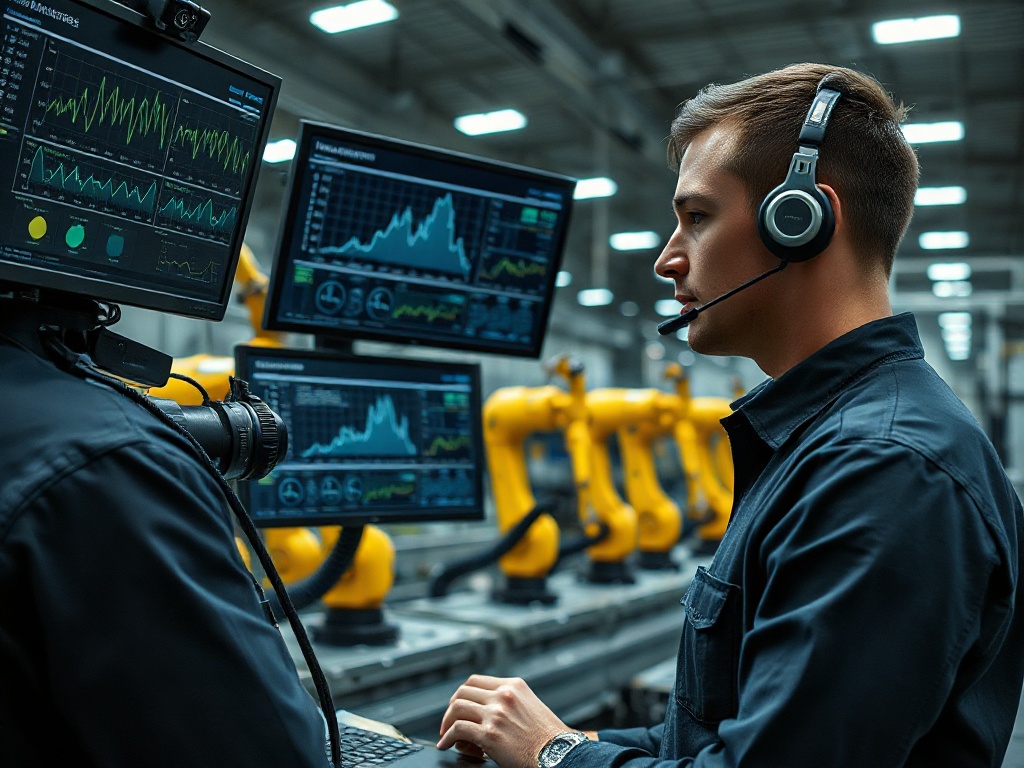
The platform ingests logs, telemetry, video, and sensor data, crosses it with the engineering context that already exists in Slack and Jira, and allows teams to interrogate incidents in natural language with the evidence attached to each finding. But the technical detail that changes the strategic nature of the product is not the conversational interface: it is the exposure of that context through a Model Context Protocol server, which allows coding agents such as Codex or Claude Code to access fleet data directly without any engineer having to manually assemble files.
That architectural decision says something precise about the positioning Alloy is building. A natural language query interface is a product that competes with other products. A data layer that other agents consume is infrastructure that becomes invisible in the best sense: it stops being what the engineer uses and becomes what the engineer's working environment already assumes to be available. The difference is not semantic. The first generates a comparison market where price matters. The second generates structural dependency where the cost of switching is the loss of accumulated context across thousands of missions, faults, and patterns already analyzed.
The founder's track record adds a relevant layer of interpretation. Joe Harris built Eucalyptus as chief commercial officer through its acquisition for 1 billion dollars. That is not the profile of an engineer who built a technical tool and then went looking for a market. It is the profile of someone who understands how to scale a company under real revenue pressure, how to sell to corporate buyers, and how to convert early traction into expansion. The fact that he is relocating to San Francisco to lead the push into the United States is not a logistical detail: it is the signal that the company already considers its primary market to be outside Australia, and that the next financial milestone requires demonstrating full-fleet retention and expansion, not just pilots.
The Cap Table as a Document of Technical Validation
There is a way to read a cap table as a public relations exercise, and there is a way to read it as a market signal. Alloy's is, in this case, far more the latter than the former. The investors who add weight are not generalist funds diversifying into robotics: they are engineers and executives from Tesla, Waymo, OpenAI, Anthropic, Halter, and Carbon Robotics who invested their own capital. Alongside them, some of the company's own customers purchased a stake in a company they are already paying for the service.
That incentive structure is unusual. Customers who invest in a vendor are making a statement about the value they expect from the platform, but they are also assuming a concentration risk that makes no sense unless the product is already integrated in a way that makes replacement costly. What the cap table reveals is not merely that the product is convincing: it is that it is already sufficiently embedded in those customers' operations that preferential access to its evolution is worth a personal check.
The valuation of 80 million dollars on 8 million dollars raised — a multiple of ten times the round — is not explained by the narrative of the robotics market as a trend. It is explained by the reading that current deployments have verifiable metrics, that retention is structurally high, and that the next financing round, which will be substantially larger given the cost of scaling in San Francisco while simultaneously developing models, agents, and a data platform, will be priced on the expansion of pilots into full fleets. That makes this round not the moment of product validation, but the starting point of the commercial test that will determine whether Alloy can become sector infrastructure or remain a high early-adoption tool with limited growth.
The Argument That Matters Most Is Not a Technological One
What makes the Alloy case structurally interesting is not that artificial intelligence can diagnose robots faster than an engineer. That is a consequence. What matters is that the robotics industry has reached a point where the learning speed of a fleet determines its competitiveness more than the hardware specifications of the machines that compose it. When Tesla and Waymo built internal fleet data infrastructure, they did not do so out of an affinity for data engineering: they did it because they understood that a fleet that learns from every mission improves cumulatively, while a fleet that operates without that memory is limited to repeating the same level of performance with the added wear of time.
That learning differential was sustainable when only two or three companies in the world could afford to build that infrastructure internally. It ceases to be sustainable the moment an external platform offers the same capability to medium-sized and small fleets that lack the budget or the time to build it from scratch. If Alloy succeeds in consolidating itself as the shared data layer that other agents and teams consume, the market it accesses is not the market for robotic diagnostic tools. It is the market for the operational memory of physical automation — a market that does not yet have a stable name, but whose scale can be deduced directly from how much it costs the sector to keep operating without it.
The SMEs and mid-scale operators that cannot afford to replicate what Tesla or Waymo built internally represent the largest untapped segment of the robotic fleet market. They are not underserved because no one recognized the problem: they are underserved because the problem, until recently, did not have a commercially viable solution. Selling a diagnostic tool to a company running fifteen robots is a transactional relationship. Becoming the data memory of how those robots fail, what causes each failure, which patterns repeat across different hardware generations, and what context surrounds each incident is a fundamentally different kind of relationship — one that deepens with every mission logged and every fault analyzed.
The test is not whether the technology works. The pilots have already answered that question. The test is whether the pilots convert into full-fleet contracts before the large operators decide that the data layer belongs to them.