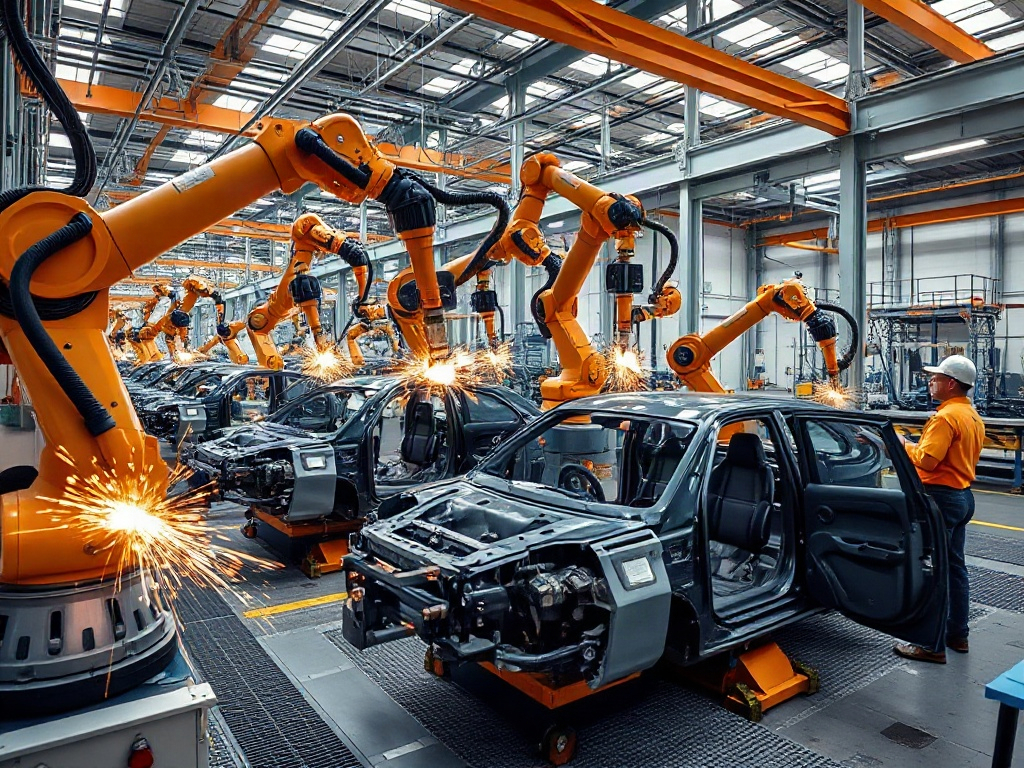

Why Manufacturing Without Robots Is No Longer a Financially Viable Option
There is a number that deserves to be read twice: 542,000 industrial robots installed in factories during 2024, more than double the number being installed a decade ago. This is not a trend statistic; it is a photograph of a threshold that has already been crossed. The global operational stock of industrial robots reached 4.66 million units, growing approximately 9% year-on-year, and the International Federation of Robotics projects that installations will exceed 575,000 units in 2025. When a technology doubles its adoption in ten years and continues to accelerate, the useful analysis is not to ask whether it will arrive, but to understand what structure of costs, power, and competition it is already reorganizing.
The industrial robotics market, counting hardware, software, and services, is estimated at 54.28 billion dollars in 2026 and could reach 94.38 billion by 2031, with a compound annual growth rate of close to 12%. Those numbers do not tell a story of a technological niche; they tell a story of structural reconfiguration of the global manufacturing floor. And in that reconfiguration, there are decisions that can still be made in an orderly fashion and decisions that, in a few years, will be made under pressure — or will not be made at all.
The Cost Argument That Many Manufacturers Still Have Not Calculated Properly
For years, industrial automation was presented as an investment reserved for large corporations with massive production lines. That narrative had an economic logic: robots were expensive to acquire, difficult to program, and required specialized teams for integration. That high fixed-cost profile made the equation unviable for medium or small manufacturers working with short production runs and variable products.
What has changed is not the ambition of robot manufacturers, but the structure of the integration cost. Advances in simulation software, visual programming interfaces, and modular systems have significantly reduced deployment time. Some current robots can be instructed by physically guiding the mechanical arm through the desired movement, without any specialized code. This does not eliminate the need for engineering, but it lowers the entry threshold in ways that were previously unthinkable. A modernized line can recover the investment in just a few years depending on volume, the number of shifts, labor costs, and the rate of waste it replaces.
The concrete calculation includes variables that rarely appear in full in traditional investment analyses: the cost of a workplace injury in a repetitive physical operation, the cost of a quality defect that reaches the customer, the cost of stopping a line due to staff absence during critical seasons, and the productivity differential against competitors who already operate with automation. When those elements are added together, the question ceases to be whether automation is profitable and becomes how much it has cost not to have implemented it sooner.
The automotive sector and consumer electronics reached this conclusion first, and not by coincidence: both industries operate with precision tolerances that manual labor cannot guarantee at scale, and with product life cycles that demand frequent reprogramming of lines. But the pattern is spreading. Companies with short-run production and high product variation, which previously dismissed automation as inflexible, are now finding in collaborative robots and artificial vision systems a way to automate without sacrificing adaptability.
What the Pandemic Revealed About the Fragility of Labor-Intensive Models
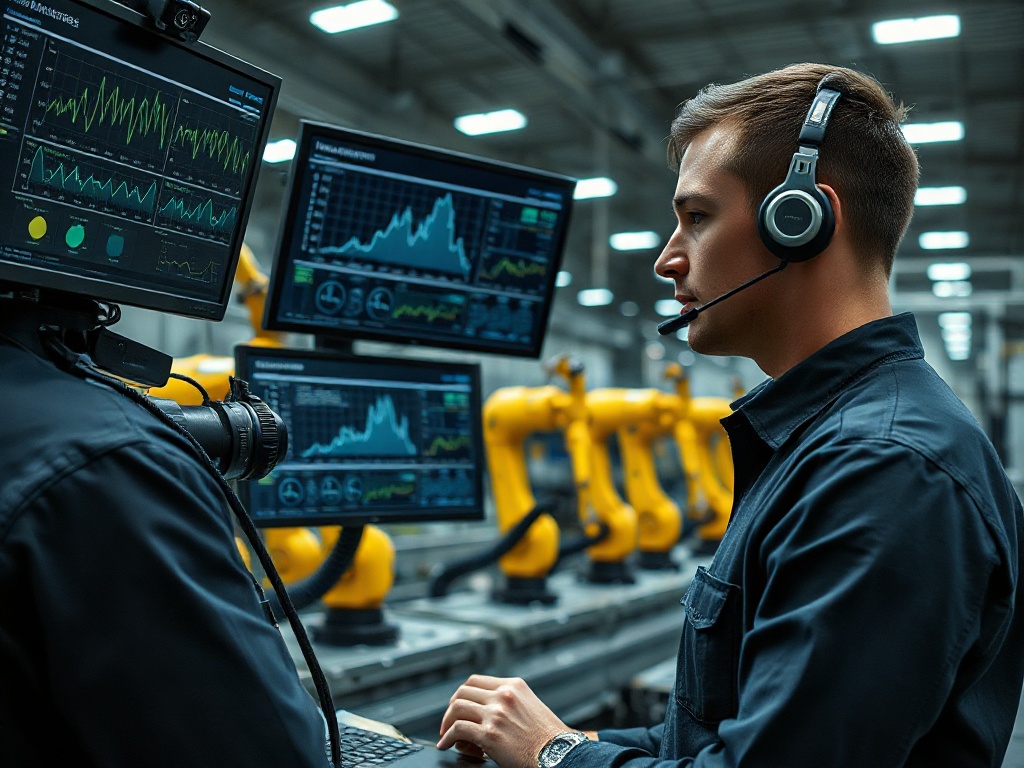
The crisis of 2020 was, among other things, an uncontrolled experiment on the resilience of different manufacturing models. Manufacturers who depended on dense labor in their lines faced shutdowns, forced rotation, shift reorganization costs, and production losses that were difficult to recover. Those who had already invested in automation maintained operations with remote supervision and reduced teams on the factory floor.
That contrast accelerated conversations that had been postponed for years in many companies. According to Carl Vause, CEO of Soft Robotics, the shift toward robots and automation — which was already underway before COVID-19 — became part of the operational recovery process, with companies using robots to sustain health, safety, and business continuity measures. The observation is relevant not because it describes a moment that has already passed, but because it anticipates how manufacturers will reframe automation in their risk analyses: not only as a productivity tool, but as a component of their resilience architecture against future disruptions.
There is, however, an important nuance that the data also records. A survey by Automation World found that 75.6% of the manufacturers surveyed did not purchase new robots as a direct consequence of the pandemic, and among those who did, 80% acquired five units or fewer. The real impact was more selective than the dominant narrative tends to describe. The pandemic did not trigger a wave of massive and immediate adoption; in many cases it reinforced the intention without converting it into executed investment. That gap between intention and execution is precisely where the most concrete risks reside for manufacturers who are still postponing the decision.
The shortage of skilled workers and the sustained rise in wages in industrialized economies are building a slower but more consistent pressure than any single crisis. In markets where the average manufacturing wage has risen and labor mobility is high, the equation of retaining workers for repetitive, physically demanding, or dangerous tasks deteriorates year after year. Robots do not solve all of those problems, but they do shift the burden toward supervisory, programming, and maintenance functions — roles with lower turnover and higher productivity per person.
China Sets the Competitive Floor and the Rest of the World Has Not Yet Fully Processed It
The geopolitical data point that should concern manufacturers in Latin America, Central Europe, and parts of Asia the most is not the total volume of the robotics market, but its distribution. China accounted for approximately 54% of global industrial robot deployments in 2024, with around 295,000 units installed in that year alone. That is not merely an advantage; it is already a structural difference in the cost per unit produced that directly affects export competitiveness.
The United States, by contrast, installed approximately 38,000 units in 2025, with year-on-year growth of 11%, but its robot density remains less than one quarter that of South Korea, the country with the highest concentration of robots per manufacturing worker. Europe, for its part, has a mature industrial fabric with manufacturers such as ABB, KUKA, and FANUC, and regional ecosystems of integrators — such as the nearly 90 identified in Slovakia — that make automation accessible to mid-sized manufacturers. But the speed of adoption matters just as much as the presence of key players.
The pattern that is consolidating is as follows: the countries that lead in robot density during this decade will set the cost floor against which the rest will have to compete in global markets. This is not an abstract future threat. When a Chinese manufacturer can operate an electronics line with already low labor costs plus intensive automation, the competitiveness differential against a European or Latin American manufacturer operating with dense manual labor becomes a pricing problem that has no tactical solution — it requires a transformation of the cost base.
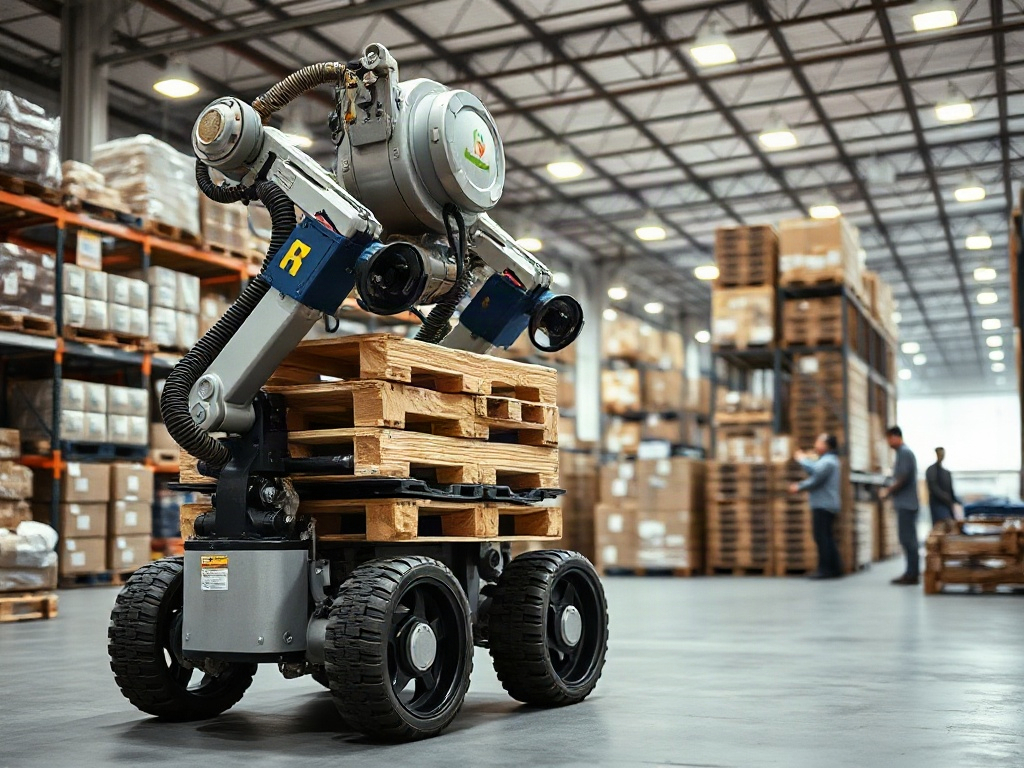
What makes the adjustment more difficult for many SMEs is not a lack of willingness but the logic of incremental investment. The most sophisticated systems from top-tier international integrators carry high entry costs. But evidence from markets such as Slovakia suggests that local integrators, designing systems specifically for the manufacturer's needs, can offer viable automation at substantially lower costs. The decision to start with one costly, repetitive, and difficult process — such as robotic welding, palletizing, or quality inspection — and measure the results before scaling, is the one that allows internal knowledge to be built without betting the entire investment on a single transformation.
Automation Does Not Only Reorganize Labor — It Reorganizes Who Can Compete
There is a consequence of this transition that market analyses capture poorly because it appears with a lag: the selection effect on the industrial landscape. As automation becomes a condition of access to the most demanding markets, manufacturers that do not reach a certain threshold of technological density are excluded from segments requiring high precision, short delivery times, and consistent quality. They do not disappear overnight, but they are displaced toward lower-margin segments where price pressure is even greater.
That displacement has consequences for industrial policy and for the strategy of any company that is today evaluating its position. The most automated markets do not only produce more cheaply; they produce with greater flexibility. Artificial vision systems and next-generation collaborative robots can detect defects, reorient randomly positioned parts, change tools automatically, and adapt to small production batches without redesigning the line. That means automation is no longer solely an advantage in mass production; it is an advantage in variable production — which is precisely the segment where many medium-sized manufacturers believed they had a competitive refuge relative to the large players.
The irony of the situation is that the technology which for decades appeared to threaten primarily manufacturing workers is beginning to threaten manufacturers who do not invest in it as well. The barrier is no longer only a labor one; it is a barrier to market access, to customers who demand traceability, consistency, and the capacity for personalization at scale.
The real displacement that this cycle reveals is more precise than the robots-versus-people dichotomy: it is the progressive separation between manufacturers who can absorb variability, disruptions, and quality demands with sustainable cost structures, and manufacturers who cannot. Industrial robotics is the most visible mechanism of that separation, but the underlying variable is the operational architecture of each company and its capacity to change it before the market removes the option entirely.