
Malaysia negotiates its technological leap with 21 Chinese companies
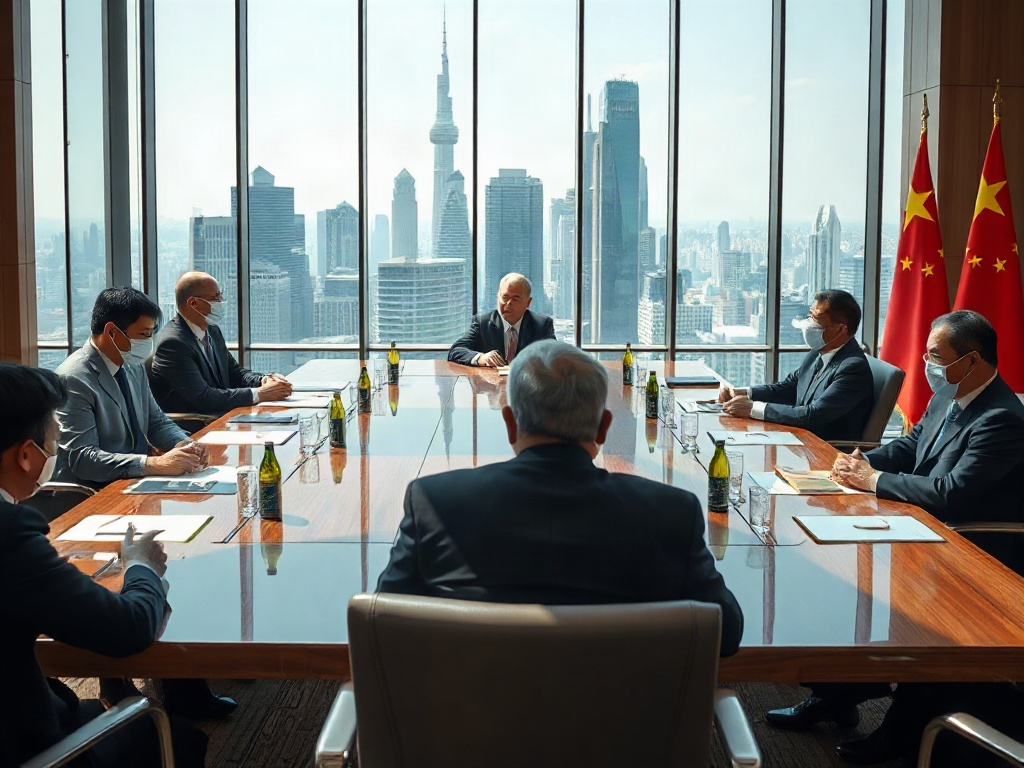
On 23 September 2026, in Shanghai, Malaysian Prime Minister Datuk Seri Anwar Ibrahim sat down with 21 Chinese industry leaders to discuss semiconductors, artificial intelligence, robotics, electric vehicles, battery materials, advanced optics, biotechnology and specialised manufacturing. The meeting produced no consolidated figures or signed contracts. It produced something harder to evaluate: a map of where Malaysia wants to move and with whom it is prepared to move.
This is not a courtesy visit. It is part of a strategy that the Malaysian government has been building for several years, and which is now seeking to capitalise on a particular geopolitical moment: with semiconductor supply chains under pressure, with demand for specialised manufacturing dispersing outside mainland China and with Southeast Asia positioned as a landing zone for technological investment that needs a base outside the epicentre of tensions between the United States and China.
The only concrete number to emerge from the days that followed was that of AgiBot Innovation: a potential investment of RM 1 billion by 2035 and approximately 5,000 jobs. The remaining 21 participants—among them representatives associated with names such as Huawei, Alibaba, Geely and ZTE—produced no quantified public commitments. That asymmetry between the scale of the event and the scarcity of hard numbers is precisely the most interesting point of departure for reading what is actually happening.
What Malaysia is really offering at the table
To understand the mechanics of this type of investment round, two things must be separated that official communiqués tend to conflate: the asset being promoted and the asset being negotiated in the shadows.
On the surface, Malaysia is offering what its Prime Minister described: a mature industrial ecosystem, a skilled workforce, a strategic location and consolidated supply chain networks. That is the sales pitch. What does not appear in the communiqués but what any advanced-manufacturing investor evaluates before committing capital is something else entirely: energy availability for computing centres, access to engineers trained in chip design or automation software, regulatory capacity to process projects of the complexity involved in a semiconductor plant or a general-purpose robotics facility, and the political durability of the incentives framework.
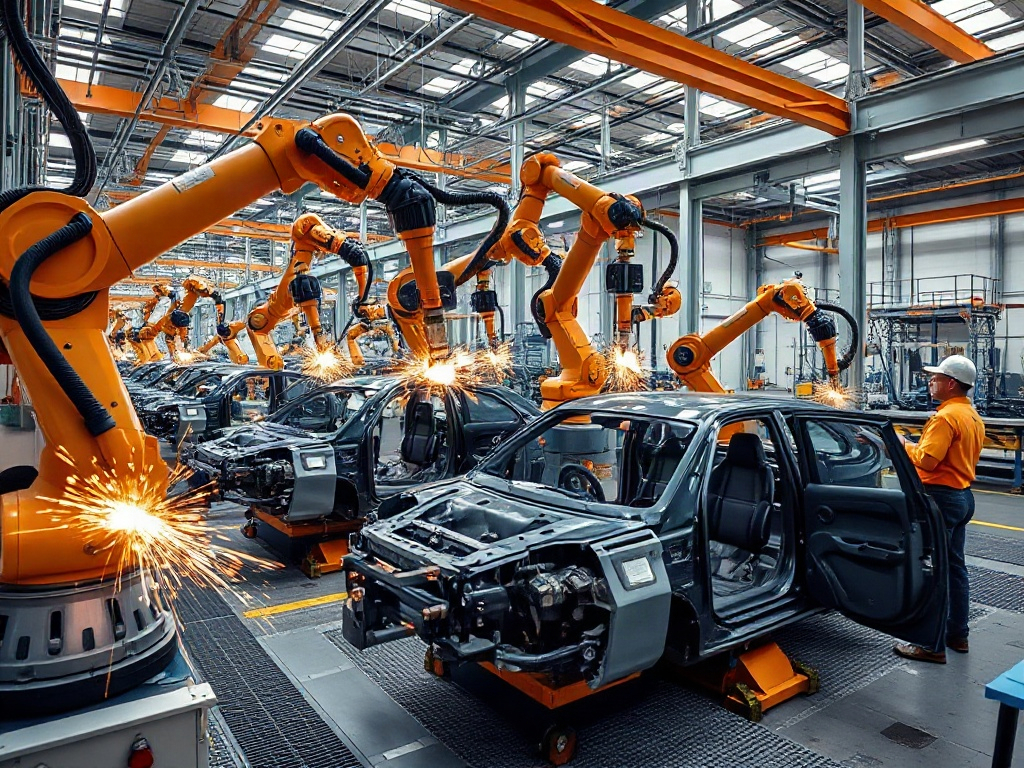
Malaysia has real advantages in electronic manufacturing, particularly in semiconductor assembly, testing and packaging. Its electronics sector is one of the most established in Southeast Asia and accounts for a significant share of its exports. The historical problem has not been attracting manufacturing; it has been climbing the value chain. The difference between assembling a chip and designing it, or between operating an automated manufacturing line and developing the software that controls it, is the difference between a 3% margin and a 30% one.
What this roundtable suggests is that Malaysia is betting that the geopolitical moment gives it a negotiating power it did not previously have. Chinese companies, especially those operating in sensitive sectors such as semiconductors or AI, have their own incentives to build capacity outside Chinese territory: diversifying against the risk of sanctions, accessing markets that require local or regional production, and reducing their dependence on a single operating geography.
That creates a window. But a window is not a deal.
The mechanics of AgiBot and what they reveal about the rest
The AgiBot Innovation case deserves attention not only because it is the only one with a number attached, but because of the kind of number it is. A potential investment of RM 1 billion by 2035 is a nine-year projection. In the lifecycle of a technology such as general-purpose robotics, nine years is more than enough time for the market, the technology and the political landscape to change shape entirely. The number serves to signal intent, not to commit capital.
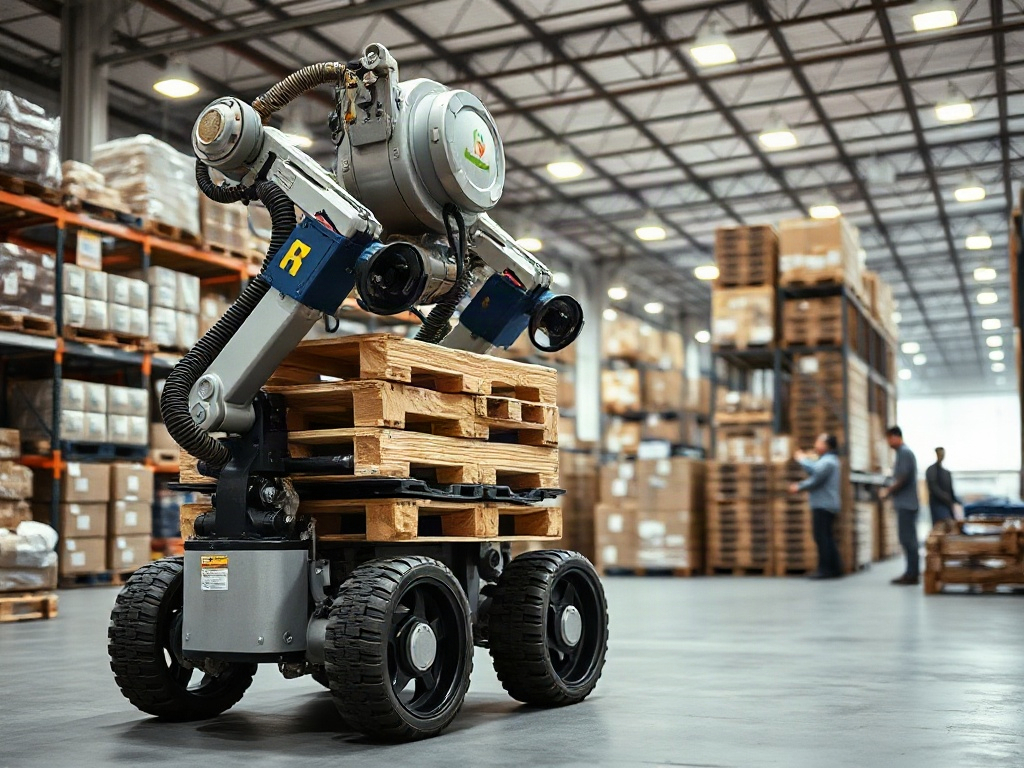
What the AgiBot case does reveal is that there is at least one actor in the room evaluating Malaysia not as a low-cost manufacturing destination, but as an operating base for general-purpose robots with artificial intelligence capabilities. That is qualitatively different from assembling components. A project of that kind would require integration with local universities, computing capacity for model training, testing and certification infrastructure, and suppliers of precision components. Each of those links is also a potential transfer of capability to the Malaysian productive fabric, if the contractual conditions facilitate it.
Here lies the structural tension in the model: when an advanced technology company installs capacity in an emerging market, the distribution of value depends on who controls the knowledge. A manufacturing plant that assembles robots but does not design the controllers, does not train the models and has no access to the source code reproduces the pattern Malaysia already knows well from its decades in the electronics sector: employment, yes; technological density, limited.
The relevant clause is not the investment amount. It is whether the agreements resulting from these conversations include the transfer of design capability, the training of engineers in high-value functions and the participation of local suppliers in supply chains covering not only physical components but also software and services. The Malaysian government articulated this with precision in the words of Anwar Ibrahim: the objective is "technology, local talent and participation of Malaysian companies." The distance between articulating that and structuring it contractually is where the bet is won or lost.
Why the scarcity of numbers is the most honest data point
The absence of aggregated commitments from a roundtable of 21 companies could be read as weakness. Read from the mechanics of incentives, it says something different: that the Chinese companies present are in a phase of genuine evaluation, not political announcement.
Investment announcements signed at high-level visits that never materialise are a well-known pattern in the region. The fact that this event produced no invented figures may be a signal that the background negotiations are more serious than what appears on the surface. It may also be that none of the 21 companies has yet found the conditions sufficient to make a commitment. There is no way to distinguish between the two readings with the information currently available.
What can be read is the pattern of sectors represented in the room. Semiconductors, AI, robotics, electric vehicles and biotechnology are not independent sectors. They are connected by the same enabling infrastructure: high-density computing capacity, precision engineering, advanced electronic component supply chains and regulatory frameworks capable of processing new technologies with reasonable speed. If Malaysia succeeds in building that shared enabling infrastructure, the individual projects in each sector become simultaneously more viable. If it treats each sector as a separate negotiation without a common architecture, it runs the risk of accumulating isolated projects without genuine industrial density.
The parallel engagement of Bank Rakyat with Alibaba Cloud and Lenovo in artificial intelligence and financial technology points in a similar direction: there is an implicit bet that the digital infrastructure of the Malaysian financial sector will also serve as a data base and processing capacity for other sectors. That has its logic. It also carries dependency risks that none of the communiqués mention.
The distribution of value is still to be written
Malaysia has a positioning window that will probably not last indefinitely. The competition to become the regional destination for advanced technological manufacturing involves Vietnam, Indonesia, Thailand and India itself, each with their own arguments of cost, scale or domestic market.
What differentiates Malaysia is not labour cost, which is no longer its strongest advantage. It is the combination of a mature electronics ecosystem, relative institutional stability and the capacity to process complex manufacturing projects without the regulatory friction that affects other markets in the region. That has value for companies that need execution speed, not just low cost.
But the model only produces distributed value—and not merely a margin for the investor—if Malaysia negotiates from that strength with precision. The difference between an advanced manufacturing hub and a sophisticated assembly hub lies not in the sectors it attracts, but in the clauses it signs. AgiBot with RM 1 billion and no design transfer is, in practical terms, a large factory. AgiBot with shared access to intellectual property and the training of engineers in non-replicable functions is something else entirely.
The Shanghai roundtable marked a credible starting point. The value Malaysia captures from it will depend on what it negotiates in the rooms that have no press coverage, with the lawyers and the engineers, not with the prime ministers.