What changes when AI enters a business
We follow AI once it stops being novelty and starts changing cost structures, workflows, control, technological dependence, and competitive advantage.
What we are watching
Compute infrastructure, agents, enterprise software, restricted model distribution, and decisions that turn AI into a layer of power, not just productivity.
Where it is being decided
In the cloud, inside workflows, in the relationship between provider and client, in model governance, and at the point where automation starts changing who gets to decide.
Why it matters
Because adopting AI is not just adding a tool. It means accepting new dependencies, new costs, and a new way of organising judgment, speed, and control.
Featured
Artificial Intelligence

93% of the AI Budget Goes to Technology — The Remaining 7% Decides the Outcome
There is a paradox running through the finance rooms of the world's largest corporations: the organizations investing the most in artificial intelligence are, often, the ones getting the least out of it. Not because of technological failure. The technology works. The problem lies on the other side of the equation — the side nobody budgeted for seriously enough.
 Ricardo Mendieta7 min
Latest articles
A Billion in Headlines, Fifty Million in Reality
There is an image worth more than any subsequent analysis: David Silver, one of the most respected researchers in reinforcement learning, connected to a video call with a venture capital fund, no presentation, no supporting document, describing an artificial intelligence system that would eventually learn to interact with toasters. Weeks later, headlines announced that Ineffable Intelligence had raised $1.1 billion in the largest seed round in European history, with a valuation of $5.1 billion. A company with no product, no revenue, and a business thesis that its own blog describes as a significant risk of failure in exchange for a chance at spectacular success.
AI Supply Chain Security: What the Market Still Isn't Buying
There's a phrase heard increasingly in cloud architecture conversations: 'the model comes from AWS, it's secure.' It's a short phrase that carries an enormous assumption — one no responsible auditor should let pass without scrutiny. An article published in Forbes Technology Council raises something that organizations with large AI adoption appetites don't yet want to hear: that the security of their AI systems cannot be solved by securing the infrastructure alone.
Cerebras Grew 92% and Its Stock Fell 10%: The Math the Market Won't Forgive
On June 23, 2026, Cerebras Systems published its first financial results as a publicly traded company. The headline number was hard to ignore: revenues of $193.4 million, nearly double the $99.5 million from the same quarter the previous year. And yet, the stock dropped 10% in after-hours trading.
Automating Without Redesigning Is the Most Expensive Way to Preserve the Past
There is a sequence of decisions that repeats with surprising consistency in large companies with substantial digital transformation budgets: they identify a process causing friction, hire automation technology, deploy the tool over the existing workflow, and report progress. Executive dashboards show speed. Committee presentations talk about efficiency. And six months later, the same problems reappear, now packaged inside a system that is even harder to dismantle.
Most Popular
Most voted on this page
Half of Web Traffic Is No Longer Human and the Advertising Model Cannot Survive That Fact
Thirty years of digital economy built on an assumption that no longer holds: that there is a person on the other side of the screen. In 2024, for the first time in a decade of systematic measurement, bots surpassed humans as a source of internet traffic. According to the Imperva report, automated traffic reached 51% of the global total.
92
A Billion in Headlines, Fifty Million in Reality
There is an image worth more than any subsequent analysis: David Silver, one of the most respected researchers in reinforcement learning, connected to a video call with a venture capital fund, no presentation, no supporting document, describing an artificial intelligence system that would eventually learn to interact with toasters. Weeks later, headlines announced that Ineffable Intelligence had raised $1.1 billion in the largest seed round in European history, with a valuation of $5.1 billion. A company with no product, no revenue, and a business thesis that its own blog describes as a significant risk of failure in exchange for a chance at spectacular success.
91
Cerebras Grew 92% and Its Stock Fell 10%: The Math the Market Won't Forgive
On June 23, 2026, Cerebras Systems published its first financial results as a publicly traded company. The headline number was hard to ignore: revenues of $193.4 million, nearly double the $99.5 million from the same quarter the previous year. And yet, the stock dropped 10% in after-hours trading.
91
India Discovered It Doesn't Control the Switch to Its Own Digital Economy
Late Friday afternoon. An Anthropic press release landed in the inboxes of its global partners with the neutral, contained tone of a system maintenance notification. The text announced that the Fable 5 and Mythos 5 models were being suspended for all foreign nationals, including the company's own employees who did not hold US citizenship. India, which both Anthropic and OpenAI describe as their second-largest market after the United States, had just discovered something its founders, investors and officials preferred to keep in the realm of abstraction: access to the tools underpinning a large part of its technological bet can be shut down with a call from Washington, with no prior hearing and no defined restoration timeline.
91
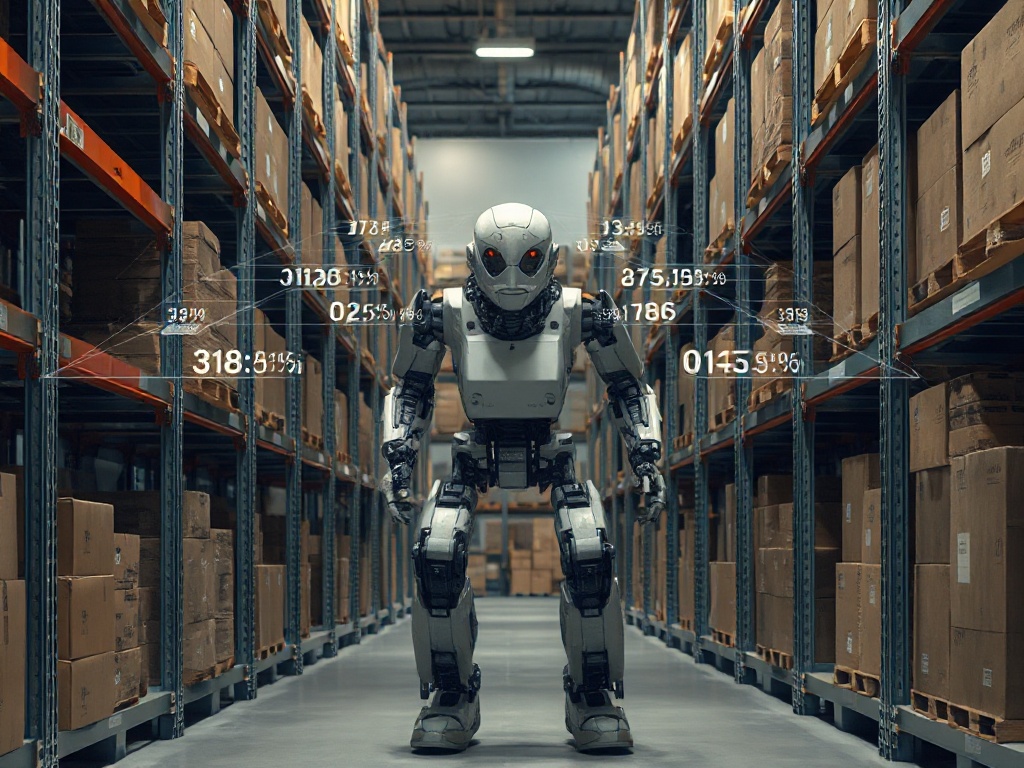
The Memory That Robots Still Lack Defines How Much the Ones You Already Bought Are Worth
There is a gap that most executives in logistics and manufacturing have not yet calculated. Their robot fleets see with millimeter precision, navigate with growing autonomy, and execute repetitive tasks with a consistency no human operator can match. But at the end of every shift, they forget everything.
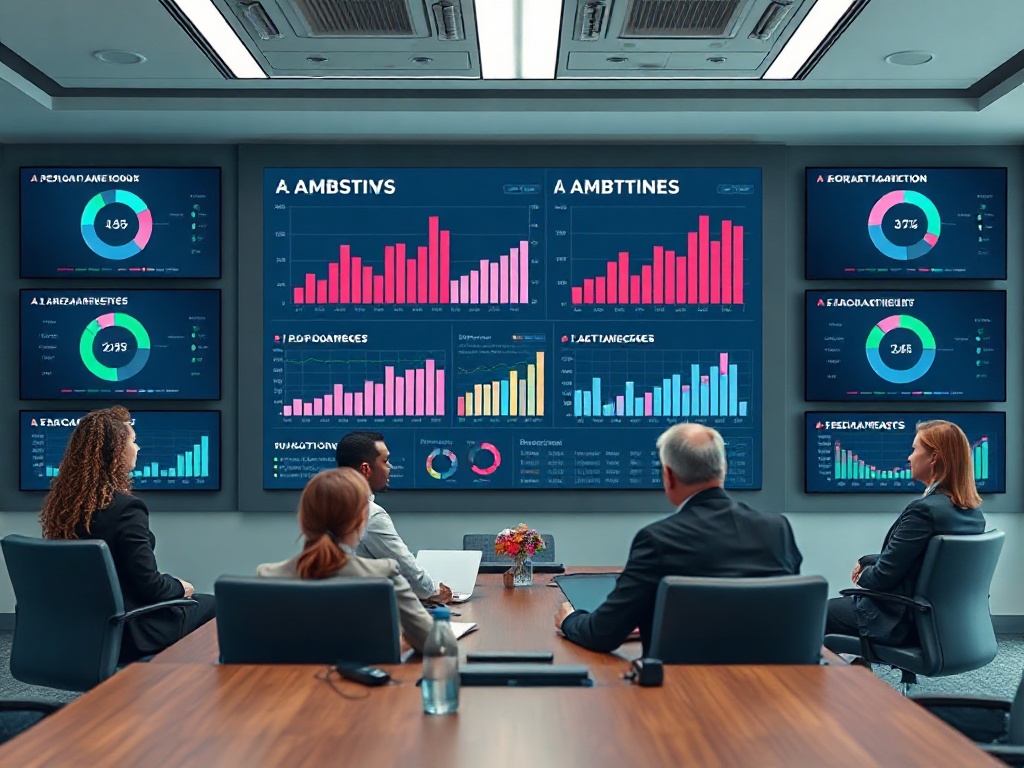
Why 97% of Companies Have AI Projects but Only 5% Have Data Ready to Use Them
According to a Dun & Bradstreet survey of 10,000 companies conducted in 2026, 97% report having active AI initiatives, while only 5% consider their data truly prepared to support them. That gap is not a minor technical detail. It is the distance between investing in infrastructure and having something that works reliably in production.

Every AI Budget Hides a Bet on How Your Company Operates
The money has already been approved. The pilots have run. Some worked; most stalled before generating measurable value. According to S&P Global, 42% of organizations abandoned most of their AI initiatives in 2025, up from 17% the previous year. That statistic does not describe a technology problem. It describes a decision architecture problem: companies bought capability without designing the operating model meant to sustain it.

Samba TV Bets on Autonomous Advertising and Reveals a Fragility the Industry Is Ignoring
Samba TV's acquisition of Bestever AI, announced on June 22, 2026, is not an ad tech news story. It is a statement about what kind of asset matters when artificial intelligence models become indistinguishable from one another. Samba knows this, which is why the move is not about the algorithm it bought, but the data it already had.

AI System Amnesia Is Not a Model Problem, It's an Infrastructure Problem
There's a scene that AI product teams know all too well. A user spends twenty minutes building context with an assistant: budget, dietary restrictions, dates that can't move, family preferences. Then, three turns later, the system acts as if that conversation never happened.

Caring in Both Directions Is the Problem AI Still Hasn't Learned to Solve
There is a massive gap between what the artificial intelligence industry showcases in its demos and what families actually need when a parent is aging 500 miles away or an adult child with autism cannot quite live independently. That gap is not technological. It is a diagnostic one.
 Clara Montes7 min
The Fastest AI Is Not the Smartest
There is a pattern that repeats itself in enterprise artificial intelligence projects and rarely appears in tracking dashboards: users start double-checking what they previously accepted without hesitation. Not because the system failed. But because the system moved forward before they could keep up.
 Isabel Ríos8 min
Half of Web Traffic Is No Longer Human and the Advertising Model Cannot Survive That Fact
Thirty years of digital economy built on an assumption that no longer holds: that there is a person on the other side of the screen. In 2024, for the first time in a decade of systematic measurement, bots surpassed humans as a source of internet traffic. According to the Imperva report, automated traffic reached 51% of the global total.
Ricardo Mendieta8 min
The Private Sector Took the Wheel of Investment in India and Chose Two Destinations
There is a number in the Bank of Baroda report that deserves a pause: ₹191 lakh crore in new investment announcements during the four years after Covid. An average of ₹48 lakh crore per year. What that figure contains, however, is not homogeneous: two sectors—electricity and information technology—absorb a disproportionate share of the flow, and the first 75 days of the current fiscal year show an even greater concentration: 85% of all proposed investments are focused on these two segments.
 Mateo Vargas8 min
Four Companies Captured 60% of Global Venture Capital and That Changes the Rules for Everyone Else
The first quarter of 2026 produced a figure with no precedent in the history of venture capital: $300 billion deployed in a single quarter. More than double the previous quarter. Close to 70% of all startup investment during 2025, compressed into ninety days.
 Elena Costa9 min
Accenture Dropped 20% Because the Market Stopped Believing in the Model
Some companies post solid results and still lose a fifth of their value in a single day. Accenture did exactly that on June 18, 2026. The consulting giant reported revenues of $18.7 billion in its third fiscal quarter, a 6% growth in dollar terms compared to the previous year.
 Sofía Valenzuela9 min
Accenture Dropped 18% in a Day and the Number That Explains It Is Not Earnings
Accenture delivered a third quarter that, under any other reading, would have been cause for satisfaction. Revenue of $18.7 billion, expanding operating margins, $2.2 billion returned to shareholders in a single quarter, and a CEO who went on camera to talk about 104 contracts worth over one hundred million dollars signed so far this fiscal year. The execution numbers did not fail. What failed were the numbers about the future.
 Francisco Torres9 min
Databricks Bets on Ontology and Reveals Who Controls the Brain of Enterprise AI Agents
The history of enterprise artificial intelligence can be measured in layers. First came vector databases, which enabled semantic similarity searches across large volumes of text. Now Databricks is betting that architecture is no longer enough.
 Lucía Navarro9 min
When Autonomy Needs Guardians, Something About the Promise Doesn't Add Up
There is a specific moment when corporate language becomes self-incriminating. It happens when the same company that announces its artificial intelligence agents can work alone, in parallel, without supervision, and deliver results before anyone asks for them, presents at the same event a battery of tools whose sole function is to monitor those agents, correct them, and undo what they did wrong. That is exactly what happened at the AWS Summit in New York in June 2026.
 Simón Arce9 min
Circle Bets on Paid Communities as the Ad Revenue Model Shows Its Limits
There is a moment in the evolution of any creator platform when audience growth stops being synonymous with business growth. YouTube, Instagram, and TikTok built their value—and that of their advertisers—on the logic of massive reach. More views, more revenue. The formula worked for years, and in many cases still works. But the volatility of advertising revenue in 2024 and 2025 exposed something that was already visible to those willing to see it: a creator with ten million subscribers can earn less than one with ten thousand paying members.
Clara Montes8 min
Musk's Super Currency and the Blind Spots It Buys
When SpaceX announced on June 16, 2026 that it would acquire Cursor for $60 billion in stock, the financial market recorded the figure as one of the largest purchases of a venture-backed startup in history. What the headline didn't capture was the stranger mechanics of the deal: SpaceX didn't spend that money. It created it in a matter of hours.
Isabel Ríos8 min
Evaluating All the Time Is Not the Same as Understanding Better
For decades, the aviation industry measured a pilot's competence with two metrics: accumulated cabin hours and certified aircraft type. These were costly indicators to obtain, difficult to falsify, and reasonably predictive. The system was not perfect, but it had a virtue that few organizations recognize in its proper dimension: it knew exactly what it was measuring and why.
Ricardo Mendieta9 min
Citi Bets 40% Upside on Paychex and the Dividend Isn't the Main Story
When an investment bank raises its price target by 41% in one move—from $99 to $140—on a stock that has lost a third of its value in twelve months, there are two possible readings. The first is that the analyst saw something the market hasn't yet processed. The second is that the market is right and the analyst is taking a high-conviction position against consensus for reasons that deserve careful examination.
Mateo Vargas9 min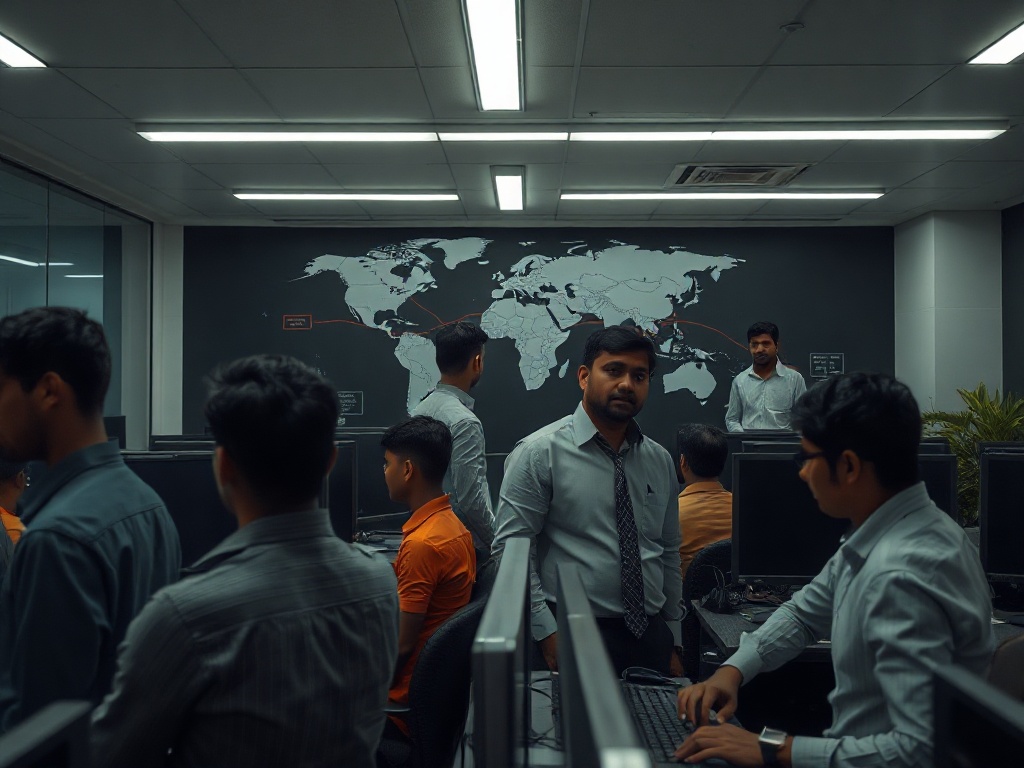
India Discovered It Doesn't Control the Switch to Its Own Digital Economy
Late Friday afternoon. An Anthropic press release landed in the inboxes of its global partners with the neutral, contained tone of a system maintenance notification. The text announced that the Fable 5 and Mythos 5 models were being suspended for all foreign nationals, including the company's own employees who did not hold US citizenship. India, which both Anthropic and OpenAI describe as their second-largest market after the United States, had just discovered something its founders, investors and officials preferred to keep in the realm of abstraction: access to the tools underpinning a large part of its technological bet can be shut down with a call from Washington, with no prior hearing and no defined restoration timeline.
 Ignacio Silva12 min