
How PepsiCo Redesigned Its Sales Force in Mexico to Stop Depending on It
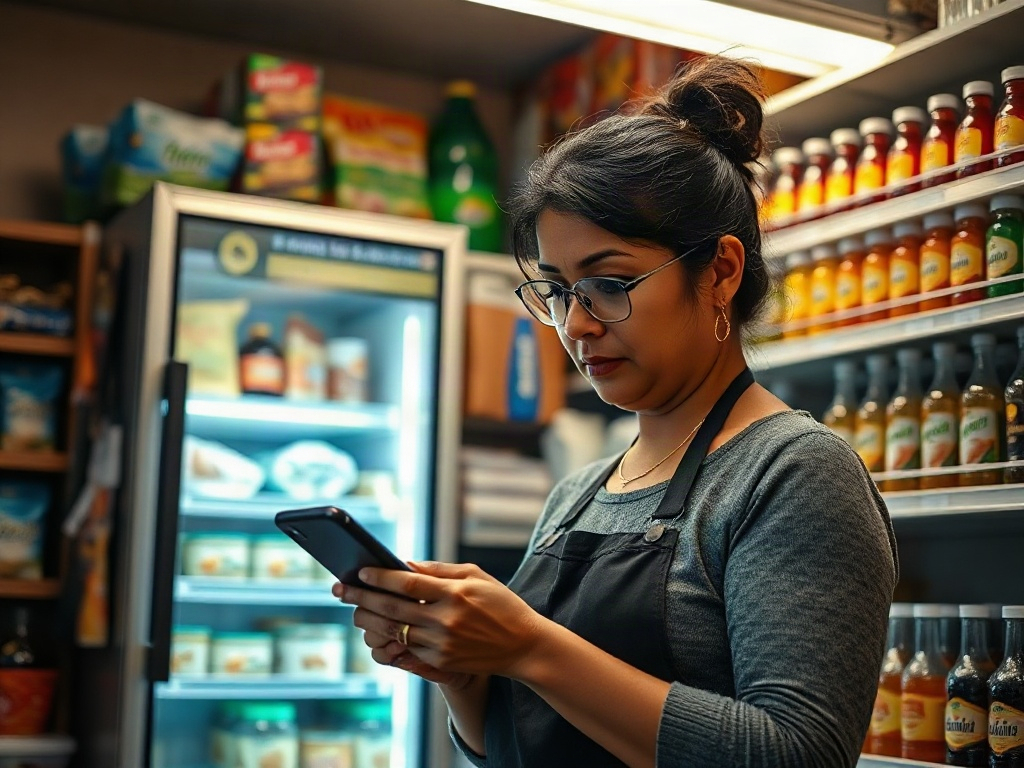
Yazmin Ruiz does not wait for a PepsiCo salesperson to restock her inventory. When the store runs out of potato chips at ten o'clock at night, she opens an app on her phone, places the order, and gets on with her shift. By the next day, the stock arrives. The story sounds trivial. It is not.
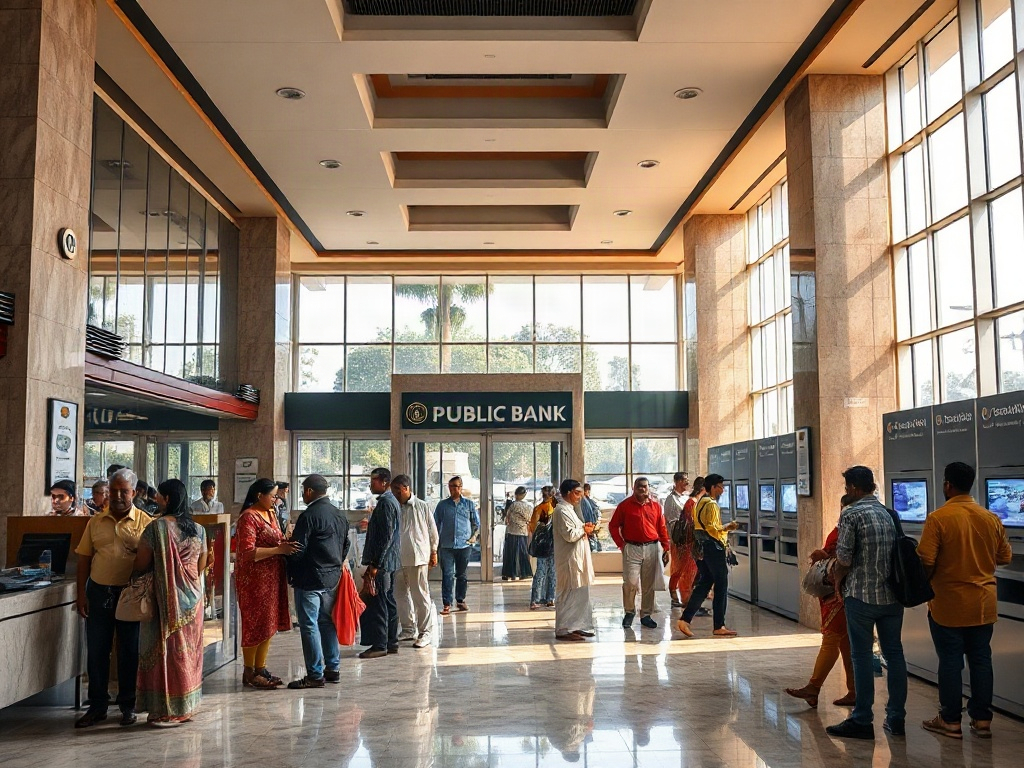
Behind that everyday gesture lies a transformation that PepsiCo has been building since 2022 in Mexico, its second-largest global market after the United States and the most fragmented in terms of distribution. A market made up of millions of neighborhood corner stores, owned by people who keep their accounts in notebooks and who for decades depended on a salesperson knocking on their door every week to find out what was available, what was selling well in the neighborhood, and what promotion they could take advantage of. That model worked for decades. It also carried a structural cost that no one named clearly.
The Problem That Growth Cannot Hide
PepsiCo operates in Mexico with around 18,000 frontline salespeople. Each one would travel their weekly route, take orders by hand, suggest new products based on their own experience, and informally share information about what was moving in other stores in the area. It was a system sustained, in large part, by the memory and individual judgment of each salesperson.
The problem was not that the salespeople were incompetent. The problem was structural: information traveled slowly, by word of mouth, with delays of days or weeks, and depended on the quality of each personal relationship. A poorly serviced store was not necessarily a store without potential; it could simply be a store assigned to an overloaded salesperson or one with a poorly designed route. Commercial precision was limited by the human capacity to process and distribute information in real time, not by any lack of willingness.
In that context, the company launched MiNegocio+, a mobile application for small retailers that allows them to place orders directly from their phone, access digital promotions, accumulate loyalty points, and browse the full catalogue of available products, including recent launches. They piloted it in Colombia. They scaled it in Mexico. Today they are deploying it globally under the name PepsiConnect. The data point that most reveals how this system works is not the number of active stores or the volume of orders generated: it is that approximately one third of all orders are placed outside regular business hours. Stores operate on their own schedules. The platform does too.
What is at stake, however, is not only logistical efficiency. It is something harder to quantify: the question of what type of dependency replaces which, and whether the new design is more robust than the previous one.
The Dependency That Is Reinvented, Not Eliminated
Athina Kanioura, who leads Latin America Foods and PepsiCo's global transformation strategy, describes the objective in terms that go beyond operations: "Changing the role of the sales organization, from order taker to business development relationship manager". The phrase is precise. It is also ambitious in a way that deserves to be audited carefully.
The risk of a transformation of this kind does not lie in the technology. It lies in what happens during the intermediate period, when the old system no longer works as it did but the new one is not yet fully embedded. At that moment, organizations tend to depend more on leaders than on structures, more on the convinced than on processes, more on the enthusiasm of the project than on its everyday mechanics.
Ana Echenique, director of sales strategy and digital transformation in Mexico, frames it differently: transforming the value chain is a prerequisite for the growth the company is projecting. That statement connects the project directly to financial results. PepsiCo has a target of organic growth of between 2 and 4 percent in 2026, and an earnings-per-share growth objective of between 5 and 7 percent. In that context, the platform is not an innovation experiment; it is part of the commercial architecture that must underpin concrete numbers.
What makes the case interesting from an organizational maturity perspective is precisely this: MiNegocio+ does not free PepsiCo from a dependency. It replaces it with a different one, potentially more sophisticated. Previously, the company depended on the availability, memory, and judgment of 18,000 salespeople. Now it depends on those same salespeople adopting a new role, on retailers using the platform consistently, and on the algorithms that generate product recommendations capturing the right signals in a timely manner. Each of those points is a new vector of fragility, less visible than the previous one, but equally real.
The question that an honest organizational audit must ask is not whether the digital system is better than the manual one — which it almost always is. The question is whether the organization operating that system has the autonomous capacity to detect when the system fails, correct it, and keep functioning. A sales force that knows how to take orders can adapt if the platform goes down for a day. A sales force redesigned as a growth consultant, which has delegated the transaction to the app, may become temporarily paralyzed if the tool stops working or if the retailer does not yet trust it.
Artificial Intelligence as the Arbiter of Assortment
The artificial intelligence component within MiNegocio+ and PepsiConnect is not incidental. It is where the most interesting, and most demanding, value proposition is concentrated.
Johannes Evenblij, senior vice president of commercial and consumer transformation, describes the central objective with a precision that deserves attention: bringing the right product to the right customer and the right consumer. That phrase condenses decades of failures in category management. Poorly designed assortment is one of the most costly problems in consumer goods distribution, and also one of the hardest to solve because it requires granular, up-to-date, and reliable information about what is happening at each point of sale.
The platform generates transactional data at the store level that previously simply did not exist in any structured form. That information, processed with artificial intelligence models, makes it possible to generate product and promotion recommendations tailored to the profile of each retail business. In operational terms, this can reduce out-of-stock events, increase the turnover of new products, and optimize trade promotion spending, which represents one of the most significant cost lines for consumer goods companies.
The Latin American B2B e-commerce market is valued at around 1.92 trillion dollars in 2025, with projections that put it at more than double that figure by 2034. Within that market, the channel of small retailers — the neighborhood corner stores that in Mexico number in the millions and in Brazil exceed 200,000 in the food segment alone — concentrates volumes that no distribution platform can afford to ignore. Whoever controls the flow of data from that channel progressively controls its capacity to negotiate with suppliers, distributors, and the market itself.
PepsiCo is not the only company that understands this. Startups like Clubbi in Brazil are building multi-brand platforms for the same universe of small retailers, with integrated financial and logistics components. The difference in business model is significant: Clubbi operates as an intermediary between brands and stores; PepsiCo operates as a manufacturer with its own channel. The former gains in variety; the latter gains in depth of data and in the ability to integrate point-of-sale signals directly into its manufacturing chain and product development. These are different bets, with different return logics as well.
What the System Still Cannot Do on Its Own
There is one aspect of the case that the executives' statements touch upon but do not address head-on: the sustainability of the transformation beyond its initial momentum.
Digital transformations in large organizations follow a well-known trajectory. The first cycle is energized by conviction from the top, explicitly allocated resources, and change narratives that mobilize teams. The second cycle — the one that occurs two or three years after the launch, when there is no longer any novelty to celebrate and the platform simply has to function as infrastructure — is the one that determines whether the transformation was real or whether it was a well-executed project with an expiration date.
In Mexico, PepsiCo has 18,000 salespeople whose role is being redefined from "order taker" to "business growth consultant." That redefinition implies changes in performance metrics, in incentive schemes, in training, and in the way those salespeople understand their own value to the company. If incentives continue to measure the volume of orders taken rather than the growth of the client's business, the change of role will be nominal. Salespeople will do what the measurement system rewards, not what the strategic discourse declares.
This is the point at which the structural maturity of the organization is put to its most demanding test. A digital platform can change the transaction channel. It cannot, on its own, change the incentive logic that governs the everyday behavior of thousands of people. That part of the work is slower, less visible, and harder to scale than the development of an application.
What PepsiCo has built in Mexico and is now deploying globally is a data and relationship infrastructure that, if incentives and internal capabilities are properly calibrated, can generate a self-reinforcing competitive advantage: more data improves recommendations, better recommendations generate more sales, more sales generate more platform usage and greater retailer loyalty. That cycle is real. It also requires the organization behind the platform to have the discipline not to treat it as a project with a beginning and an end, but as a capability that must be maintained, corrected, and deepened without the support of launch-day enthusiasm.
The case of MiNegocio+ is not that of a company that found the solution to retail fragmentation in emerging markets. It is that of a large and complex company that made a long-term structural decision, is executing it with coherence, and now faces the hardest part of any organizational transformation: converting a change of tool into a change of culture, without losing the ability to measure whether one truly produced the other.