Decisions that change the direction of a company
We read moves that alter position, margin, control, and competitive advantage. Not just what a company is doing, but what it is trying to win, defend, or avoid.
What we are watching
Portfolio bets, price wars, infrastructure control, shareholder pressure, and redesigns that change who gets to capture value.
Where it is being decided
Competition, corporate governance, pricing, expansion, vertical integration, and decisions that look tactical until they start redefining a position.
Why it matters
Because strategy is not measured by intention, but by consequences: who gains margin, who loses control, and what hidden costs each move leaves behind.
Featured
Strategy

The Software That Survives the AI Wave Is Not the Cheapest but the Hardest to Leave
There is a thought experiment worth doing before talking about product strategy: take your software stack and ask yourself one question about each tool. If it disappears tomorrow, how long would it take to replace it with a well-instructed AI agent? If the answer is 'an afternoon', the product lives on fragile ground.
 Tomás Rivera8 min
Latest articles
Hyundai Bets on More Than 100 Models Before 2030 and Raises Its Margin Target
On August 26, 2026, in Seoul, Hyundai Motor presented to investors the most ambitious roadmap in its recent history: more than 100 vehicle launches and renewals by 2030, an operating margin target raised above 9%, and a capacity expansion plan of 1.27 million additional units. The backdrop is uncomfortable: in the second quarter of 2026, the company reported an operating margin of just 5.8%, down from 7.5% in the same period the previous year.
In Enterprise AI, the Winner Isn't the One With the Biggest Model
There's a conversation that leadership teams in heavy industries have been putting off for years. It's not about technology. It's about what it means, precisely, to make a good operational decision when the data supporting it lives scattered across twelve different systems, four siloed departments, and a maintenance history that nobody has fully digitized.
Why Banning ESG Funds from Children's Accounts Reveals More About Power Than Sustainability
The US Treasury Department has just drawn a line that goes far beyond a technical fund eligibility decision. On August 20, 2026, the administration published proposed regulations governing permitted investments in the so-called 'Trump Accounts' — tax-advantaged savings accounts for minors created under the 'One Big Beautiful Bill' Act. The rule does two things at once: it sets an extraordinarily low fee cap of 0.1% annually on invested balances and explicitly excludes any fund linked to environmental, social and governance criteria.
LBS Bina Chooses Margins Over Volume as Malaysia's Property Market Cools
LBS Bina Group Bhd's most recent quarter tells two distinct stories depending on which line of the income statement you look at first. Revenue grew. Net profit fell by nearly half. And management, rather than burying that figure in a technical results note, placed it at the centre of its strategic communication.
Most Popular
Most voted on this page
In Enterprise AI, the Winner Isn't the One With the Biggest Model
There's a conversation that leadership teams in heavy industries have been putting off for years. It's not about technology. It's about what it means, precisely, to make a good operational decision when the data supporting it lives scattered across twelve different systems, four siloed departments, and a maintenance history that nobody has fully digitized.
90
Your Team's Time Doesn't Belong to You
Hayagreeva Rao, professor of organizational behavior at Stanford Graduate School of Business, recently offered a definition of leadership that holds up better than most books on the subject: 'Great leaders are people who think of themselves as custodians of other people's time.' No war metaphors. No references to transformational vision or charisma as a managerial asset.
89
When Growth Stops Being Your Advantage and Becomes Your Trap
There is a precise moment in the life of any growing organisation where the very practices that built its success begin to undermine it. It is not a dramatic moment. There is no meeting where someone declares that the model no longer works.
88
Why Lightspeed Bet on a Model Where Content Is Investment Attraction
When Lightspeed Venture Partners hired Claire Zau, a seed investor with hundreds of thousands of followers on Instagram and TikTok, it wasn't to improve its social media presence. It did so because it reached a structural conclusion: in a market where several firms manage more than $25 billion each, capital no longer differentiates. Early visibility does.
88

When Growth Stops Being Your Advantage and Becomes Your Trap
There is a precise moment in the life of any growing organisation where the very practices that built its success begin to undermine it. It is not a dramatic moment. There is no meeting where someone declares that the model no longer works.

Why Canada's Tax Reform Starts With Small Businesses and What That Reveals About Real Power
Mark Carney's government has just admitted something tax experts have been pointing out for years with growing impatience: the Canadian tax code no longer works as it should. This is no minor statement. It is a public acknowledgment that four decades of patches, special credits, and accumulated sectoral programs have produced a system nobody deliberately designed but everyone must navigate.

The Talent India Cannot Find Is Threatening Its Most Valuable Business
The dominant narrative around Global Capability Centers in India has, for the past decade, been an almost unqualified success story. Nineteen hundred operational centers, presence across eight industries, ambitions to reach one hundred billion dollars in economic contribution. And yet, beneath that accelerated growth, there is a fracture the sector has been struggling to process for months: the talent profile GCCs need today no longer matches the talent India produces in sufficient quantity.

IBM and OpenAI Join Forces to Compete for Corporate AI Spending at Global Scale
On August 13, 2026, IBM announced a sweeping alliance with OpenAI that goes well beyond a joint press release. The company will create a dedicated OpenAI practice within IBM Consulting, integrate models such as GPT-5.6, Codex, and ChatGPT Work into its IBM Consulting Advantage platform, and certify tens of thousands of consultants in OpenAI technologies over the coming months. Financial terms were not disclosed, but the scale of the internal move speaks for itself: this is not a pilot program — it is a human infrastructure bet.

Milky Mist Raises ₹465 Crore in Anchor Round Before Listing and Reveals a Model Global Funds Have Already Decided to Back
There is a detail in the structure of Milky Mist Dairy Food's anchor book that deserves more attention than it typically receives in standard IPO coverage: Zulia Investments Pte Ltd, a subsidiary of Temasek Holdings, did not simply enter the anchor round by purchasing approximately ₹160 crore in shares. It was already a pre-IPO shareholder, through another entity linked to the same sovereign fund. That is not a speculative entry of institutional capital. It is an investor that already conducted its analysis, already took a position, and decided to increase it just before the stock lists on NSE and BSE.

India Reaches 300 GW of Renewable Energy and Reveals Its Next Problem Is Not Generation
Crossing 60% of a national electricity capacity target four years ahead of schedule is no small achievement. On July 31, 2026, India surpassed 300.50 GW of installed non-fossil capacity, according to the Ministry of New and Renewable Energy. The figure includes 164.59 GW of solar energy, 58.14 GW of wind, 57.24 GW of hydropower, 11.75 GW of bioenergy, and 8.78 GW of nuclear.
 Elena Costa9 min
Why Ackman Bet $2.4 Billion That the Market Misunderstood Microsoft
There is a difference between buying a stock because it is rising and buying a stock because the market does not yet know what it is worth. Bill Ackman, founder of Pershing Square Capital Management, built a $2.4 billion position in Microsoft doing exactly the latter. The distinction is not semantic: it defines who assumes structural risk and who simply rides a trend.
 Mateo Vargas9 min
Bank of America Spends $250 Million a Year on Weight Loss Drugs and Makes No Apologies for It
When the CEO of one of the world's largest banks publicly declares that his company spends over $250 million a year on weight loss medications and defends it without hesitation, he's not describing a medical benefit. He's describing an organizational design bet on what kind of workforce he wants to sustain, and how far he's willing to go to build it. Bank of America has spent several years absorbing the cost of GLP-1 medications, the class of drugs that includes brands like Ozempic, Wegovy, and Zepbound, as part of a healthcare package that exceeds $2 billion annually.
 Ignacio Silva8 min
Tanger Turned the World Cup into a Mass-Scale Loyalty Laboratory
The summer of 2026 was no ordinary one for retail in the United States. The FIFA World Cup, hosted on North American soil, generated a wave of international tourism that did not reach all retail formats equally. Tanger Inc., the outlet shopping center operator, positioned itself at the center of that wave with an advantage that was no accident: it had a presence in eight of the eleven host cities of the tournament.
 Diego Salazar8 min
Why Lightspeed Bet on a Model Where Content Is Investment Attraction
When Lightspeed Venture Partners hired Claire Zau, a seed investor with hundreds of thousands of followers on Instagram and TikTok, it wasn't to improve its social media presence. It did so because it reached a structural conclusion: in a market where several firms manage more than $25 billion each, capital no longer differentiates. Early visibility does.
 Lucía Navarro7 min
How Buc-ee's Turned Its Logo Into a Weapon of Territorial Expansion
There is something that happens when a large company enters a new market: the territory it comes to occupy is not just physical. It is also symbolic, legal, and in some cases, intimidating. The story of Buc-ee's in Ohio illustrates that process with a clarity that no brand strategy manual would dare to describe so openly.
 Isabel Ríos7 min
AI Spending Rose 110% and the Underlying Systems Couldn't Keep Up
ServiceNow has been measuring AI maturity in large enterprises for three years. In 2026, the index they build from surveys of more than 4,500 executives and 2,000 employees worldwide recorded a notable improvement: a 16-point advance, reaching 51 out of 100. That sounds promising until you read the next line: while corporate AI spending grew 110% year-over-year, the foundational capabilities that AI needs to function at scale simply did not keep pace.
 Sofía Valenzuela7 min
Three Dividend Oil Stocks Wall Street Is Backing With Data
The geopolitical noise carries a price that markets are still struggling to calculate. The conflict between the United States and Iran, already affecting operations across the Middle East, collides with uncertainty over how long the artificial intelligence spending cycle will hold — and a growing sense that valuations in many sectors have been stretched too far. In that context, a particular segment of Wall Street analysts is betting on something more straightforward: energy companies that generate cash, reduce debt, and pay dividends while the rest of the market debates future narratives.
 Francisco Torres8 min
Why Your Accounting Lies If It Was Designed for a Different Business
There is a category of accounting error that never shows up in audits and yet distorts hiring decisions, pricing strategies, and capital rounds: using a recording system designed for one type of business and applying it, without modification, to one that operates in a structurally different way. The result is not that the books are badly done. It is that they are well done for the wrong model.
 Javier Ocaña9 min
Deep Oil and Energy Transition Form an Uncomfortable but Profitable Alliance
When Talos Energy announced on July 27, 2026 that it had signed a definitive agreement to acquire a 50% working interest in offshore Mexico Block 29, operated by Repsol, the immediate market reaction was modest but clear: the company's shares rose approximately 2.6% in after-hours trading. A small move in absolute terms, but one that signals something more interesting than simple price approval. What investors were reading was not just an asset transaction, but a strategic thesis about how scale is built in deepwater while the global energy sector navigates a contradiction it has yet to resolve.
 Gabriel Paz9 min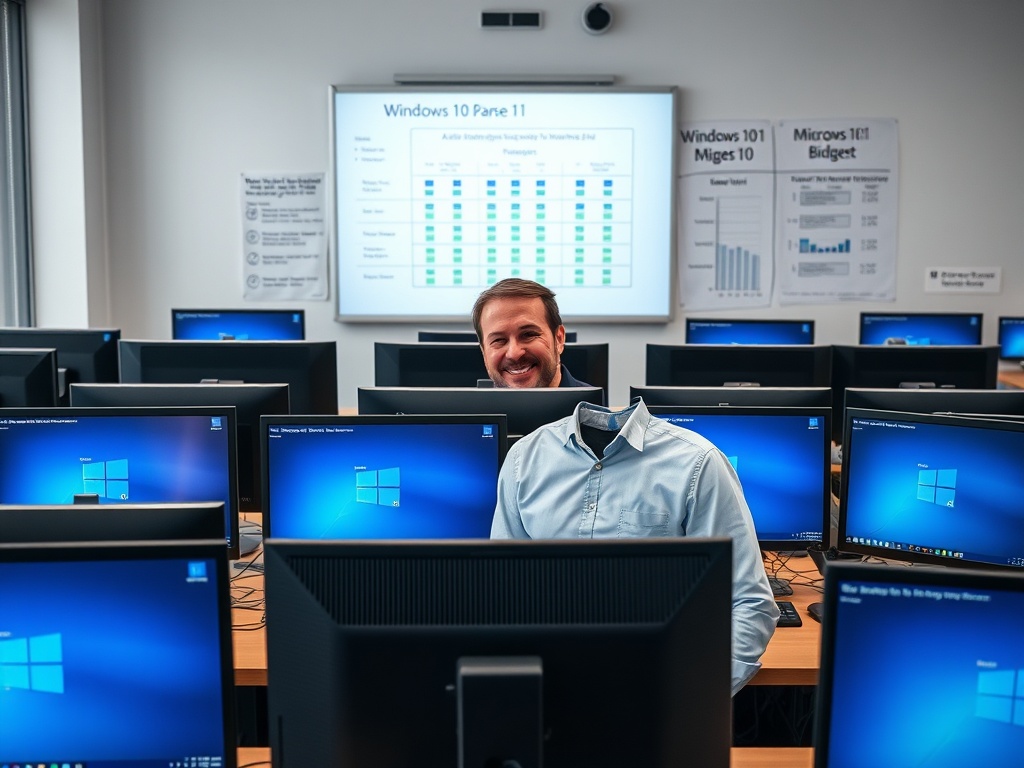
The 30% That HP Cannot Ignore and Microsoft Has Stopped Pretending Doesn't Exist
When the CFO of one of the largest PC manufacturers on the planet mentions, in a conversation with investors, that 30% of its installed base is still running Windows 10, she is not sharing a technical anecdote. She is describing the anatomy of a replacement cycle that has not yet ended and that, precisely for this reason, continues generating revenue across the entire supply chain.
 Camila Rojas7 min
Your Team's Time Doesn't Belong to You
Hayagreeva Rao, professor of organizational behavior at Stanford Graduate School of Business, recently offered a definition of leadership that holds up better than most books on the subject: 'Great leaders are people who think of themselves as custodians of other people's time.' No war metaphors. No references to transformational vision or charisma as a managerial asset.
 Ricardo Mendieta8 min
Creator Marketing No Longer Seeks Legitimacy — It Has It
Ten years ago, allocating advertising budget to a content creator was a bet that many marketing directors privately justified as 'exploration.' Today, 72.2% of marketing professionals surveyed by Influencer Marketing Hub expect to increase those budgets by at least 50% in 2026. This is not a sign of optimism — it is evidence that a channel has already consolidated its position in the commercial mix.
 Clara Montes8 min
Databricks Is Worth $188 Billion and Its Next Bet Could Reshape Enterprise AI
In five months, Databricks added $54 billion to its valuation without listing on any stock exchange. It went from $134 billion in February 2026 to $188 billion in July, led by a new strategic funding round headed by Coatue Management. What stands out is not just the number, but the speed at which the power structure of the enterprise data market is shifting.
Elena Costa7 min