
India Reaches 300 GW of Renewables and Reveals That Its Next Problem Is Not Generation
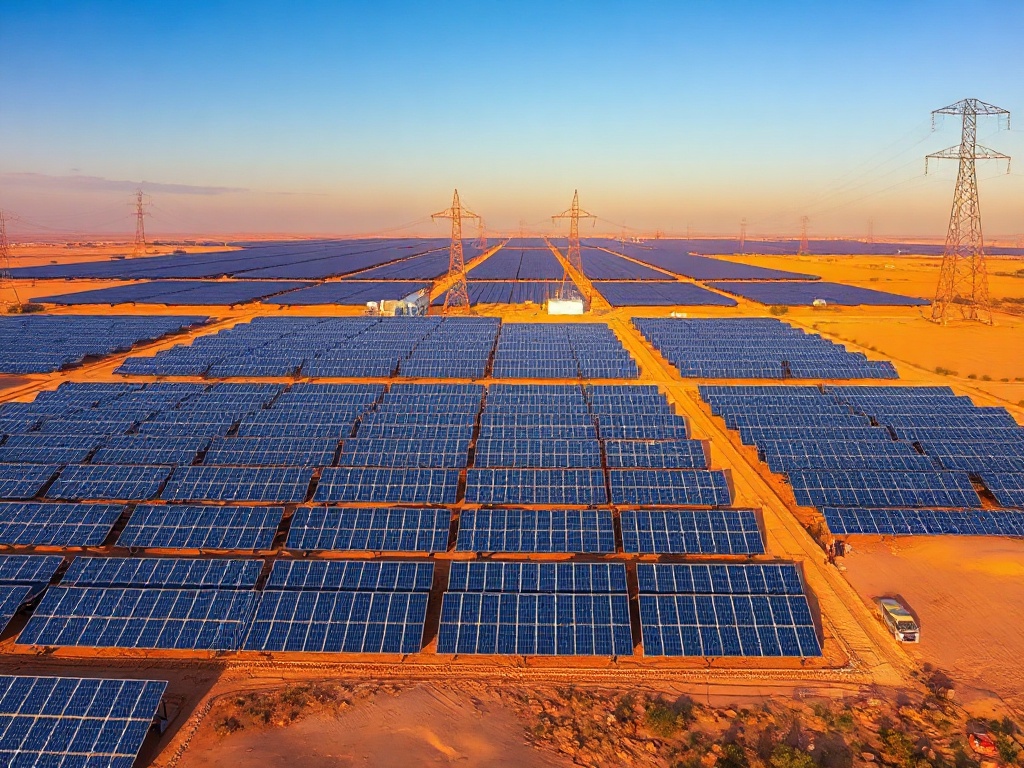
Crossing 60% of a national target for electricity capacity four years ahead of schedule is no small achievement. On July 31, 2026, India surpassed 300.50 GW of installed non-fossil capacity, according to the Ministry of New and Renewable Energy. The figure includes 164.59 GW of solar energy, 58.14 GW of wind, 57.24 GW of hydroelectric, 11.75 GW of bioenergy, and 8.78 GW of nuclear. The total places India at the threshold where the narrative of the energy transition begins to be insufficient to describe what is actually happening.
The country set a target of 500 GW of non-fossil capacity by 2030 as part of its climate commitments. At the current pace, it does not appear to be an empty promise. In the 2025–26 fiscal year alone, 55.29 GW of new non-fossil capacity was installed, of which 44.6 GW came from solar and 6 GW from wind. In the first six months of 2026, the addition was 30.58 GW, a 25% increase over the same period the previous year. In historical perspective: solar capacity grew from 2.8 GW in 2014 to more than 164 GW today. Total renewable generation jumped from 190.96 billion units in 2014–15 to 477.79 billion in 2025–26.
The official narrative focuses on these numbers, and it is right to do so: they are numbers that deserve attention. But what the 300 GW milestone reveals most clearly is not the speed of capacity addition. It reveals where the next bottleneck lies.
The Limit That Doesn't Appear in the Headlines
When the share of non-fossil sources exceeds 54% of total installed capacity — which is where India stands today, on a base of approximately 552 GW — the central problem is no longer how much capacity is being added, but rather how much of that capacity can be delivered reliably to the system.
Solar and wind are inherently variable. They produce when the sun shines and the wind blows, not necessarily when demand requires it. At low penetration levels, that variability is absorbed without much friction because the grid has enough dispatchable capacity — hydroelectric, gas, coal — to compensate. At penetration levels above 40 or 50%, the equation changes: the accumulated variability exceeds the system's response capacity if there is no backup infrastructure in place.
India is crossing that threshold right now. And it is doing so without having yet resolved the three problems that define it: transmission, storage, and firmness. Transmission grids are not growing at the same rate as solar farms. Large-scale storage — long-duration batteries, green hydrogen, pumped hydro — still does not have the cost structure or the deployment scale needed to cover sunless hours in a system with 164 GW of solar. And "firm power" — capacity that can be contractually committed at any hour — remains predominantly fossil-based.
This does not invalidate the achievement. It contextualizes it. Adding 55 GW in a single year is operationally complex and politically significant. But if that capacity is not integrated into the grid in a way that allows it to be used reliably, its financial and systemic value is only partial. India knows this. The relevant question is whether the pace of investment in integration infrastructure is keeping up with the pace of panel installation.
The Manufacturing Bet That Changes the Logic of the Supply Chain
There is one component of the Indian story that is generally presented as secondary data and deserves greater analytical weight. The capacity of locally manufactured solar modules under the ALMM scheme — the Approved List of Models and Manufacturers — exceeded 200 GW of listed capacity, up from just 2.3 GW in 2014. That is not merely industrial policy; it is a structural change in the supply chain.
Until just a few years ago, India's dependence on imported solar modules — primarily from China — represented a dual systemic risk: currency-related and geopolitical. A tariff shock, an export restriction, or a depreciation of the rupee could suddenly raise the installation cost across the entire industry. The Production Linked Incentive (PLI) scheme was designed to break that dependence, and the numbers suggest it is working at scale.
The direct consequence is that the solar installation cost in India now has a growing proportion denominated in local rupees, with local suppliers and domestic supply chains. This reduces currency exposure, stabilizes project costs for financiers, and improves predictability for energy buyers who sign long-term contracts. For an investor assessing project risk in an emerging market, that reduction in uncertainty carries a value that does not appear in the price per installed kilowatt.
What remains unresolved in the local manufacturing chain is the dependence on upstream inputs: polysilicon, wafers, and cells. India produces modules, but a significant portion of the input materials is still imported. This limits — without eliminating — the progress toward supply chain independence. The logical next step for industrial policy would be to close that link. If it is closed, the financial logic of the Indian solar sector would become materially different from that of any other emerging market.
What Green Hydrogen Says About the Long-Term Strategy
The Ministry also noted that India is positioning green hydrogen as a central element of its industrial decarbonization strategy, through the National Green Hydrogen Mission. This deserves to be read not only as climate policy but as a positioning bet in a global market that does not yet exist at scale.
Green hydrogen — produced through electrolysis using renewable energy — currently has production costs three to five times higher than those of grey hydrogen derived from natural gas. The competitiveness of green hydrogen depends directly on the cost of the renewable electricity used to produce it. India has a structural advantage in that input: high solar irradiation, declining installation costs, and a capacity base that already exceeds 164 GW of solar.
If the cost of solar energy continues to fall and the efficiency of electrolyzers improves — both trajectories that have empirical support over the past decade — India could be accumulating today the foundational infrastructure that would allow it to produce green hydrogen at competitive costs before the international market consolidates. This implies positioning itself as an exporter in a segment of high potential demand for industries that are difficult to electrify directly: steel, cement, fertilizers, and long-haul aviation.
The bet is neither small nor guaranteed. Hydrogen transport and storage infrastructure is expensive and complex. Export markets still do not have the contractual depth that would justify investments at scale. And competition is real: Saudi Arabia, Australia, and several North African countries are making similar bets with their own comparative advantages. But India has something that most of those competitors do not have to the same degree: a domestic industrial consumption market that can absorb local production while the export market matures. This reduces demand risk in the initial phase, which is precisely where most green hydrogen bets have failed in other contexts.
The Pattern Worth Retaining
India reached 300 non-fossil gigawatts by following a logic that few countries have executed with this level of coherence: combining ambitious targets with active industrial policy, local manufacturing incentives, and the systematic reduction of installation costs. The result is an installed capacity approaching that of established renewable powers, built in a historically short period of time.
But the pattern that the 300 GW milestone reveals is not solely one of capacity accumulation. It is the pattern of an electricity system entering a qualitatively different phase — one in which the determining variable is no longer how many panels are installed, but how well the system can convert that generation into reliable, dispatchable, and financially predictable energy.
The countries that reached this threshold before India — Germany, the United Kingdom, Spain — took a decade or more to resolve the integration architecture after reaching similar penetration levels, and some paid high costs in the form of elevated tariffs, grid congestion, or the need to maintain fossil capacity as structural backup. India has the advantage of arriving later and being able to design that architecture with more information available. It also faces the disadvantage of having to do so at a speed and scale that has no direct precedent.
The shift that this case reveals is the following: India has completed the most visible phase of its energy transition and is entering the most difficult one — the phase that does not generate headlines about new gigawatts, but about transmission systems, storage contracts, and firm capacity markets. That phase is less photogenic and far more decisive in determining whether the 500 GW of 2030 will be a number in an official press release or a structural transformation of the energy system of the world's most populous nation.