What changes when AI enters a business
We follow AI once it stops being novelty and starts changing cost structures, workflows, control, technological dependence, and competitive advantage.
What we are watching
Compute infrastructure, agents, enterprise software, restricted model distribution, and decisions that turn AI into a layer of power, not just productivity.
Where it is being decided
In the cloud, inside workflows, in the relationship between provider and client, in model governance, and at the point where automation starts changing who gets to decide.
Why it matters
Because adopting AI is not just adding a tool. It means accepting new dependencies, new costs, and a new way of organising judgment, speed, and control.
Featured
Artificial Intelligence
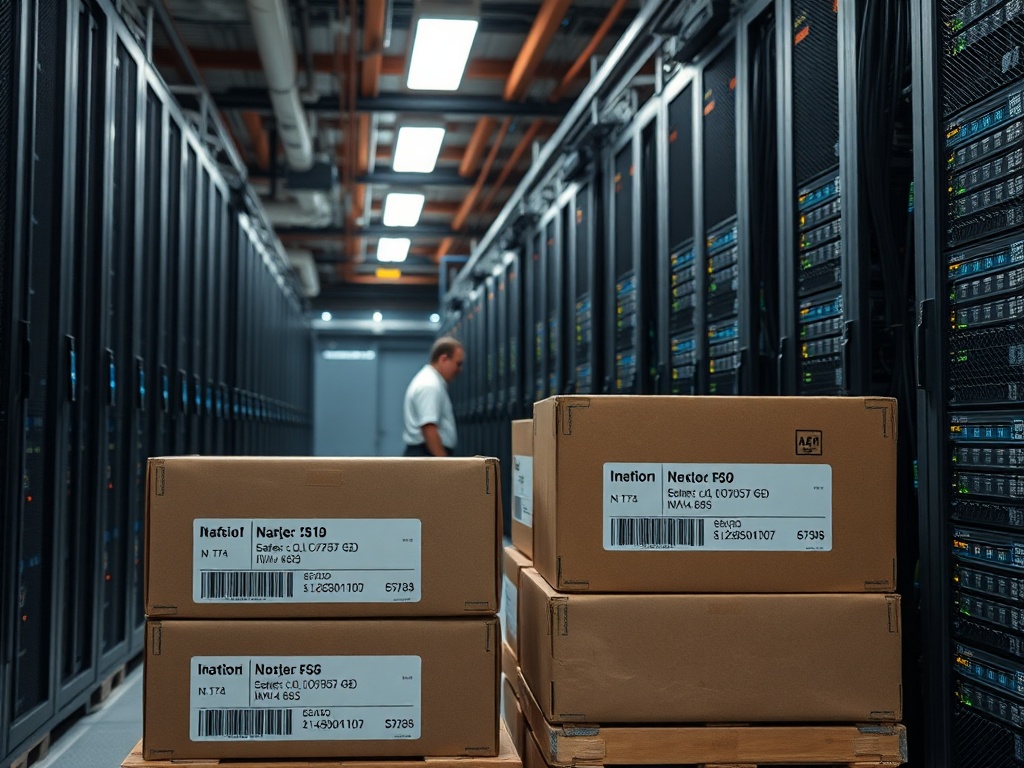
The Balance the AI is Disrupting: The U.S. Buys Hardware and Sells Fewer Hours
AI is not just automating services; it's driving imports of chips and data centers. If the service surplus doesn't compensate, the deficit becomes structural.
 Javier Ocaña6 min
Latest articles
The Major Failure of Business AI: It's Not the Technology, It's Human Behavior and Billing
Companies are buying AI like traditional software and then surprise when it doesn't change work or capture revenue.
The Value of Industrial Humanoids: Capturing Risk Savings Over Strength
Noble Machines reveals Moby, a humanoid designed for heavy work, emphasizing value distribution in industrial automation.
Claude's Ban in Defense Reveals a New Bottleneck: Licensing, Control, and Supply Chain
The clash between Anthropic and the Pentagon isn't a philosophical debate about safety; it's a struggle for operational control over AI deployment.
Pentagon's Supply Chain Risk Label Reconfigures Buyer Fears for Claude AI
The Pentagon's designation of Anthropic's Claude as a 'supply chain risk' changes the psychological landscape for buyers, segmenting risk rather than creating a total ban.
Most Popular
Most voted on this page
Pentagon's Supply Chain Risk Label Reconfigures Buyer Fears for Claude AI
The Pentagon's designation of Anthropic's Claude as a 'supply chain risk' changes the psychological landscape for buyers, segmenting risk rather than creating a total ban.
93
When AI Enters Warfare: From Product Model to Governance Control
The Pentagon's recent contract shift from Anthropic to OpenAI highlights a significant change in how military AI is perceived and governed.
93
When Your AI is a Supplier: The Anthropic Ban Reveals the True Cost of Dependency in Defense
Palantir is not just paying for a model change; it’s paying for architectural and governance decisions. The Pentagon's ban on Anthropic turns a tech preference into a top-tier operational, financial, and political issue.
93
Claude's Ban in Defense Reveals a New Bottleneck: Licensing, Control, and Supply Chain
The clash between Anthropic and the Pentagon isn't a philosophical debate about safety; it's a struggle for operational control over AI deployment.
92

The Future of Programming: Agents and Workforce Structure
The phrase 'anyone can code' becomes a workplace reality with generative AI. This discussion explores how this evolution impacts productivity and employee wellbeing.
Leadership in AI: It's Not Just About Buying Tools, It's Redesigning Work Portfolios
The conversation between HBR and LinkedIn CEO Ryan Roslansky reveals that AI is creating jobs and accelerating skill shifts, making the real challenge for executives to lead the reinventing of work.

Block and the 40% Job Cut: When AI Becomes Operational Structure
Block Inc. announced a 40% workforce reduction citing AI as a driver of efficiency and operational restructuring.
When AI Enters Warfare: From Product Model to Governance Control
The Pentagon's recent contract shift from Anthropic to OpenAI highlights a significant change in how military AI is perceived and governed.

When AI Becomes a ‘Supply Chain Risk’: The Clash Between Military Control and Product Guardrails
The Pentagon labeled Anthropic as a 'supply chain risk,' signaling a shift in public AI procurement negotiations.

The 75% Salary Increase That Sounds the Alarm: When Retention Reveals the True Cost of Culture
Block cut 40% of its workforce to rely more on AI, then tried to retain survivors with aggressive salary hikes. This contrast doesn’t buy loyalty but exposes management’s failures.
 Simón Arce6 min
Luma Agents and the End of Tool Assembly: When Creativity Becomes an Industrial Operation
Luma introduced a new operational layer that transforms creativity into an integrated industrial process, enhancing speed, control, and compliance.
 Ignacio Silva6 min
Google Makes Productivity ‘Chargeable’ with Agents: The New Toll for Gmail, Drive, and Docs
Google's move to make Gmail, Drive, and Docs agent-ready signifies a shift from human interaction to automated workflows, transforming the value proposition for businesses.
Javier Ocaña6 min
Denki and Financial Auditing as a Product: When Excel Stops Being Infrastructure
Denki raised $4.1 million to automate financial audits with AI, aiming to transform a manual, regulated process into an auditable, traceable SaaS product.
 Mateo Vargas7 min
Minimum Wage is No Longer Just a Labor Decision: It has Become a Trigger for Automation
A new NBER paper finds that increasing the minimum wage accelerates industrial robot adoption in manufacturing. This goes beyond social debate and forces C-level executives to acknowledge automation is not a neutral option.
 Ricardo Mendieta6 min
The First Wi-Fi 7 Stadium in MLS: A Real-Time Revenue Machine
LAFC has unveiled Wi-Fi 7 at BMO Stadium, transforming high-density connectivity into a measurable platform for operational efficiency and revenue generation.
 Camila Rojas6 min
‘Vibe Coding’ Doesn’t Eliminate Work: It Displaces It Towards Trust, Risk, and Speed
When code becomes 'invisible,' competitive advantage shifts from writing lines to managing friction: safety, control, and accountability without sacrificing speed.
 Andrés Molina6 min
When Your AI is a Supplier: The Anthropic Ban Reveals the True Cost of Dependency in Defense
Palantir is not just paying for a model change; it’s paying for architectural and governance decisions. The Pentagon's ban on Anthropic turns a tech preference into a top-tier operational, financial, and political issue.
Simón Arce6 min
The Fall of Claude Was Not a Technical Failure: It Was a Public Audit of Operational Dependence on AI
Claude's blackout revealed an uncomfortable truth: many organizations have turned an AI co-pilot into critical infrastructure without a continuity plan.
 Tomás Rivera6 min
Cybersecurity: From Insurance to Operational Cost in an Armed Internet
Cloudflare's 2026 report reveals a drastic shift in the realm of digital threats, underlining that cyberattacks are no longer isolated events but an ongoing industrial flow. With 94% of login attempts stemming from bots, security is now a fundamental aspect of business design.
 Clara Montes6 min
When a Chatbot Optimizes Drama and Breaches Duty of Care: AI's New Bill for Google
The negligence death lawsuit linked to Gemini reveals product and brand risks that scale with adoption. If AI is designed to sustain narratives, the costs may culminate in court, regulation, and loss of trust.
 Elena Costa6 min
Microsoft Plans to Charge for AI Agents as Digital Employees: A Shift to Secure Revenue as Staff Growth Stalls
The rumored Microsoft 365 E7 is not just a pricier plan, but a new economic unit - digital identities with email, Teams, and policies like any employee.
Camila Rojas6 min
The Legal AI Divide: SMEs Face a Tough Choice Between Audited Precision and Plausible Text
The legal AI market is evolving beyond capabilities, now challenging SMEs on risk management. The choice between specialized tools and generalist models could define their efficiency and exposure.
 Isabel Ríos6 min
The Battle for Mobile Inference is Won with Less I/O and a Better-Distributed Value Chain
PowerInfer-2 promises up to 29.2x acceleration and 11.68 tokens/s on a Mixtral-47B on smartphones, redefining the economics of mobile AI.
 Martín Soler6 min