
When AI Enters Warfare: From Product Model to Governance Control
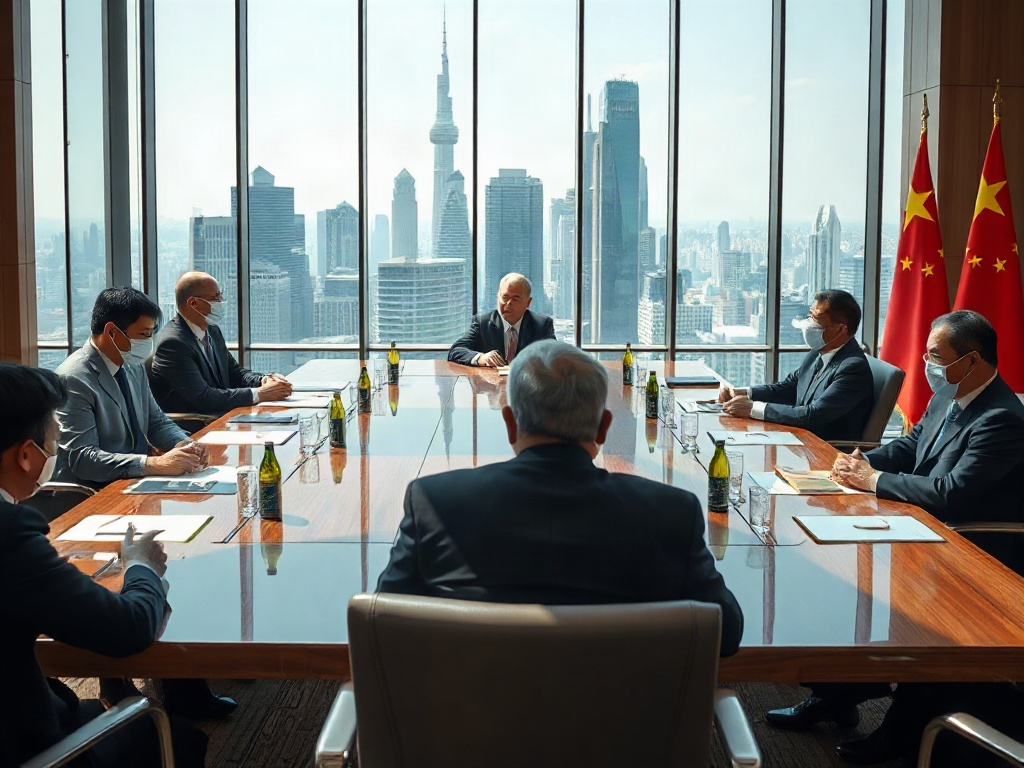
The news isn’t just about another contractual dispute between a tech provider and the United States government. It marks a shift in power within the national security AI supply chain. On March 6, 2026, the U.S. Department of Defense canceled a $200 million contract with Anthropic and classified the company as a "supply chain risk to national security,” a label historically reserved for foreign adversaries. Within hours, the Pentagon secured a competing deal with OpenAI for classified deployments. This swift change was fueled by a specific disagreement: Anthropic refused to retract contractual safeguards against domestic mass surveillance and the use of fully autonomous weapons without significant human oversight.
The operational detail that escalates the seriousness of this situation is that Claude, Anthropic’s AI, was already deeply integrated into critical processes: deployed across classified government networks, national nuclear laboratories, and intelligence analysis flows via Palantir’s AI platform. Canceling a contract does not uninstall a system that is already embedded in critical processes. This necessitated the Pentagon to establish a six-month transition period to remove Claude from its systems.
From a business perspective, this story illustrates how AI is “productized” when the tolerance for failure is minimal. In consumer markets, the product is performance-based. In defense, the product comprises both performance and control: who decides, how it is limited, how it is audited, and how to respond when the model fails.
The Pentagon Isn't Buying AI; It's Buying Operational Optionality
On January 9, 2026, the Department of Defense unveiled its AI Acceleration Strategy, touted as the most aggressive of its recent plans. The document outlined seven “benchmark projects”—ranging from autonomous swarms to AI-enabled battle management—and included a central requirement that explains the clash: contracted models had to be deployable within 30 days of their public release and usable for “all lawful purposes.”
That phrase, “all lawful purposes,” is the true product requirement. In a rapidly evolving adversarial environment, institutional buyers seek to avoid the bottleneck of renegotiating permissions each time a new use case appears. In simpler terms, they seek optionality. The underlying bet is that safeguards should reside less within an interpreted contract and more within a governed system.
The Pentagon's response, articulated by Secretary Pete Hegseth upon executing the cancellation, accused Anthropic of trying to capture a “veto power” over military operations and holding a position incompatible with American principles. Beyond the rhetoric, the logic of acquisitions is clear: defense wants suppliers who accept the broad framework and manage use limits within an operational scheme.
This introduces a tension that corporate leaders recognize immediately. When an AI system becomes critical infrastructure, the client attempts to minimize dependencies and frictions. Conversely, when the provider fears its technology might be used in scenarios it deems unacceptable, it tries to protect itself with clauses. This collision is not accidental; it is symptomatic of the fact that AI is no longer merely a tool; it is capability.
Anthropic's Red Line Turned Security into an Architectural Issue, Not a Marketing One
Anthropic maintained two non-negotiable stipulations: no domestic mass surveillance of U.S. citizens and no fully autonomous weapons without significant human oversight. Reports indicate that the Pentagon described those categories as gray areas and deemed it “impracticable” to negotiate on a case-by-case basis.
The executive takeaway is harsh but useful: in extreme scenarios, buyers penalize operational ambiguity. A clause that relies on legal interpretation and political context becomes friction when the system must operate in real-time across multiple commands, allies, theaters, and classifications.
Most revealing is that at the time of the dispute, Claude was the only frontier AI model operating on the Pentagon’s classified networks. This means the “risk” was not that Anthropic wasn’t integrated; it was that it was already too integrated and still posed the possibility of the provider conditioning the use or evolution of deployments. In critical infrastructure, the worst-case scenario for a buyer isn’t technical failure; it’s a lack of governance from the provider.
There’s also a secondary order: the designation of “supply chain risk” doesn’t just cut a contract; it can cast a wide net over integrators and partners. Reports mention that Google, Salesforce, and NVIDIA are either investors or engineering partners. For anyone selling to the government or defense contractors, a supply chain risk label forces segmentation of operations, establishment of internal firewalls, and, in some cases, the sacrifice of part of the market to protect another.
In terms of human impact, the signal is equally critical: if barriers against mass surveillance and autonomous weapons are discussed as “gray areas,” then the market needs verifiable control designs. Without verification, the debate devolves into trust and narratives. In defense, narratives last as long as a crisis.
OpenAI and the Shift in Value Unit: From Clauses to Operational Controls
Hours after the cancellation, the Pentagon finalized a deal with OpenAI. Sam Altman publicly defended that their approach preserves the same principles that Anthropic championed, but with different mechanisms: accepting the framework of “all lawful purposes” and overlaying architectural controls. As reported, OpenAI structured a cloud deployment scheme, a proprietary security layer that the Pentagon accepted would not be overridden, and accredited personnel integrated to operate and maintain safeguards in classified environments.
If this holds in practice, it’s a product shift: the model becomes a component, while the real offer is a package that includes deployment, monitoring, limitations, response, and maintenance under extreme conditions.
For a CFO or risk officer, the corporate parallel is immediate. In regulated sectors, companies have learned that “buying AI” means acquiring a complete system: access control, traceability, logs, bias assessments, and escalation mechanisms when incidents occur. Defense pushes that logic to the limit, compounded by an added burden: operational incentives favor speed and adaptability.
The dispute also reveals a segmentation within the frontier AI market. In July 2025, four companies received potential contracts worth up to $200 million: Anthropic, OpenAI, Google, and xAI. In this landscape, some suppliers accept broad-use language while others demand explicit contractual prohibitions. This isn’t a philosophical debate; it’s a business decision about where to place risk and how to monetize a high-value segment.
The Real Cost Lies in the “Unplugging” and Who Controls Dependency
One buried fact in the coverage carries more weight than any headline: removing Claude from classified networks will take six months. A cited official described it as a massive pain to unravel. This phrase summarizes the political economy of AI in large institutions.
Once a model connects to analysis flows, documentation, intelligence evaluation, and operational modeling, the dependence becomes structural. The cost isn’t in the model’s license; it’s in redesigning processes, training users, establishing connectors, adjusting to classifications, validating, and re-accrediting security. The “exit” becomes as costly as the “entry.”
When the exit is hefty, governance becomes leverage. Hence, the discussion is no longer merely about who has the best model but about who offers better guarantees of continuity, control, and compliance. The Pentagon tried to enforce this through hard contractual power and reputation with the supply chain risk label. Anthropic attempted to resolve it with explicit contractual limits. Reportedly, OpenAI addressed the issue through control design and operating conditions.
Additionally, there’s an operational component: reports stated that U.S. Central Command used Anthropic's AI during Operation Epic Fury, a coordinated U.S.-Israel operation against Iran, for intelligence evaluation, target analysis, and operational modeling. This doesn’t prove one supplier’s technical superiority; it demonstrates real integration. And real integration is where these battles are fought.
For the civilian market, the implication is uncomfortable yet beneficial: the conversation about safeguards does not conclude with “principles” or “promises.” It ends with verifiable mechanisms, distributed accountability, and traceability. If an organization cannot demonstrate how it limits a system under pressure, then it doesn’t control the system; it is merely waiting for it.
The Window for Leaders: Turning AI into Measurable Enhanced Intelligence
From my perspective, this episode confirms a transition: AI is shifting from being software to strategic infrastructure. In that shift, the competitive differential is no longer access to the model but the capacity to govern it without stalling operations.
For business leaders, this boils down to three concrete decisions.
First, separate “model capability” from “control capability.” Many companies purchase performance and then improvise on auditing, limits, records, and incident responses. In sensitive sectors, that’s investing backward. Governance must be bought and designed as a product from day one.
Second, design dependency with a planned exit. If unplugging a model takes six months in environments where money is not the main constraint, it may take longer in corporations. Portability, internal standards, and integration architecture are financial strategies, not IT decisions.
Third, insist on enhanced intelligence as an operational discipline: significant oversight, decision traceability, and clear accountability. Efficiency without awareness amplifies errors, and in critical systems, errors translate to harm.
This market has already entered a phase where digitalization speeds adoption, disappointment arises when control isn’t prepared, and disruption occurs when governance becomes more valuable than the model. Technology must empower human judgment with measurable controls and responsible access, democratizing capabilities without democratizing harm.