
When Security Collides with Supply Chain: The Pentagon's Move Redefining the Military AI Market
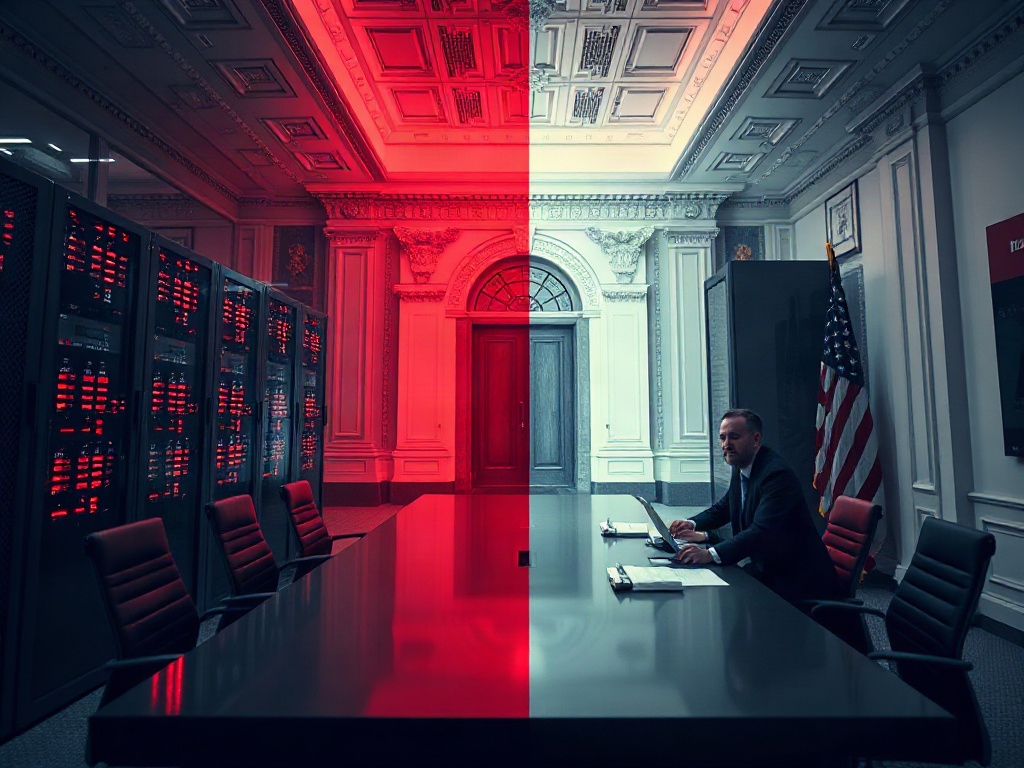
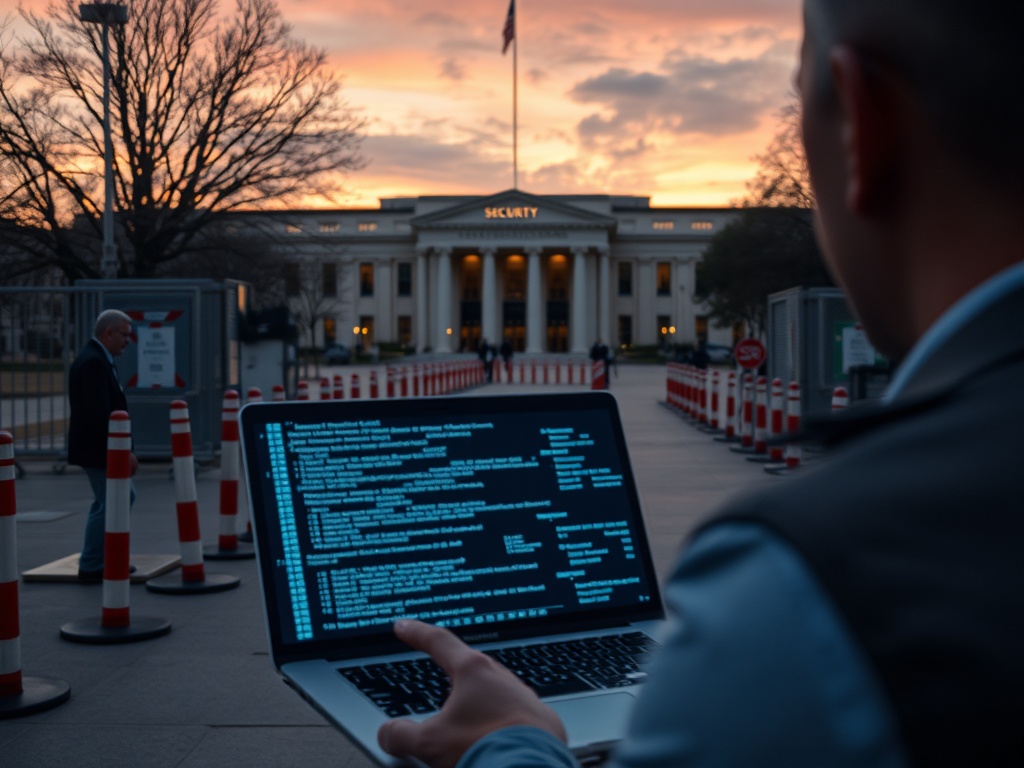
The dispute between Anthropic and the U.S. Department of Defense has escalated from a contractual disagreement to a realm typically reserved for external threats. According to a notice received on Wednesday, March 4, 2026, the Pentagon designated Anthropic as a risk to the supply chain, a classification that could block partnerships with contractors and jeopardize a $200 million contract for classified AI tools, including the Claude Gov model. The company, led by Dario Amodei, has announced it will challenge this designation in court.
What’s striking is not just the escalation itself, but the instrument chosen. Rather than merely rescinding or renegotiating, the Pentagon applied a high-voltage regulatory and political signal. Based on available information, the clash intensified after negotiations collapsed when Anthropic refused to lift restrictions that would prevent the use of Claude in mass surveillance of Americans or fully autonomous weapons. A defense official indicated that the designation took immediate effect, even though the report noted that Claude tools were still in use in operations in Iran until Thursday, March 6, 2026.
This story is not about a startup being “against” the state or a state being “against” innovation. It’s about operational power: who decides the limits of AI usage when it’s integrated into sensitive missions and, above all, what market levers are activated to enforce alignment.
From Contract to Sanction: How a Usage Disagreement Became an Exclusion Mechanism
At the origin was a contract and a product with a specific advantage: Claude Gov operated within the Pentagon’s classified cloud, making it a preferred choice for teams wanting to deploy AI in secure environments until recently. This technical detail explains why the conflict is painful on both sides. If the model was already integrated into classified flows, changing it isn’t a typical “swap” of suppliers: it requires validations, retraining, security checks, and rebuilding integrations.
The relationship deteriorated over months and exploded in the last week of February. According to reports, Defense Secretary Pete Hegseth warned on February 27, 2026, of a six-month transition period to move AI work to alternatives. Spokesperson Sean Parnell set a specific ultimatum: 5:01 PM ET that Friday. Simultaneously, elevating reputational costs, the Pentagon informed Congress, via letter, that Anthropic's restrictions introduced "national security risks" into the supply chain.
Anthropic maintained it could not accept a framework that, in its view, opened doors to ignore safeguards via legal language. From that point, the domino effect was immediate: the designation threatens the $200 million contract and forces the interruption of collaborations. The statement cites the most visible case: the cessation of work with Palantir Technologies, particularly the integration of Claude into the Maven Smart System deployed by the U.S. military during the Iran campaign.
The market signal is clear. A discussion about “conditions of use” has turned into a “supply risk” event. This semantic shift has consequences: it raises the stakes of the disagreement and reduces the negotiating margin, as the discussion now extends beyond the contract's wording to the legitimacy of the company as a supplier.
The New Battleground: Control of Use, Not Model Precision
In public discussions about AI, the race for benchmarks is often exaggerated. Here, however, the core issue is different: controlling usage in extreme scenarios. Practically, Anthropic sought to maintain explicit limits to prevent two kinds of deployments: mass surveillance of citizens and fully autonomous weaponry. The Pentagon, through its spokesperson, denied interest in prohibited uses and asserted that mass surveillance is illegal. Nonetheless, the clash persisted, suggesting that the disagreement isn’t merely about “intention,” but about how access is drafted and who retains the ability to say no when operational context pressures.
The strategic consequence for the startup market is uncomfortable: the government buyer in defense does not purchase just capability. It buys availability under crisis conditions, minimal friction, and clear authority over exceptions. When a company reserves the right to block certain uses, the government may read this as an operational risk, even if the usage being blocked is controversial or outright illegal.
This is the typical blind spot in the conversation on "AI ethics" when it enters public procurement: a startup's internal frameworks may be impeccable in PowerPoint but fragile in execution if the customer demands prerogatives that contradict those policies. In defense, negotiation resembles less a SaaS licensing deal and more a doctrine of control.
The product economics also shifts. As the customer demands unrestricted access, the supplier assumes reputational, talent, and governance risks. To the extent that the supplier imposes limits, they take on the risk of commercial exclusion. This tension explains why this case has become a reference point: there is no clean exit when adoption is already underway.
A Market Restructured Amid Transition: OpenAI, Google, and xAI as Substitutes
Reports indicate that President Donald Trump requested the week prior for federal agencies to cease collaboration with Anthropic, and the Treasury Department and the General Services Administration announced intentions to halt business dealings. Almost immediately, OpenAI, led by CEO Sam Altman, secured a deal with the Pentagon following the order. In a leaked internal memo, Amodei accused the Pentagon of opportunism regarding the timing, and then apologized for that document.
Beyond the drama, what matters is the mechanics of substitution. With a six-month transition announced by Defense, a “forced market” of replacements emerges: budgets, integrations, and pilots shift towards those who agree to the buyer's conditions. The text mentions Google and xAI from Elon Musk as other competitors with military contracts and negotiations to align them under “unrestricted terms.”
For a startup, this redefines the concept of a defensive moat. Claude Gov had operational advantages due to its compatibility with the classified cloud. But that advantage becomes temporary if the buyer decides to fund alternatives and expedite their certification. When the state purchases, it can also bear the cost of breaking dependency.
An additional pattern emerges: decoupling as a governance tool. The order to cut collaborations affects third parties, like Palantir, that were building on Claude. In corporate markets, this is already painful. In defense, it also becomes a disciplinary message for the entire chain: integrating with a “disputed” supplier can become a contractual risk.
Startup Perspective: Scarcity is No Longer Compute, It’s Permission
As a business futurist, I see a paradox that many founding teams are not modeling well. AI is lowering the marginal cost of producing analysis, text, software, and support; that’s the abundance part. The bottleneck is shifting to something else: permission. Legal permission, political permission, contractual permission, permission for deployment in regulated environments.
This explains why a supply chain designation is so powerful. It doesn’t discuss whether the model "is good." It discusses whether the supplier "can be." It's a shift of terrain: from performance to legitimacy as infrastructure.
Within the framework of the 6Ds, the industry is already deeply digitalized and experiencing its phase of disappointment for those expecting linear and apolitical adoption. Disruption is not only technological; it is contractual. Demonetization is also progressing: each new competitor with the capability to deploy in secure environments erodes pricing and turns models into substitutes. Dematerialization comes when capabilities that once required entire teams get packaged into interfaces and APIs. However, democratization is stalled when access depends on authorizations and classified integrations.
For leaders and investors, the operational lesson is clear: in regulated sectors, the product is not just the model. It is the complete package of compliance, auditing, usage controls, data governance, and the ability to operate under political pressure. The company that does not design this package from the outset ends up negotiating from a weak position, as the buyer can redefine the conflict as a matter of national security.
Anthropic chose to maintain limits, and that positioning may strengthen its brand among talent and clients who value safeguards. It also opens a legal and commercial front of high cost. The Pentagon, for its part, gains negotiating power with the rest of the market by demonstrating its willingness to use hard tools to demand conditions.
What This Case Foreshadows: The Government AI Standard Will Be a "Control Architecture"
The most significant part of this story isn't the litigation itself, but the implicit standard that may arise from it. If the narrative of “unrestricted access” becomes the norm for selling AI to defense, the market will tend toward two types of suppliers.
The first group will accept broad conditions, prioritizing contracts and rapid scaling. This group may capture revenue and volume but assumes the risk that reputation can turn into a liability when controversial usages appear or when administrations and criteria change. The second group will try to compete with explicit limits, betting on clients who pay for governance and traceability. This group may miss out on public procurement in defense and focus on civil agencies, regulated companies, or international markets.
The underlying tension is that the state wants to avoid dependence on a single supplier while also ensuring that the supplier does not have the capacity to veto deployments at critical times. Therefore, the six-month transition is more than a deadline: it is a tool for reconfiguring dependency.
Lauren Kahn (Georgetown) commented that Claude is “a good capability” and that removing it will be “painful,” suggesting that despite the conflict, the product was generating operational value. This reinforces the thesis that the clash is not about utility but rather about control and governance.
The defense market for AI is entering a phase where competitive advantage will be designing systems that amplify human judgment, with auditable limits and compatibility with secure environments, without turning AI into a black box used to automate high-impact decisions. In terms of the 6Ds, the sector is moving from disruption to demonetization in basic capabilities, while scarcity shifts to permissions, certifications, and usage frameworks; technology must empower the human element with verifiable control and more distributed access.