Decisions that help a business grow without breaking the owner
We follow small and medium-sized businesses where reality weighs most: trust, cash flow, focus, operations, and professionalisation that can move a company out of survival mode.
What we are watching
Family businesses, social capital, useful digitalisation, bottlenecks, founder dependence, and structural errors that block growth even when the market is responding.
Where it is being decided
In sales, cash, processes, culture, reputation, succession, and in the ability to turn a business that depends on one person into a company that can stand on firmer ground.
Why it matters
Because an SME does not need grand theory. It needs clarity on what drains it, what still supports it, and which changes can return control, time, and margin without hollowing out its identity.
Featured
SMEs

When the Federal Government Cuts the Thread, Rural Economies Collapse Entirely
Near Thackerville, Oklahoma, a small town on the Texas border with fewer than 500 residents, the WinStar World Casino became one of the largest entertainment complexes on the planet. It is operated by the Chickasaw Nation. What started as a bingo hall two decades ago now anchors Oklahoma's $10 billion gaming industry and serves as one of the state's largest employers.
 Isabel Ríos8 min
Latest articles
California Is Sending SMEs the COVID Bill
There is a tax that most California employers did not choose, did not cause, and cannot avoid. It applies to the first $7,000 of each employee's wages. And it is about to cost nearly nine times more than in any other state in the country.
Before Signing a Loan for Your SME, There Are Four Questions Nobody Asks You
For nearly half of small businesses in the United States, cash flow is not a temporary challenge — it is a permanent operating condition. The Intuit QuickBooks Small Business Insights 2026 survey confirmed that figure hovers around 50%, and while the data comes from the North American market, the mechanics it describes apply with equal precision in the UK, Australia, Canada, or any market where an SME depends on credit to bridge the gap between what it produces and what it collects.
Why MSPs That Separate Security and Backup Are Taking a Risk They Can No Longer Afford
There is an operational fracture that the managed services provider industry has been normalizing for years, and the market is starting to collect on it. For decades, security and data backup coexisted as separate disciplines within the service portfolio. Today, that separation is an attack vector.
How a Viral Food Truck Redesigned the Architecture of Social Capital in Las Vegas
Guiliano Raso had no access to institutional capital, professional network, or culinary credentials. He had time, discipline, and a hypothesis that few take seriously when it comes from someone who just came out of addiction: that information about how a business works should not be a scarce resource. Three years working three simultaneous jobs allowed him to accumulate six figures in savings.
Most Popular
Most voted on this page
The Sheikh Bought the Restaurant. SMEs Paid the Tuition.
A Sheikh from Abu Dhabi recently spent £1.4 billion on three London restaurants. Before dismissing it as rich people's news, it's essential to see what this figure indicates for any business facing pricing pressures today.
93
Six Bottles, 700 Feet Deep, and a Pricing Lesson for SMEs
A Scottish firm submerged a barrel in Loch Ness for 30 minutes, selling the first bottle for £850. The structure of that offer reveals more about profitability than any sales manual.
93
Why MSPs That Separate Security and Backup Are Taking a Risk They Can No Longer Afford
There is an operational fracture that the managed services provider industry has been normalizing for years, and the market is starting to collect on it. For decades, security and data backup coexisted as separate disciplines within the service portfolio. Today, that separation is an attack vector.
86
SME D Bank Bets on Manufacturing and Reveals Where the Money Is in Thailand
Thailand's SME Development Bank (SME D Bank) has just made a move that few analysts outside Southeast Asia are reading correctly. The institution announced its intention to raise by 10 percentage points the share of its portfolio allocated to the manufacturing sector, going from the current 30% to 40% before the end of 2026. Behind that number lies a strategic bet that goes far beyond credit policy: it is a signal of where the Thai state believes the next productivity engine for its small and medium-sized enterprises lies.
86

SME D Bank Bets on Manufacturing and Reveals Where the Money Is in Thailand
Thailand's SME Development Bank (SME D Bank) has just made a move that few analysts outside Southeast Asia are reading correctly. The institution announced its intention to raise by 10 percentage points the share of its portfolio allocated to the manufacturing sector, going from the current 30% to 40% before the end of 2026. Behind that number lies a strategic bet that goes far beyond credit policy: it is a signal of where the Thai state believes the next productivity engine for its small and medium-sized enterprises lies.

The Social Capital That No Algorithm Can Replace in an Emergency
Jeremy Renner invests in post-accident emergency technology, unwittingly revealing a major blind spot in modern organizations: confusing data networks with trust networks.

Trust as a Business Model: What Augusta Teaches About Fear Money
In a high-risk financial sector with zero complaints in three years, Augusta Precious Metals reveals a unique approach that prioritizes client assurance over profits.

An AI Opened a Store with $100K and Forgot to Hire Staff for Opening Day
Luna, the AI managing Andon Market in San Francisco, had a $100,000 budget, made hiring decisions, negotiated with suppliers, and designed the interior but forgot to schedule employees for opening day.

Two Million Dollars Buried Under Ice and No Safety Net to Cushion the Fall
The winter storm that destroyed 80% of the oyster harvest in Long Island was not just a climatic event; it revealed an industry built on structural isolation.

Exporting a Premium Cannabis Brand Without Opening a Single Store
Rubicon Organics has entered the UK medical market without investing in local infrastructure. The model reveals something more interesting than the news itself.
 Clara Montes6 min
The Sheikh Bought the Restaurant. SMEs Paid the Tuition.
A Sheikh from Abu Dhabi recently spent £1.4 billion on three London restaurants. Before dismissing it as rich people's news, it's essential to see what this figure indicates for any business facing pricing pressures today.
 Diego Salazar7 min
The Most Expensive Electric Grid in the World and the Social Capital No One Is Auditing
Duke Energy is set to invest $220 billion to modernize its grid. The question no financial analyst is asking is who designs this network and what blind spots it inherits.
Isabel Ríos7 min
40 Merchant Cash Advance Loans Bankrupt 12 Restaurants in California
Geddo Corp. didn’t go bankrupt for selling bad burgers. It collapsed because it signed 40 short-term financing contracts that drained its cash flow before paying suppliers.
 Francisco Torres7 min
Losing All Capital Doesn’t Destroy a Business: Ignoring Why It Was Lost Does
Entrepreneurs losing millions but generating new clients quickly prove that what's vital is not just money, but understanding the business's core viability.
Clara Montes6 min
When the Provider Makes the Mistake and the Customer Pays the Bill
Student Finance England issued funds to ineligible students, demanding repayment within 60 days, amid systemic failures that undermine trust.
Diego Salazar7 min
The Homogeneous Table That Didn't See Claude Mythos Coming
The U.S. Treasury summoned major banks for an urgent meeting on AI cyber risks. The attendees were predictable and the response came too late.
Isabel Ríos7 min
Uxin Sells 51,000 Used Cars Annually Yet Continues to Lose Money
Uxin doubled its sales volume over two consecutive years, yet operational losses remain a pressing issue. Growing at 135% annually, with a gross margin of 6.7%, comes at a cost.
Francisco Torres7 min
Salesforce Survives AI, but Its Clients No Longer Want the Same
The CRM giant stands strong, but its organic numbers tell a different story than Wall Street's optimism. It's not the technology changing, but what companies expect from it.
Clara Montes7 min
Six Bottles, 700 Feet Deep, and a Pricing Lesson for SMEs
A Scottish firm submerged a barrel in Loch Ness for 30 minutes, selling the first bottle for £850. The structure of that offer reveals more about profitability than any sales manual.
Diego Salazar7 min
AI Agents for Businesses: Who Sets the Rules of the Game
Anthropic launched its enterprise agent program promising to democratize AI in finance, HR, and legal. But with a homogenous team coding the future of work, the product has a built-in flaw.
Isabel Ríos7 min
When the Electricity Rate Finances Something Other Than Electricity
A report alleges that PG&E inflated the operational costs of its sole nuclear plant to justify charges that customers should not be paying. The pattern revealed is not exclusive to California.
Clara Montes7 min
AI on a Tight Budget: What SMEs Must Do Now
As large corporations debate AI investments, SMEs are uniquely positioned to capitalize on opportunities that arise from limited resources.
Diego Salazar7 min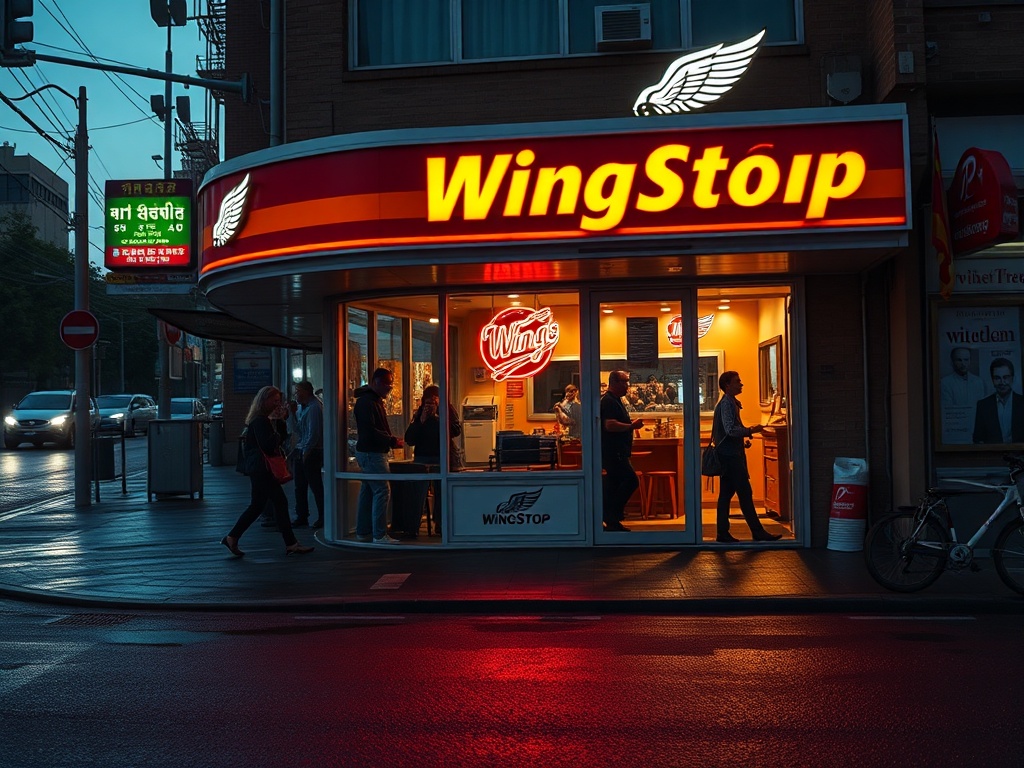
The Wingstop Model Reveals the Blind Spot Analysts Overlook
Wingstop reported an impressive quarter on paper: enviable margins, 493 new openings, and analysts raising targets to $374. However, the social architecture that dictates whether this expansion scales or fractures remains unmeasured.
Isabel Ríos7 min