How an organisation changes when the past is no longer enough
We follow companies that need to reorganise capital, culture, leadership, and priorities to hold the present without getting shut out of the next cycle.
What we are watching
Capital reallocation, distributed structures, governance changes, operating reorganisation, and moves where transforming a company demands more than a new speech.
Where it is being decided
In the ability to move resources, redesign incentives, coordinate multiple businesses at once, and build an organisation that does not depend on a single figure.
Why it matters
Because transforming a company is not announcing the future. It is building a structure capable of funding it, executing it, and sustaining it without emptying out what still keeps the business standing.
Featured
Business Transformation

When Leadership Becomes the Structural Failure of a Business
The abrupt departure of the CEO of Co-op is not just an HR story. It’s a visible symptom of a governance model that builds tension until something breaks.
 Sofía Valenzuela7 min
Latest articles
Target Bets on Employees to Win Back Customers
Target isn't relaunching its brand with a marketing budget; it's banking on uniforms and retention bonuses to rebuild lost trust with millions of shoppers.
CoreWeave is Worth $43 Billion, and Its CEO Still Carries GPUs
CoreWeave transitioned from mining cryptocurrencies in a garage to operating over 28 data centers with a valuation of $43.6 billion. The question is: what happens when the main nerd is no longer under the hood?
Valeo Invests $225 Million in Future of Automotive Computing
When an automotive supplier builds a 337,000 square-foot factory to essentially create a high-performance computer, they are redefining their entire business model.
CNN Lays Off Dozens of Employees as It Bets Everything on Streaming Without Showing Numbers
In March 2026, CNN confirmed another round of layoffs, eliminating 'several dozen' positions as part of a reorganization led by CEO Mark Thompson.
Most Popular
Most voted on this page
Amazon Tightens Controls to Defend Its Most Valuable Asset
Following millions of lost orders due to poorly managed changes, Amazon is buying back reliability with internal friction. This isn’t a cultural shift but a pricing decision tied to its delivery promise.
93
Lumen Bets on AI to Survive Its Own Debt
Lumen Technologies is not using artificial intelligence to grow: it is using it to avoid demise. This distinction defines the full risk of its portfolio.
91
Stryker and the Executive Price of Relying on Microsoft
The cyberattack that shut down Stryker's Microsoft environment revealed a longstanding executive decision: operational continuity reliant on a single point of failure.
91
B3's Commitment to a Resilient CSD
B3's second phase of its central securities depository overhaul is more than a technical milestone; it's a critical infrastructure reengineering.
91
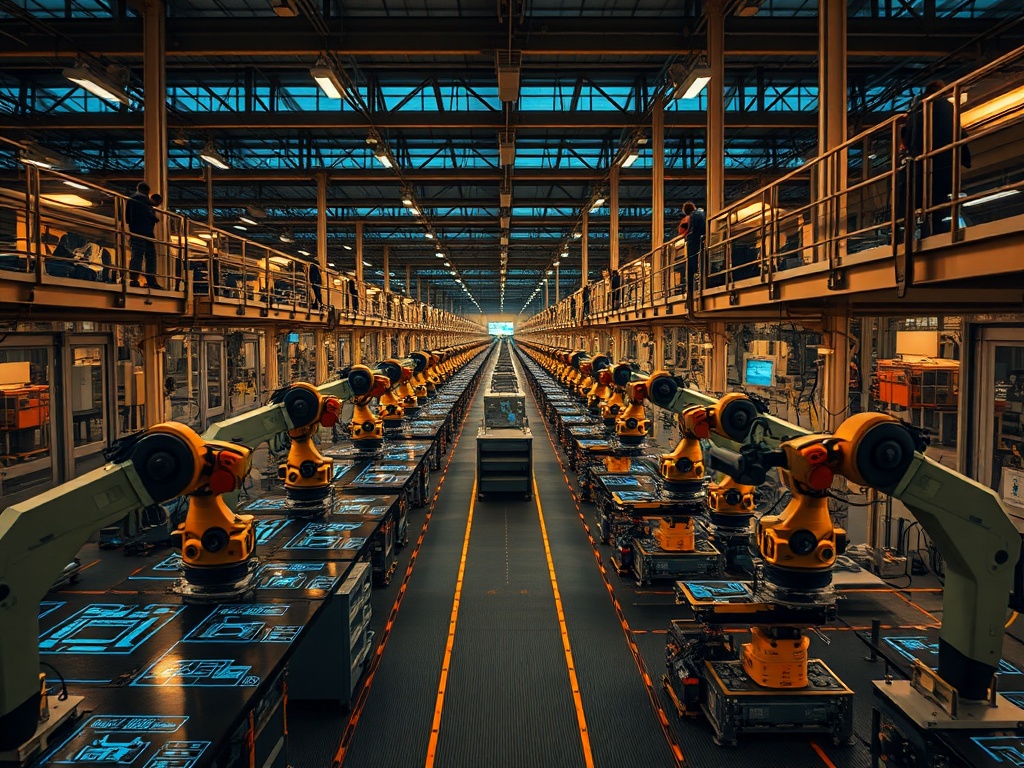
Bezos Bets $100 Billion on Physical Manufacturing, Changing Everything
As Silicon Valley buzzes with software disputes, Jeff Bezos is placing the biggest bet of his career on physical manufacturing. This isn't industrial philanthropy; it's a calculated and costly renunciation he's making after decades.

Lumen Bets on AI to Survive Its Own Debt
Lumen Technologies is not using artificial intelligence to grow: it is using it to avoid demise. This distinction defines the full risk of its portfolio.

China Leads the Factory of the Future as Europe Accumulates Technological Debt
The MHP Industry 4.0 Barometer 2026 reveals a structural divide in global manufacturing, highlighting China's technological edge over Europe.

The Supply Chain Advance Auto Parts Used to Stop the Bleeding
Advance Auto Parts consolidated 38 distribution centers into 14 giant facilities and aims for 60 local inventory centers. The numbers indicate this is no gamble: it’s the only architecture that could stop the bleeding.

Bakkt Rebuilds Corporate Structure, but One Architect Remains
Bakkt reports $132 million in losses while celebrating its 'year of reconstruction'. The issue isn't just in the numbers: it's in who supports the structure.

Shopify Bets on the Shopping Agent, But the Model's Structure Has a Weak Link
AI-driven orders surged 15 times in twelve months on Shopify's platform. Before celebrating, it's essential to review the structural weight behind this growth.
Sofía Valenzuela7 min
Resumes Are Dead. What Comes Next Determines Who Gets Hired
87% of large companies filter candidates using AI before human review. Adapting to this mechanism isn’t optional— it's the line between being selected and overlooked.
 Diego Salazar7 min
Meta Bets $600 Billion on the Future, Costing 16,000 Jobs
Meta Platforms’ massive capital expenditure raises questions about organizational strategy amid significant layoffs.
 Valeria Cruz7 min
The Campus as a Balance Sheet: What Silicon Valley Architecture Reveals About Its Business Model
For decades, tech giants built deliberately mundane offices. When they started constructing grand campuses, it was a clear signal of shifting business architecture.
Sofía Valenzuela7 min
One Million SKUs Without Explosions: Risk Engineering as a Competitive Advantage
Automating pricing at massive scale is less about algorithms and more about damage control. The architecture that reduced pricing incidents from 3% to 0.1% reveals why companies treating pricing as financial infrastructure thrive, while those treating it like an advanced spreadsheet struggle.
Diego Salazar7 min
The Satellite That Replaced Fiber Optics and Its Cost to Rural SMEs
The U.S. has redirected $10 billion to Starlink, moving away from fiber optics. Before celebrating savings, it's worth examining what rural SMEs actually contracted.
 Clara Montes7 min
The Small Team That Automated 68% of Its Calls Without a Hero at the Helm
A public housing authority in southern Mississippi modernized its communication infrastructure without relying on a charismatic leader or a Fortune 500 budget. The lesson is not in technology.
Valeria Cruz7 min
From Regulator to Investor: The $200 Million Bet Redefining Who Shapes the Financial Future
Sopnendu Mohanty spent a decade shaping fintech regulations in Singapore. Now, he deploys $200 million to choose the winners.
 Ricardo Mendieta7 min
Stryker and the Executive Price of Relying on Microsoft
The cyberattack that shut down Stryker's Microsoft environment revealed a longstanding executive decision: operational continuity reliant on a single point of failure.
 Simón Arce6 min
B3's Commitment to a Resilient CSD
B3's second phase of its central securities depository overhaul is more than a technical milestone; it's a critical infrastructure reengineering.
Sofía Valenzuela6 min
Algoma and the Strategic Price of Electrifying Steel
Algoma Steel has closed its blast furnace and completed the transition to electric arc furnaces as revenues decline. This tension is not a failure; it is the cost of a bet that demands immediate operational and business sacrifices.
Ricardo Mendieta6 min
Guerbet and the Art of Governing Without Heroes
The recent changes in Guerbet's Board of Directors reflect a shift towards institutional power rather than personal influence. This article explores the implications.
Valeria Cruz6 min
Amazon Tightens Controls to Defend Its Most Valuable Asset
Following millions of lost orders due to poorly managed changes, Amazon is buying back reliability with internal friction. This isn’t a cultural shift but a pricing decision tied to its delivery promise.
Diego Salazar6 min
Gap and the Silent Test of a Sustainable Turnaround
Gap Inc. has seen growth and eight quarters of positive comparable sales, but the key question is whether it can sustain this amidst external pressures like tariffs.
Valeria Cruz6 min