
Namibia Wants to Stop Selling Land and Start Selling the Future
There is a structural difference between a country that exports what is in the ground and one that exports what it can do with it. Namibia has just formalized, through its Minister of Industries, Mines and Energy Modestus Amutse, that it wants to be the latter. The announcement from May 2026 is not merely a geopolitical statement of intent: it is an architecture of economic transition with specific metrics, concrete timelines, and identified partners. And that is what sets it apart from the majority of mining policy communiqués circulating across the African continent.
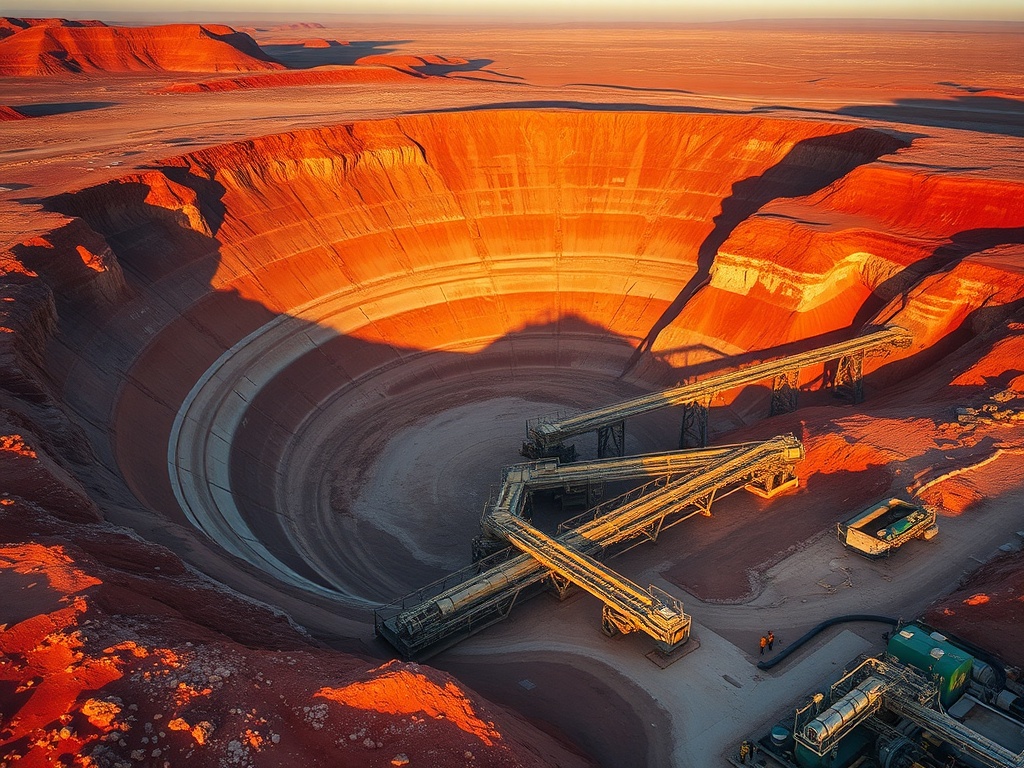
Context matters: the global energy transition needs lithium, graphite, rare earths, copper, and uranium in volumes that the current market cannot stably satisfy. Europe knows this, the United States knows this, and the countries that have historically acted as raw material suppliers without capturing processing value are beginning to understand it as well. Namibia has the geology. The question that this announcement answers — partially — is whether it also has the architecture to convert that geology into lasting wealth.
The Number That Defines the Ambition
The central figure in Amutse's announcement is not the most eye-catching, but it is the most revealing: Namibia wants to raise the proportion of processed mineral exports from 46.6% to 57% by 2030. A difference of just over ten percentage points beyond a simple majority, in six years, within a sector that represents approximately 14% of national GDP.
To understand why that matters, one must understand the mechanics of value in the mining chain. One kilogram of lithium spodumene sold as raw rock is worth a fraction of what that same kilogram is worth once converted into battery-grade lithium carbonate. The difference is not marginal: it can be a multiple of five to ten times the price, depending on the degree of purity and the industrial destination. The same applies to graphite for anodes, rare earth concentrates, or refined copper compared to copper ore. When Namibia says it wants to raise its percentage of processed minerals, it is saying that it wants to retain a larger portion of that difference.
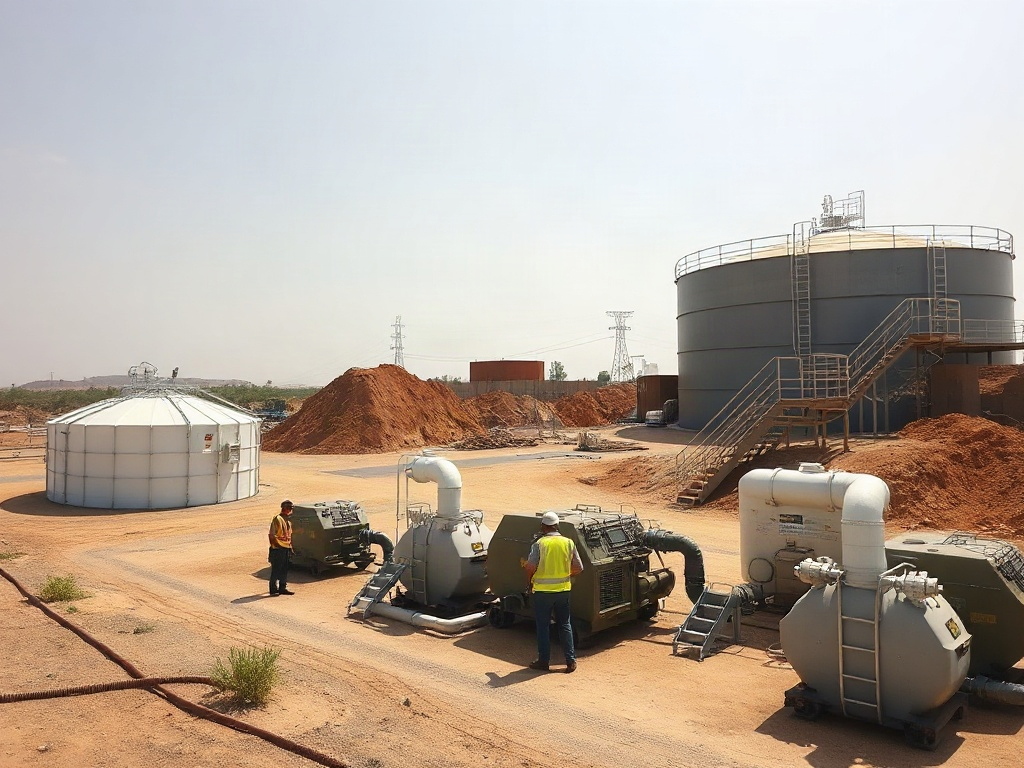
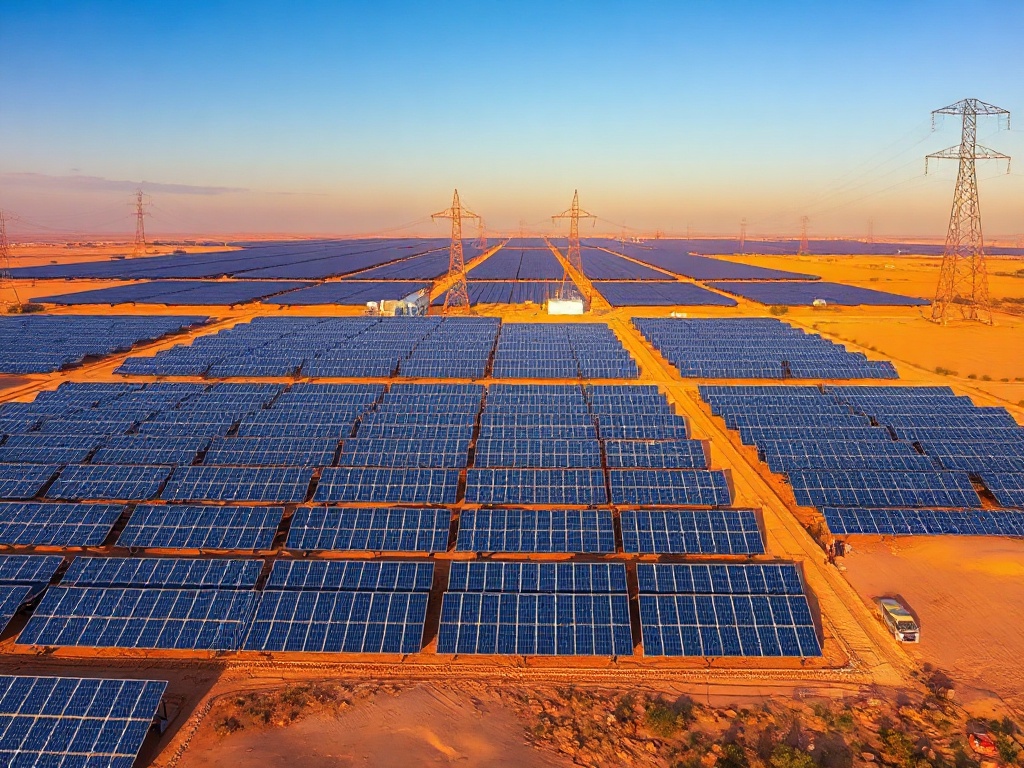
The problem is that scaling toward processing is not an editorial decision: it requires reliable energy infrastructure, industrial water supply, intensive capital investment, specialized technical personnel, and access to refining technology that has historically been concentrated in few hands — China, Australia, a handful of European nodes. The announcement names all of these vectors within the National Critical Raw Materials Strategy that the government is developing: mining competitiveness, local processing, capacity development, ESG standards, and the attraction of strategic investment. Naming them is not the same as building them, but the fact that they are articulated within a framework with measurable objectives changes the quality of the signal being sent to the market.
The other number anchoring the ambition is that of foreign direct investment: Namibia is seeking to raise its stock from 207 billion Namibian dollars (approximately 12.6 billion US dollars) to 254 billion by 2030. That increment — nearly 47 billion additional Namibian dollars — is the capital that would need to finance precisely those beneficiation plants, the associated infrastructure, and the expansion of exploration activities. Without that flow, the leap to 57% of processed exports is an aspiration without a financial lever.
Europe Arrives Before the Rhetoric
What makes the Namibian announcement more than mining policy rhetoric is that some of its elements already have operational counterparts. The European Union, through the European Investment Bank and under the framework of the European Critical Raw Materials Act, is providing technical assistance to the lithium expansion project at Andrada Mining's Uis mine in the Erongo region. The explicit objective is to bring that project to a bankable feasibility level: to close the metallurgical optimization and infrastructure gaps that separate a pre-feasibility study from actual financing.
This is not industrial philanthropy. The logic of the European Critical Raw Materials Act is to reduce the structural dependence of the battery and green technology supply chain on a small number of suppliers — China being the most frequently cited case. To achieve this, Europe needs to geographically diversify its sources of lithium, graphite, and rare earths, and it is willing to use public policy instruments to unlock projects that would otherwise take years longer to reach commercial financing.
The EU-Namibia partnership under the Global Gateway program goes one step further: it covers not only critical raw materials but also green hydrogen, and its explicit mandate includes the promotion of local added value in Namibia, not merely European access to cheap minerals. This creates an alignment of interests that, if sustained, could be structurally different from the classic extractive model in which the host country sells the rock and the purchasing country captures the industrial margin.
The latent point of tension in this architecture is that European interest in Namibia ultimately remains focused on securing supply at predictable prices and on favorable terms. The fact that this interest is expressed through technical assistance to bring projects to bankable feasibility is better than the alternative — extraction without transfer — but it does not eliminate the power asymmetry between a bloc with industrial processing capacity and a country that is still constructing the infrastructure needed to avoid depending on that external capacity.
The Model Namibia Is Choosing Has Costs That Don't Appear in the Communiqué
Minister Amutse was explicit about the government's philosophical framework: "The global energy transition cannot be built on obsolete extractive models. It must be built on co-investment, local value creation, technology transfer, sustainability, and shared prosperity." It is a declaration that sounds well-intentioned and that also has economic logic behind it. The problem with statements like this is not that they are false; it is that they do not specify the mechanism by which they are fulfilled under pressure.
Scaling toward local processing involves industrial policy decisions that generate friction. Forcing or strongly incentivizing mining companies to process within Namibian territory increases their operational costs, at least in the short and medium term, compared to the alternative of exporting concentrate and refining it in already-amortized facilities elsewhere. This can slow the entry of new capital if the expected return conditions are not competitive. Local content strategy has historically produced very heterogeneous results across Africa: ranging from models that generated genuine national industry to models that simply delayed investment or redirected it toward jurisdictions with fewer requirements.
Namibia has some favorable conditions that are not universal across the continent: relative political stability, a reasonably predictable track record in mining governance, and an already-established foreign investment base in the uranium sector. These conditions do not guarantee the success of the pivot toward processing, but they do reduce the baseline risk faced by any investor evaluating the jurisdiction.
What does not appear in the communiqué — and rarely appears in communiqués of this type — is the cost of the transition for the existing labor force. Moving from extraction mining to industrial processing requires different and, in many cases, more specialized technical profiles. The National Strategy mentions capacity development and technical training, but that is precisely the slowest and most difficult component of the entire process to scale. There is no refining plant that functions without operators and engineers trained specifically for it, and that human capital cannot be built within the same timeframe in which a project financing agreement is negotiated.
The Value of Announcing With Architecture
There are mining policy announcements that are essentially smoke signals: declarations that serve to position the government within a global narrative without committing to anything specific. This is not entirely that case. Namibia is presenting binding metrics — 46.6% to 57% of processed exports, FDI stock from 207 to 254 billion Namibian dollars — an operational partner with concrete instruments already active (the European Union and the EIB at Uis), and a strategic framework in development with identified components.
That does not mean the outcome is assured. It means that the promise has sufficient architecture to be measured. And that, in the universe of industrial policy declarations, is a distinction that should not be underestimated.
What Namibia is building — if the capital arrives, if the energy infrastructure keeps pace, if technical training scales at the necessary rate — is not merely a more favorable position in the energy transition supply chain. It is a model of a country that captures industrial margin on its own natural resources, rather than systematically transferring it to those who have the capacity to transform them. That is what Amutse calls "shared prosperity." What the numbers call it is something more precise: retaining the value differential between raw mineral and processed mineral, and using that differential to finance an economy less dependent on the variability of commodity prices.
If the percentage of processed exports reaches 57% in 2030, that number will have demonstrated that the architecture withstood the pressure. If it stalls at 48% or 50%, the analysis will have to begin by asking which of the links in the chain — capital, energy, talent, or industrial policy — gave way first.