
Five Trillion Dollars and an Energy Transition Nobody Expected to Lead This Cycle
The dominant narrative of the last two years placed data centers and language models at the heart of the largest investment story of the modern era. That reading is not wrong, but it is incomplete. What is happening in global capital markets is wider, deeper, and more structural than the debate over artificial intelligence allows us to see from the surface.
Eli Horton, senior portfolio manager at TCW, stated it with surgical precision before CNBC in May 2026: "I think this is the largest capital cycle the global economy has ever experienced, and that cycle is the energy transition." His estimate: close to five trillion dollars in capital expenditure by the end of this decade. Not five trillion accumulated in AI. Five trillion driven by three forces that have been building in parallel for years and are now intersecting simultaneously for the first time: energy security, electricity demand, and decarbonization.
That overlap is not accidental. It is the mechanism that makes this cycle qualitatively different from all previous ones.
When Three Forces Converge at the Same Time
For nearly two decades, electricity demand in the United States stagnated. Improvements in energy efficiency offset economic growth, and the result was a flat curve that discouraged investment in generation and transmission. That period is over. The return of domestic manufacturing, the progressive electrification of transportation and industry, and the eruption of artificial intelligence data centers shattered the equilibrium. Demand began growing again, and it did so abruptly.
At the same time, the closure of the Strait of Hormuz following the war with Iran placed before governments an evidence that many had preferred to ignore for years: dependence on concentrated energy routes is a first-order strategic vulnerability. That geopolitical pressure accelerated investment decisions in local generation that had long been sitting in planning documents without ever reaching the execution phase.
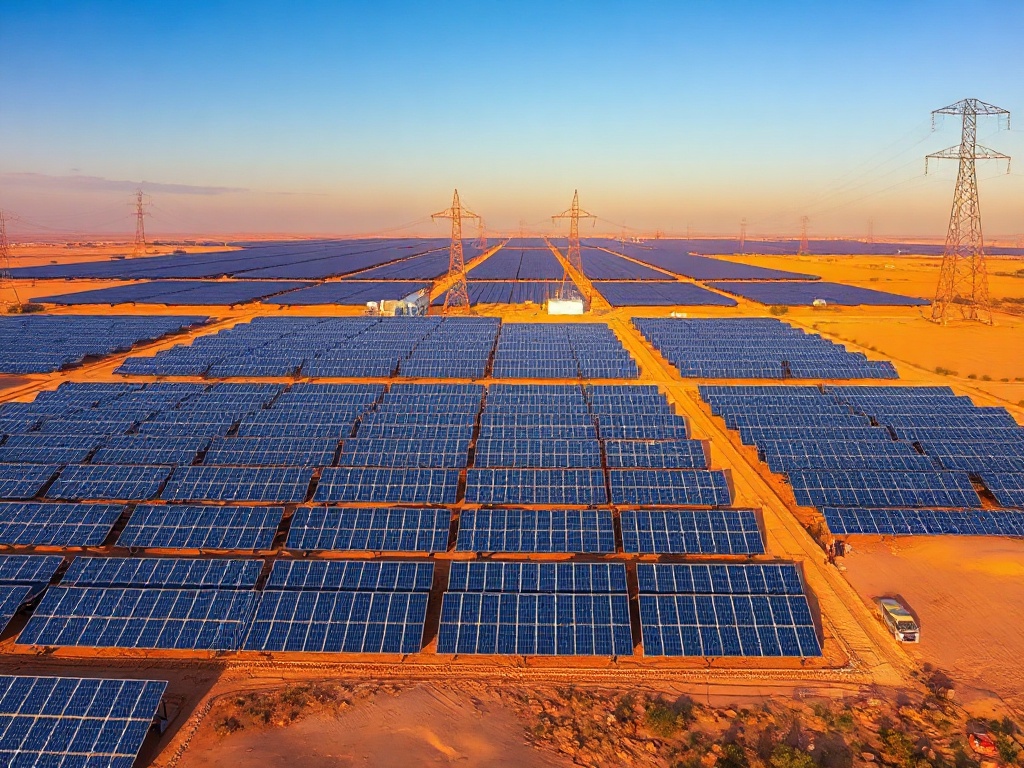
The third vector, decarbonization, was operating with institutional slowness until the other two injected urgency into it. Not because climate objectives have changed, but because the need for new sources of generation can no longer wait for the pace of ordinary regulatory cycles. Investment in clean energy and investment in transitional energy — including natural gas — are growing simultaneously because demand exceeds the available capacity of any single source.
The result is an investment cycle that does not recognize a clear sectoral leader, but rather distributes itself along the entire energy value chain. And that makes it more resilient to shocks that affect any individual segment.
What GE Vernova and Caterpillar Reveal About the Anatomy of the Cycle
There is a more precise way to read the health of an investment cycle than looking at the capital budgets of the major tech companies: observe the companies that manufacture the physical inputs that cycle requires.
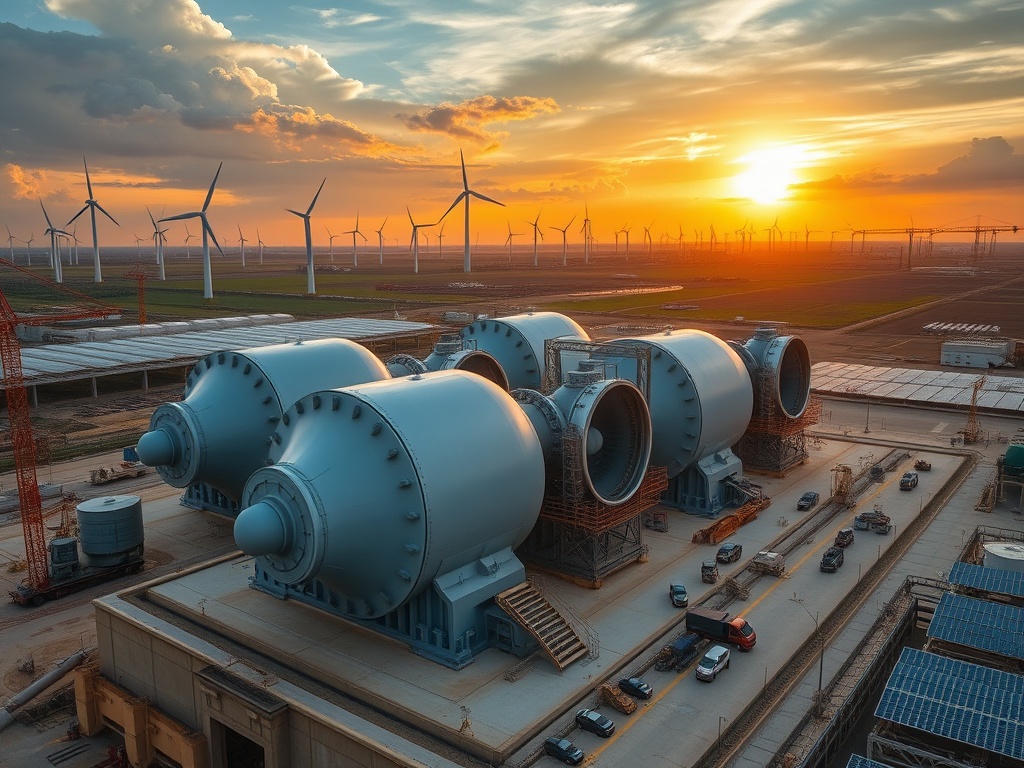
GE Vernova is today one of the most eloquent cases. Its gas turbines, which spent years accumulating modest orders in a market that had been betting that distributed generation and renewables would cover the entire gap, are sold out until 2030. Horton underscored this in his remarks: "There are only three companies in the world that manufacture them. They have a lot of power at the table." That oligopoly of supply, combined with demand that cannot afford to wait, creates a pricing power that simply did not exist five years ago.
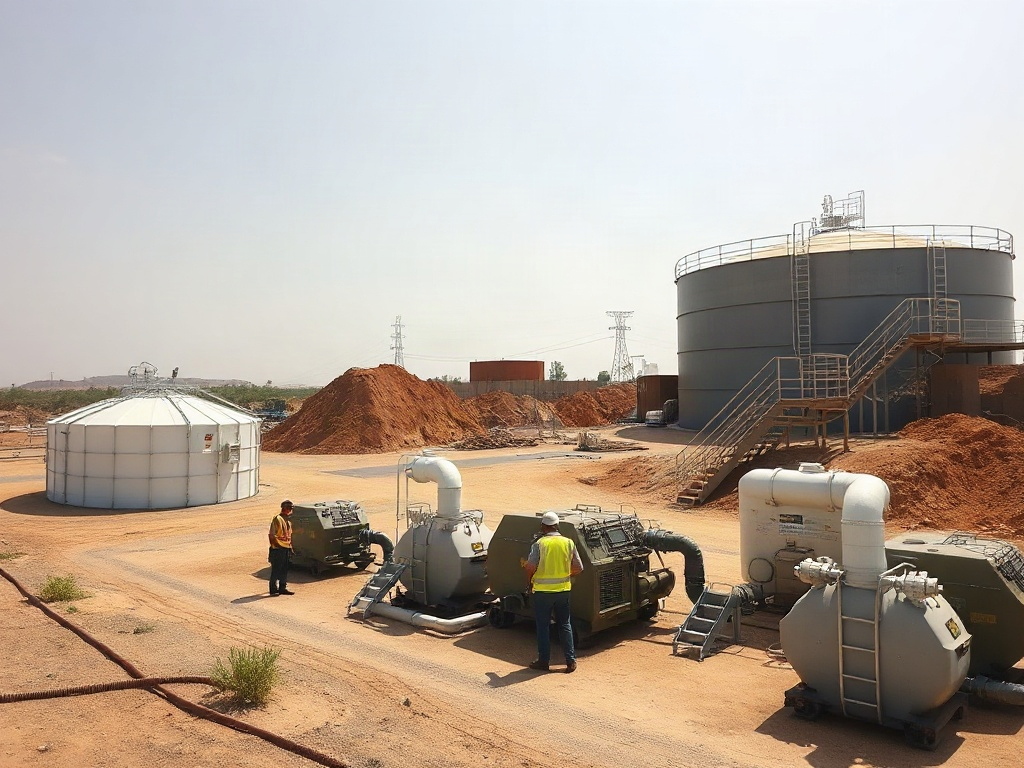
Caterpillar tells a similar story from a different angle. Its three core business units — construction equipment, mining equipment, and power generation — are all squarely within the areas that this investment cycle requires simultaneously. Mining is growing because the critical metals needed for the energy transition and for semiconductors must be extracted. Construction is growing because manufacturing plants, data centers, and transmission infrastructure must be built. Distributed generation is growing because the centralized electrical grid cannot absorb the new demand at the speed the market demands.
What these two cases reveal is not a coincidence of timing. They reveal that the cycle has already touched the floor of the physical economy. It is not merely financial, nor merely digital. When the companies that manufacture turbines and civil construction machinery are operating at the limit of their capacity, the cycle has roots that do not evaporate after one bad quarter of technology earnings.
AI Is Spending More, But It Is Not the Only Underlying Force
Bank of America estimated in April 2026 that capital expenditure by the major technology infrastructure providers — Alphabet, Amazon, Meta, and Microsoft — will exceed 800 billion dollars in 2026, an increase of 67% compared to 2025. Their projection for 2027 approaches one trillion dollars. A significant portion of that figure corresponds to the rising cost of chips, not solely the physical volume of installed infrastructure. Semiconductor manufacturers are maintaining pricing power and actively exercising it.
These numbers are real and their weight on credit markets is concrete. Investment-grade debt issuance in the first quarter of 2026 reached one trillion dollars, compared to 600 billion in the same period of the previous year. Morgan Stanley projects 2.25 trillion in gross issuance for the full year. The investment cycle is not only being financed through operating cash flow: it is taking on debt at scale, and the markets are absorbing that debt because the revenue prospects of the dominant issuers justify it for now.
But there is a distinction that Horton's analysis places on the table with greater precision than most reports from the financial sector: spending on artificial intelligence and spending on the energy transition partially overlap — data centers are large consumers of electricity, and their growth directly pressures the demand for generation — but they respond to different investment logics. AI is a cycle accelerated by platform-to-platform competition and by the expectation of returns on business models that are still being validated. The energy transition is a cycle forced by physics, by geopolitics, and by infrastructure that has gone decades without receiving sufficient investment.
That difference matters for anyone trying to read the duration of the cycle. If AI spending slows down due to margin pressure or a correction in technology valuations, the energy cycle has its own engines that do not depend on that narrative. They are distinct assets, with distinct horizons, even though at this moment they are traveling in the same direction.
The Largest Cycle Also Has the Longest Decline Ahead of It
The most frequent historical comparison for this cycle is the telecommunications bubble of the late nineteen-nineties. The parallel has partial merit: it was also an investment cycle in physical infrastructure — optical fiber, towers, network equipment — financed with debt and with demand expectations that in many cases did not materialize at the promised speed. Spending on AI has already surpassed the peak of that cycle measured in real terms, which is a data point that deserves attention without necessarily becoming an automatic alarm signal.
The relevant structural difference is that the cycle of the nineties built infrastructure for a demand that did not yet exist at the necessary scale. The current cycle builds infrastructure for a demand that is already present, is already growing, and is already constrained by available supply. GE Vernova is not sold out until 2030 due to speculation: there are concrete buyers with concrete needs that cannot be met by any immediate substitute.
That does not eliminate the risk of overinvestment in specific segments. Capital cycles distributed among many actors tend to produce excesses in the nodes where information about competition is most opaque. Gas-powered energy generation may end up with more installed capacity than the market absorbs if renewables scale faster than projected. Data centers may double in some markets if the consolidation of spending among the major providers reduces the base of corporate clients using their own infrastructure.
But the risk of localized excess is not equivalent to the collapse of the cycle. And what Horton identifies with more precision than analyses focused solely on AI is that the three vectors feeding this cycle — energy security, electricity demand, and decarbonization — are structurally incompatible with a short correction. Energy security is now a State priority in most developed economies. Electricity demand is not going to reverse its trend. And decarbonization has institutional commitments that transcend any four-year political cycle.
Capital Has Already Chosen Its Structure and Will Take Decades to Finish Flowing
What this cycle reveals, beyond its raw figures, is a displacement in the architecture of global investment. Over the last twenty years, productive capital migrated toward asset-light models: digital platforms, financial services, software. Return on employed capital was higher where there were fewer physical assets to manage and depreciate. That model worked as long as the physical infrastructure inherited from previous decades could absorb the load.
That absorptive capacity has been exhausted. The electrical grid cannot power the data centers the market is building. Ports and roads cannot handle the manufacturing flows that industrial policy is relaunching. Critical metal supply chains cannot cover the demand for batteries and semiconductors that electrification requires. Capital is returning to the physical world not out of industrial nostalgia, but because the digital economy it built is colliding with physical limits that cannot be resolved with software.
The five trillion dollars projected for this decade is the response to that collision. And the most honest signal that the cycle is structural, and not cyclical, is that its greatest immediate beneficiaries are not the companies generating the technological spending, but those that manufacture the turbines, construction equipment, and network infrastructure that makes that spending functional. When the most sophisticated capital in the world needs to purchase machinery from companies that have a four-year waiting list, the cycle is no longer in its promise phase. It is in its execution phase.