
The War of Cheap Drones is Redesigning the Defense Economy
The most significant change in modern warfare isn’t a new sixth-generation fighter or a hypersonic missile; it’s something far more uncomfortable and disruptive for budgets, suppliers, and security architectures: the normalization of cheap, disposable, mass-produced unmanned systems.
Iran turned this into doctrine with the Shahed, a one-way attack drone. According to reports cited by The New York Times, its unit cost is estimated to be between $20,000–$50,000, typically carrying explosive payloads of 40–50 kilograms with ranges reported to be anywhere from 970–1,500 kilometers and beyond in some estimates. These are not “exquisite” platforms; they are guided munitions that arrive in mass, saturate defenses, and force opponents into an economically challenging game.
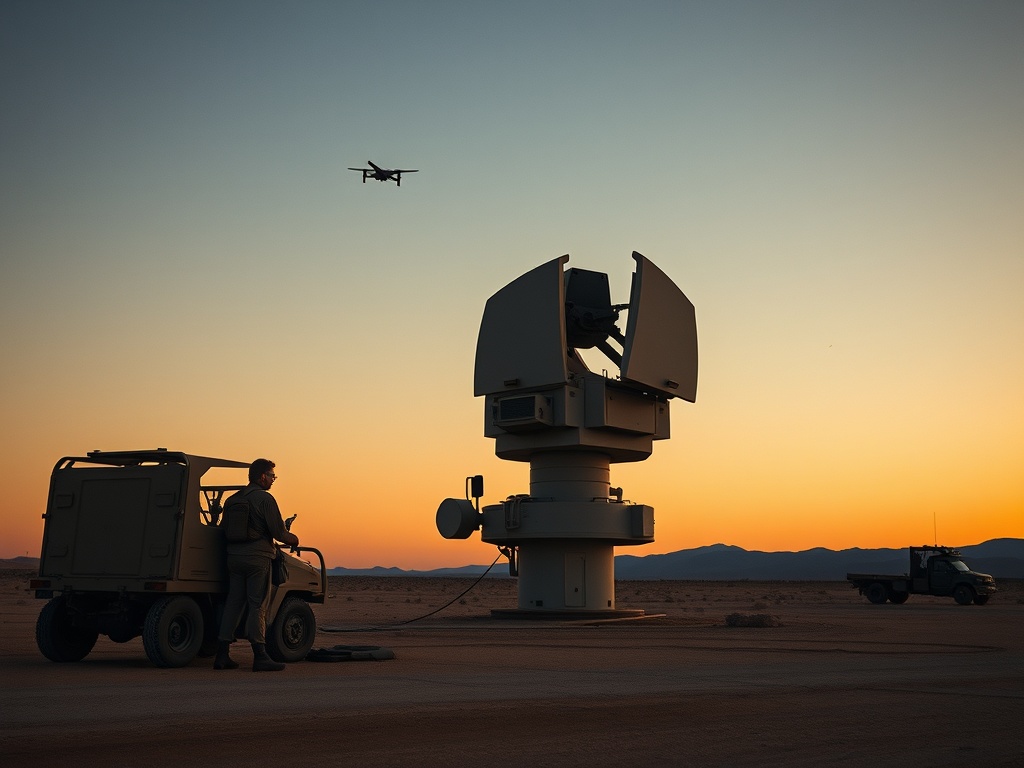
The hallmark of the age is that the United States decided to copy the concept. Central Command (CENTCOM) has unveiled its Low Cost Uncrewed Combat System (LUCAS) as a one-way attack drone modeled on this logic, costing approximately $35,000 per unit, also according to The Times coverage. In parallel, a target drone with comparable shape and mission, the FLM 136 from SpektreWorks, was showcased at a Pentagon event in July 2025.
This is not just an article about hardware. It’s about the new balance of power emerging when the primary weapon is the one that wins the cost-effectiveness equation.
Asymmetry No Longer Lies in Reach, but in Cost Ratios
The public narrative often fixates on interception percentages. However, the real board is decided in the financial arena of defense: how much it costs to maintain the pace.
According to The New York Times, operators of U.S. PATRIOT and THAAD defenses report interception rates against the Shahed of around 90–96%. That’s high tactical performance. The problem lies in the cost of that success: interceptors costing millions of dollars facing drones worth tens of thousands. This differential isn’t aimed at “winning” every exchange; it seeks to impose costs, deplete inventories, force political decisions, and ultimately degrade the credibility of a defensive posture.
Iran designed the Shahed to function as loitering munition, using pre-programmed coordinates with satellite and inertial guidance, launched simply from a rail with rocket assistance. This is no coincidence. That combination reduces training requirements, simplifies the support chain, and enables transport even in commercial trucks. In business terms, it’s a product with relative high performance and low marginal cost, built for scaling.
The strategic consequence is that air defense ceases to be a “purely military” issue and becomes a matter of budgetary sustainability. If stopping a low-cost attack requires consuming high-cost assets, then my vulnerability lies not in the adversary’s accuracy but in my own expenditure structure.
This pattern was intensely observed in Ukraine, where Russia used Shahed (designated Geran-2), and it has now spread to the Middle East, including episodes like the so-called 12-day war in June 2025, mentioned in The Times coverage. With each campaign, the message is reinforced: war is being “industrialized” around volumes and replenishment.
LUCAS and Washington’s Most Relevant Admission
When an actor like the United States adopts a system described as “modeled” on the Shahed, what it is doing is not merely adding a device to its inventory. It is accepting a principle: having the best is no longer sufficient; having enough is essential.
CENTCOM described LUCAS as a low-cost, one-way attack drone, costing about $35,000 per unit, according to The New York Times. This is significant for two reasons.
First, it shifts the discussion to a territory where Iran feels comfortable: mass production and consumption. The United States, historically inclined towards complex and costly systems, is building a bridge to a category where value is measured not by sophistication but by cost-effectiveness ratio and rapid replenishment.
Second, it opens a new chapter in the Western defense supply chain: closer to batch manufacturing logics, acceptable failure tolerances, and short iteration cycles. The example of the FLM 136 from SpektreWorks displayed in July 2025 serves as an industrial signal: actors and products appear that orbit this same philosophy, with specifications like ~822 km range, ~194 km/h maximum speed, and 6 hours of autonomy for the target, according to the briefing.
In March 2026, the joint operation reported as Operation Epic Fury was presented by U.S. officials as a campaign that significantly reduced Iranian one-way attack drone launches through strikes on launchers, storage, and supporting infrastructure. Beyond the immediate tactical outcome, the business lesson is clear: if the threat becomes industrialized, so must the response. It is not enough to intercept; we must attack the “back office” of the capability.
The detail that is often overlooked is that this transition redistributes power within the defense apparatus itself: whoever controls the production, integration, maintenance, and logistics of cheap platforms will wield more influence than whoever merely provides premium parts.
The New Market: Mass-Market Weapons and Defensive Margins
Shahed-type drones force a reconsideration of the map of opportunities and risks for businesses and governments.
For traditional defense suppliers, the growth of “cheap loitering munitions” creates a portfolio dilemma. This segment operates in a price range that has historically been less attractive for large contractors: lower tickets, cost pressures, and volume expectations. But that’s precisely why it’s becoming strategic. In a world of finite inventories, the contract that guarantees constant replenishment can be more decisive than the contract that sells a few high-margin units.
At the same time, the bigger defense business may not necessarily lie in the offensive drone but in recovering a favorable ratio in interception. If taking down a drone costing $20,000–$50,000 requires spending millions, the market will tend toward solutions that lower the cost per intercept: cheaper sensors, efficient integration, electronic warfare, lower-priced interceptors, and defensive layers with better unit economics. The Times highlights this cost asymmetry as central to the issue.
From an impact perspective — and here I speak from my role at Sustainabl — there’s a point that cannot be sugarcoated: “efficiency” in weaponry is not a moral achievement. It is an optimization of damage capacity. However, there is a legitimate field where the private sector can act with a clearer ethical mandate: defending critical infrastructure and reducing harm to civilians through more accessible alert systems, resilience, and protection for lower-budget countries.
This is the angle I’m interested in to audit the distribution of value: when defense becomes prohibitively expensive, it is not the large national budgets that are most exposed, but medium and small economies — and, by extension, their populations and infrastructure. If the market only offers “luxury” protection, the security gap becomes another form of inequality.
What This Trend Demands from C-Level Executives Outside Defense
The war of cheap drones does not remain confined to the Pentagon or Tehran. It strikes directly at insurers, energy, logistics, ports, airports, and telecommunications operators. The reason is simple: Shahed was used against military bases, oil infrastructure, and civilian buildings, according to the briefing. In practice, this turns infrastructure into an asset that must budget for its own protection according to criteria similar to cybersecurity: to assume that the attack will not be “unique,” but repetitive and of low marginal cost.
For a C-Level executive of critical infrastructure, the learning is about financial architecture. If the response depends on a costly and slow state intervention, exposure remains. In contrast, organizations that internalize a resilience strategy with gradual, measurable, and auditable investments — redundancies, detection, protocols, continuity agreements — buy time and reduce the severity of the impact.
In business terms, the parallel with cybersecurity is direct: the attacker lowers costs, automates, and scales; the defender must avoid the reflex of responding with costly solutions every time. That budgetary discipline is the difference between operational continuity and paralysis.
It also changes the conversation with investors and regulators. If physical risk becomes more frequent and cheaper to execute, the cost of capital will tend to incorporate that premium. Companies that demonstrate controls, drills, redundancies, and verifiable plans will not only be “safer”; they will be better financed.
The ultimate mandate is both operational and ethical. In the new security economy, competitive advantage is not sustained by gestures or narratives, but by cost structure and real capabilities. The C-Level that uses people and the environment as inputs to generate money will end up financing their fragility in premiums, disruptions, and loss of legitimacy. The C-Level that uses money as fuel to uplift people will design protection, continuity, and value chains that withstand pressure without passing the human cost onto communities.