
The Strait of Hormuz Is No Longer a Route—It Is an Actuarial Bet
When a United States Navy official testifies before the Senate that crossing the Strait of Hormuz costs 64 million dollars in insurance per transit, the figure may be exaggerated, imprecise, or contextually incorrect. But the question that figure places on the table cannot be dismissed so easily: if even approximate numbers move in that range, the Strait has ceased to be a logistical infrastructure and has become an active risk variable over which no one has complete control.
That, in itself, already reorganizes how energy markets, marine insurance, and global supply chains will have to operate over the coming years.
What the Verified Numbers Reveal Before the Decontextualized Figure
On November 17, 2026, Hung Cao, acting Secretary of the Navy of the United States, appeared before the Senate Armed Services Committee. In an exchange with Senator Elissa Slotkin, he mentioned that the insurance cost for a commercial transit through the Strait of Hormuz had risen from 54,000 dollars before the conflict to 64 million dollars at present. He did not specify whether this referred to a war-risk premium on hull value, cargo coverage, an accumulated sum of multiple exposures, or the total cost of a specific package for a high-value vessel.
Michelle Bockmann, an analyst at maritime intelligence firm Windward, noted publicly that Cao "offered no context whatsoever" and that the figure cannot be interpreted as a standard market price without knowing the type of vessel, its value, and the applicable rate. No independent evidence exists to corroborate 64 million dollars as the current premium for a reference commercial vessel.
What is verified by S&P Global, in a report from July 2026, is that war-risk insurance premiums escalated to 7.5–10% of hull value, compared with the previous range of 1–3%. For a 270,000-metric-ton crude tanker, that translates to approximately 21 million dollars in insurance premium alone. Reuters reported in September, citing an executive at Emirates National Oil Company, that moving a cargo of oil through Hormuz costs between 10 and 20 million dollars. These figures are distinct, not interchangeable, and each measures a different thing: the asset exposure, the cargo cost, and the total transit cost.
But even if Cao's number is dismissed as imprecise, the directional signal is the same. Before the war, crossing Hormuz was routine logistics. Today it is a financial decision with the structure of active risk management.
A Strait That Remains "Open" Only in a Technical Sense
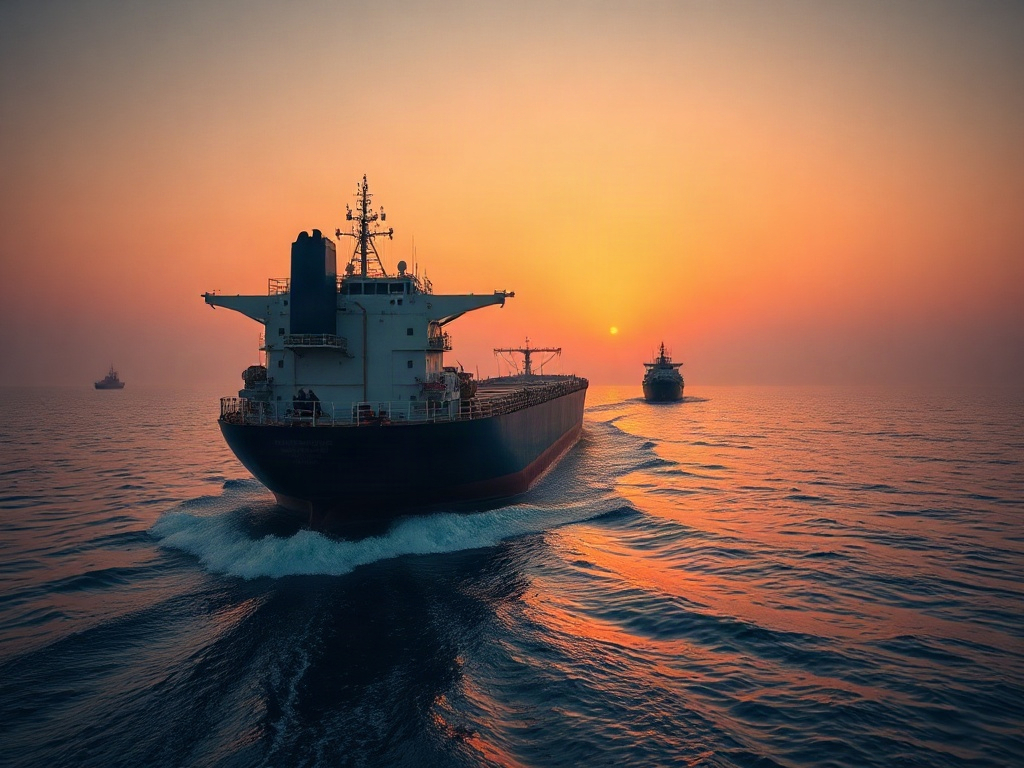
The United Kingdom, through its maritime trade operations body (UKMTO), recorded 308 vessel crossings during the week ending November 11, 2026, comprising 139 outbound voyages and 169 inbound. Traffic remains approximately 65% below pre-war levels.
That figure is more useful than any insurance number for understanding the state of the strait, because it reflects the decisions of real operators with real economic exposure. They are not crossing because it does not suit them to cross, or because they fear doing so, or because insurance makes the voyage unprofitable, or because their clients cannot guarantee delivery at all. Probably for all four reasons at once.
What complicates the situation further is that two actors simultaneously claim control of the passage: the United States describes its naval escorts as a guarantee of freedom of navigation; Iran demands that vessels use approved routes that bring them closer to its own coastline and that they coordinate with its forces. For some countries—including India, China, Iraq, and Qatar—Iran has issued exemptions. For the rest, transit involves submitting to two competing authorization systems, neither of which guarantees safety.
During that same week reported by the UKMTO, eight maritime incidents occurred, five of them inside the strait itself. On Tuesday, November 11, two tankers were attacked near Oman, one of them left with its engine room ablaze. The following day, Iranian forces reported that three additional tankers had struck naval mines. And on Tuesday the 18th, the United States struck targets on the Iranian island of Qeshm, near Hormuz, in response to a drone attack on U.S. military installations in Bahrain.
That is the operational environment. Chris Beauchamp, chief market analyst at IG, was precise in his assessment: the route is passable only if operators are willing to assume that risk, and it is not "open" under any pre-war definition of the term.
The Economics of the Conflict and Its Cascading Effects on the Supply Chain
Before the conflict, the Strait of Hormuz channeled approximately one fifth of the world's oil supply. Not only crude: also liquefied natural gas, fertilizers, and essential goods produced by Gulf countries. A 65% drop in traffic does not produce an immediate energy crisis because markets absorb part of the impact through inventory adjustments, supplier substitution, and higher prices. But that absorption has a cost and a time limit.
The cascade of costs works as follows: war-risk insurance premiums rise, and shipowners pass them on to freight rates. Higher freight rates raise the delivered price of crude. Refiners absorb part of the increase or pass it on to fuel prices. Transport and manufacturing companies that depend on those fuels adjust their own prices. The end consumer pays more, or the company accepts lower margins, or both.
But there is a less visible effect: insurance markets are operating with incomplete information in real time. Insurers must set premiums on assets exposed to military risk in an environment where the rules of who controls what are unclear, where incidents are frequent, and where official information about certain transits cannot be independently verified. The UKMTO itself warned that its statistics include "facilitated" transits reported by the United States that it was unable to corroborate directly.
That introduces an uncertainty premium on top of the risk premium. Insurers are charging not only for calculated risk, but also for risk they cannot calculate well. And that component—the one with no precise price because no model has been calibrated to the scenario—is what makes a number like 64 million dollars plausible even if it is not exactly right.
What Hormuz Displaces on the Maritime Sustainability Agenda
The shipping industry has for several years been committed to a decarbonization process involving orders for vessels with alternative propulsion, investment in bunkering infrastructure, and conversion of existing fleets. That process requires a condition that the conflict at Hormuz directly erodes: certainty about routes and operational economics.
A shipowner evaluating a capital commitment to a methanol- or ammonia-fueled vessel does so based on assumptions about the routes that vessel will operate, the ports where it will bunker, and the margins it will generate. If one of the central routes of global energy trade becomes financially unpredictable, the business model that justified that capital commitment loses coherence. Not because the technology is wrong, but because the supporting infrastructure and the predictability of returns are no longer guaranteed.
The likely result is not that shipowners abandon decarbonization targets, but that they delay or reformulate them. The trend reported in the industry points toward fuel adaptations and retrofits—that is, modifications that expand the flexibility of existing vessels to operate on more than one fuel type—rather than irreversible bets on a single technology. That is a rational response to an environment in which route uncertainty outweighs conviction about which fuel will dominate in 2035.
There is also a coordination problem that the conflict aggravates. Alternative-fuel vessels need bunkering infrastructure at the ports they call at. If orders for new vessels advance faster than that infrastructure, the stock of new capacity is underutilized or diverts its routes toward ports that do have available infrastructure. The conflict at Hormuz does not solve that problem; it intensifies it: operators are forced to maintain optionality of route and of fuel simultaneously, which raises the cost of fleet design and operation.
The Figure Was Imprecise; the Displacement Is Not
The number Cao cited before the Senate probably does not survive rigorous technical scrutiny. But what the episode reveals does not depend on 64 million dollars being exact. It depends on the direction of the change being incontrovertible: the cost of crossing Hormuz has gone from being a routine operational datum to being a first-order risk variable that maritime, energy, and insurance business models cannot ignore.
The difference between 54,000 dollars and 20 million verifiable dollars is already sufficient to reorganize the economics of global energy transport. A transit that cost less than chartering a corporate flight now consumes a significant fraction of the profit margin on a full crude cargo. That is not a matter of perception or political narrative: it is arithmetic.
What the Strait of Hormuz exposes at this moment is the fragility of supply systems designed on the assumption that critical routes remain accessible. When that accessibility becomes a variable conditioned on parallel military negotiations, the cost does not disappear: it is redistributed toward the links in the system least capable of absorbing it.