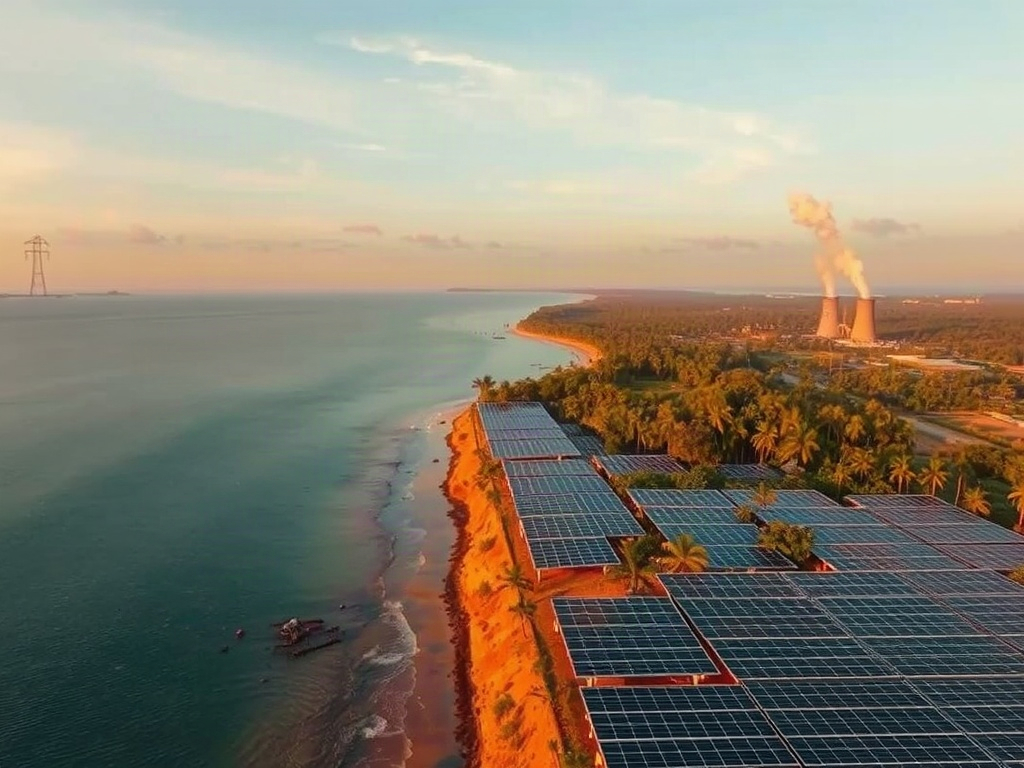

Sri Lanka Bet Everything on Foreign Oil and Is Now Paying the Price for That Fragility
There are economies that build their energy systems as though the price of oil were a constant. Sri Lanka was one of them for far too long. Today, with inflation at its highest level in three years, with rationing still in place, and with the energy ministry admitting that the country spent up to 30% of its foreign exchange reserves in a single month to pay for fuel imports, that bet has been exposed in all its broken architecture.
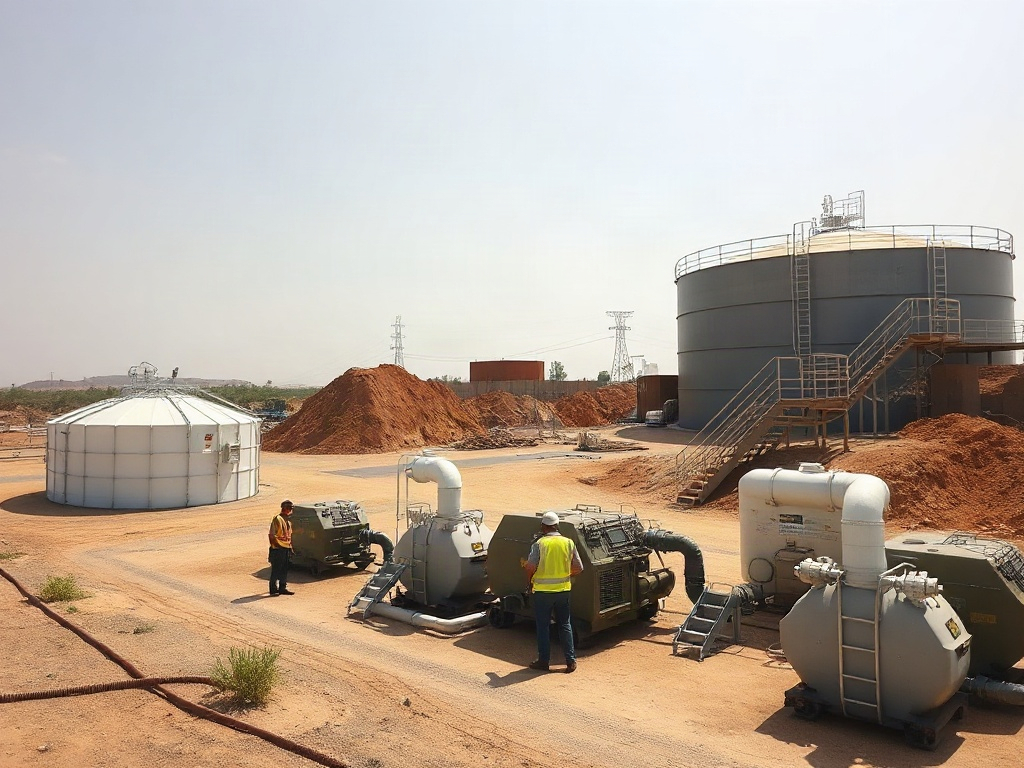
The immediate trigger was the conflict between the United States, Israel and Iran, which disrupted the flow through the Strait of Hormuz and sent international fuel prices soaring. But the underlying problem is not geopolitical: it is structural. An island that imports one hundred percent of its oil and gas built an electricity matrix with coal and fuel oil as its backbone, and now that backbone is failing under external pressure.
Energy Minister Anura Karunathilaka said it with a frankness unusual for standard diplomatic language: price shocks are "wake-up calls." His policy response is to accelerate the transition to renewables and to aim to surpass the target of 70% renewable electricity generation by 2030, up from a current level of around 60%, of which 40 percentage points already come from hydropower.
What the minister did not say — and what is worth auditing — is whether the architecture underpinning that acceleration can withstand what is coming.
Solar Is Growing, but the Grid Is Not
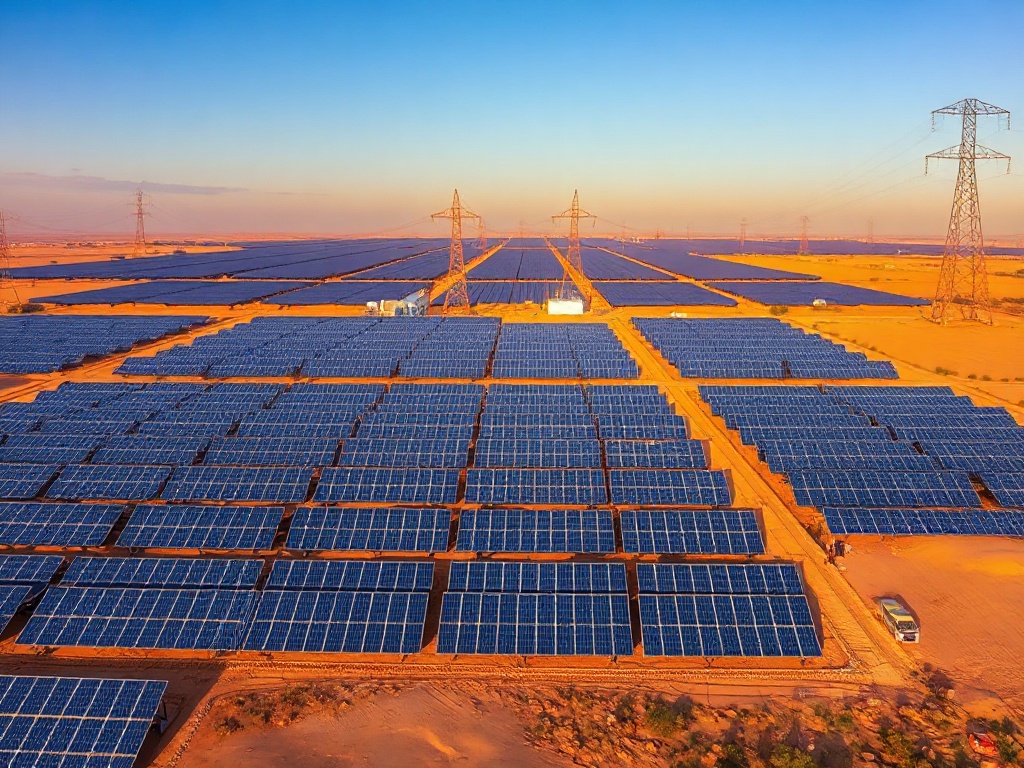
The solar target is ambitiously quantifiable: bringing installed capacity to nearly 4,400 megawatts by 2029, which implies growth of 388% compared to 2024. In operational terms, it means adding around 600 megawatts per year for five consecutive years. For a country that only emerged from its worst economic crisis three years ago, that pace of investment requires more than political will: it requires a financing chain, bankable contracts, and a tariff framework that investors can model.
None of those three elements has yet been resolved.
The current transmission system cannot absorb the projected growth without bottlenecks. The minister himself acknowledged this: there are constraints in transmission lines, in grid availability, and in controlling fluctuations between supply and demand. In October of this year, a six-hour blackout affected the entire island after the national grid collapsed, possibly because solar generation exceeded consumption during peak midday hours. The transmission system plans to add five major lines from 2027 onwards, but that means the bottleneck will remain active for at least the next two years of the most intensive solar expansion.
This is not a minor observation. Installed solar capacity that cannot be dispatched, or that has to be curtailed due to grid instability, generates no return on investment. It generates idle assets and additional financial pressure on the system. If private solar investors — households, businesses, independent developers — calculate their return on investment assuming they will be able to freely export to the grid, and then discover that the grid cuts them off to maintain stability, the adoption model stalls on its own without any formal policy obstructing it.
The Price Problem Nobody Wants to Name Directly
The change in the tariff model for residential solar is, in all likelihood, the most politically difficult element of the entire package of announced reforms.
The current mechanism functions as a form of deferred net metering: private solar producers inject electricity into the grid during the day — when there is excess generation and low demand — and withdraw an equivalent amount at night without paying the cost difference between nighttime and daytime electricity. That difference is absorbed by the state. Karunathilaka described it as an additional cost that falls on the public treasury and that he considers unjust to pass on to the general population.
The framing is honest but incomplete. What the current scheme essentially does is subsidise residential solar adoption through an implicit transfer from all consumers — including those who do not have panels, who tend to be those with the least capacity to invest — to those who can afford to install photovoltaic systems. In a lower-middle-income country with a still-fragile economy, that cross-subsidy has distributional consequences that do not appear in any carbon accounting.
The solution the government proposes is a "new financial model" that is fair to both producers and consumers simultaneously. That statement is all that currently exists. There is no detail about whether a time-differentiated export tariff will be adopted, a fixed network charge, a revised credit per kilowatt-hour exported, or some bilateral contract mechanism. That lack of definition is not a secondary technicality: it is the element that determines whether the projected 600 MW per year of solar actually gets installed or not.
When the compensation received by solar producers is changed retroactively — or even prospectively, with ambiguous signals — the adoption curve stalls. Mid-scale project developers need a 15- or 20-year contract with a known tariff in order to obtain bank financing. If that framework is under review, capital waits. And waiting in this case has a cost: every year of delay in installing solar capacity is a year in which the island continues importing fuel oil or coal at prices it does not control.
Wind at Mannar and the Politics of Selective Listening
The case of the Mannar peninsula reveals a different but equally structural tension: the gap between technical potential and social viability.
Sri Lanka has an estimated wind potential of approximately 30 gigawatts, a figure that would make wind its most abundant renewable resource by a considerable margin. However, the wind farms installed since 2020 in Mannar generated sustained community resistance. Residents attribute flooding, reduced fishing catches, and risks to migratory birds to the turbines. These are documented allegations, not independently verified scientific findings, but the minister chose to respond to them with an explicit political commitment: only projects already approved or under construction will continue in Mannar; future ones will be located elsewhere.
The decision has short-term political logic. But it has a long-term cost worth naming. The third wind phase at Mannar — a contract for 52 turbines awarded to Adani — was cancelled in 2025 following a dispute over the price per kilowatt-hour. The combination of a tariff dispute and community opposition left a significant portion of wind capacity unrealised at precisely the moment the country needs it most. The outcome is not a lesson incorporated into the permitting policy; it is a gap in the project pipeline that solar will have to fill on its own.
The forward risk is that if wind policy becomes a practice of avoiding conflict by moving projects elsewhere rather than building the community consultation and compensation mechanisms that would make them viable, Sri Lanka will end up executing its energy transition on the sites where there is the least resistance — not necessarily where the resource is best or where aggregate environmental impact is lowest.
What Is Holding and What Still Cannot Bear the Weight
The minister was direct about the real timelines: battery storage infrastructure, the transmission grid, and the investment frameworks "are not yet ready to fully replace coal and fuel oil." His projection for reaching between 90 and 95% renewable generation places that horizon at 10 to 15 years away.
That chronological honesty matters because it separates ambition from architecture. Sri Lanka has sufficient renewable resources to sustain the transition it describes: sun, wind and hydropower are abundant. What it does not yet have is the financial engineering, the grid infrastructure, and the regulatory framework to convert those resources into bankable contracts, predictable cash flows, and installed capacity that dispatches when it is needed.
The difference between a policy objective and a transition that functions under pressure is precisely this: the former holds as long as oil prices justify the change; the latter holds even if oil prices fall, even if the government changes, or even if the economy contracts again. Sri Lanka is clearly in the first phase. Moving to the second requires resolving three things simultaneously: a solar tariff framework that does not depend on unsustainable cross-subsidies, a transmission plan that precedes rather than follows capacity installation, and a wind siting process that builds social legitimacy rather than evading it.
The momentum is there. The external pressure to act is too. What determines whether this transition survives the next crisis is not the speed at which panels are installed but the solidity of the rules that make that installation financially predictable for those who invest and operationally reliable for those who consume.