
Repsol converts kitchen waste into 200,000 tonnes of diesel per year
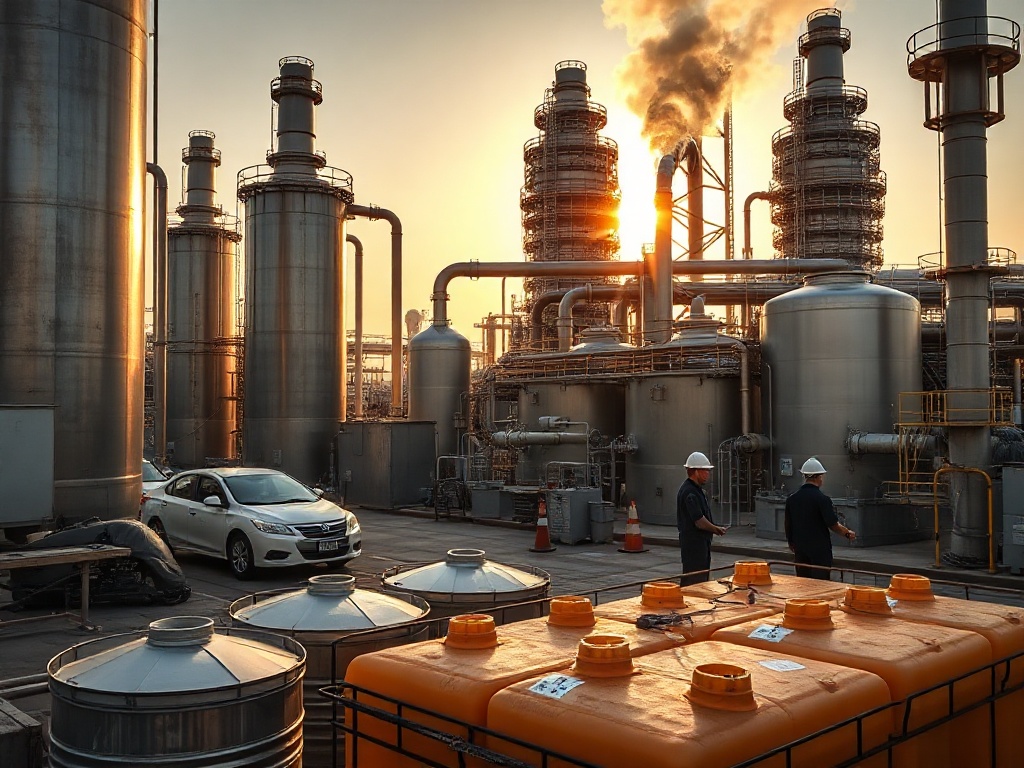
There is a logic that for decades seemed immovable in the oil industry: value lay in crude, in geology, in whoever controlled what was beneath the ground. Repsol has just demonstrated that this logic has visible cracks. The company launched industrial-scale production at its second plant dedicated exclusively to 100% renewable fuels, located at its industrial complex in Puertollano, in the province of Ciudad Real. The raw material is not petroleum. It is used cooking oil and waste from the agri-food industry. The end product is diesel that works in any current engine, without modifications, and can be distributed through the existing supply infrastructure.
The investment amounted to more than 130 million euros to transform a refinery unit that previously processed materials of fossil origin. To that figure, a further 16 million euros were added to integrate renewable hydrogen into the process, produced on-site by replacing natural gas with biogas derived from waste. The combined result, according to the company, is a fuel whose carbon footprint can be up to 98% lower than that of conventional mineral diesel, when the full life cycle is taken into account.
The installed capacity stands at 200,000 tonnes per year, which adds to the 250,000 tonnes per year already produced at the Cartagena plant. Repsol now operates with 450,000 tonnes per year of renewable fuel capacity in Spain. The company estimates that the use of Puertollano's output will prevent the emission of approximately 700,000 tonnes of CO₂ per year in life-cycle terms, compared to the conventional fuels it replaces.
When waste becomes a productive asset
What makes this case structurally interesting is not the investment figure or the declared emissions reduction. What deserves analytical attention is the transformation of the procurement logic. For decades, a refinery depended on a concentrated, expensive, and geopolitically fragile supply chain: crude oil. Used cooking oil and organic waste from the food chain, by contrast, are dispersed, abundant materials that, in the absence of industrial processing, constitute a management problem for whoever generates them. The refinery that processes waste does not merely change its raw material; it changes its position within an entirely different logistical and incentive system.
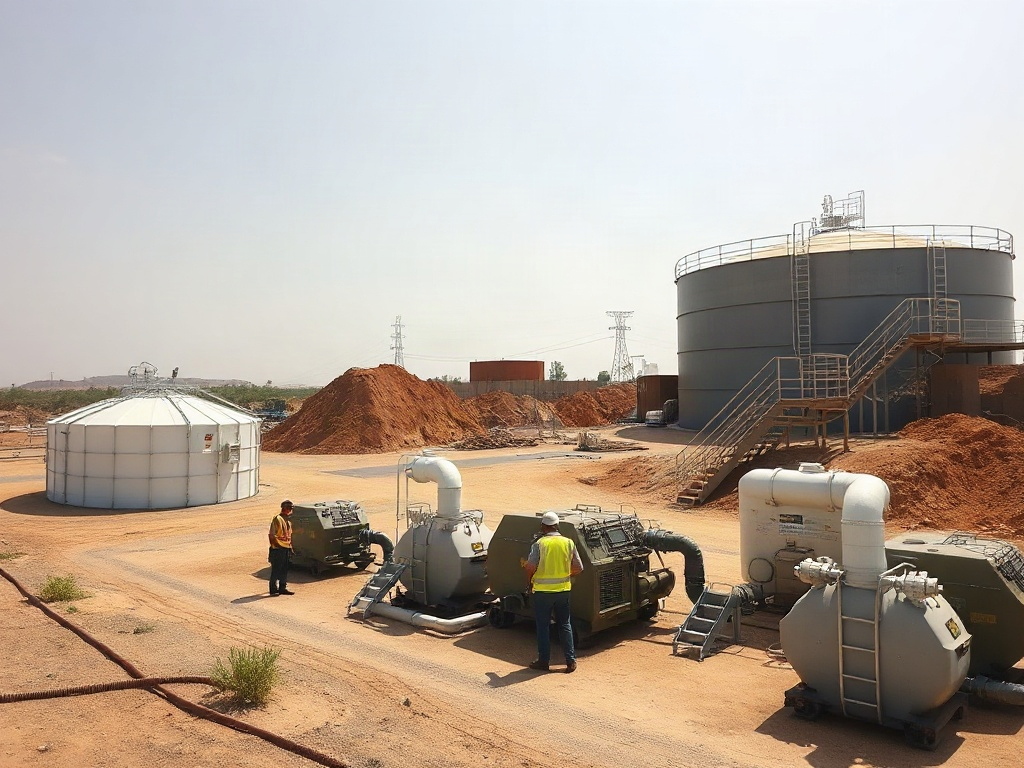
This 130-million-euro investment in Puertollano is also the first transformation of its kind on the Iberian Peninsula: a fossil refinery unit converted into a plant capable of processing organic waste streams. That is not an incremental adjustment. It involves reactors specifically designed for this type of production, the adaptation of auxiliary services, and a distinct logistical architecture. The technical integration was, according to the company itself, one of the central achievements of the project.
The renewable hydrogen component adds another layer of complexity. Repsol does not purchase green hydrogen on the open market: it produces it on-site, replacing natural gas with biogas from waste. That closes a loop which reduces exposure to gas prices, improves the carbon profile of the final product, and increases the self-sufficiency of the complex. In terms of cost architecture, this is significant because part of the structural volatility of a conventional refinery derives precisely from the price of gas as an input for producing hydrogen in hydrotreatment processes.
The commercial availability of the product, known as Nexa Diesel, is already operational at more than 1,600 service stations operated by Repsol in Spain and Portugal. The fact that the existing distribution channel can absorb the product without modifications is not a minor detail: it eliminates one of the most persistent adoption barriers in the transition away from conventional fuels.
What Bloomberg saw that the press release does not say
Bloomberg reported on 26 May that the new capacity at Puertollano is bringing Repsol closer to Neste Oyj in the ranking of European renewable fuel producers. Neste, the Finnish company, has for years been the continental reference point in renewable diesel. The fact that a Spanish refinery is positioning itself in that competitive space after five years of investment is an indicator of a shift in positions within a market that has not yet reached its definitive scale.
That context is more relevant than the corporate sustainability narrative that naturally accompanies these announcements. The European market for renewable fuels is being shaped right now: the volumes, the raw material supply chains, the contracts with airlines and fleet operators, the accessibility across distribution networks. Whoever establishes industrial capacity at this scale at this moment is choosing a place in a value chain that, ten years from now, will have far less flexibility to incorporate new actors. Entry barriers in conventional refining are high; entry barriers in circular refining — which also require managing waste streams — are even more specific and demanding.
Repsol's portfolio at Puertollano is not limited to liquid fuels, either. The complex already produces sustainable aviation fuel (SAF) from organic waste for airlines, and is close to inaugurating the only ultra-high-molecular-weight polyethylene plant on the Iberian Peninsula. Over the past five years, total investment at Puertollano reached approximately 800 million euros. What is being built is not merely a plant: it is a diversified industrial platform operating on the economics of waste and high-value-added materials.
The friction that the announcement does not resolve
An honest analysis of this move requires identifying the tensions that corporate communications tend to smooth over.
The first is regulatory dependency. Renewable fuels in Europe are partly driven by biofuel blending mandates and carbon credit mechanisms. The profitability of a 130-million-euro plant processing used cooking oil also depends on those policy frameworks remaining stable or becoming more stringent over time. If regulatory pressure eases, or if the definition of admissible feedstocks changes, the financial model of the asset is altered. There is no publicly available data on the payback period of the investment or on the margins per tonne, which limits the ability to externally audit the robustness of the model.
The second tension concerns feedstock scale. Used cooking oil is not an infinite resource. As more European actors compete for the same agri-food waste streams, the price of raw material rises. Neste, Eni, TotalEnergies and other players are all pursuing the same organic flows. Repsol has not publicly detailed its supply contracts or its long-term strategy for securing volumes. That is a real bottleneck that the circularity narrative does not eliminate on its own.
The third is the company's position in relation to the 2035 debate. Repsol has indicated in previous communications that renewable fuels should be considered as grounds for reconsidering the ban on combustion engines in Europe. That is a legitimate reading from the perspective of a company with physical assets in refineries. But it is also a position that may collide with the political direction of the European Union if the regulatory axis maintains its orientation toward the electrification of private transport. Repsol's industrial bet in Puertollano works best in a scenario where liquid fuels continue to form part of the transport mix for decades — especially in heavy-duty fleets, aviation, and maritime shipping. That scenario is plausible for freight transport. In private transport, the regulatory convergence is moving in a different direction.
Circular refinery as a repositioning of competitive standing
What Puertollano places on the table, beyond the capacity announcement, is a model of industrial transformation in which the inherited physical asset ceases to be merely a transitional liability and becomes a low-carbon production platform. That transformation is neither free nor automatic: it required five years, 800 million euros invested across the complex, and the technical conversion of units originally designed for an entirely different type of chemistry.
The construction and commissioning of the project involved more than 650,000 hours of work, approximately 80 subcontractors — the majority of them regional — and an average daily workforce of more than 110 people, with peak figures exceeding 250. That is also a structural data point: the renewable fuel industry at this scale generates specialised industrial employment in geographies that would otherwise be absorbing the full impact of the decline of conventional refining.
The change that Puertollano represents is not that oil has run out, nor that refineries are about to disappear tomorrow. What it reveals is that the structure of value within the hydrocarbon chain no longer follows a single stable path. A refinery that produces diesel from used cooking oil and generates hydrogen from waste-derived biogas operates according to a logic of procurement, regulation, and competitive positioning that is materially different from the logic that sustained the business throughout the twentieth century. The physical asset is the same. The architecture that makes it profitable and defensible over time no longer is.