
Ericsson and Intel Bet on AI-Native 6G: The True Product is the Operational Architecture
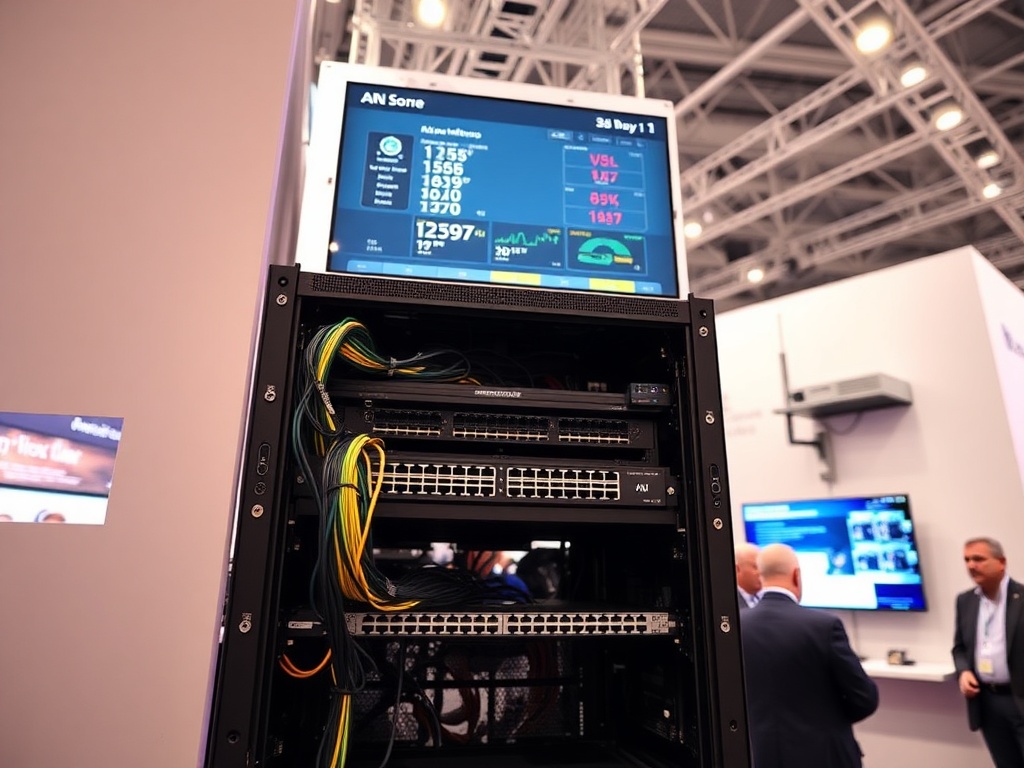
At Mobile World Congress Barcelona 2026, Ericsson and Intel announced a strategic collaboration to accelerate the transition from research to commercial deployments of AI-native 6G. The public message was clear: 6G will not merely be an evolution of 5G but will create the infrastructure to “distribute AI” across devices, edge, and cloud; from Intel’s perspective, there is a push for a unified RAN, core, and edge to facilitate a transition that is “open, efficient, and secure.” They set a timeline: commercial 6G networks by 2030 and initial testbeds by late 2027. In between, demonstrations at the congress showcased Cloud RAN, 5G Core, and open infrastructure.
At face value, this is the technology headline. However, the strategic reading is different: when two giants with decades of partnership announce collaboration without disclosing financial figures, the real asset is not a packaged “6G product.” The real asset is an operational architecture aiming to become a de facto standard: determining what is computed, where it is computed, with what silicon, which cloud, under what security criteria, and with what compatibility for operators. This is the leverage that defines margins, bargaining power, and deployment speed in an industry where decision windows are long, and the cost of error is extremely high.
AI-Native 6G is Not a Feature: It’s a Redistribution of Power in the Network
Ericsson positioned 6G as the infrastructure for “distributing AI” across devices, edges, and clouds. This statement matters less for its marketing and more for its implication: if AI transitions from being an overlay “on top” of the network to being part of its operation, the center of gravity shifts from radio as specialized hardware to a combination of high-performance computing, cloud orchestration, and real-time inference capabilities.
Intel emphasized the unification of RAN, core, and edge AI, discussing a transition that is “open, energy-efficient, and secure,” with a critical component: Cloud RAN powered by Intel Xeon and “future Ericsson silicon” on Intel’s most advanced process nodes. In operational language, this is a bet to standardize the computing layer and capture value on two fronts: (1) performance and efficiency (cost per bit, energy consumption, inference density) and (2) control over the hardware roadmap that supports virtualized network functions.
Here lies a structural tension in the sector: operators aim to lower total costs, avoid excessive reliance on a single vendor, and maintain multi-vendor flexibility. Suppliers, in turn, need volume and predictability to amortize R&D and manufacture at scale. An AI-native 6G pushes differentiation beyond antennas or boxes, focusing on software platforms, acceleration, and security. This alliance is not neutral: it seeks to define the “baseline” upon which future network functions will run.
No public investment figures or expected returns have been disclosed. This does not lessen its relevance; rather, it amplifies it. In the absence of numbers, what is being communicated is an intention for standard leadership and a “fast track” to commercialization. In telecommunications, those who define interfaces, integration, and operational maturity hold advantages even before a mass market exists.
The Real Play: Turning Research into Products Without Bureaucracy Slowing Pace
The announcement emphasizes “accelerating” the transition from research to commercial deployment. This word often fails in corporations for a simple reason: they try to manage exploration with the same processes they use for the exploitation of the current business. In 6G, this error could be fatal because the timeline is long, and the risk of technological fragmentation is high.
In this case, Ericsson and Intel appear to focus on pillars that, if executed well, reduce organizational friction: leadership in standards, public demonstrations at MWC, integration of core, RAN, and edge, and a platform narrative (openness, efficiency, and security). This suggests an attempt to move from “research” to a validated pre-product through repeatable demonstrations, concrete integrations, and reusable components.
The typical trap would be to celebrate demos as if they were products. The difference lies in governance design: such a collaboration needs an “assembly line” for technical learning, not a committee. If decision-making gets stuck in corporate approval cycles, the window towards the 2027 testbeds becomes merely a symbolic milestone, not an operational one. Conversely, if managed as a portfolio—with separate fronts aimed at maturing Cloud RAN, cloud-native core, platform-level security, and silicon—the organization can protect the current business (5G/5G Advanced) while building the next stack.
What is clear from the publicly available facts is that they are using MWC as a mechanism for positive pressure: showcasing progress in Ericsson’s pavilion and Intel’s booth, along with partner spaces. This public exposure acts as internal discipline: it forces the delivery of real integration, not just slides. In industries with long cycles, such a cadence is a management tool as vital as the budget.
Cloud RAN, Xeon, and Silicon: The Portfolio Behind the "Openness" Discourse
The announcement merges two movements that, taken together, reveal the portfolio logic.
First, Cloud RAN driven by Intel Xeon. This serves as a bridge from 5G Advanced to 6G: it enables today’s sale of network modernization, virtualization, and operational efficiency while laying the groundwork for AI-native capabilities. For Ericsson, this bridge protects its current revenue engine: the operator doesn’t buy “6G”; they buy measurable improvements in operation, scalability, and deployment. For Intel, it is a way to anchor general-purpose computing in a field that has historically mixed specialized hardware with closed stacks.
Second, “future Ericsson silicon” fabricated on Intel's advanced nodes. This aims at three explicit goals mentioned in the announcement: performance, efficiency, and security, alongside “supply security” for operators. Though no technical details have been published, the intent is clear: if 6G increases the weight of computing and inference, silicon returns as a field of competitive advantage. And if silicon dictates energy efficiency, it also defines operational cost and the viability of certain edge functions.
The nuance is that “openness” does not imply a lack of control; rather, it signifies control through interfaces and compatibility. In telecom, the winner is rarely the most “open” in the abstract, but rather the one who translates openness into an operationally viable proposition: standard components where beneficial, differentiation where value is captured, and an integration model that reduces the operator's switching costs.
The existence of a rival alliance mentioned in context—Nokia with Nvidia in AI-native RAN/core—reinforces the pattern: the battle is not solely for radio but for computing platforms + software + acceleration. The impact on the market is predictable: more vertical alliances, more competition to influence standards, and greater pressure to demonstrate energy efficiency and real latency, not promises.
Implications for Operators: Efficiency Today, Dependency Tomorrow
From the operator's perspective, the case for this collaboration is straightforward: a well-designed “AI-native” architecture should enhance spectral efficiency, energy consumption, and the capacity to deliver latency-sensitive services, backed by inference closer to the user. The collaboration also emphasizes platform-level security, an unavoidable topic if the network evolves into a distributed system of computation and inference.
The hidden cost lies in technological dependence. If integration among Cloud RAN, core, edge, and silicon is optimized for a specific path—for instance, certain families of processors, specific software layers, or particular security architectures—multi-vendor flexibility can practically diminish, even if the discourse suggests openness. This isn't an ethical judgment; it's industrial mechanics: the more optimized for efficiency and performance, the more the possible combinations narrow.
Another critical point is time management. 2030 as a commercialization date implies that the business over the coming years will largely remain 5G/5G Advanced, with selective investments in cloudification and automation. A sensible strategy for suppliers is to use the journey to 6G as a sales accelerator without forcing the customer to wait for the “big leap.” The demonstrations at MWC fit precisely within that logic: showing a tangible bridge rather than a leap into the unknown.
Finally, the promise of “supply security” through advanced process nodes is relevant for operators for both operational and regulatory reasons. In national networks, continuity of supply and traceability matter as much as performance. If the alliance manages to convert this into a verifiable platform attribute, it adds a layer of differentiation that does not solely rely on peak speed.
A Viable Alliance If It Separates Today’s Paying Business from Tomorrow's Train
This collaboration has strategic coherence because it addresses the real bottleneck of 6G: turning research into a deployable infrastructure stack, with computing, connectivity, cloud, and security designed as a system. The absence of public figures limits direct financial analysis, but the stated timeline—testbeds in 2027 and commercialization in 2030—requires disciplined portfolio management.
Organizationally, viability rests on executing at two speeds without contaminating metrics: exploiting 5G Advanced and Cloud RAN as a source of cash and operational learning, while exploring AI-native 6G with technical autonomy, a cadence of demonstrations, and a focus on standards and integration. If Ericsson and Intel maintain that separation—selling products today and creating tomorrow’s architecture—the balance between current profitability and future exploration is operationally sustainable.