
TCL Bets on Screens as a Defensive Strategy in an AI-Dominated Market
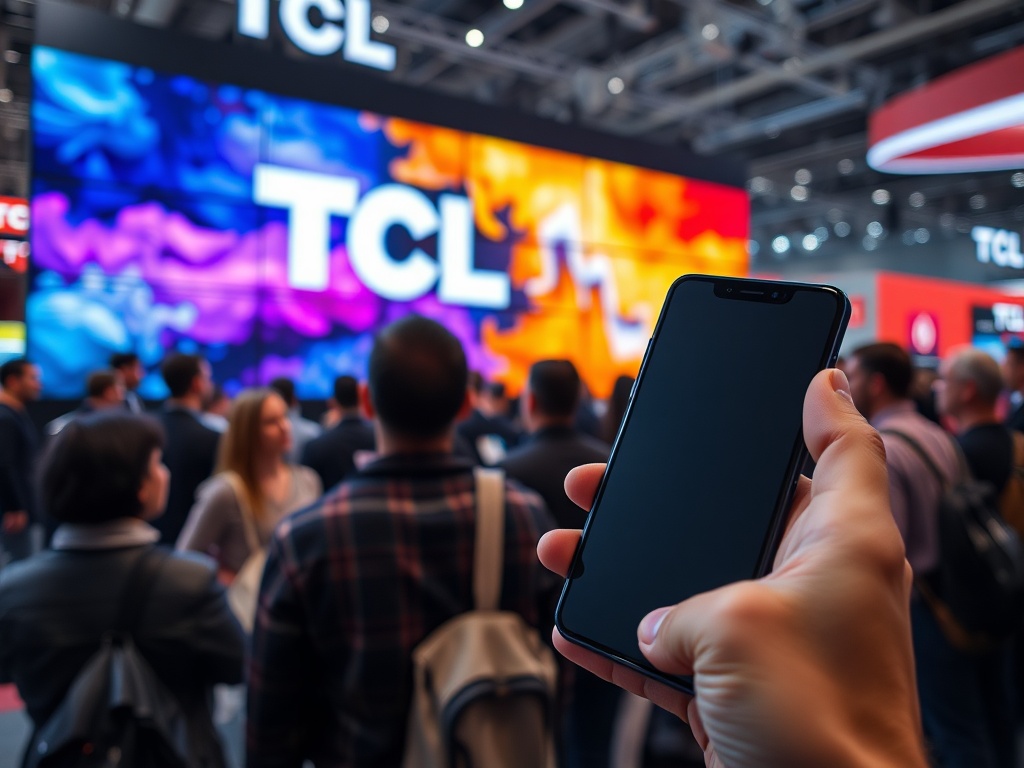
At MWC 2026 in Barcelona, the script was predictably filled with AI promises, similar demos, and a race to label any function as "smart." In this context, TCL chose to present a different star. According to coverage from Euronews, the brand highlighted screens as the "hero" of the event, delivering a simple message: without a top-tier panel, the “AI experience” has no place to shine or to be supported in daily use.
The centerpiece of the booth was the X11L SQD-Mini LED, a series already unveiled at CES 2026, boasting ambitious specifications: over 20,000 local dimming zones, up to 10,000 nits of peak brightness, and a promise of 100% BT.2020 color gamut, backed by its Super Quantum Dot technology. TCL also showcased NXTPAPER screens for smartphones and e-note devices, emphasizing visual comfort, and hinted at concepts like AR glasses. It wasn’t a showcase of flashy announcements; it was a public validation of an industrial gamble.
What matters for a business leader is not the features list, but the underlying pattern: when a category floods with indistinguishable claims about AI, differentiation reverts back to physical assets, supply chain control, and the part of the product the customer perceives without a manual: what they see.
The Real Strategy Behind the Showcase: Differentiate Where Comparisons Are Immediate
TCL understands something that many product teams overlook when swept up by the moment’s narrative: in consumer electronics, users do not\u2019 purchase AI; they buy visible results. In televisions and mobile devices, these results begin with the panel. At MWC 2026, the company took that argument to the extreme, elevating the screen to a category of competitive advantage against the saturation of messages about AI.
The case of the X11L is illustrative because it competes in the territory where consumers perceive value within seconds: contrast, brightness, color stability, halos around bright objects, reflections in a lit room, viewing angle, the actual thickness of the unit. In the demonstration, TCL leveraged numbers that signal power: 20,000+ zones and 10,000 nits. Yes, these are marketing metrics, but they also declare serious investment in engineering, materials, and backlighting control.
Meanwhile, the discourse of “AI improves everything” has become easily replicable. If a competitor can buy a similar chip, license models, or upgrade software with similar promises, the supposed differentiation deflates. Instead, an advanced panel—with manufacturing processes, filters, controllers, and consistent performance—becomes harder to copy quickly.
This indicates a positioning maneuver: TCL is not just competing against other brands; it competes against the erosion of perceived value in a market where justifying a premium price is increasingly difficult year after year. The screen is the component that sustains that premium because it’s what the customer interacts with all the time. AI can be the garnish, but the “silver” is charged for the dish itself.
SQD-Mini LED as a Margin Play: When the Product Defends Itself with Physics, Not Discourse
Euronews' narrative fits within a product economy logic: in an environment of increasingly similar functions, profitability is defended by controlling the component that concentrates the perception of quality. In the X11L, TCL pushes SQD-Mini LED with a clear promise: more zones, more brightness, and more color purity.
From a cold perspective, 20,000 dimming zones is not a technical trophy; it’s a strategy to reduce one of the most frustrating defects in advanced LCDs: halo effects. And the elevated peak brightness isn’t merely “more”; it’s utility in real scenarios: HDR, well-lit rooms, sports content, video games. In premium markets, those details justify the leap in category.
Furthermore, TCL places AI in its rightful place: as processing that optimizes the panel, not as an abstract promise. The spec sheet mentions a processor with optimization functions, but the heart of the argument remains material and measurable: the backlighting system, color filters, the panel, and its control. This hierarchy matters because it avoids the typical pitfall of selling “magic” and then disappointing in the tangible aspects.
Now, there is also an operational risk that the business should not gloss over. The general coverage of the CES-MWC cycle suggests that real-world testing does not always achieve the declared peaks of brightness and color gamut. That doesn’t disqualify the product, but it changes the type of promise that should be made. In the premium sector, a disconnect between claims and experience costs double: in returns and in confidence loss. The point isn’t “don’t promise”; the point is to promise what you can sustain in a living room, not just in a laboratory.
The positive defensive side effect of this bet is that if TCL can make the market associate its brand with leadership in screens—not with a passing AI feature—it turns the debate into a less volatile one. AI will continue to evolve and homogenize; a reputation for panel quality, if earned consistently, is more durable.
The Invisible Move is the Supply Chain: Control the Panel to Control the Pace of Innovation
MWC 2026 displayed products, but the real business lies behind: panels, manufacturing, and scalability to larger sizes without shooting up costs and defects. In the context material, the relationship with CSOT, the group’s R&D and panel manufacturing arm, is mentioned. This matters because it completely changes the type of company TCL is: not merely an integrator purchasing components, but an influential player in the critical piece.
For an innovation strategy, this integration holds a practical advantage: it allows for rapid iteration where it hurts. If halo effects are the issue, work is done on zone control and the optical system; if reflections hinder retail sales, anti-reflective layers are invested in; if the viewing angle impacts open-plan homes, the panel is redesigned. These are not cosmetic improvements; they are direct responses to user friction.
This also explains why the focus on screens is a means of escaping the theater of AI. An assistant or “smart” mode is activated in a demo; a bad screen is endured for eight hours. The premium customer, one who pays for 75, 85, or 98 inches, buys with their eyes and with regret in mind: “this looks spectacular” or “this wasn’t what it promised.”
In mobile, NXTPAPER aims at another real pain point: visual fatigue and prolonged reading. Coverage doesn’t provide fine metrics, so there’s no need to fabricate them. But the product framing is clear: less hype and more ergonomics. In a smartphone market where camera and AI are no longer sufficient to differentiate brands, the reading experience, paper-like finish, and emphasis on visual well-being can capture a niche willing to pay if the proposal proves practical through use.
The executive warning here is sober: vertical integration helps, but does not forgive a classic error. If the company falls in love with the technology and fails to tie down pricing and willingness to pay early on, it ends up building a technical monument with uncertain demand. The panel is an expensive asset; it is justified when the narrative turns into orders, not awards.
The Validation That’s Missing Is Not Technical, It’s Commercial: Visible Pricing and Real Commitment
MWC serves to impress, but not necessarily to validate business. A full booth does not equate to sustainable sales. For this strategy to hold firm, TCL needs to convert specifications and demos into commercial evidence: what segment pays for ultra-large, how much they pay for the perceived improvement, and what part of the value is explained by screens versus software.
The described timeline is coherent: launch in China by the end of 2025, debut in North America at CES 2026, and planned deployment in Europe and the United States later in 2026. This suggests a phased expansion, typical when seeking to amortize production capacity and learn from markets with different sensitivities to price.
But the premium market does not forgive two mistakes:
1) Promise misaligned with real experience. If the claim of 10,000 nits and 100% BT.2020 is used as an anchor and then the customer perceives something lower, the product can be excellent and still generate negative noise. In premium, the comparison is cruel because the purchaser is more informed and more likely to demand.
2) Confusing validation with applause. Awards and “Best of…” help open retail and press doors, but the real thermometer is commitment: pre-orders, conversions, return rates, and repeat purchases. Useful innovation is seen in cash flow, not in the showcase.
TCL’s smart move is choosing a territory where the customer perceives value without explanation. The incomplete move would be failing to translate that perception into a concrete commercial architecture: versions, tiered pricing, and messaging that avoids overpromising. In a cycle where AI becomes increasingly similar across brands, the one that wins isn’t the one that shouts the loudest, but the one that reduces purchase risk with consistent evidence in stores and at home.
The Executive Order is to Turn Spectacularity into Market Evidence
TCL's bet at MWC 2026 works because it returns the conversation to the component that supports the experience and the price: the screen. In a sea of interchangeable AI demos, investing in panels, zone control, and color is a way to build a moat sturdier than a slogan.
The next step isn’t technical; it’s about commercial execution: grounding claims in reproducible performance, tying the proposal to segments with real willingness to pay, and using each geographical deployment as an experiment with visible pricing and verifiable results. True business growth only occurs when the illusion of a perfect plan is abandoned and constant validation with the real customer is embraced.