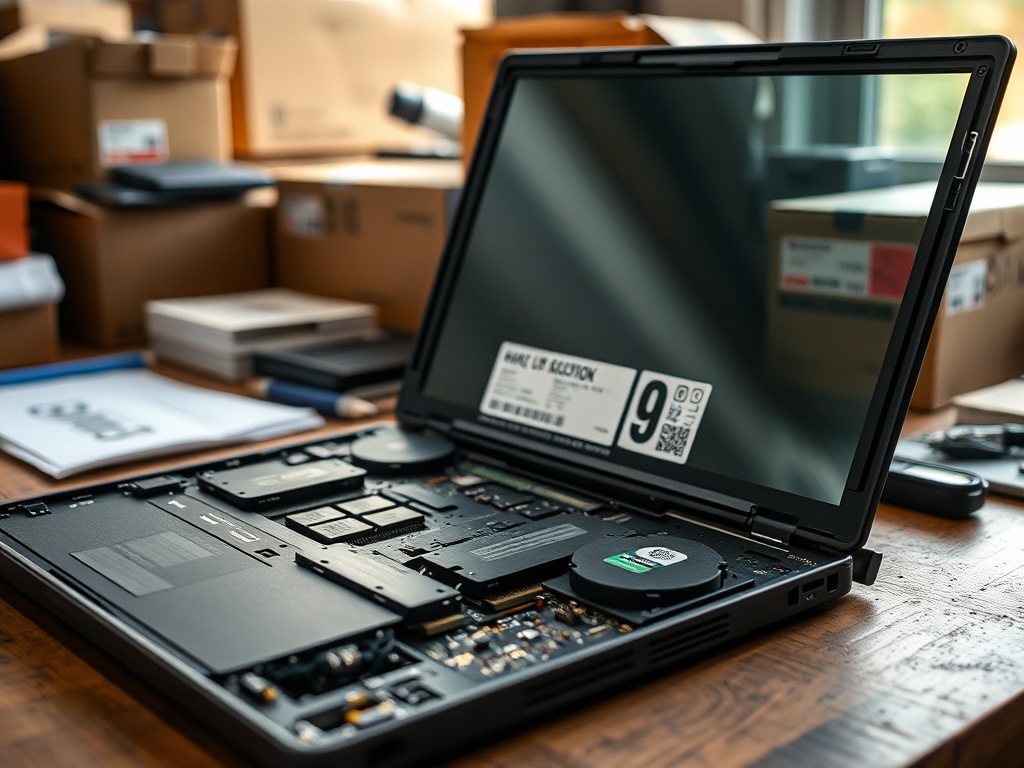

Memory Shortages Expose Leadership: The Framework Case and the Cost of Promising Without Controlling Silicon
When a product is modular, repairable, and designed to last, the customer is purchasing more than just components. They are buying a promise. In the case of Framework, that promise is being stretched in an uncomfortable way: the price of memory.
According to its CEO, Nirav Patel, the company has had to navigate a global memory shortage that is pushing costs up, affecting demand, and forcing operational decisions that few brands celebrate publicly: repeated price increases, configuration adjustments, and even working with chip brokers to secure supply. The news, reported by Business Insider, depicts a small company in a market dominated by giants, trying to uphold its proposition without hiding the blows under a marketing rug. This attempt, in 2026, is already an act of governance.
Framework detailed in public updates that the increases are based on concrete cost changes. In January 2026, it adjusted prices for Framework Desktop systems and Mainboards due to increases in LPDDR5x, with hikes ranging from 6% to 16%, having a particularly strong impact on the 128GB configuration due to the use of 128Gbit parts requiring multiple chips to achieve that capacity. Meanwhile, in its DIY Edition Framework Laptop line, the price of configurable DDR5 memory rose by 50% in an initial adjustment, settling between $12 to $16 per GB, still below retail averages and what some competitors charge for equivalent upgrades.
This narrative may seem technical. It is not. It is a story about how to manage the dignity of commitment when the market punishes without permission.
Silicon Inflation as a Test of Operational Integrity
The shortage of DDR5 and LPDDR5x is not an abstract event for Framework. It translates into a direct line between supplier cost and final price, with few buffers in between. What in a large corporation gets blurred among margins, portfolios, and contracts becomes a matter of life or death for a smaller company.
The facts are clear: Framework raised prices multiple times because memory costs continued to soar. In the Desktop, the increase was tangible from mid-January 2026, with a reported minimum increase of $40 attributed to LPDDR5x. In the Laptop DIY Edition, the blow concentrated on configurable DDR5 memory, but with a strategic move that reveals an uncommon understanding of the psychological contract with its community: they invited buyers to bring their own RAM, even including a link to PCPartPicker in their configurator and referencing a knowledge base with tested compatibility options.
That decision has a short-term reputational cost. It also carries long-term value: not simulating control where there is none. Transparency works when it’s not an aesthetic gesture but an explicit renunciation of corporate theater.
Patel stated that memory became "more expensive" and that this impacted demand. There are no public figures indicating how much demand fell, and the data void requires caution in exaggerating. However, the economic mechanics are sufficient: in PCs, price elasticity exists, especially when consumers perceive alternatives. In a modular product, moreover, the buyer tends to be more informed and more sensitive to justifications for price increases.
The fine point is this: the shortage not only raises costs, but also erodes a company’s ability to uphold promises of availability and “star” configurations. In particular, the 128GB configuration appears to be the most exposed due to the required component structure. When a single SKU becomes disproportionately expensive, the company faces a classic portfolio tension: either sacrifice accessibility, sacrifice margin, or sacrifice volume. Framework chose something more challenging: to sacrifice communicational comfort.
The Memory Market No Longer Responds to PCs; It Responds to Data Centers
The briefing explicitly outlines the engine of imbalance: the expansion of AI infrastructure is absorbing vast amounts of memory and shifting manufacturing capacity toward higher-margin products for servers. An example is cited that symbolizes the new order: an NVIDIA GB300 rack consuming 20TB of HBM3E and 17TB of LPDDR5X**. Although this data isn’t from Framework, it explains why a company focused on PCs ends up competing for the same input as players operating with radically different budgets and urgencies.
This demand change rewrites the industrial hierarchy. Consumer memory ceases to be the center of gravity. It becomes managed surplus, subject to price spikes and erratic availability. In this framework, a quote from a Maingear CEO mentioned in the briefing describing the phenomenon as a multi-year problem suggests a normalization of pain: the industry isn’t waiting for it to “pass” but is adapting to a new baseline.
Framework, by design, positioned itself in a moral corner of the market: repairability, modularity, the right to fix. This stance attracts a customer with a long memory and low tolerance for cynicism. Hence, the "bring your own RAM" move isn't just a pricing tactic. It is a way of redistributing control back to the user at a time when the manufacturer has lost control over the input.
The financial implication is uncomfortable for any CFO: when a critical component increases, the final price rises, or the margin falls. Additionally, if the volume drops due to price sensitivity, the margin not only fails to compensate but becomes an illusion. In smaller companies, volume sustains future negotiations and the ability to finance inventory. If the market contracts, the unit cost can rise again due to the loss of scale. This spiral is the silent enemy.
Meanwhile, the giants can play another game. The briefing mentions comparisons to Apple charging $25 per GB for comparable upgrades, along with the context of other manufacturers such as Dell or Asus announcing increases due to memory costs. This environment reduces the reputational risk of raising prices but does not eliminate the commercial risk of losing customers who simply postpone purchases.
Here comes the detail that separates management from narrative: Framework did not attempt to sell scarcity as an opportunity. They described it as a constraint, and that is more useful for a board than any slogan.
Brokers, Weighted Averages, and the Art of Managing Promises
Working with chip brokers is a phrase that makes one uncomfortable because it smells of the secondary market, volatility, and risk. Precisely for this reason, it is relevant. When a company admits its supply chain needs intermediaries to maintain continuity, it recognizes that the “clean” procurement model is no longer sufficient.
Patel, according to Business Insider, mentioned this navigation of including brokers as part of the operational response. Framework also indicated that it respects the original price for existing pre-orders and uses the weighted average cost of inventory to manage fluctuations. Translated into governance: they are trying to prevent volatility from devolving into arbitrariness and to avoid having the customer perceive it as a casino.
This is the point where ego often ruins companies. Ego needs to look good. It needs to maintain a narrative of control. In contexts of prolonged scarcity, this need produces two pathologies: promising timelines that are unsustainable or hiding increases within confusing configurations. Framework chose a third path: raise prices when costs rise and explain why in detail, even knowing that this reduces demand.
I do not romanticize transparency. It can be a double-edged sword. Making numbers public teaches customers how to arbitrate against you. It shows them where you’re pressured and gives them arguments to wait for future discounts or buy elsewhere. However, Framework has already incorporated that risk into its strategy by facilitating external RAM purchases for the DIY Edition. This move, viewed coldly, transforms a margin problem into a proposition problem: if the user can install their memory, Framework's value migrates to the base, the design, the repairability, the support, and the trust.
This shift is healthy when the company can capture value in other modules and services. It is dangerous when memory was an important part of the margin to finance the rest. We don't have figures to conclude what the case is. What we do see is a company trying to avoid an accounting lie: pretending that the margin holds by magic.
There is also a lesson in product architecture: the Desktop with LPDDR5x integrates design decisions that can limit supply flexibility in the face of shocks. When availability becomes industrial politics, integration decisions become financial decisions.
The Competitive Advantage in 2026 is the Sincerity that Endures Audits
Framework is doing something unusual: publishing monthly updates and asserting that it will only pass on increases to the extent they come from the supplier. This assertion is easy to say and difficult to execute, as it requires internal discipline, traceability, and resisting the temptation to use the crisis to expand prices.
The briefing notes that the company learned in post-CES 2026 meetings that restrictions might prolong throughout 2026 and possibly for years. Facing this horizon, the strategy cannot be reactive. It requires designing options.
Some options are visible between the lines, even if not explicitly stated as a plan. Firstly, segment configurations to preserve "relative value" in 32GB and 64GB, positioning them attractively against building a PC independently. Secondly, protect pre-orders, which in a hardware company are political capital and cash capital. Thirdly, normalize BYO in DIY to reduce exposure to inflated prices in the channel.
The risk, from a leadership standpoint, arises when the organization confuses transparency with strategy. Transparency without the ability to ensure availability ends up being a report of impotence. Transparency with clear operational decisions becomes a form of control, not of the market, but of internal behavior.
For C-Level executives, this case illuminates an uncomfortable truth: the bottleneck is not always in engineering, sales, or capital. Sometimes it lies in the conversation no one wants to have about which promises need to be withdrawn from the market when critical inputs change ownership, and the owner is now AI demand.
The culture of any organization is nothing but the natural result of pursuing an authentic purpose, or the inevitable symptom of all the difficult conversations that the leader's ego does not allow them to have.