
India imports 90% of its oil and that is no longer just a supply problem
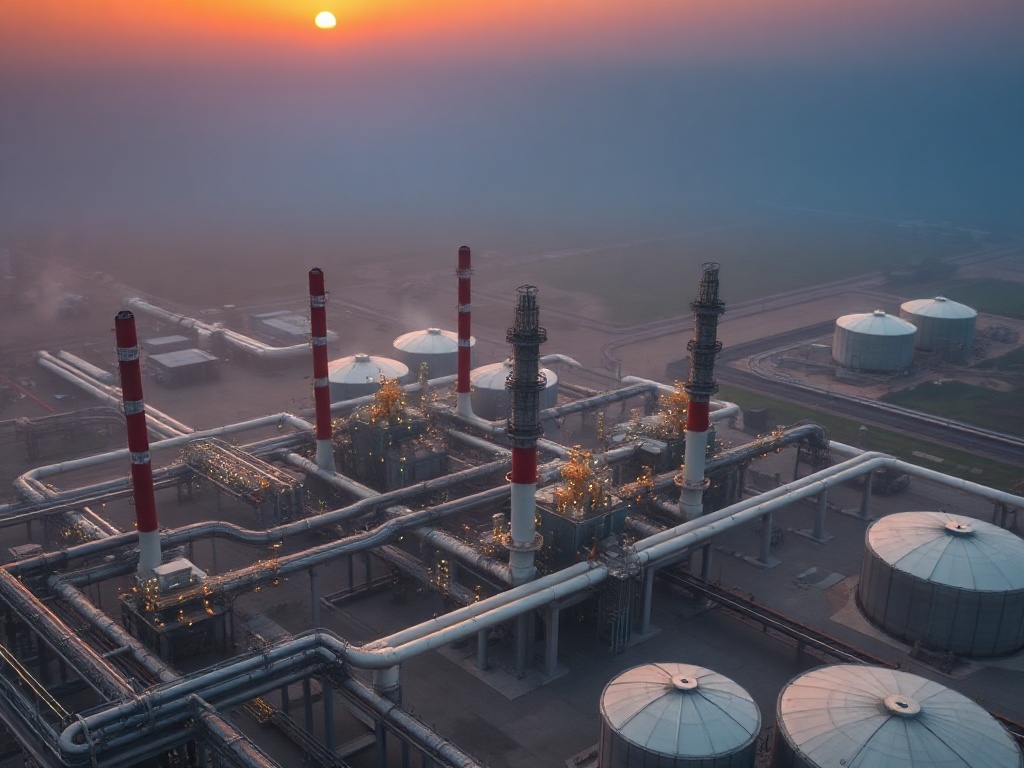
There is a moment when dependence ceases to be a manageable condition and becomes a structural vulnerability. For India, that moment has already arrived. The country imports close to 90% of the oil it consumes, and the persistent tensions in West Asia — the region from which most of that crude originates — have ceased to be an abstract geopolitical risk and have become a variable with direct consequences for the current account, inflation, and the fiscal stability of the state. The question circulating at the "India's Energy Security Challenge" panel at the India's Most Sustainable Companies 2026 event, organised by Business Today, was not whether India should change its energy matrix, but whether the current architecture of the system can sustain the pace of transition the country needs without compromising the immediate security of supply.
The session brought together executives from the sector's leading public enterprises — ONGC and BPCL — alongside the hydrocarbons regulator PNGRB and a clean energy specialist from the Institute for Energy Economics and Financial Analysis (IEEFA). The format revealed, from the very design of the panel itself, a tension that the Indian energy sector has been deferring for years: the coexistence of actors whose institutional viability depends on fossil fuels and analytical voices that document the financial deterioration of that model. This friction is not decorative. It is the friction that defines how India will distribute trillions in energy investment over the coming decade.
When diversification of sources is not enough to resolve the underlying problem
The standard argument against import vulnerability is the geographical diversification of suppliers: reducing concentration in West Asia by purchasing more crude from Russia, Latin America, or Africa. India has been doing precisely this, and the pivot toward Russian crude after 2022 was a fiscally intelligent move that reduced the cost of imports. But source diversification does not attack the structural core of the problem: the physical dependence on a raw material that India does not produce in sufficient quantities and that its economy consumes in growing volumes.
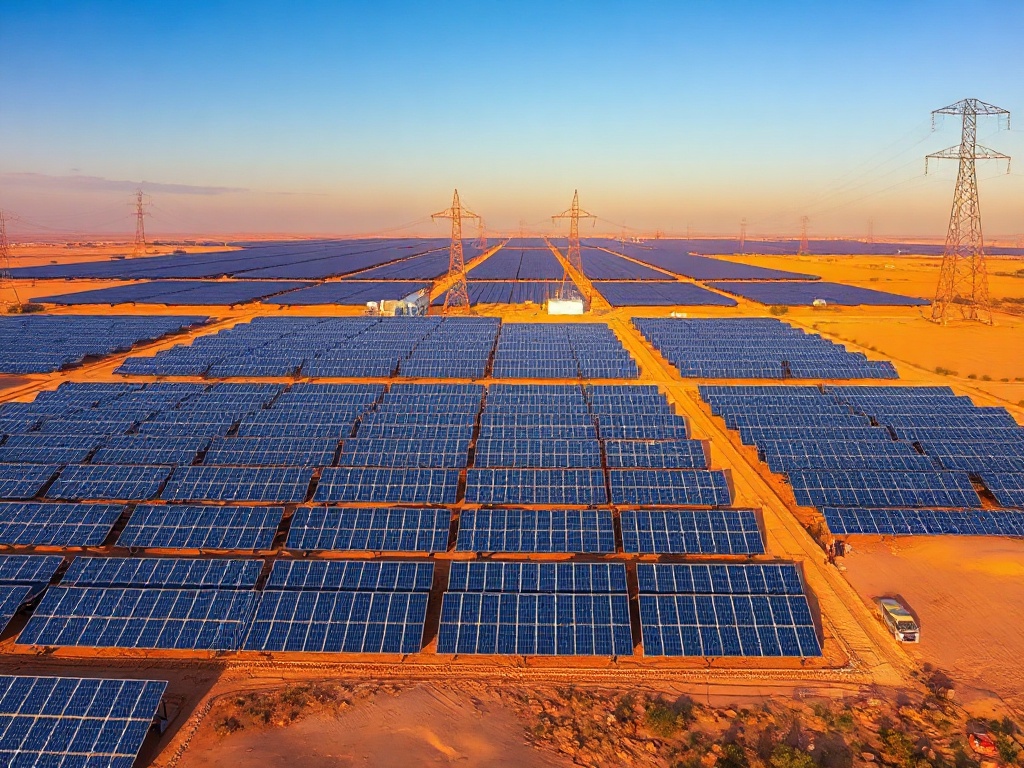
The analysis by Lawrence Berkeley National Laboratory, synthesised under the title Pathways to Atmanirbhar Bharat, establishes that India could achieve energy independence of close to 90% by 2047 if it aggressively deploys renewable capacity, electrifies its vehicle fleet, and develops green hydrogen for sectors that are difficult to decarbonise. This implies surpassing 500 gigawatts of non-fossil capacity before 2030 and reaching an electricity grid that is 80% clean by 2040. The numbers are technically plausible. The problem is not the technique; it is the sequence.
Between today and 2047 there is a transition period during which India will continue to be highly dependent on imported oil. And it is precisely in that interval — perhaps the most critical one — where the energy security architecture of the country presents its greatest vulnerabilities. Strategic petroleum reserves are insufficient to cover prolonged disruptions. The natural gas infrastructure, which could operate as a bridging fuel, is underdeveloped across much of the territory. And the pace of renewable deployment, though historically high, faces bottlenecks in transmission networks, storage, and financing.
Coal as a transition asset and the exit problem that nobody wants to name
One of the most politically complex elements of the panel was the explicit reference to coal as a domestic resource that India should continue to use "while fiscal space allows". The formulation is not innocent. India has substantial coal reserves and an electricity industry that still generates more than half of its energy from that mineral. Abandoning coal without having consolidated a sufficient alternative in terms of capacity and storage is not a fiscal or operational option in the short term.
But coal has an exit problem that India's energy debate rarely confronts with precision. It is not solely a matter of emissions: coal-fired thermal plants represent assets with operational lifespans of 25 to 40 years, and a significant portion of India's installed capacity is relatively recent. Shutting them down prematurely carries a financial cost that falls upon state-owned electricity distribution companies already operating with deteriorated balance sheets, and upon local communities whose economic activity depends on mining and generation. This is not a problem of political will; it is a problem of the financial architecture of the electricity system, one that requires specific instruments — transition financing, compensation mechanisms, tariff reforms — that have not yet been deployed at the necessary scale.
IEEFA has systematically documented how various coal projects at the global level accumulate the risk of stranded assets as renewables reduce their marginal costs of generation. For India, that dynamic is real but asymmetric: the competitiveness of solar and wind grows, but the grid does not yet have the flexibility to absorb high proportions of variable generation without compromising the stability of supply. In that context, coal operates as systemic insurance. Expensive, polluting insurance with an uncertain expiry date, but functional within the current conditions of infrastructure.
The logic of strategic reserves and the limit of the budget as a political variable
Expanding strategic petroleum reserves is one of the most direct measures available to reduce India's exposure to supply disruptions. The logic is straightforward: if the country can absorb an interruption of several months without turning to the international market, its negotiating position improves and its vulnerability to geopolitical crises is attenuated. The panel identified this expansion as a priority, and it is not the first time that diagnosis has appeared in India's public debate.
The obstacle is fiscal. Building and maintaining strategic reserves requires significant capital investment in storage infrastructure, plus the financial cost of the inventory. For a state that simultaneously manages energy subsidies, investment in renewable infrastructure, structural fiscal deficit, and social spending pressures, the space to allocate resources to supply insurance competes with other urgencies. The phrase "while fiscal space allows", which appears in the panel's description, is in reality the expression of a hierarchy of priorities that India has not resolved explicitly.
This lack of definition has consequences. An energy security strategy that depends on available fiscal space is not a strategy; it is a conditional intention. What India needs is not simply more storage, but a framework that defines how much supply risk is acceptable, which instruments mitigate it, and who finances each component. That risk architecture is what is absent from the current debate, and it is what causes the discussion about strategic reserves to remain at the level of diagnosis without advancing toward implementation.
The energy transition as a reorganisation of institutional power, not just of technology
What the panel at India's Most Sustainable Companies 2026 illustrates with precision — beyond the technical content — is that India's energy transition is not a problem of engineering or of the availability of capital in the abstract. It is a problem of the reorganisation of institutional power among actors whose relevance, budget, and mandate are constructed upon distinct energy logics.
ONGC and BPCL are public enterprises whose capitalisation, employment, and political position depend on the continuity of the hydrocarbons model. PNGRB is a regulator designed for a gas sector that has not yet reached the scale necessary to operate as the axis of the transition. IEEFA operates from an analytical logic that documents the financial deterioration of the fossil model but does not control the mechanisms for the allocation of public investment. These four positions represent four sets of incentives that do not converge naturally.
The energy transition advances effectively when the incentives of the dominant institutional actors align with the direction of change, or when the pressure of material conditions — costs, access to capital, asset risk — forces them to reposition themselves. In India, that pressure exists but has not yet reached the threshold at which the dominant fossil actors perceive that their adaptation is more profitable than their resistance. The sustained decline in the costs of renewables and India's growing access to international climate financing are the material conditions that are beginning to shift that threshold, but the movement is gradual and uneven across sectors.
The structural inflection point that this panel reflects is not the appearance of a technology that resolves the supply problem. It is the moment at which the logic of the import model — buying cheap oil to sustain growth — ceases to be fiscally sustainable at the same time that the domestic renewable alternative reaches sufficient scale to operate as the backbone of the system. India is in the period preceding that moment, managing a transition that does not yet have the financial, regulatory, or institutional instruments fully operational to execute itself at the speed that the energy security risk demands.