
Bodegas and the Boundary Where Federal Policy Becomes Real Costs for Small Businesses
On November 13, 2026, New York City Mayor-elect Zohran Mamdani stood before cameras to announce something unusual: that he had spoken personally with President Donald Trump and Secretary of Agriculture Brooke Rollins, and that as a result of those conversations, thousands of small grocery stores would have an additional 90 days to comply with new federal SNAP program requirements. He called it a victory for workers and small businesses. Trump, in that context, received public credit from a Democratic mayor of the country's largest city.
What appears to be a political agreement between ideological adversaries is, in its internal mechanics, something considerably more interesting from an economic standpoint: the story of how a well-intentioned federal regulation can become a working-capital pressure that crushes exactly the businesses it claims to want to protect.
When Complying with the Law Becomes an Entirely Different Business Model
The United States Department of Agriculture published in May 2026 a substantial update to the minimum inventory requirements for retailers authorized to accept SNAP benefits. The previous standard required three varieties in each of the four basic food categories: dairy, grains, proteins, fruits and vegetables. The new standard raised that threshold to seven varieties per category, increased the minimum units per variety to three, and required that at least three of the four categories include perishable products.
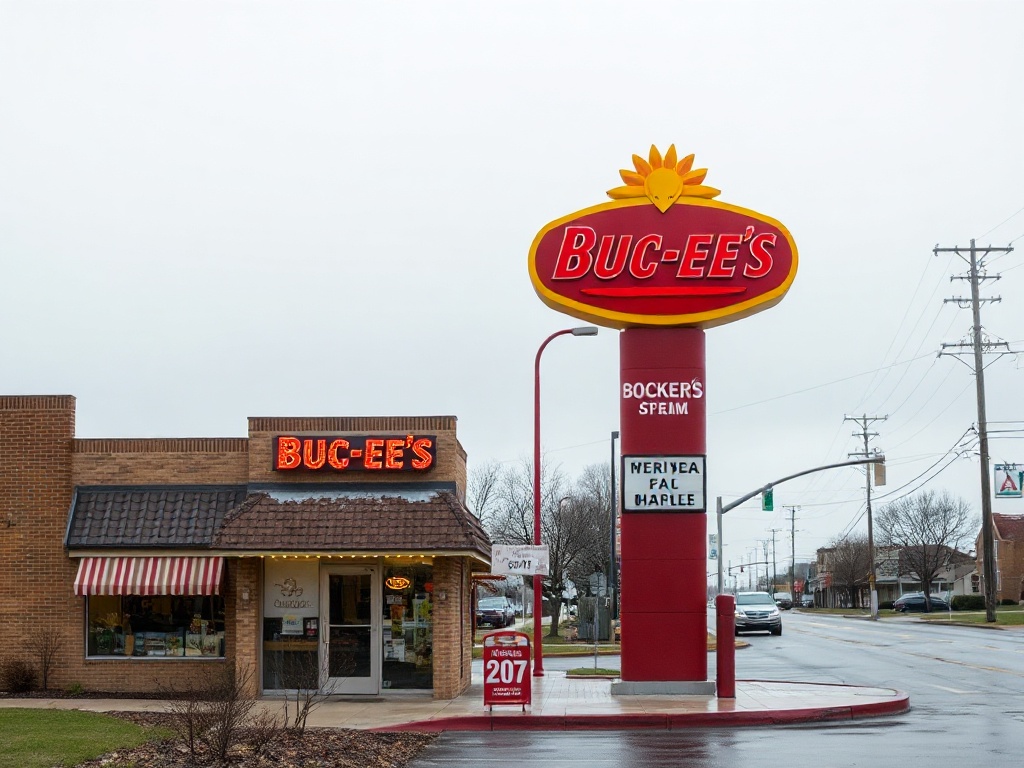
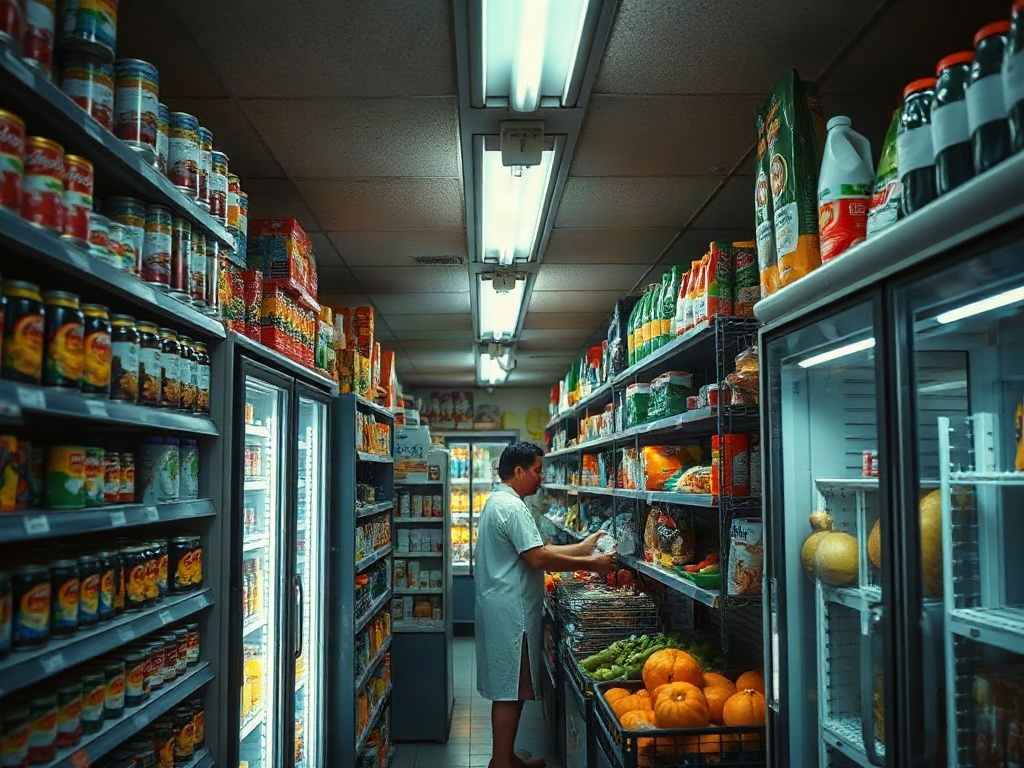
The arithmetic is concrete: 28 mandatory varieties, 84 minimum units in active inventory, available on each day of operation. For a supermarket chain with 40,000 square feet of retail floor space and consolidated relationships with distributors, that is background noise. For a neighborhood bodega with 600 square feet, limited refrigeration, and margins that do not allow for absorbing fresh-food shrinkage, that is a complete reconfiguration of the operating model.
Mamdani said it explicitly: for large corporate chains, the requirements presented virtually no challenge. For corner stores, the story was different. That distinction is not rhetorical. It reflects a structural asymmetry that the regulation did not distinguish when setting the threshold: the cost of compliance is not proportional to the size of the business or its capacity to absorb it.
A bodega operating on tight working capital faces, when confronted with this kind of requirement, a sequence of problems that chain together. First, the need to expand the fresh-food assortment implies greater turnover, greater shrinkage risk, and greater delivery frequency. Second, existing refrigeration space may not be sufficient for three categories of perishables simultaneously, which turns compliance into an infrastructure investment, not merely an inventory one. Third, if a required product sells out before restocking, the business is technically in violation on that day. The infraction is not cumulative: it is immediate. And the consequence of losing SNAP authorization includes a six-month waiting period before reapplying.
That detail completely changes the risk calculation. This is not a graduated fine. This is a binary cancellation carrying an opportunity cost of half a year of SNAP sales.
What Preceded the Visible Agreement
Before the November 13 announcement, something occurred that the headline of the political agreement tends to obscure: around one hundred bodega owners contacted the New York City mayor's office directly. That mobilization generated the pressure that led to the letter Mamdani sent to Rollins on November 2, initially requesting a six-month extension.
What was obtained was 90 days, not 180. But what matters is not the difference in weeks. What matters is the condition that made it possible for the request to reach the table: owners of small businesses who articulated an operational problem with enough specificity to convert it into a politically viable case. It was not a chamber of commerce lobbying effort or a legal challenge. It was the direct signal from a segment of businesses close enough to the edge that the impact became immediate and measurable.
That mechanism reveals something about how regulated markets move. Federal rules are written from an average view of the sector: they are designed with the median operator in mind, or the one the regulator knows best, which is usually the largest and the most thoroughly documented. Businesses that fall below that average are exposed to requirements that were not calibrated for their operational reality. The error is not always made in bad faith. It is frequently a matter of visibility: the bodega serving a low-income neighborhood with high SNAP dependence does not have the institutional weight to participate in the drafting of the rule, but it does feel the weight of the rule when it arrives.
The 90-day extension buys time. It does not resolve the underlying problem: that the rule was designed without distinguishing between types of operator, and that the February 2027 deadline arrives with the same compliance costs, only on a different calendar.
The Extension as Diagnosis, Not as Solution
The extension that the USDA granted on that same November 13 carries an expiration date: February 11, 2027. By that date, affected retailers must comply with the updated standards, obtain a new policy modification, or risk losing their SNAP authorization.
From the standpoint of business value proposition, the 90-day period has at least three possible uses. The first is a viability diagnosis: determining whether the cost of maintaining the mandatory assortment is recoverable through additional SNAP sales, or whether the business operates better outside the program. The second is negotiation with distributors: the new standard increases demand for small, frequent deliveries of fresh products, which could generate conditions for more favorable supply agreements for low-volume stores. The third is additional regulatory pressure: 90 days is also enough time for merchants' associations, local officials, and legislators to attempt to modify the standard or differentiate it by operator size.
What the extension does not resolve is the central question the USDA did not address in the May rule: if the policy objective is to broaden access to nutritious food regardless of zip code, the mechanism of minimum inventory standards works well for large formats and fails systematically in small formats—which are, frequently, the only SNAP access points in low-income neighborhoods.
There is an operational irony in that architecture: if the bodegas that cannot comply lose their authorization, SNAP beneficiaries in their neighborhoods are left without a nearby access point, which directly contradicts the stated objective of the policy. The regulator seeking to improve inventory quality in small stores may end up removing small stores from the system. Not by intention, but by design.
The Market Nobody Was Counting
Behind the 90 days lies a market signal worth reading carefully. The USDA estimates that the rule affects tens of thousands of SNAP-authorized stores across the country. Mamdani spoke of millions of consumers affected. Neither of those figures has an independently verifiable source in the available information, but the scale of the problem is large enough that the President of the United States agreed to a national extension at the request of an opposition-party mayor.
That reveals something about the economic and political weight of this segment. Bodegas are not a marginal phenomenon. In dense urban areas with high concentrations of SNAP beneficiaries, they are food-access infrastructure. Their continued participation in the SNAP system is not merely a social-policy matter: it is part of the logistical chain that makes it possible for benefits to reach those who need them without requiring long-distance travel.
Distributors and wholesalers that supply this segment face a period with an unusual dynamic. Demand for fresh products in bodegas may grow if owners decide to invest in compliance. At the same time, the margins of those businesses do not allow them to pay for the added complexity without some form of support: lower per-unit cost, lower order minimums, greater delivery frequency at no extra charge. The distributor that designs a proposal for that specific customer, rather than forcing its supermarket model onto a neighborhood bodega, has a window that the federal standard has inadvertently opened.
The 90-day extension is not the end of this story. It is the moment at which the underlying problem becomes visible to all the actors who had until now ignored it: the regulator that designed the rule without calibrating for size, the distributors that have no model for low-volume customers with high fresh-food delivery frequency, and the bodega owners who now have a concrete date by which to decide whether their business has a future inside the SNAP system or outside it. The pressure generated by a poorly calibrated regulation does not disappear with an extension. It accumulates until someone redesigns the rule, the distribution model, or the business itself.