
The Screen Nobody Asked to Pause
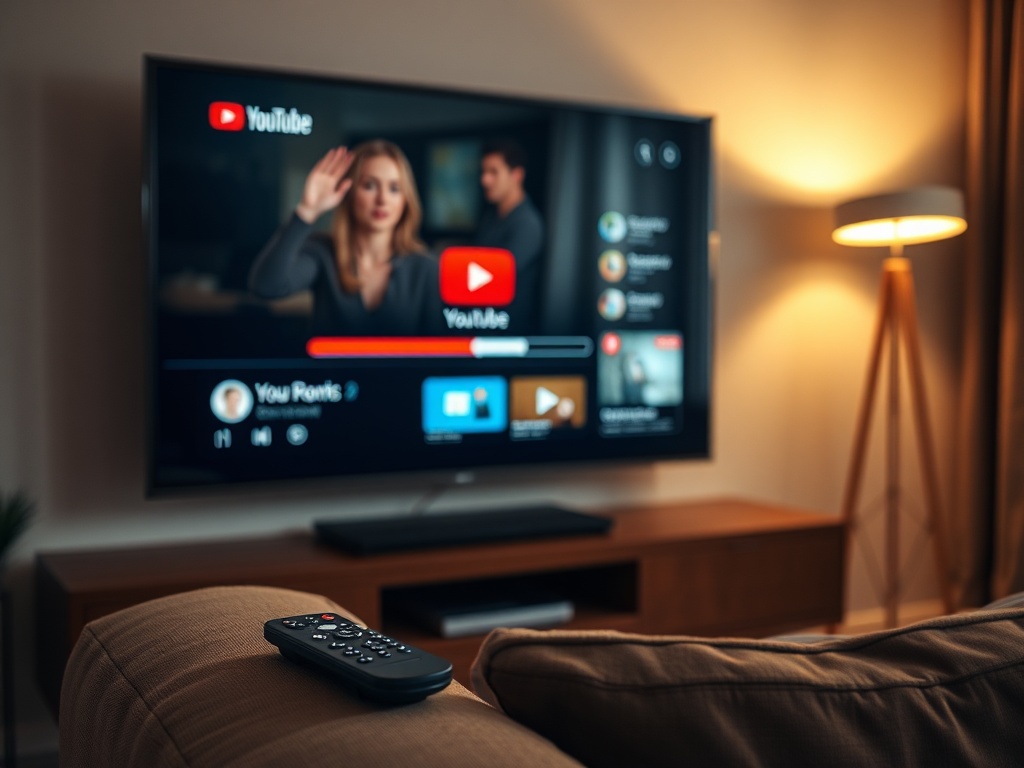
A few weeks ago, Reddit forums dedicated to YouTube were flooded with screenshots revealing a detail that left many users staring incredulously at their screens: unskippable ads lasting over 90 seconds on the TV app. This wasn’t an isolated incident. Posts exploded in the r/YouTube subreddit and on Hacker News, with comments ranging from indignation to dark humor. One user captured the collective mood with a phrase that serves as a diagnosis: "Apparently, they don’t know what’s happening on their own platform until users point it out."
YouTube responded through its official account on X (formerly Twitter) with a direct denial: the platform claims it has no unskippable 90-second ad format in testing, and is investigating the reports. This denial was met with more skepticism than relief. Another user replied publicly: "They shouldn’t lie; it damages their reputation as a company." This cycle—documented experience, institutional denial, disbelief—reveals something deeper than a mere bug in the connected TV app.
Alphabet, YouTube’s parent company, reported advertising revenues of $61.66 billion in the fourth quarter of 2025, with YouTube contributing an estimated $6.5 billion of that total. The platform serves over 2 billion active monthly users and operates with a structural dependency, deriving 80% of its revenue from advertising. YouTube Premium, its ad-free alternative, has reached 100 million subscribers paying $15.99 a month for the individual plan, a number that seems sizable until compared to the total user base: it constitutes only about 5% of users. The other 95% finances the operation by watching ads.
When Friction Becomes the Product
The global digital video advertising market reached approximately $200 billion in 2025, with connected television—where YouTube operates through its Smart TV app—capturing an increasing fraction of that expenditure, projected to grow by 20% year-over-year. This context explains why unskippable formats hold such commercial value for advertisers: they guarantee full exposure. A 90-second ad on a big screen, with the user seated on the couch unable to skip it, is every media planner’s dream. The CPM (cost per thousand impressions) on YouTube for connected television ranges between $20 and $30, significantly higher than mobile formats.
The issue isn’t that YouTube wants to monetize more; it’s about how it executes this. Analysts on Hacker News propose three non-exclusive technical hypotheses: that the ad-blocking detection system triggers extended formats as a punitive response, that a glitch blocks the skip button, or that the platform loops traditional ads. Any of these scenarios implies that the user compelled to endure 90 seconds of mandatory advertising hasn’t entered into a clear contract of attention exchange for free content; they’ve merely been caught in a mechanism they didn’t control, which nobody explained to them.
This has measurable consequences. The use of ad blockers among YouTube users reached 40% in 2025. If the platform’s institutional response continues to be punitive friction—more ads, longer durations, less skippable—there’s a projection that this figure will escalate to 50%, halving the effective impressions for advertisers. Major advertisers are already reallocating 15% of their budgets to skippable formats to avoid the brand damage of forcing someone to watch 90 seconds of unrequested ads. The inverse scale of trust operates as quickly as the scale of outrage on Reddit.
The Hidden Cost of Monetizing Without Agreement
YouTube inherited an implicit contract with its users that worked for nearly two decades: free content in exchange for reasonably tolerable ads. This informal contract was never signed, yet it structured the behavior of 2 billion people. The escalating ad loads—unskippable ads grew by 25% on streaming platforms during 2025—are eroding this agreement without offering a comparable replacement.
The most instructive parallel isn’t in direct competition, but in the history of cable television from the 2010s. Cable networks accumulated progressively higher ad loads, convinced that exclusive content would retain subscribers regardless of the experience. Streaming platforms emerged with ad-free offers and, within a decade, reduced the pool of cable households in the U.S. from 100 million to 70 million. YouTube TV, which currently serves 8 million subscribers, operates precisely in the segment where that fatigue is most intense: the large screen in the living room, where an extended and unexpected ad experience is more disruptive than on mobile.
The Premium model as a valid alternative has a structural weakness that the numbers expose mercilessly. At $15.99 per month, the individual plan of YouTube Premium costs more than several competitors with established content offerings. And while Netflix, Disney+, and Amazon Prime Video are also facing pressures to monetize better, YouTube starts with a base where 95% of its users have never paid and have no urgent incentives to begin doing so unless the free experience becomes unsustainable. This turns the ad escalation into a double-edged sword: it could push some users toward Premium but pushes a larger proportion toward ad blockers or abandonment of the platform on connected TVs.
The financial implications of this trend aren’t hypothetical. A contraction of 5% to 10% in engagement among the free user base translates directly to less advertising inventory and pressure on CPMs. A drop of 10% to 20% in those CPMs, amid deteriorating advertiser trust, impacts the $31 billion annually that YouTube generates from video advertising. Alphabet boasts a market capitalization of $2 trillion, and historical advertiser controversies have led to intraday drops of between 1% and 2%. The accumulated damage of an abusive platform narrative isn’t resolved with a statement on X.
The Business That Forgets Who Makes It Possible
There are business models that create value for all stakeholders in their chain, and there are models that sustain themselves by extracting value from those with less negotiating power. YouTube built its dominance on the backs of content creators who work without labor guarantees, users who contribute time and attention for free access, and advertisers who pay to reach this audience. When the platform simultaneously pressures all three sides—creator commissions, user experience, and formats that harm brand advertisers—it’s not optimizing the model; it’s devaluing the assets that make it function.
The internal investigation YouTube promised in its official response could lead to a technical adjustment of the skip button on connected TVs, a clarification on duration limits for unskippable formats, or a temporary discount for Premium. Any of these tactical exits resolves the quarterly conversation without addressing the structural question: how much friction can a user base absorb before behaviors irreversibly reorganize around alternatives?
Alphabet’s C-Level has a decision on the table that goes beyond an advertising policy. They need to audit whether the model that finances 80% of its revenue is built on a sustainable pact with the people who make it possible, or whether it is consuming that trust as if it were an infinite resource. Using users as captive advertising inventory is a short-term strategy with a visible expiration date. Leveraging advertising revenue to finance a user experience that people actively advocate for is the only architecture that scales without destroying what sustains it.