
Xbox charges by the hour and reveals that the access model was never what it promised
There was a moment, just a few years ago, when Microsoft presented cloud gaming as the answer to the oldest problem in the video game market: the cost of entry. You don't need a console. You don't need to buy the game. You pay a monthly subscription and you play. The promise was simple, and that was part of its power.
That moment ended in October 2026.
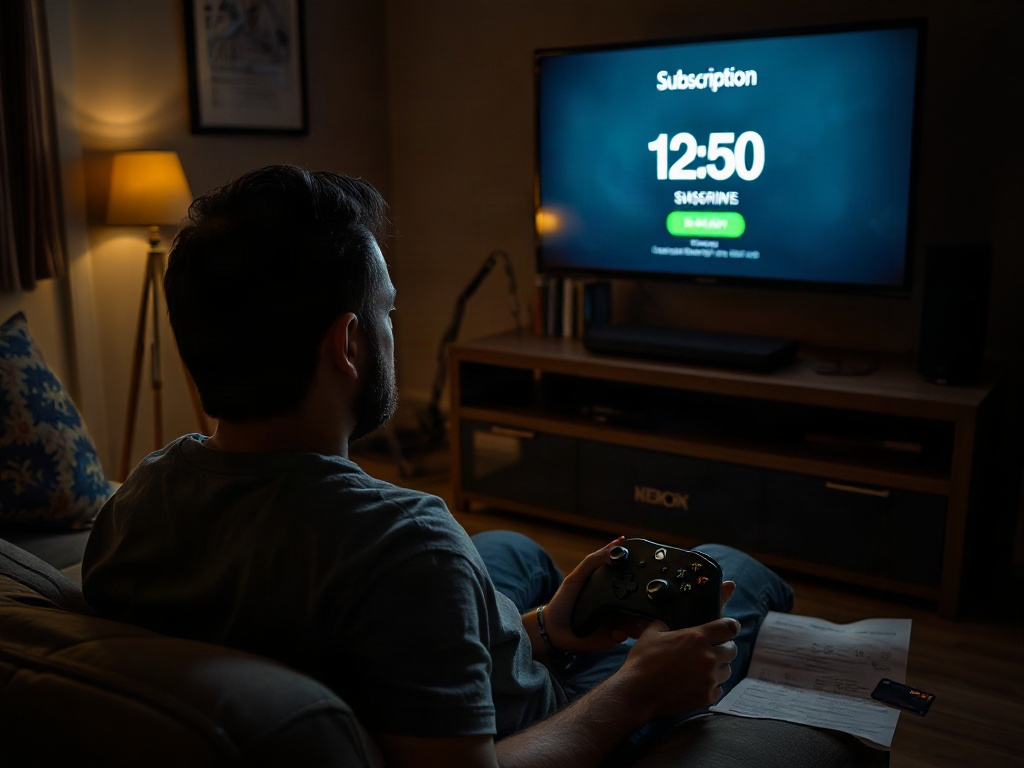
Xbox introduced Cloud Playtime, a pay-per-hour service that allows users to purchase cloud gaming time in blocks: ten hours for $3.99, twenty-five for $7.99, fifty for $11.99. The mechanics are transparent in their pricing, but what they reveal about the architecture of the model is more complicated than the announced rate. Because the problem is not the figure. The problem is that this piece does not fit cleanly with what came before it.
What actually shifted in the structure
When Microsoft launched Xbox Cloud Gaming in 2020, the value argument rested on a clear concession from the consumer: you sacrificed ownership of a physical game, but in return you gained broad, flexible, frictionless access. Game Pass was the membership that enabled everything. Unlimited downloads on console. Streaming included. A library in motion.
That architecture had an internal coherence. It was not perfect, but its pieces supported one another: the catalogue justified the subscription, the streaming made the catalogue accessible on more devices, and the complete model lowered the barrier to entry for users who did not want to invest in hardware.
What Microsoft did from September 2026 onwards was to separate three elements that had previously functioned as one: access to the Game Pass catalogue, the right to stream those games, and the amount of time available to do so. Today a subscriber pays between ten and twenty-three dollars per month depending on the plan, and that gives them between five and fifteen hours of cloud gaming. If they exhaust those hours, they can purchase more through Cloud Playtime. If they have no subscription, they can also buy individual hours and access the service all the same.
From the perspective of unit economics, the move has logic. Intensive streaming is expensive to serve: it requires server capacity, bandwidth, and sustained low latency that can only be maintained with infrastructure investment. Limiting consumption and charging for excess is a way of aligning the real cost of the service with the revenue it generates. Microsoft is not being irrational in the technical sense.
The problem is that this financial alignment arrives at a moment when the original value proposition already had a visible crack. Xbox has recorded falling hardware sales and Game Pass subscription losses for several consecutive quarters. The division cut approximately twenty percent of its workforce, around 3,200 positions, and began selling titles that had previously been exclusives, including Halo, on competing platforms such as PlayStation. The business model built around the console as the central piece can no longer sustain the revenues Microsoft expected.
Cloud Playtime is not a growth bet. It is a response to a structure that needs more revenue streams without being able to raise the subscription price without the risk of accelerating churn.
The problem that prices do not solve
There is a distinction that pricing analysis tends to ignore and that matters greatly here: the difference between what a user pays and what a user receives in return.
In the original physical model, buying a game meant owning it. You could lend it, resell it, play it offline, store it. The perceived value had a materiality that justified the price. In the downloaded digital model, that materiality disappeared, but at least access was stable: you downloaded the game, had it in your library, and depended on the licence conditions to keep it active.
In the streaming model with metered hours, the consumer's position is weaker across every dimension. You pay for time, not for access. The game runs on Microsoft's servers, at the quality Microsoft decides, under the licence conditions Microsoft maintains with the studios, in the markets where Microsoft chooses to operate. And when your hours run out, so does the game, even if you have paid for the full month of Game Pass.
YouTuber Yong Yea articulated this criticism directly: if the user already pays for a subscription and also has to purchase additional time to use a feature of the service, the argument that cloud gaming is cheaper than buying physical titles becomes difficult to sustain. And the problem is compounded because in this model the user also ends up with nothing. Not the game, not accumulated hours they can use freely later — though Microsoft notes that purchased hours do not expire at the end of the monthly cycle.
This tension between price and ownership is not exclusive to Xbox. In June 2026, four Sony users filed a class-action lawsuit in California arguing that the company had not adequately disclosed that purchasing a PlayStation game in digital format amounted to acquiring a licence, not ownership of the product. A 2024 California law requires video game companies to explicitly state that a digital purchase is a licence. Sony responded by arguing that no user can assume exclusive ownership of a digital good when multiple people can purchase it simultaneously. The case remains open.
A separate lawsuit against GameStop, filed in January, alleges that the retailer did not inform buyers of Pokémon Legends: Arceus that they were acquiring a licence and not the game itself. What these cases have in common is not the platform but the structure: the industry has spent years selling access under the language of ownership, and consumers are beginning to notice the difference.
The framework being redesigned without saying so
Behind the mechanics of hours and prices lies a larger structural question: who is Xbox actually talking to right now?
The original Game Pass proposition had a fairly well-defined user profile. Someone willing to pay a monthly membership in exchange for access to a broad catalogue, with the flexibility to play on console or via streaming depending on the available device. It was not the hardcore gamer who buys every title on launch day, nor the casual user who plays twenty minutes a week. It was a mid-volume user with varied appetite and a willingness to pay for access rather than for individual titles.
Cloud Playtime expands that perimeter in one direction: it allows users without a subscription to purchase individual hours to try or play occasionally. Microsoft describes it as a flexible alternative that does not require committing to a full membership. In that sense, the move attempts to capture a segment that the subscription model was not converting: the user who does not want the full package but does want on-demand access.
The risk lies at the other extreme. Subscribers who joined Game Pass for unlimited streaming now find a limited service where broad access once existed. For them, the change is a functional reduction even if the price has not risen. And in a market where 37% of Generation Z users have cancelled at least one subscription due to fatigue, adding friction to a service that was already struggling to retain users is a bet with a narrow margin for error.
Microsoft also decided that Sony will stop producing new PlayStation 5 games on physical disc from 2028. That closes a chapter. The direction of the industry is clear. But the speed at which that chapter closes, and the terms under which the next one is built, will determine whether users perceive it as progress or as a loss of control they did not choose.
The concession that defines where this is heading
Any analysis of this move must honestly name what still cannot be known. Cloud Playtime is an experiment that only began its testing phase with Xbox Insiders in October 2026, with a broad rollout scheduled for November. There are no adoption figures, no data on how many users are exhausting their included monthly hours, no public information on the margin of the streaming operation, and no breakdown of what percentage of Game Pass revenue comes from users who were using the cloud intensively.
What can be read with clarity is the implicit concession embedded in the architecture. Microsoft is abandoning the promise of unrestricted access as the central argument of Game Pass. That promise was operationally expensive to sustain and was probably not generating revenue proportional to the use that certain segments were making of the service. The decision to meter streaming is coherent with a company that needs every piece of its model to generate revenue that covers its real cost.
The problem is not that the decision is irrational. The problem is that the segment that cared most about that promise — the user who valued streaming as a genuine alternative to buying individual titles — is precisely the one that now finds the service more closely resembling what they were trying to avoid: paying more for each additional hour of play, with nothing to show for it at the end.
The mechanics of Cloud Playtime are financially understandable for Microsoft and structurally coherent with a company that needs to convert variable costs into measurable revenue. What remains unresolved is whether that conversion can occur without eroding the reason why the catalogue's most valuable users chose the subscription model in the first place. If that group stays, Microsoft will have found an additional monetisation layer without losing its base. If that group interprets the change as a degradation of the service they paid for, the financial adjustment will have arrived too late to be a solution and too abruptly not to accelerate the very problem it is trying to correct.