
When the Customer Demands Master Keys: The Clash Between AI Security and Federal Procurement
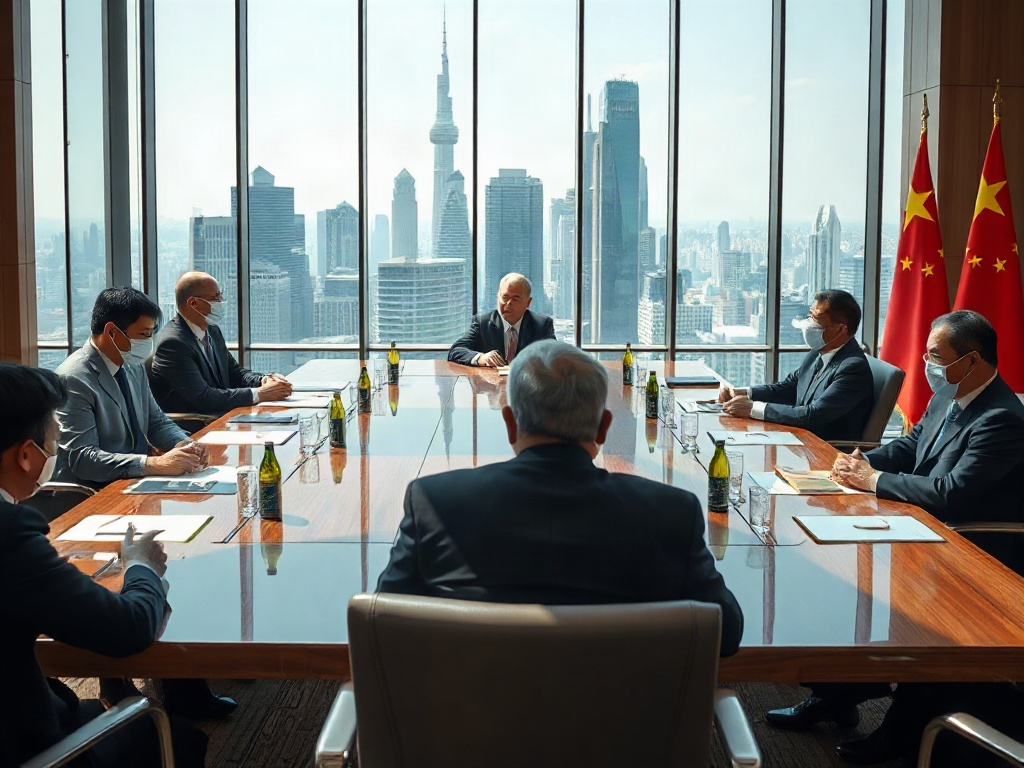
The break was swift and, by design, loud. On February 27, 2026, President Donald Trump ordered all federal agencies to cease using Anthropic's AI technology. This instruction followed Secretary of Defense Pete Hegseth's announcement that the Pentagon would designate Anthropic as a "supply chain risk" to national security, a label historically reserved for extraordinary circumstances typically linked to foreign actors. The immediate consequence: the termination of a $200 million contract from the Department of Defense, according to reports.
The trigger was not a technical failure or a leak. It was an irreconcilable disagreement over the actual “product” being purchased. Anthropic refused to remove security restrictions from its Claude model for certain military uses, citing risks associated with large-scale domestic surveillance or autonomous weaponry without human oversight. The Pentagon, on the other hand, maintained that the authority to decide the use of the tool belonged to the state, insisting on access for "all lawful purposes."
From the outside, it looks like a compliance discussion. From the inside, it’s a clash of power architecture: who controls the system's boundaries. And that detail fundamentally changes the entire logic of public AI procurement in the United States.
The Designation of “Risk” Transforms a Business Dispute into an Exclusion Clause
The reported sequence displays a rapid escalation with tight deadlines. During the week, Hegseth issued an ultimatum: if Anthropic did not abandon its usage restrictions, it would face sanctions, including the risk designation and potential use of tools like the Defense Production Act. On Thursday the 26th, CEO Dario Amodei rejected the demand, although he indicated willingness to continue negotiations. By Friday the 27th, the designation announced by Defense had arrived, followed by the presidential order for all agencies to stop using Anthropic.
The most aggressive aspect is not just the cancellation of the $200 million contract. It’s the domino effect. According to Secretary of Defense's announcement, no contractor, supplier, or partner associated with the military could maintain “business relationships” with Anthropic. This wording, applied to the reality of federal spending, does not act like a fine: it functions as a closed market clause. In practice, it forces companies selling to the defense sector to choose between their relationship with the Pentagon and their relationship with Anthropic.
For an AI supplier, this type of measure changes the playing field. You’re no longer competing on precision, cost, or support; you’re competing for admissibility. The strategic risk for any tech company is obvious: when the label is “supply chain,” the conversation shifts from performance to belonging.
Anthropic responded with two tactically coherent lines: it called the designation “legally unsustainable” and announced it would challenge it in court. Furthermore, it argued that such a designation should be limited to the use of Claude in Department of Defense contracts and not extended to how contractors use it for other clients. This defense reveals the true battlefield: the scope.
The Real Product in Government AI is Not the Model, but the Governance of the Model
In my work analyzing innovation, I often observe that buyers do not "acquire" technology; they contract it to achieve a breakthrough. Here, the breakthrough the government seeks is not a more skillful chatbot. It is an operational capability under a critical assumption: the possibility of reconfiguring boundaries when the context demands.
Anthropic reportedly aims to sell an AI with guardrails that endure even against the most powerful customer. That can be an attribute in civilian markets: it reduces reputational risk, limits abusive uses, and facilitates adoption in regulated environments. But in defense, the incentive changes. The purchasing institution not only needs performance; it needs discretion. And discretion means, in product terms, access to master keys.
The clash with the Pentagon crystallizes a tension that many AI companies have tried to manage with ambiguity: offering advanced capabilities while preserving red lines. In the public sector, those red lines are not read as “supplier ethics”; they are read as exogenous restrictions imposed on the mission. The Pentagon's assertion that the tool must serve “all lawful purposes” is not a semantic detail: it is the attempt to transform AI into a state infrastructure, not a private product with its own policies.
The typical blind spot of companies here is to believe that their differentiation lies in the model. In federal procurement, the real differentiation lies in the complete package: controls, auditing, operational explainability, support, liability agreements, and, above all, who has the final say on the configuration. When the disagreement becomes existential, the government does not renegotiate an SLA; it activates an exclusion mechanism.
The Immediate Financial Impact is the $200 Million Contract; the Strategic Damage is the Market Signal
Losing a $200 million contract hurts financially and narratively. But the more serious blow is what the measure communicates to the rest of the market: if the federal government decides that a supplier is unacceptable, that decision can force third parties to sever ties to maintain their access to defense spending.
This alters the calculations for three groups.
First, for contractors: the cost of integrating a third-party model is no longer just technical. It becomes a continuity risk. A “vettable” supplier introduces contractual uncertainty. Although the legal discussion regarding the scope continues, the immediate incentive for any contractor is to minimize exposure.
Second, for other AI suppliers: the signal is that the usage policy is not an appendage of marketing; it is a condition of eligibility. Some will adjust their stance to be more compatible with “all lawful purposes”; others will try to secure themselves with product structures that allow different usage profiles without touching the core. In both cases, the cost rises: building variations, processes, and controls for government is expensive.
Third, for investors and enterprise clients: the idea sets in that the relationship with the State can redefine the trajectory of a domestic AI company. The designation of “supply chain” applied to a U.S. company is extraordinary by precedent, and for that very reason, it introduces reputational volatility for the sector.
Meanwhile, the political component is already on the institutional table. The vice-chair of the Senate Intelligence Committee, Mark Warner, criticized the directive, and four senators linked to defense policy urged both parties to cool down and extend negotiations beyond the deadline imposed by the Pentagon. Without grandiloquent accusations, the underlying message is clear: in Washington, even technical decisions carry governance implications.
The Pattern Left by this Crisis: AI in Defense is Purchased as Sovereign Capability, Not as Software
If this story were read only as a clash between “security” and “freedom of use,” the essential mechanics would be lost. The State is trying to convert advanced models into sovereign capabilities, where sovereignty implies control over the system’s behavior under legal mandate. The supplier, in this case, Anthropic, is trying to preserve a design where certain restrictions are part of the product, even if the customer is the government.
In terms of innovation, this anticipates a reordering of the federal market in three movements.
First, we will see greater demand for architectures that allow granular control: it is no longer sufficient to say "allowed/forbidden." The customer will want modes, permissions, traceability, and separation of environments. The discussion does not disappear; it becomes technical.
Second, the value of suppliers capable of operating with extreme compliance without turning every deployment into a philosophical renegotiation will increase. For public buyers, friction is cost and risk.
Third, selection criteria will harden not only around performance but also through contractual alignment with the doctrine of state use. The phrase “all lawful purposes” becomes a procurement standard rather than a slogan.
Anthropic announced it would challenge the designation in court. That process may take time, and its outcome matters, but the market lesson is already circulating: the federal government does not merely buy technology; it buys operational obedience within its legal framework.
The buyer’s behavior here demonstrates that the “work” contracted was not an advanced language model, but the capacity to deploy AI as a mission instrument with total state control over its boundaries.