
Nuclear a Mile Underground: When True Innovation Is Selling Certainty, Not Electrons
Deep Fission, a U.S. nuclear technology firm, has recently announced an agreement with Urenco USA to secure low-enriched uranium (LEU) for its Gravity reactor: a small modular pressurized water reactor designed to be installed a mile (1.6 km) underground in a water-filled shaft. This imagery is powerful for what it suggests and especially for what it avoids: large containment buildings, kilometers of visible civil work, and a public discourse dominated by surface considerations.
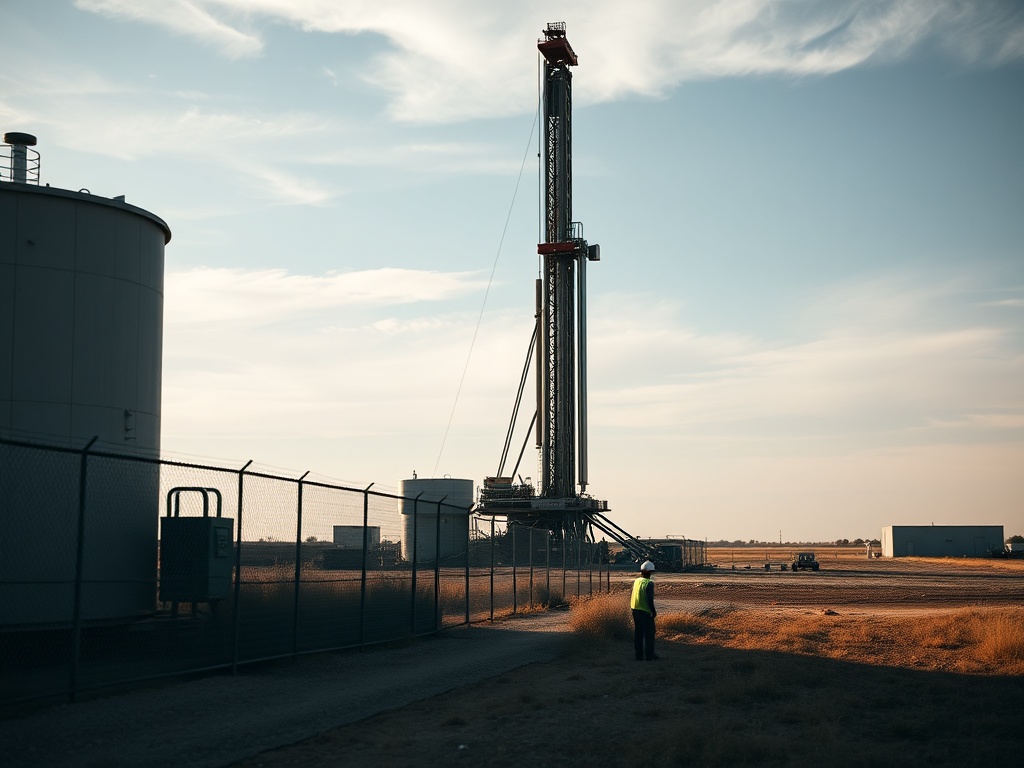
The full-scale commercial prototype will be located at Great Plains Industrial Park in Parsons, Kansas, with a groundbreaking ceremony scheduled for December 9 (year unspecified in the source). The declared ambition aims for operational status by 2026, pending authorizations under the Reactor Pilot Program of the U.S. Department of Energy, executed under the Atomic Energy Act.
Technically, Gravity is presented as an SMR (Small Modular Reactor) of 15 MWe (and 30 MWt thermal) per unit, with the promise of scaling multiple units up to 1.5 GWe. Its design takes advantage of hydrostatic pressure from a water column equivalent to 160 atmospheres, operates at a core temperature of 599 °F (315 °C), and uses standard PWR fuel in 17x17 assemblies, with four assemblies per core. Deep Fission's narrative emphasizes something more important than the numbers: there are no moving parts underground except for control rods, which would fall by gravity in the event of a power loss.
On the surface, this news appears to be another entry in the SMR surge. However, the strategic point lies elsewhere: this design attempts to transform nuclear energy into an industrial service with a distinct promise. It doesn't sell sophistication; it sells predictability.
The Product Is Not the Reactor: It's a Shortcut to Firm Energy Where There's Urgency
The energy sector is rife with proposals that look good in the lab but fall apart on the schedule. Deep Fission aims to tackle the Achilles' heel of traditional nuclear with a very specific combination: miniaturization, standardization, and burying what usually becomes politically visible underground.
The key facts that matter from a business and adoption perspective are three. First, the construction proposal: the company claims it can go from construction to operation in six months. Second, the cost proposal: it notes a cost reduction of up to 80% compared to traditional nuclear plants and a target LCOE (levelized cost of electricity) of $50 to $70 per MWh. Third, the operational cycle: it estimates around six years of operation per unit without a fuel reload.
This package suggests a clear reading of the “real customer” for an SMR in 2026: it is neither the residential consumer nor the regulator as a user. It’s the industrial operator, the industrial park, the large consumer who faces dual pressure: needing clean, stable electricity and needing speed to avoid losing competitiveness.
The promise of energy density is also designed for that type of buyer. If multiple units can aggregate to 1.5 GWe, the message is not only “I can grow with you” but “I can grow without needing a decade for permits, construction, and social conversation on the surface.” The words of Deep Fission's COO, Mike Brasel, align with that intention: “The name Gravity is more than symbolic… it leverages nature’s most dependable forces… safely and sustainably.” Here, gravity operates as a commercial metaphor for reliability, not merely as a poetic resource.
The agreement with Urenco, then, is less a supply detail and more a piece of credibility. In technologies where the market fears the gap between prototype and continuous operation, securing LEU with an established supplier reduces perceived risk and shapes the product as something “purchasable” rather than merely “admirable.”
Lowering the Reactor Underground Is a Move of Costs, Permits, and Reputation
Installing a reactor a mile underground is not an indulgence. It's a way to redesign the entire system of containment, safety, and physical footprint with a business objective: converting part of the risk into geology and part of the cost into drilling.
Deep Fission blends three worlds that already have mature supply chains: PWR technology, deep drilling like oil and gas, and geothermal heat transfer. This mix is strategic for a simple reason: it reduces the percentage of the project that depends on "unique components" and pushes it towards what is purchasable. The company emphasizes that the reactor would measure approximately 30 feet in height and 26 inches in diameter at depth. This compactness is a commercial argument: less land required, fewer visible structures, and less infrastructure that becomes a symbol.
In nuclear, reputation and social permission often turn into hidden financial costs. Each month of delay increases capital costs, erodes the thesis, and kills returns. By moving the system underground, the project tries to avoid two frictions: the friction of massive surface construction and the friction of a “megaproject” that triggers local opposition. There is no explicit promise to avoid conflicts, but the design aims to reduce the triggers that typically initiate them.
There is also a logic of operational safety that serves as a message to the market, even if the end buyer does not evaluate it in detail. The reported design emphasizes natural convection for the primary loop flow and the use of gravity to insert control rods during electrical failures. This does not eliminate regulatory work; however, it builds a narrative of “less dependence on active systems,” an attribute that historically reduces adoption anxiety.
If the gamble pays off, the outcome is a repositioning: nuclear ceases to look like a monumental public work and instead approaches an industrial asset installable in modules. This perceptual shift, in high-demand electrical markets, is worth as much as thermal performance.
The Arithmetic That Defines Adoption: Capital, Schedule, and Fuel
For an energy executive, the dilemma is rarely ideological. It is about financial structure. Traditional nuclear suffers because it turns too many variables into fixed costs: high CAPEX, long schedules, permitting risks, and high exposure to interest rates.
Deep Fission aims to attack that structure by design. By promising construction within six months, it seeks to reduce the window where capital is immobilized without generating cash flow. By promising up to 80% lower costs compared to traditional plants, it tries to close the gap against alternatives that win on speed of deployment. And by projecting $50–70 per MWh, it positions itself within a band competing for levelized cost, not just low emissions.
Fuel is another bottleneck. In an environment where demand for LEU is growing, the most significant signal from the agreement with Urenco is that the company is not remaining in the conceptual plane. Gravity uses standard PWR fuel, with assemblies 17x17. This matters because “standard” reduces risk: it facilitates purchasing, specifications, and certifications, and minimizes supply chain surprises.
However, the fragility lies in what the news cannot promise. The timeline to 2026 depends on authorizations and the execution of the Reactor Pilot Program. Nuclear does not forgive optimistic schedules. The market of industrial buyers, moreover, does not reward narratives; it rewards contracts with guarantees, availability, and clear penalties. Real validation will not come from the first well drilled but from the first unit operating with stability and consistent costs.
In other words: the model depends on repeatable execution, not on media milestones.
What the Market Is “Contracting” Is Deployable and Discreet Stability
When I hear “reactor a mile underground,” the easy mistake is to stay within extreme engineering. The useful reading is of buying behavior.
The customer for this type of solution is not contracting nuclearity. They are contracting three very concrete advances. First, firm energy to operate processes and critical loads without depending on the volatility of strained grids. Second, speed and predictability to convert electrical needs into operational assets in months, not a decade. Third, reduced reputational and territorial friction, because a facility with minimal surface footprint and no large visible structures changes the conversation from day one.
The agreement with Urenco adds a layer of “purchasability” that many advanced projects do not achieve: it connects design discourse with a tangible piece of the supply chain. And the site in Kansas, with a groundbreaking date, pushes Deep Fission from the realm of ideas into timelines.
Real innovation here is not about burying a reactor. It's trying to package nuclear energy as an industrial product purchased to gain operational certainty, with less surface area, less exposure, and a shorter path to generation. The success or failure of Gravity will demonstrate that the true work that the user is contracting is not a new technology, but clean and firm electricity with a level of predictability that allows for planning investment, production, and growth without surprises.