
The New Space Capital Doesn't Fund Rockets: It Funds Control of Critical Infrastructure
Investment in space tech has ceased to be an exotic wager and has transformed into a strategic line of business. According to Crunchbase, venture funding in the categories of space technology and satellites surpassed $12 billion last year, accumulating over $2 billion in 2026 alone; globally, Crunchbase recorded $14.2 billion last year, more than double the figures from 2023 and 2024. The headline sounds euphoric, but the pattern is more precise: the market is not rewarding "going to space"; instead, it is rewarding who controls the bottlenecks connecting space to the real economy.
The list of recent funding rounds tells the story. Stoke Space is extending a Series D round up to $860 million for reusable rockets. Axiom Space closed a round of $350 million to advance a successor to the International Space Station and spacesuits for lunar missions. Aalyria, spun out of Google, raised $100 million for software that configures satellite communications on demand. Northwood Space secured $100 million for satellite-ground communication infrastructure, announcing it alongside "millions in signed contracts," including a $49.8 million contract with the Space Force to support the Satellite Control Network. Meanwhile, the public market shows appetite but also volatility: Firefly Aerospace and Voyager Technologies debuted and fell from their initial price, while Karman Space & Defense withstands with a valuation over $11 billion and York Space Systems approaches $3.4 billion after its recent debut. And above all, there looms an event that reshuffles expectations: SpaceX, the dominant player, is seeking a reported valuation of $1.5 trillion ahead of a possible IPO.
My reading is clear: money is migrating towards a thesis of critical infrastructure. Launch, stations, links, and ground control are converging on the same board. Whoever wins that board isn't selling "space"; they're selling essential services for defense, connectivity, navigation, observation, and operational continuity.
The Megaround Fever Reveals an Industry Maturing Through Concentration, Not Volume
Crunchbase highlights a contrast that many overlook: while investment volume is increasing, the number of rounds remains relatively flat. This is not just a statistical detail; it's a sign of maturity skewed towards concentration. In early markets, capital disperses into experiments. In markets starting to define themselves, capital clumps into large bets, leading to the emergence of "unicorns" that accelerate total funding with fewer movements.
More than two dozen companies raised rounds of $100 million or more in the last year. This type of check necessitates a different discipline: merely having a narrative isn't sufficient; scale, industrial capability, contracts, and a credible path to recurring revenue are now required. The case of Northwood Space is illustrative because it bridges two worlds: venture capital and state. A $49.8 million contract with a defense agency for the Satellite Control Network isn't just cash; it's operational validation in a system where failure is costly. When a player inserts itself into the chain of "launches, early operations, tracking, control, and emergency assistance," it becomes sticky and hard to replace.
The same logic applies to the launch side. Stoke Space is not raising money due to rocket romanticism; it's buying time and redundancy for a race where reuse defines unit economics. In stations and suits, Axiom Space is financing a transition: the market is preparing for a future where the International Space Station is no longer the gravitational center, and where "habitat" capability becomes an industrial service, not merely a scientific project.
In the stock market, the narrative is tougher. Firefly and Voyager show that the public market will provide backing, but won’t forgive mistakes. The sector's message is clear: the IPO window exists, but it demands sustained execution. Private funding can inflate expectations; the public market audits them daily.
Space Enters Platform Phase: Software, Links, and Land Become the New "Operating System"
If one looks solely at the total dollar amounts, it may appear that space is "business as usual." But if you examine the composition, you'll see the shift: competitive advantage is moving from visible hardware to orchestration. Aalyria, as a spinout from Google, fits this pattern perfectly: software that configures satellite communications "to meet demand" isn't merely an accessory; it's an attempt to turn orbital connectivity into something akin to the cloud, where capacity allocation is dynamic, and complexity is hidden behind a control layer.
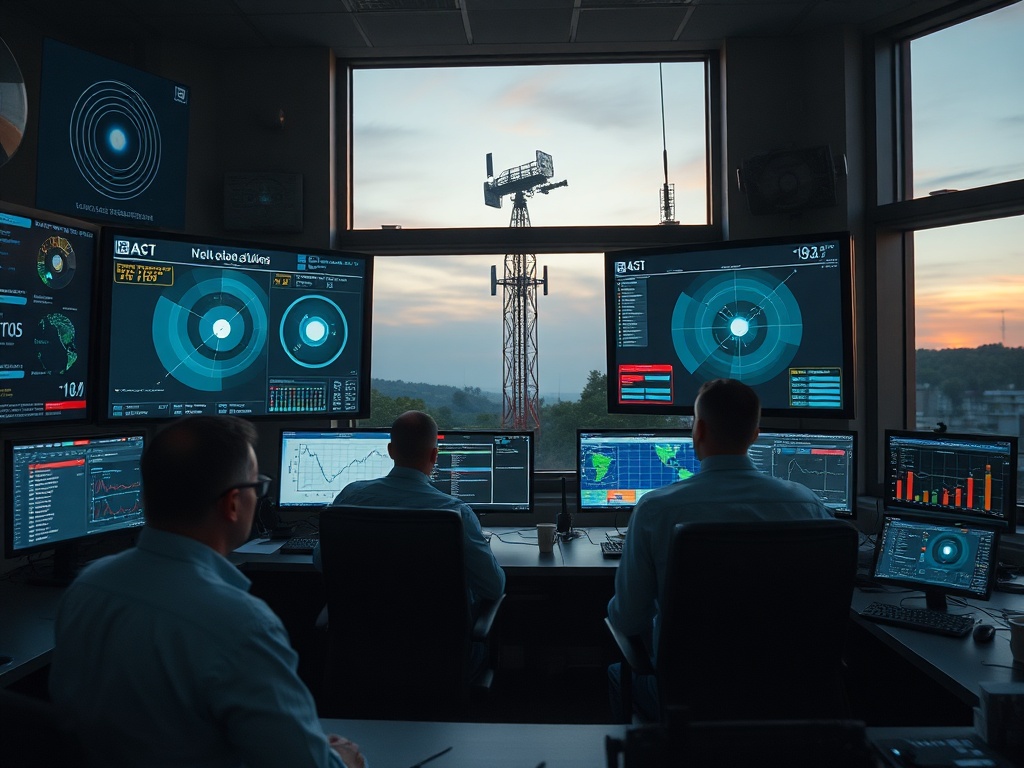
Northwood Space reinforces this point from the opposite end: ground infrastructure is where satellite promise becomes a usable service. In practice, the end user does not consume orbit; they consume availability, latency, resilience, and continuity. Land is where the collision of requirements between commercial customers, defense, emergencies, and critical operations is managed. That’s why, when Northwood states that its vertical integration "collapses what used to take years into months, and what took months into days," it points to a cycle advantage: deployment speed and the capability to operate a complete system.
In this ecosystem, launching is necessary but insufficient. Reuse lowers barriers but also transforms the market into one where differentiation relies on: (1) marginal cost per mission, (2) cadence, (3) reliability, and (4) coupling with the rest of the chain. The space station, for its part, aims for a model of "shared infrastructure" for R&D, manufacturing, or sustained presence. And communication software and ground control are the equivalents of networks and data centers in the digital economy.
This convergence explains why the sector can sustain high funding even as other startup segments lag below peaks from 2022. When the product resembles infrastructure, capital treats it as infrastructure: large bets, fewer winners, and an obsessive focus on reliability.
The Power Economy Shifts: The Winner Will Be Whoever Turns Space CAPEX into Sellable OPEX
There’s a recurring idea in truly scaling sectors: the market rewards those who transform large fixed investments into repeatable services. In space tech, the challenge is not just to design technology but to convert complex assets into a catalog of consumable capabilities.
The Space Force's contract with Northwood exemplifies how infrastructure is monetized without waiting for the commercial market to "mature." Defense does not buy demos; it buys performance, continuity, and protocols. For a startup, this can accelerate the learning curve and simultaneously raise the internal quality standard. The risk is evident: dependence on budget cycles and changing requirements. The opportunity, too: turning government validation into leverage for commercial clients demanding guarantees.
On the IPO side, the volatility following Firefly and Voyager’s debuts reflects a structural tension. Space narratives tend to promise long horizons, but the stock market pays for quarterly deliverables. Karman Space & Defense, with a valuation over $11 billion, as highlighted in the report, illustrates that the public market does reward perceived traction and defensible positioning. York Space Systems, valued around $3.4 billion after its recent debut, serves as a reminder that initial valuation is not a trophy; it's a starting point for reevaluation by the market.
And then there’s SpaceX as a systemic event. A reported valuation of $1.5 trillion for a potential IPO is not just a number; it’s a magnet for talent, capital, and narratives. It's also a benchmark: it redefines what "scale" means in space tech and forces comparisons that may be unfair to smaller companies. However, the second-order effect is real: such an IPO normalizes the idea that space is not a niche; it’s macroeconomic infrastructure.
Through my impact lens, the critical point is not the size of the check but its direction: if capital funds platforms that lower marginal costs and expand access, the industry accelerates. If capital focuses on building closed castles, the industry grows, but social benefits narrow.
The Signal for C-Level Executives: The Advantage Is Played Out in Resilience, Not Spectacle
The pattern for 2025-2026, as articulated by Crunchbase, represents a reconfiguration of the "center of gravity" of the commercial space sector. The popular narrative remains trapped in the rocket, but investors are allocating resources across the entire chain: reusable launches, habitats, communication software, ground infrastructure, and defense contracts.
For corporate leaders, the implication is practical. Space tech ceases to be a line of innovation and becomes a potential dependency. Satellite connectivity, observation, synchronization, and control begin to resemble electricity or cloud services: no one wants to manage it, but everyone needs it. This drives two strategic movements. First, tougher due diligence: not for "technology" but for operational continuity, redundancy, compliance, and service capacity. Second, alliances that mitigate concentration risk: a dominant provider can be efficient, but it also creates dependency.
The rise of large funding rounds with a flat round count suggests that the market is selecting champions. This selection is not determined by who has the shiniest demo but by who secures contracts, deploys infrastructure, and sustains operations. Simultaneously, the presence of IPOs with mixed performance indicates that the phase of promises is ending, and the phase of daily audits is beginning.
This market is advancing from digitization towards disruption in critical layers of communications and control, with a gradual de-monetization driven by reuse and software, and a democratization that will depend on whether infrastructure is opened as a service. Space technology must empower humanity by reducing access barriers and enhancing operational resilience in essential sectors.