
When Conserving Nature Becomes a Territorial Conflict
There’s a paradox that the natural capital market has yet to resolve: the faster a conservation company grows, the more it resembles what it claims to want to replace. Oxygen Conservation has been building a portfolio of land in the UK for years, promising to restore degraded ecosystems and generate verifiable carbon credits. The model has impeccable financial logic. The issue is that the communities living within and around these landscapes are not experiencing an ecological transition. They are undergoing a transfer of control.
This distinction is not semantic. It is the difference between a purpose-driven business and one with good public relations.
The Mechanics of Expansion and What It Costs to Ignore
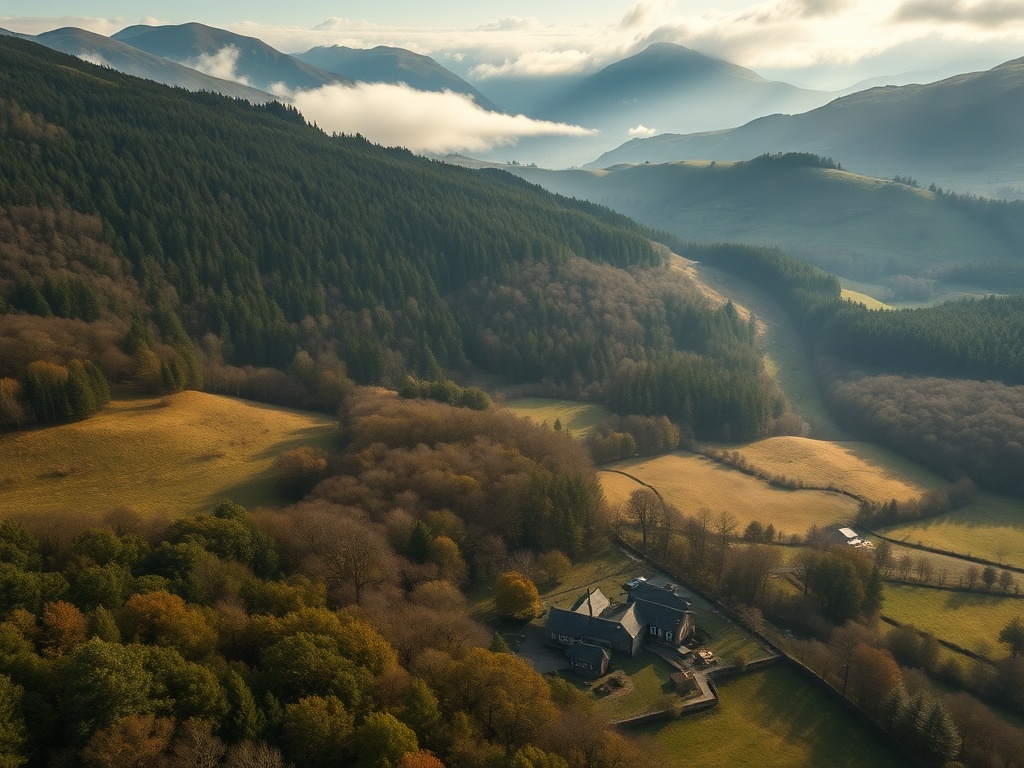
Oxygen Conservation has grown by acquiring rural properties in Scotland at a speed that has raised alarms among local residents, tenant farmers, and community organizations. The discontent does not stem from opposition to conservation as an idea, but rather from how it is executed in practice: accelerated purchases that change land use without robust consultation processes, and a corporate narrative that speaks of biodiversity while ignoring the social biodiversity of the territory.
This is not a branding issue. It is a structural problem with the business model. Natural capital, in order to be genuinely tradable in the long term, needs the social legitimacy of the communities it operates in. Without it, the carbon credits it generates are exposed to a category of risk that financial markets still underestimate: socio-territorial conflict risk. This type of risk does not appear in standard sustainability reports, but it has very concrete consequences: litigation, regulatory blockages, lobbying campaigns that erode credibility with corporate credit buyers, and ultimately, loss of operational access to the territory.
The speed of Oxygen Conservation’s expansion reveals a comprehensible financial logic: acquire land before carbon and natural asset prices rise even further. But that same speed compresses the time needed to build local trust that makes any land management project sustainable. There is a contradiction between the long-term horizon of forest carbon — which can be measured in decades — and the acquisition pace, which operates on monthly cycles.
The Business Model Under Scrutiny
Natural capital as an asset class is going through what we might call the disappointment phase within its own maturity curve. After years of institutional enthusiasm, the first real-scale projects are revealing that the promise of "making money through conservation" requires more than just access to land and carbon verification methodologies; it requires governance.
Oxygen Conservation is not the only company in this position. It is, at any rate, the most visible case at this moment in the Scottish debate on land ownership reform. But its situation illustrates a pattern that recurs in other markets: natural capital models structured as pure investment vehicles tend to replicate the power asymmetries that ESG frameworks claim to want to correct. Land changes hands. Financial profits flow to external investors. Local communities absorb the externalities of the transition without materially participating in its benefits.
From a unitary economy perspective, this model has a significant design flaw: the long-term value of a forest carbon credit depends on the permanence of the project. And permanence, in land use projects, directly depends on the social stability of the surrounding environment. A contentious community project is at risk of non-permanence. That has a cost, even if that cost is not yet well modeled in voluntary carbon markets.
The question that the C-level of any firm in this sector should be addressing is not how much land they can acquire, but what architecture of local participation makes that asset defensible over time. That is the real test of viability.
The Digitalization Lacking in Natural Capital
There is something striking when analyzing the natural capital sector from a technological convergence perspective: the sophistication of financial instruments contrasts sharply with the poverty of community participation mechanisms. Satellite remote sensing models are used to measure carbon capture tree by tree, yet there is no equivalent digital infrastructure to map the social capital of the territory or to give structured voice to communities in decision-making processes.
This asymmetry is a missed opportunity. Participatory governance platforms, decentralized registries for benefit distribution, and community monitoring systems already exist and are being tested in conservation projects in the Global South. Their adoption in mature markets like the UK remains marginal, partly because it adds short-term operational complexity and partly because it forces sharing control of assets with actors who may lack financial power but possess legitimizing power.
Democratizing access to the benefits of natural capital is not an ethical concession: it is a technical condition for projects to be permanent, and thus financially viable. Companies that understand this early will create more resilient portfolios than those that continue to optimize only the speed of acquisition.
The Asset That Doesn’t Appear on the Balance Sheet
Oxygen Conservation is learning, in real-time and under public pressure, a lesson that natural capital markets will need to systematize: the social license to operate is not a pre-business formality, it is a constitutive part of the asset. A forest under restoration in a conflict-laden territory is not worth the same as one in a territory where the local community is an active partner in the project. The difference is not moral; it is financial.
Voluntary carbon markets, which are undergoing their own maturation and standardization process, will progressively incorporate community benefit metrics as part of the quality criteria for credits. This is already happening in standards like Verra or Gold Standard, where social co-benefits are beginning to influence pricing. Companies today that build real community governance are not being altruistic: they are anticipating an adaptation that the market will require of them anyway.
Speed without consultation is not a growth strategy. It is a social debt that comes with a premium when conflict escalates. Natural capital only functions as a durable asset class when environmental measurement technology and human participation architecture advance at the same pace.