
The Statistic That No Corporate Announcement Wants to Lead With
In late 2024, Google announced it will finance a natural gas plant to meet the energy demands of its artificial intelligence (AI) data centers. The news was covered by The Guardian, WIRED, and Axios with various nuances, but all point to the same structural reality: the energy demand of AI is increasingly outstripping the available capacity of clean energy.
This is not an episode of corporate hypocrisy. It is the most visible symptom of a tension that has been quietly building for years within the financial statements of major tech companies. Google had set ambitious climate goals, publicly committed to investors and regulators. However, the massive emergence of large-scale language models and the race for AI infrastructure have completely altered the energy equation upon which those projections relied.
The issue is not ideological. It is mathematical. A conventional data center consumes between 20 and 50 megawatts. A data center designed for intensive AI workloads can exceed 100 megawatts per installation. The speed at which Google, Microsoft, Amazon, and Meta are expanding this infrastructure vastly outpaces the rate at which renewables are being integrated into the grid. When the demand curve rises faster than the clean supply curve, something has to give. In this case, it was the climate commitments.
The Financial Geometry Behind a Decision That Appears to Be a Setback
Analyzing this decision solely from an environmental perspective is a misreading. The choice to turn to natural gas stems from operational continuity logic that no board of directors can casually ignore.
Generative AI is currently the most strategic revenue-generating asset in recent tech history. Large language models require training cycles that consume massive amounts of energy over concentrated periods. Interrupting or slowing down those cycles due to a lack of energy capacity carries a direct opportunity cost: delays in product launches, loss of competitive advantage against rivals who do have access to that capacity, and a potential erosion of trust from institutional investors who are valuing these companies based on their AI capabilities.
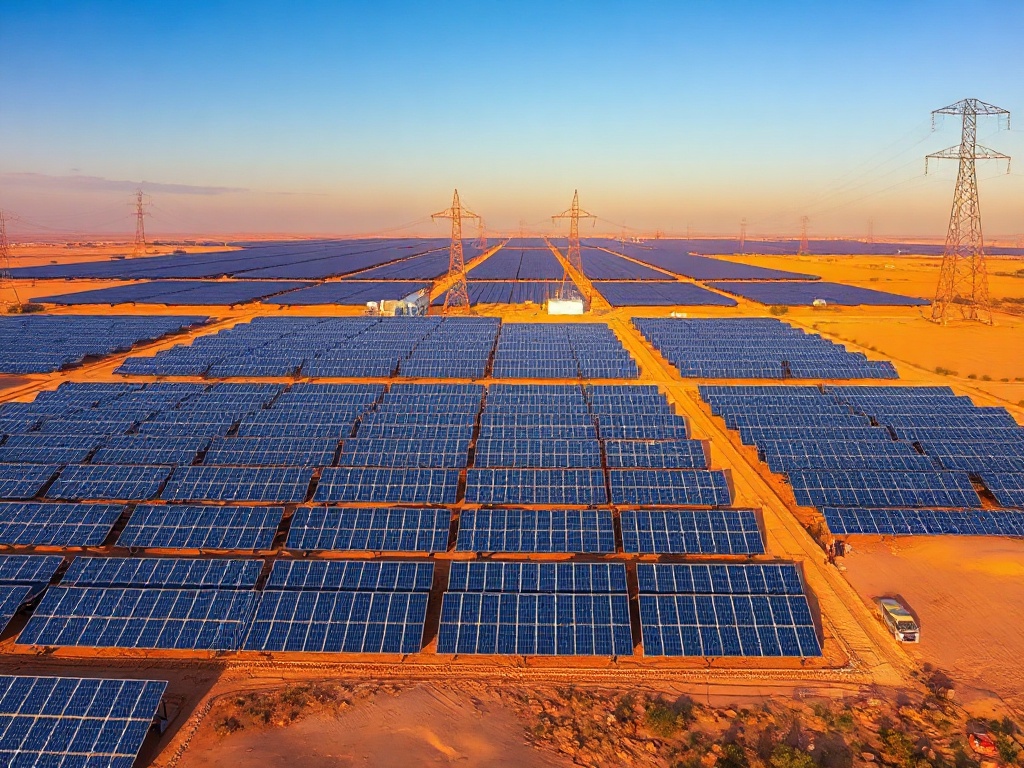
In this equation, natural gas is not a whim: it is the only source of electricity generation that can scale with the speed and power density that AI infrastructure currently demands. Solar and wind energy, while cheaper per kilowatt-hour under ideal conditions, have two constraints that are fatal in this context: intermittency and deployment latency. Building and connecting a 200-megawatt solar park to the grid takes three to five years, including permits, engineering, and connection. A gas plant can be activated in a fraction of that time. That temporal difference, in the current AI cycle, equates to a competitive eternity.
Investigate Midwest has also documented that Google is exploring carbon capture technologies associated with these facilities. This is not a complete solution but reveals that the company is trying to build a bridge between its climate commitments and immediate operational needs. The question is not whether that bridge is sufficient — clearly it is not in the short term — but how long it must be sustained before clean alternatives reach the necessary scale.
When Climate Commitments Clash with Technological Speed
Google's episode highlights a fracture affecting the entire global tech industry, directly impacting any leader managing energy-intensive infrastructure assets.
The carbon-neutral commitments that major tech companies signed between 2018 and 2022 were calculated on a growth model that did not anticipate the emergence of generative AI at this scale. Microsoft, which had promised to be carbon negative by 2030, reported a 29% increase in its emissions in 2024 compared to 2020, directly attributable to the expansion of its AI infrastructure. Google recorded a 48% increase in its total emissions between 2019 and 2023. Amazon Web Services faces similar challenges. We are not witnessing companies abandoning their values: we are witnessing organizations that underestimated the speed at which a technology can alter the physical bases of their operations.
This has a macroeconomic implication that extends far beyond the tech sector. Over the last decade, capital markets have incorporated sustainability metrics as indicators of long-term risk management. Institutional funds, pension funds, and ESG investment vehicles have allocated massive capital under the assumption that major tech companies were simultaneously engines of growth and responsible actors in the energy transition. Google's decision to resort to natural gas not only complicates its climate narrative: it introduces a reputational risk variable that ESG fund managers will have to reclassify in their models.
The circularity here is not rhetorical. The money that financed the expansion of AI came, in part, based on green commitments. Now, that expansion is reversing those commitments. The flow of capital that underpinned the tech bet and the flow of capital that supported the climate bet originated from the same source and are now heading in opposite directions. This tension will eventually be resolved with a reconfiguration of valuation frameworks: clean energy assets capable of scaling at the speed demanded by AI will be worth more, proportionally, than any language model that cannot guarantee its supply.
Fast-Scaling Clean Energy Will Become the Most Valuable Asset of the Next Decade
Google's move is not the end of corporate climate commitments. It is the clearest signal the market has sent regarding where the real bottleneck of the next technological phase lies.
The scarcity that will define value in the next ten years will not be the scarcity of AI models, chips, or data. It will be the scarcity of clean energy that can be deployed with the speed and power density that digital infrastructure requires. Companies, governments, and investment funds that understand this now and position capital in storage technologies, distributed generation, modular reactors, and smart distribution networks will not be betting on the environment: they will be acquiring the scarce resource upon which the entire digital economy of the 21st century will rest.
The leaders who survive this cycle will be those who stop treating energy as an infrastructure cost and begin to view it as a structural competitive advantage. The company that ensures clean, abundant, and quickly deployable energy will not need to negotiate climate commitments with its board: it will have made them the foundation of its financial architecture.