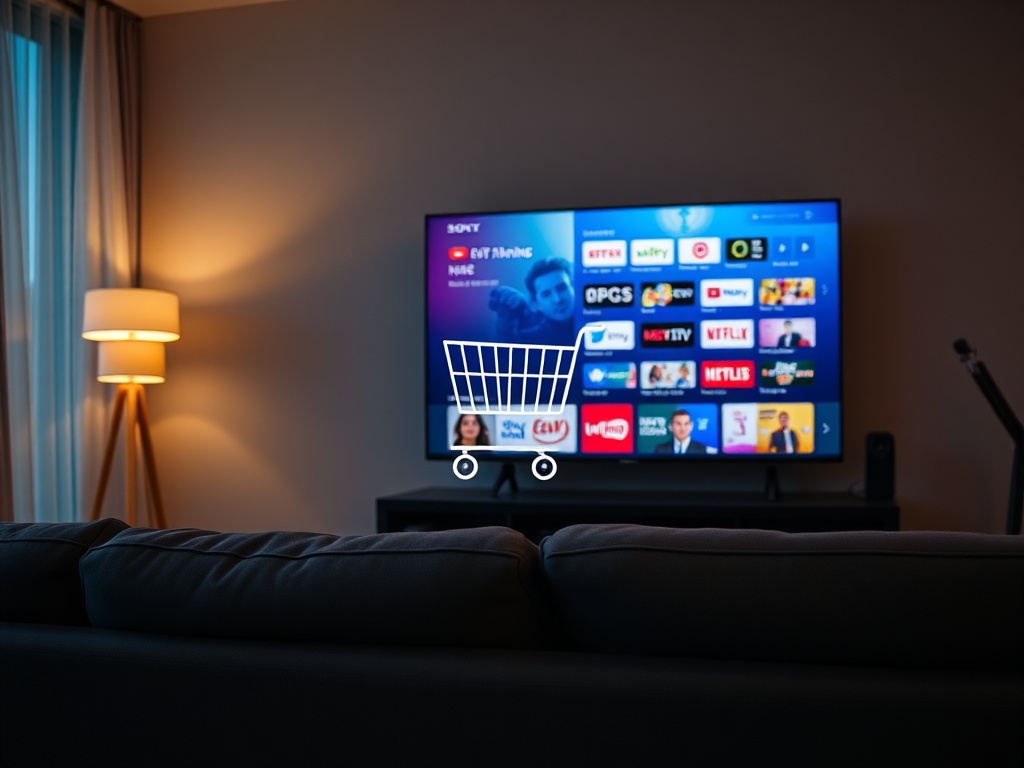

The Television as a Sales Channel
On March 24, 2026, Walmart announced that buyers of new Vizio televisions must create or link a Walmart account during initial setup to access the device's smart features. This is not optional. It is the gateway to the product you have already paid for.
Most coverage of this news is framed around privacy issues. While that is accurate, it is incomplete. What Walmart has just accomplished is far more calculated from a business standpoint: it has turned every Vizio screen into a node of its retail advertising network, Walmart Connect. To understand why this move is worth every cent of the $2.3 billion it paid for Vizio in December 2024, one must look beyond the television itself and analyze the business architecture surrounding it.
The historical problem with connected TV advertising has always been the same: you could measure how many people saw an ad, but you could not prove that they subsequently went to the store and purchased the product. The loop never closed. Walmart has just closed it. By forcing users to identify themselves with the same credentials they use to shop at Walmart.com or its physical stores, the company can track the complete journey: from the ad you saw in your living room to the item you put in your cart. This is not a product feature; it is the measurement infrastructure that advertisers have been seeking for a decade.
Courtney Naudo, Walmart's Senior Vice President of Integration and Business Planning, described the initiative as “creating a frictionless experience across screens.” That phrase sounds like corporate public relations, but it is technically accurate. What Walmart is reducing is not user friction, but friction for advertisers to demonstrate return on their investment.
The Financial Geometry Behind the Screen
Walmart paid $2.3 billion for Vizio. To someone evaluating that figure solely as a hardware acquisition, it seems expensive for a mid-range TV brand. But Walmart didn’t buy televisions. It bought captive advertising inventory within the consumer's home.
The data they already possess confirms the bet. Connected TV campaigns through Walmart Connect achieved a median view rate of 44% for the advertising brands during the measured period. Café Bustelo, one of the participating brands, recorded a 98% incremental reach in households untouched by linear television. This means that Walmart is not just recirculating existing audiences; it is opening doors to households that the traditional media system could not reach.
Now multiply that capability by the installed base of Vizio televisions in the U.S. and by the volume of transactions Walmart processes each week. The strategic asset is not the television. It is the unique identifier that connects the audience with the buyer. Once you have that, you can offer L'Oreal —the brand Walmart announced as its launch partner— the opportunity to place its products within the premium content users are watching, and then demonstrate, with first-hand data, how many of those users purchased the product within the next seven days.
No streaming platform can do that. Netflix knows what you watch, but it doesn’t know what you buy. Amazon Prime Video comes close, but its retail network lacks Walmart's physical penetration. Walmart's competitive advantage does not lie in screen technology. It lies at the intersection of content consumption data and in-store purchase data, a territory where no one else has the same reach.
The Friction No One Is Calculating
This is where my analysis diverges from corporate enthusiasm. Walmart is executing well on the advertiser side. It is reducing friction for media buyers, increasing the certainty that their advertising investments translate into measurable sales. This justifies premium prices for advertising inventory and solidifies Walmart Connect as a network with real bargaining power against Google or Meta.
The issue lies at the other end of the equation: the user who just unboxed the television. For that consumer, Walmart's move does precisely the opposite. It increases friction at the moment of greatest vulnerability, which is the initial setup, and reduces the certainty that their experience with a product they have already purchased will be independent of their shopping habits with a specific retailer.
The question Walmart has yet to answer publicly with numbers is how much of that initial friction translates into process abandonment, returns, or simply customers choosing to buy their next television from another brand. Users unaffected by the change immediately, previous Vizio owners before the acquisition, have a grace period which the company has already hinted could come to an end. This is a signal that the implementation is gradual not out of consideration for the user, but because Walmart is measuring market tolerance before making the universal requirement.
L'Oreal as a launch partner is a surgical choice. It is a brand with massive presence at Walmart, with low unit price products and high purchase frequency, perfect for demonstrating the closure of the cycle between content and transaction with clean, quick data. If the trial works, the advertising inventory of Vizio OS becomes an asset Walmart can sell at prices that no linear television screen can justify.
The Pattern This Reveals for the Market
Walmart has just formalized a model that other companies have tried to build in separate layers for years. Apple has hardware, services, and payments but lacks large-scale physical retail. Amazon has a marketplace, Prime Video, and Alexa, but its network of physical stores does not reach Walmart's penetration. The vertical integration that Walmart is executing, from screen to cart to checkout, is structurally hard to replicate for any competitor that does not simultaneously have scale in physical retail, a transactional database, and at-home hardware.
This does not mean that the model does not come with costs. The regulatory pressure on the consolidation of data across entertainment and commerce contexts is real and growing. The fact that Walmart has been explicit in its communication regarding the use of data "aggregated, consensual, and compliant with regulations" suggests its legal teams are already anticipating scrutiny.
But from a business architecture perspective, the move is well-constructed. When a company can make advertisers’ willingness to pay increase because it can reliably demonstrate that investment generates sales, and simultaneously turn its hardware into a firsthand data capture point, it has created a feedback loop that funds itself. This is not a product experiment; it is the foundation of a media business with technology margins, built upon the infrastructure of a retailer that already operates at a global scale.
Long-term commercial success in this model hinges on a single technical principle: the value proposition Walmart makes to advertisers must be verifiable, the results must be measurable, and the path from screen to purchase must be short enough for the advertiser to attribute without ambiguity. When these three conditions are met, the price of advertising inventory is not set by the market: it is set by those who hold the data.