
The Moment When Fares Change Everything
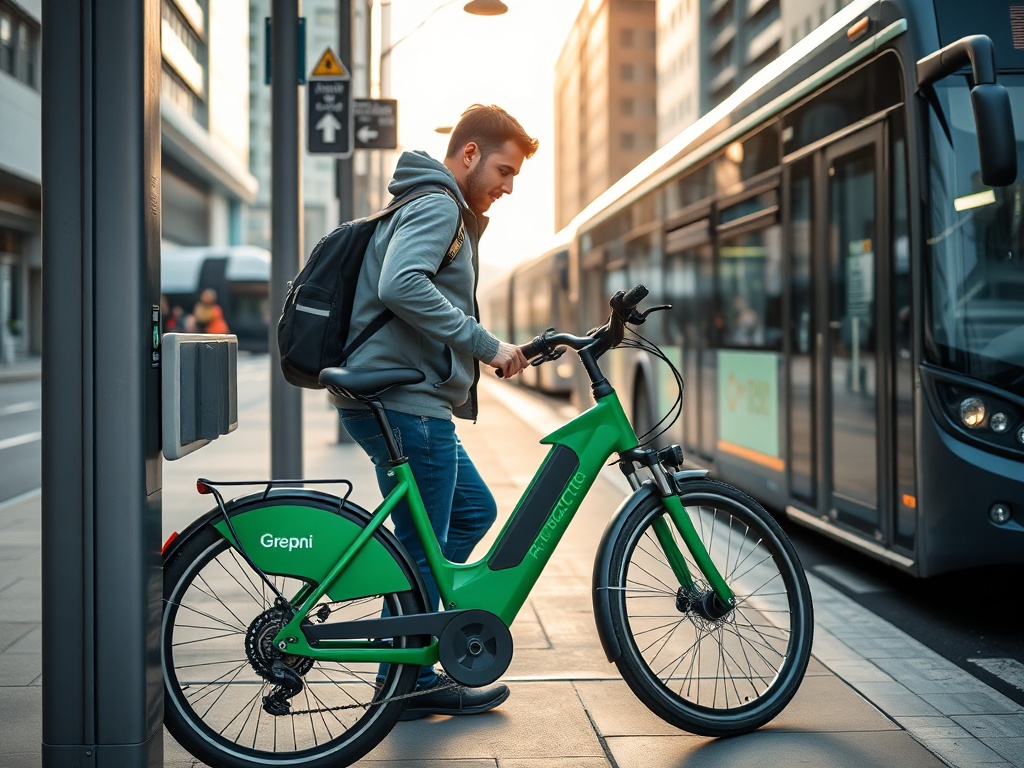
Lime has just launched a monthly subscription in the United Kingdom that positions its bikes and electric scooters below the cost of many urban public transport passes. The proposition is straightforward: pay a fixed fee and travel without worrying about the price per trip. According to the BBC, this move creates direct competition with buses and trains that has yet to be articulated in such explicit terms.
The crucial detail is not the price itself. What matters is that Lime arrived at this figure not from a spreadsheet in a boardroom. It came after years of actual usage data, city commuting patterns, and—this is what distinguishes the move—the user’s willingness to pay a recurring fee instead of incurring costs per ride. This distinction between transactional and subscription models is not cosmetic: it completely changes the structure of predictable revenue and customer retention.
What Lime is executing here is not a price war. It is a redefinition of the competitor. For years, micromobility companies compared themselves to one another: Lime against Bird, against Bolt, against the local offering. Now, the frame of reference has changed, and the rival is the municipal transport pass. That is the strategic shift worth analyzing.
Why Subscription is Not a Disguised Discount
When a company offers an all-you-can-ride monthly pass, a conventional financial analyst's first instinct is to treat it as a discounted acquisition strategy. A bait. But the mechanics underneath work differently.
A user who pays for a monthly subscription does not evaluate each individual trip. They have already committed their funds. This generates a completely different usage behavior: the subscriber uses the service more frequently, in more contexts, because the marginal cost of each additional trip is perceived as zero. The volume of trips per subscribed user tends to be significantly higher than that of pay-per-use users, which for Lime translates into more mobility data, greater operational density per city, and an infinitely more manageable demand prediction curve.
From a cost structure perspective, subscription also transforms something that usually burdens these companies: revenue volatility. The per-minute rental business is extremely sensitive to weather, weekdays, and local events. An active subscriber base turns some of that variability into guaranteed income at the beginning of each month. It’s not financial magic; it’s business model engineering applied after observing what actually happens in the streets.
There’s another angle often overlooked: the subscription acts as a barrier to exit. A user paying per trip can easily switch to another platform the next day without friction. A subscriber who has already paid for the month has an active incentive to maximize usage within the contracted service. Retention is not managed through push notifications or loyalty points; it's managed by committing the user’s budget from the first day of the month.
Public Transport as Price Benchmark: What This Move Reveals
Lime’s decision to explicitly position itself against buses rather than other micromobility apps says something about how the company understands its own market at this moment. It means that it’s no longer competing for the occasional user wanting to cross downtown in five minutes. It is competing for daily commutes, the journey from home to work, the routine five days a week.
This is a radically different market from that of tourists or weekend users. It demands reliability, consistent coverage, and an economical proposal that withstands monthly comparison with what is already spent on transportation. And this is where Lime’s move works as a sort of large-scale validation experiment: if users migrate from the bus pass to the micromobility subscription, that is not a marketing achievement; it’s empirical evidence that the product addresses the same problem at a lower perceived cost.
The most interesting signal for any public transport operator is not Lime’s price. It’s that a private company reached that price after iterating its model for years with real users, while public transport fares are set in administrative processes that can take months or years to respond to changes in demand or living costs. The asymmetry of speed is the real structural issue.
For cities operating subsidized bus networks, the risk is not immediate. But if Lime—or whoever consolidates this segment in the next three years—manages to retain a significant percentage of regular commuters in several cities, the ticket revenue-based funding models of public transport will face a fundamental problem that no ad-hoc fare adjustment will solve.
The Trap Lime Still Needs to Avoid
None of this analysis means that Lime’s model is fully validated. There’s one variable that no subscription automatically resolves: infrastructure. An electric bike does not compete with a bus on a day of heavy rain, in a city without bike lanes, or when the user needs to travel eight kilometers uphill. The value proposition of the subscription is only sustainable if the physical product consistently meets the user’s real conditions, not under the ideal conditions of a presentation deck.
The history of urban micromobility is rife with companies that scaled quickly, burned capital on fleets, and had to withdraw from entire cities because operations were not profitable at that level of usage. Lime has survived longer than most, but the subscription implies a commitment to availability that raises the operational bar. If a user pays a monthly fee and the bike is unavailable near their home for three consecutive mornings, cancellation will come before any retention campaign.
What differentiates a company that survives this moment from one that doesn't is the speed with which it detects the problem and adjusts fleet density, anchor points, or agreements with municipalities. That’s not done with annual plans: it’s done with operational dashboards reviewed weekly and decisions made in days, not quarters.
The business leader aiming to build something lasting learns one thing from this move that is worth more than any five-year financial projection: the only plan that doesn’t lie is the one the customer validates with their money every month, renewing or canceling. Everything else is hypotheses waiting to be destroyed by reality.