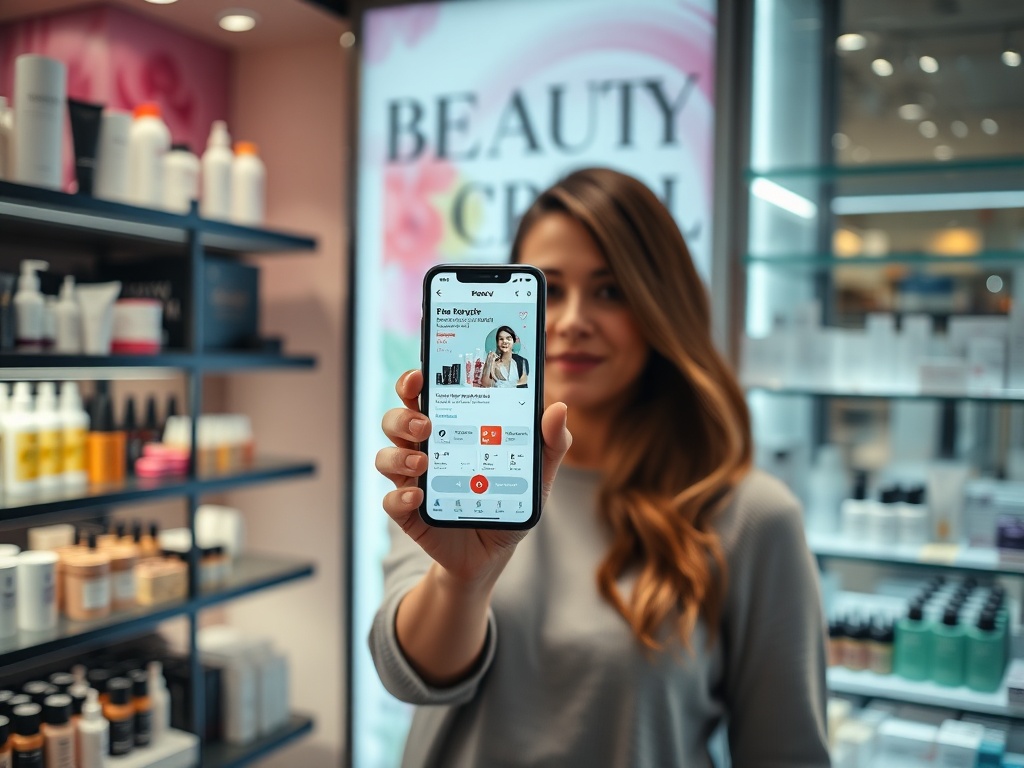

Ulta Beauty Bets on TikTok Shop: A Move That Reveals More Than It Seems
Ulta Beauty has just confirmed its entry into TikTok Shop, announcing this alongside an 11.8% sales growth, at a time when the platform is solidifying its presence in the United States and millions of consumers are shopping for beauty products directly from their home screen. The narrative circulating in financial media is simple: a robust company leverages an emerging channel with favorable winds. This reading, however, feels too comfortable.
What is truly happening is more alarming. Ulta is venturing into territory where the algorithm dictates demand, where margins are negotiated with every scroll, and where the promise of mass reach comes at a cost that rarely appears in press releases. The question analysts should be asking is not whether TikTok Shop is an opportunity—this is obvious—but rather, what Ulta is sacrificing to maintain a disciplined presence there, rather than just being present.
The Channel That Rewrites Discovery Logic
For decades, Ulta Beauty's competitive advantage rested upon a very specific architecture: physical stores with a high density of SKUs, trained staff to guide purchases, and an experience that blended accessible luxury with the practicality of mass retail. This architecture fostered loyalty—not the emotional loyalty mentioned in brand reports, but measurable loyalty that translates into visit frequency and average ticket size.
TikTok Shop operates on a radically different logic. Discovery is not controlled by the brand or retailer; it is controlled by the algorithm. A product can go viral in 48 hours because a content creator with 200,000 followers showcased it in a real-use context. This holds enormous value for beauty categories where visual demonstration is the most powerful selling argument available. Ulta understands this. That’s why it entered.
However, the same mechanism that drives short-term sales can erode long-term positioning. When a consumer's first interaction with a brand is through a 45-second video flashing a discount code, the value proposition compresses to price and immediacy. The curated experience of a physical store, the salesperson's expertise, and the ability to test products at the counter—all of this disappears. Ulta has spent years building exactly that.
The jump of 11.8% in sales is a factual data point and deserves recognition. But that figure does not differentiate between channels, nor between margins, nor between returning customers and one-time buyers driven there by the algorithm. That distinction is more important than the headline suggests.
What the 11.8% Doesn't Reveal About Channel Profitability
Social commerce has a unit economy that retail financial teams are learning to read in real-time, with costly errors included. TikTok Shop charges transaction fees. Content creators who generate volume charge for results or by fixed agreements. The discounts that drive initial conversion reduce gross margins. And the fulfillment logistics for impulse-generated orders have statistically higher return rates than planned purchases.
None of this makes Ulta's gamble unfeasible. But it does mean that the growth in gross sales and the growth in profitability per acquired customer in this channel are two distinct stories, and only one of them will determine whether this decision was strategically sound in three years.
The pattern I’ve observed in retail companies entering high-reach channels without first defining their minimum profitability metrics is consistent: initial quarters show revenue growth, teams celebrate, and between the fourth and sixth quarter, margin pressures appear that no one modeled rigorously enough because enthusiasm for the channel outstripped analysis. Ulta has the scale and resources to absorb this learning cycle. Mid-sized brands that mimic its logic may not have that luxury.
What would distinguish a disciplined entry from a reactive one is relatively easy to identify from the outside: if Ulta has defined which product categories will go to TikTok Shop and which will be protected for the physical experience, and if that segmentation is guided by margin data rather than just engagement data, then there is a real guiding policy behind the move. Conversely, if the strategy is merely to “put the catalog out there and see what works,” the current 11.8% growth may become the ceiling of a short cycle.
The Gamble Ulta Needs to Articulate Publicly
There is a scenario where this decision is correct and coherent: Ulta uses TikTok Shop as a channel for acquiring young new customers, accepts that the initial margin in that segment will be lower, and has a mechanism in place to migrate those customers to its loyalty program and eventually to the in-store experience where average ticket size and purchase frequency justify customer acquisition investment. If this is the design, then entering TikTok Shop isn’t a gamble on the channel; it’s an investment in the top of a customer funnel that increases in value over time.
But this design requires something few retail companies articulate clearly: an explicit decision on what Ulta will not do in this channel. Not all products. Not all price categories. Not all brand experiences compressed into short video formats. The sacrifices are what lend coherence to the move.
Ulta has spent years differentiating itself from Amazon and mass discount channels precisely because it chose not to compete on pure price. TikTok Shop naturally gravitates towards pricing and discount virality. If Ulta does not design the limits of its presence on this platform from the start, the channel will inevitably push its positioning toward an identity it never intended to adopt.
Social commerce is not the future of beauty retail. It is a layer of the present that coexists with others. Companies that understand it this way, and enter with their own rules rather than being shaped by algorithmic logic, are the ones that extract value without sacrificing positioning. Others merely deliver volume in exchange for margin. Ulta's C-level executives have the data to know which of the two groups it operates within. What the market still doesn’t know is whether that data exists and is guiding decision-making, or if entering TikTok Shop was primarily a response to pressure not to miss out on where young consumers are. Both are moves. Only one is strategy.
The discipline of a retail leader is not measured by the channels they add. It is measured by the limits they design within each, and by their steadfastness in maintaining them when algorithms offer more volume in exchange for less identity.