
M&S Closes 14 Cafés and Reveals the Real Cost of Focus
For decades, a familiar scene has unfolded in British department stores: a customer walks in to buy a shirt, finds themselves sitting with a latte and a slice of carrot cake, leaving without the intended purchase. Marks & Spencer (M&S) cultivated this ritual. Its in-store cafés were not operational accidents; they were part of a brand identity that promised something vague yet powerful: visiting M&S was an experience in itself. Now, the company announces the closure of 14 of these dining spaces, with public reaction swinging between nostalgia and outrage. I understand both sentiments. However, neither is strategically relevant.
What M&S is doing, whether consciously or not, is beginning to answer a question that should have been addressed much earlier: What business are we really in? The honest answer cannot be "fashion, food, and full-service dining" simultaneously, not with the margins that physical retail is generating in post-pandemic UK, and not with the online retail pressure squeezing every square meter of store space.
The Space Occupied by a Café Isn’t Free
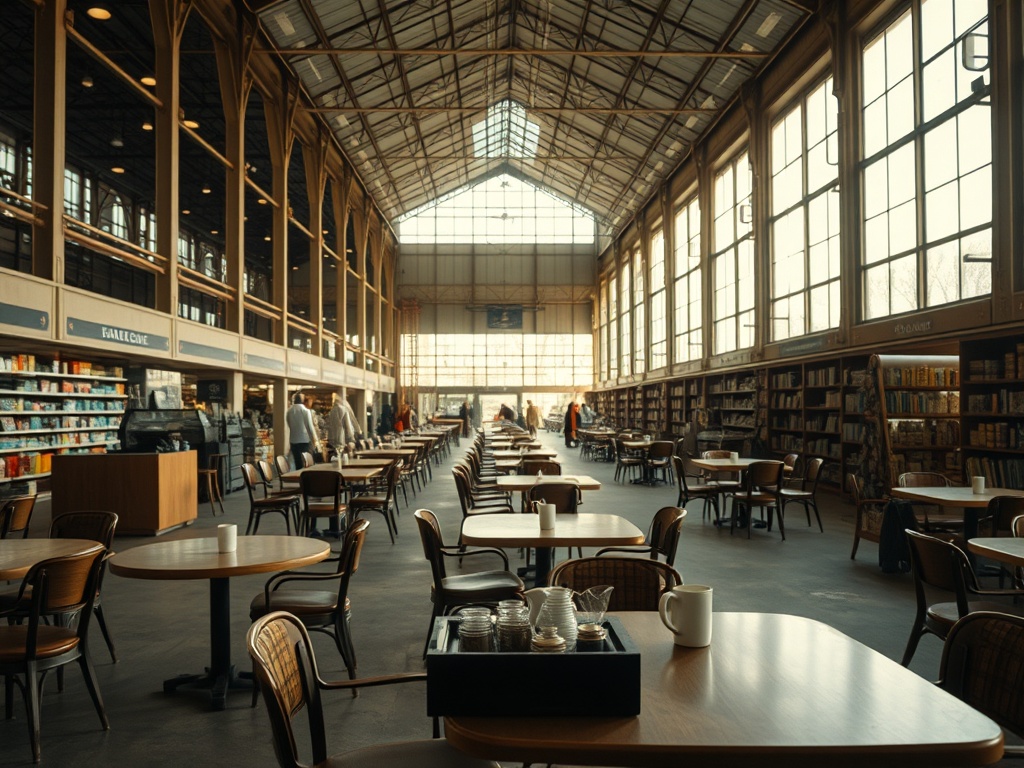
A café within a department store consumes space, staff, supply chains, health management, specialized equipment, and managerial attention. All this comes with a fixed cost that doesn’t disappear when customer traffic drops on a Tuesday afternoon. What is difficult to quantify from the outside, but not hard to imagine for any retailer, is the ratio between the income generated by that space and what it would produce if it were allocated to higher-turnover or higher-margin product categories.
M&S has not published the economic breakdown for each closed café. However, the decision to close 14 locations simultaneously does not suggest a cosmetic adjustment; it suggests that internal analysis revealed a systematic pattern of underperformance. When the problem is isolated, you close one. When fourteen are shut down at once, the diagnosis indicates structural issues.
What seems more revealing to me is not the number of closures, but the silence that preceded them. These cafés didn’t just lose economic sense this week. The question of whether a retailer of clothing and food should operate fully staffed dining areas, with its own supplies and all the logistical complexities that entails, has gone unanswered in public for years. There’s a name for this: postponement of uncomfortable decisions. And its cost is always paid later, with greater pain and less maneuverability.
What Customer Nostalgia Doesn’t Fund
Headlines speak of “disappointed” shoppers. That information matters, but not in the way mainstream media presents it. Customer disappointment is data, not a veto. A retailer making portfolio decisions based on how upset their customers might get on social media is operating with the wrong tool.
What M&S needs to measure is not the intensity of discomfort, but its durability and impact on buying behavior. If customers who frequented the cafés stop visiting stores altogether as a result of the closures, that’s a revenue loss that should be quantified and weighed. If, on the contrary, those same customers continue to buy clothes and food at M&S because the product justifies the visit, then the café was an emotional cost, not a revenue driver.
This distinction isn’t just semantic. It defines whether the decision was correct or whether it was a cost-cutting measure disguised as strategy. From the outside, I can’t know for sure. What I can assert is that the reasoning leading a company to maintain 14 dining operations within retail stores, without a clear thesis on how those spaces contribute to overall margins, is not strategy. It is institutional inertia masquerading as tradition.
Moreover, there’s a scenario worth monitoring: if M&S frees up that space to expand categories like premium food or higher-value clothing, the café closures become a physical capital reallocation towards segments with better economic equations. If, on the other hand, the released space remains underutilized or becomes storage, the decision will have been just a cut without architecture.
Physical Retail Doesn’t Survive by Trying to Be Everything
A pattern permeates the recent history of European retail: operators that survived the last decade of digital transformation didn’t do so by adding layers of experience without a profitability logic behind them. They did so by being relentlessly selective about what they offered and to whom.
M&S has a value proposition that works in quality food and clothing positioned in the mid-high price range. That combination is already complex enough to execute well. Adding full-service dining as a third vertical doesn’t multiply the brand's appeal; it multiplies points of operational failure. Each additional service a company vertically integrates is a new source of variability in customer experience and a new cost center competing for managerial attention.
The closure of these cafés, viewed dispassionately, aligns with an operational simplification thesis that makes sense in the current UK retail context. Physical stores are under profitability pressure per square meter. The post-inflation consumer in the UK is more selective. And M&S, if it wants to seriously compete in quality food against specialized rivals, needs to dedicate resources, space, and managerial attention to that battle, not split them between internal kitchens and product aisles.
The issue isn’t that M&S is closing cafés. The issue would be closing them without a guiding policy that explains where it redirects those resources. A cut without a destination is just a cut. A renunciation with direction is strategy.
The Discipline of Letting Go of Inherited Burdens
Companies with long histories accumulate assets that have long ceased to perform but no one dares to touch because they are part of institutional identity. M&S’s cafés are a perfect example of such an asset: emotionally charged, operationally costly, and strategically ambiguous.
Closing them generates negative headlines for 48 hours. Keeping them generates a silent bleed that doesn’t appear in any headlines but erodes the margin for years. Boards that choose the comfort of positive headlines over the discipline of margins are the ones that end up making much more painful decisions when there’s no time left.
M&S has taken a step that, given the available information, seems more coherent than reckless. What will determine if it was strategy or simply cost-saving is what it does with the space, capital, and managerial attention it recovers. That won’t be found in any press release. It will be reflected in the numbers over the next two years.
The C-level executives leading an organization with decades of history have a specific responsibility: to distinguish between what the company has always done and what it must do to remain viable. Those two lists are not the same, and confusing them comes at a price that is paid in installments, slowly, until suddenly it is all due at once. The discipline of eliminating what is inherited that no longer contributes is not cruelty to the past. It's the only way to finance the future.