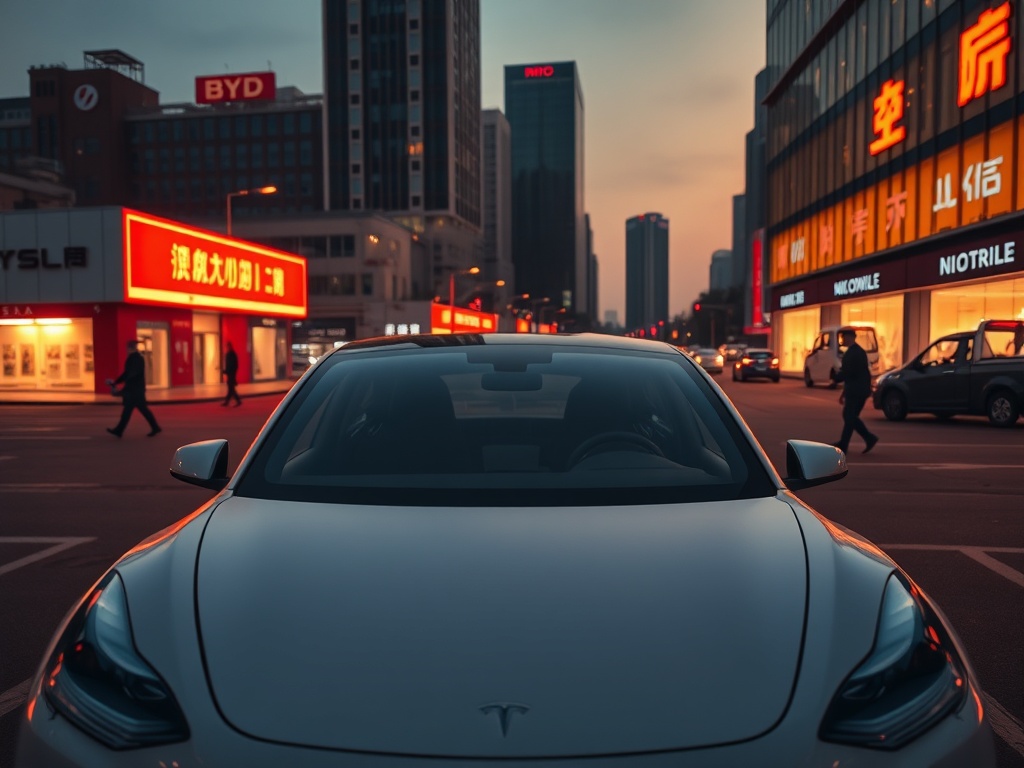

The Factory Producing for Nobody at Home
Gigafactory Shanghai hasn’t stopped its operations. In the first quarter of 2026, the plant produced and shipped 213,398 vehicles, a number that several outlets celebrated as evidence of resilience. However, beneath that wholesale figure lay a radically different reality: only 112,798 of those cars ended up in the hands of Chinese buyers, a 16.2% decrease compared to the same period in 2025. In January, the plunge was a staggering 45% year-on-year, marking the lowest level since November 2022. March wrapped up with a drop of 24.3%.
The gap between the two numbers, more than 100,000 units, was shipped via boat to Europe and the Asia-Pacific region. Exports from Shanghai surged by 529% in March alone, jumping from 4,701 to 29,563 units. Tesla found a way to keep its assembly line busy. What it hasn’t found is how to maintain the decision-making mind of a buyer in Shanghai, Chengdu, or Shenzhen.
That distinction—the gap between producing and convincing—is exactly where the diagnosis that production reports fail to deliver resides.
What the Chinese Buyer Is Evaluating
When a Chinese consumer considering an electric vehicle doesn’t purchase a Tesla in 2026, they are not making an irrational decision. They are processing a set of signals that, viewed through the lens of behavior, point in a single direction: the push toward Tesla has eroded, and the allure of local alternatives has grown at a pace the brand did not anticipate.
The push—this unbearable friction with the current situation that leads someone to seek something new—was strong three years ago. Fossil fuels, uncertainty regarding the future of mobility, and the status associated with adopting early technology were all factors. Tesla captured that push better than anyone. But local manufacturers, with models that understand local charging infrastructure and entertainment systems integrated with Chinese platforms, priced competitively in a brutal margin war, have redefined what it means to be “the best option” for that same consumer.
The problem isn’t that Tesla has gotten worse. The problem is that the comparison threshold has risen, and Tesla hasn’t moved its proposition quickly enough to stay above it. When the allure of an alternative surpasses that of the incumbent, the inertia of habit—the force that typically defends established brands—begins to work against them. The consumer who already owns an electric vehicle from a local manufacturer doesn’t feel any urgency to switch to Tesla. Those without a vehicle are building their brand reference around options that feel more culturally relatable and economically accessible.
Globally, Tesla delivered 358,000 units in Q1 2026, below market expectations, while producing nearly 408,000, amassing an inventory surplus of over 50,000 unsold vehicles. That number exceeds the previous record of 46,500 units from Q1 2024. Inventory isn’t just a logistical issue; it’s the physical manifestation of a gap between what the company believes the market wants and what the market is actually willing to buy.
When Exporting Signals Internal Failures
The wholesale narrative has a valid operational logic: if the domestic market isn’t absorbing production, it gets redirected to markets that do. Record exports from Shanghai are, in that sense, a short-term financial engineering solution. But there’s a strategic cost that shipping numbers don’t capture.
Each unit that leaves China toward Europe or Asia-Pacific is a unit that did not build brand loyalty in the largest market in the world for electric vehicles. And brand loyalty isn’t created from a catalog; it’s built from the accumulated experience of millions of owners who recommend, renew, and normalize a brand within their social circles.
The export model as a safety valve works to manage a short-term crisis. It becomes structurally problematic when it replaces a domestic demand strategy. The China Passenger Car Association, which provides the data revealing this gap, will continue to publish figures month by month. If April shows a continuation of the pattern from March, the argument that this is a temporary correction will become unsustainable.
The stock price rose by 0.49% in pre-market trading following the data release. Investors, at least at that moment, chose to read the wholesale headline. But the capital market and the consumer market process time differently. The former looks at quarters; the latter builds perceptions over years.
The Arithmetic of Fears Left Unaddressed
There’s a behavioral mechanic that companies with technically superior products often underestimate. Buyer anxiety, that set of invisible frictions that slows down the purchase decision, doesn’t vanish because the product is objectively good. It dissipates when someone actively works to eliminate it.
In China, those frictions are specific and measurable. Integration with the local digital ecosystem—where navigation, payment, and entertainment platforms differ from Western ones—is a daily point of friction. After-sales service in second- and third-tier cities is another. The perception that a foreign brand might be impacted by trade tensions or regulatory restrictions adds an extra layer of uncertainty that a buyer evaluating a purchase of this magnitude weighs more heavily than any satisfaction survey would record.
Meanwhile, local manufacturers have built their proposals precisely around eliminating those frictions, not around exceeding their products in terms of engineering. They have reduced the cognitive effort of the purchase decision for their target buyer. And that, from a consumer behavior perspective, is often more powerful than having the best engine or the highest range.
Tesla has spent years perfecting its product. The data from Q1 2026 suggests that this same effort has not been applied with the same intensity to refine the decision experience for its Chinese buyer. Investing in making the product shine is a bet that yields diminishing returns when the buyer already assumes the product is good but still hasn’t resolved their fears about everything surrounding the product. Leaders who confuse these investments will find themselves looking at production numbers with pride while their local competitors drive away with the keys.