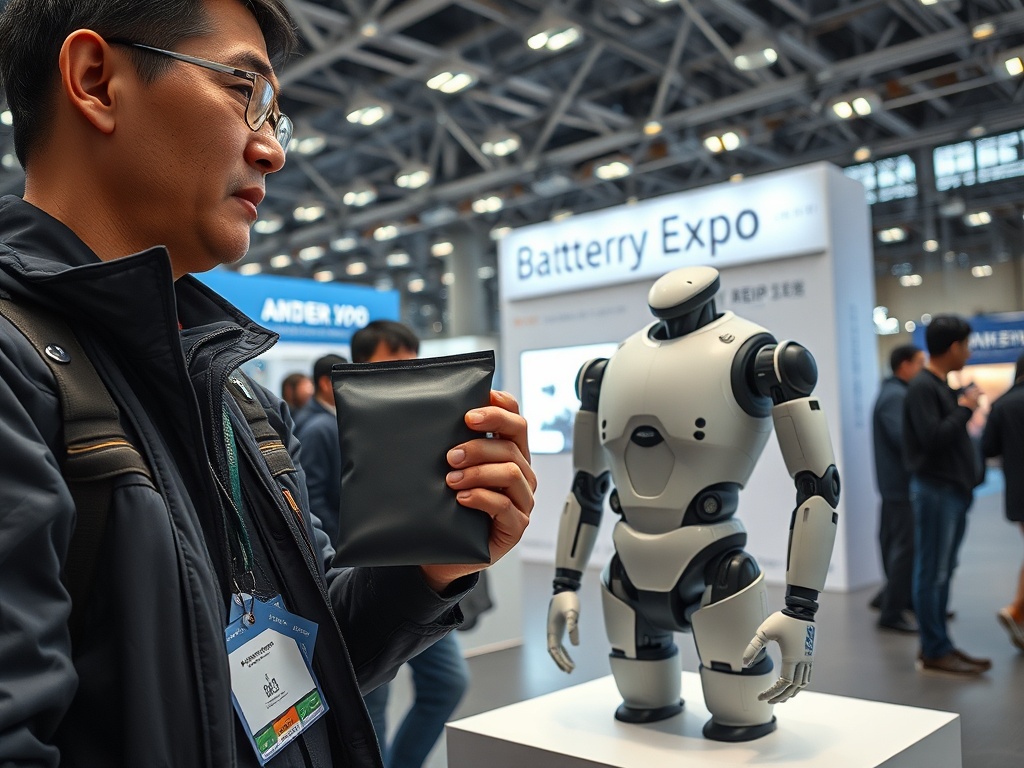

Solid-State Battery Enters Robotics, Transforming the Labor Economy
Samsung SDI delivered a clear message at InterBattery 2026 in Seoul: “AI thinks, Battery enables.” This phrase resonates deeply as the centerpiece of their booth is their first pouch-type all-solid-state battery prototype aimed at humanoid robots and physical AI systems. The technical data driving this initiative is aggressive: a target energy density close to 500 Wh/kg, nearly double that of many conventional lithium-ion batteries. The company has also set a clear industrial ambition: mass production in the second half of 2027. Everything else at the fair—from UPS for data centers to monitoring software and storage containers—serves as evidence that Samsung SDI is strategizing its portfolio for the investment cycle propelled by AI.
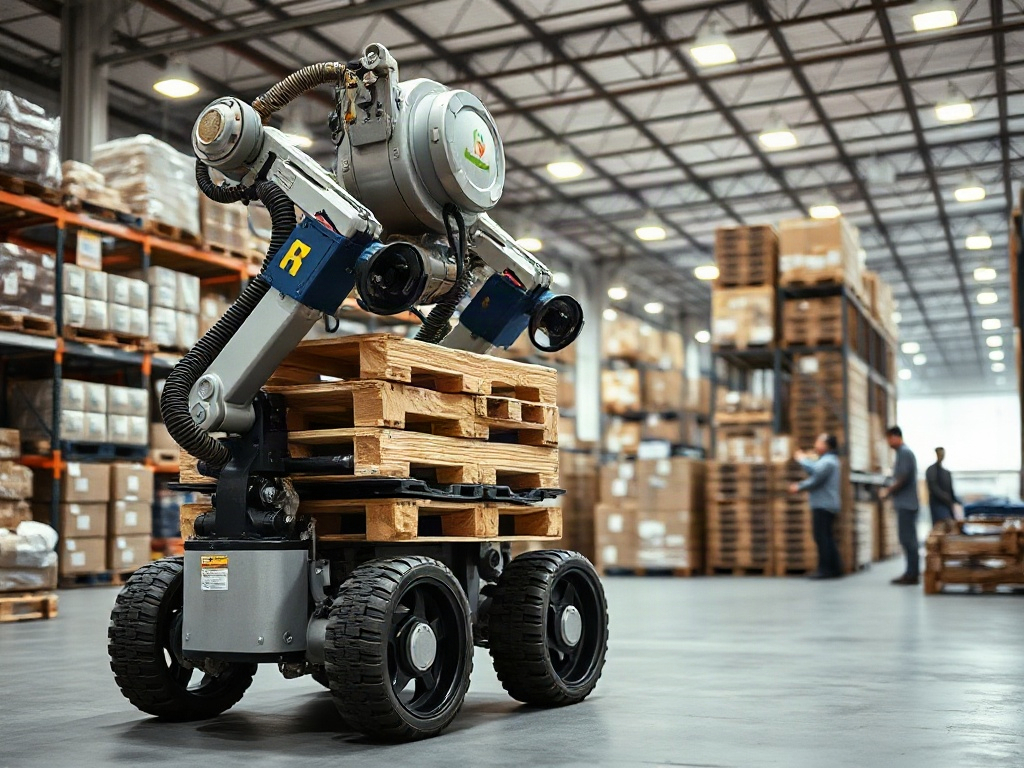
What was presented as a humanoid prototype represents, in business terms, an attempt to capture the most elusive asset in robotics: usable energy per kilogram under peak power, within a limited volume, and with safety demands exceeding those of mass consumption. For a robot, every gram counts in terms of autonomy, stability, payload, and operational costs per hour. When the battery improves, the robot transitions from being an “expensive demo” to a productive unit able to justify its place on a production line.
Pouch Format: A Product Decision, Not Just a Technical Detail
Samsung SDI’s announcement emphasizes that the pouch format reduces weight compared to prismatic designs while maintaining stable output for robots that require instant spikes in energy to walk, lift, or regain balance. That statement reveals a correct understanding of the issue at hand: a humanoid does not consume energy like an electric vehicle on the road; its profile is intermittent, with abrupt demands. The value of a battery for robotics is measured less by the “average” and more by the worst minute of the cycle.
Moving to all-solid-state also reconfigures the risk language. Replacing liquid electrolytes with solid materials is commonly associated with improved safety and higher energy density, the two variables that penalize humanoid robots the most: safety due to proximity to humans and density due to physical constraints. Samsung SDI had already developed solid prismatic batteries for electric vehicles and is now expanding to pouch batteries for robotics, aviation, and wearables. This signals platform development: the company isn’t merely “testing a gadget” but aims to build a family of products where the form factor adapts to the end market.
From a strategic perspective, the pouch for humanoids is also a pathway to standardization. Robotics today suffers from design fragmentation, which drives up costs. If a supplier achieves a power module with repeatable performance and turns it into a reference for integrators, it captures negotiation power without needing to own the entire robot. This is a classic critical layer move: those who control energy control deployment scheduling.
500 Wh/kg: Transitioning from Laboratory Robotics to Operations
The figure of 500 Wh/kg is not merely a headline-grabbing record; it’s a potential economic threshold. If a robot achieves double the energy density of typical batteries, the operator gains a combination of benefits: more hours per charge, less mass to move, or more mass available for payload. In any of the three scenarios, the effect is expressed in a metric that CFOs understand: cost per operational hour.
TrendForce projects global shipments of humanoids to exceed 50,000 units by 2026, with year-on-year growth exceeding 700%. It also estimates that demand for solid-state batteries for humanoids could surpass 74 GWh by 2035. Samsung SDI has a pragmatic reading here: even if the market takes time to develop, the reward for being a credible supplier when deployments become massive is disproportionate.
The other, less celebratory insight is the execution risk. Presenting a prototype is one thing; scaling production with consistent quality and market-supportable costs is another. Samsung SDI has set a window for mass production in the second half of 2027. This timeline aligns with the general narrative for solid-state battery commercialization towards 2027-2030. The advantage is that the company is using a segment where initial volumes can be smaller than automotive, and therefore more tolerant of higher prices in early stages. For a manufacturer, robotics can serve as an industrial ramp: less volume, more margin, accelerated learning.
The crucial element will be whether performance under peaks, lifespan, and failure rates uphold the business case. Robotics does not tolerate rapid degradation: a battery that loses capacity reduces shifts, killing the promise of productivity. The news does not provide data on lifecycle, temperature, or costs, so a responsible analysis remains within the confirmed parameters: target density, form factor, focus on power peaks, and estimated production date.
The Complete Play Involves Data Centers and Software, Not Just Robots
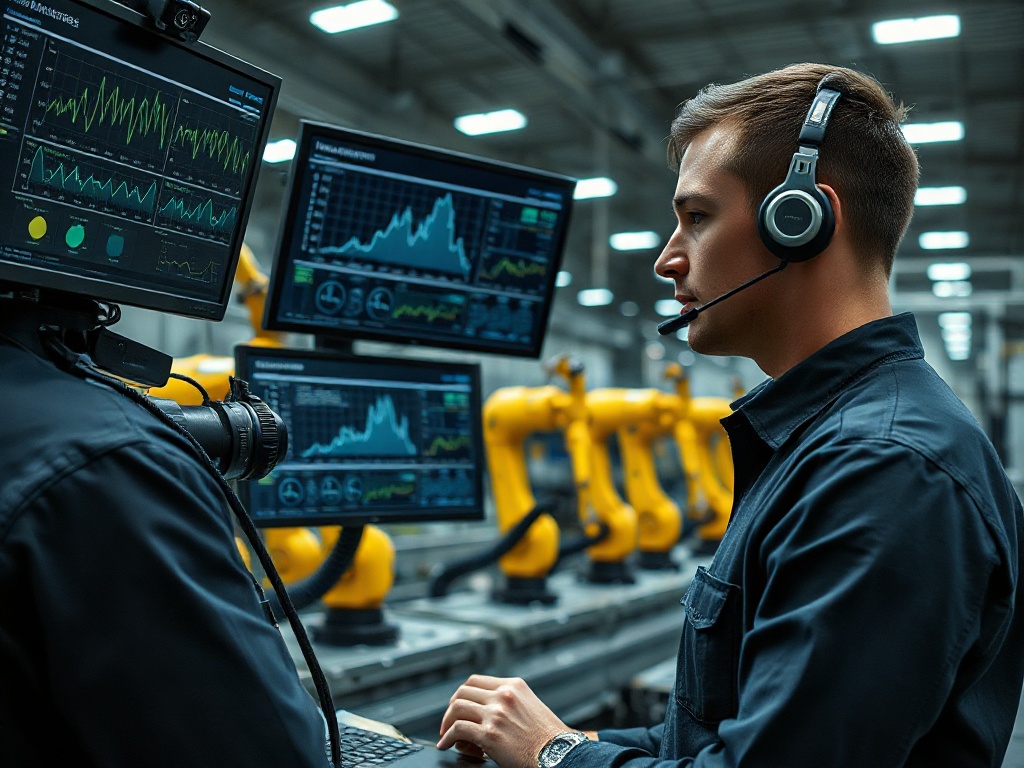
Samsung SDI did not present the prototype in isolation. They also introduced the U8A1 battery for data center UPS, featuring 33% improvement in space efficiency and over 50% extended data retention during outages through integrated battery backup in servers. They also added Samsung Battery Intelligence (SBI), an AI monitoring software for real-time tracking of storage systems, utilizing data from over 1,400 global sites.
Here lies the financial pattern: AI generates two waves of energy demand. The first is stationary computing, which burdens the electrical grid with spikes and penalizes with multimillion-dollar costs for any interruption. The second is physical AI, where energy literally equates to mobility and safety. Samsung SDI is positioning hardware and software as a package: batteries providing power and a monitoring framework that reduces operational risk. In markets where failures cost reputation and money, monitoring shifts from an accessory to a purchasing condition.
For enterprise buyers, this integration has a consequence: increased dependence on a single supplier. This can be beneficial if it reduces incidents and simplifies maintenance; it can be perilous if it captures too much pricing power. The smart way to buy is to demand open telemetry standards and clear contractual guarantees. By showcasing the complete package, Samsung SDI is signaling that it desires to be more than just a cell manufacturer: it wants to be a partner in operational continuity.
The Typical Blind Spot Lies in Design Tables and the Human Chain
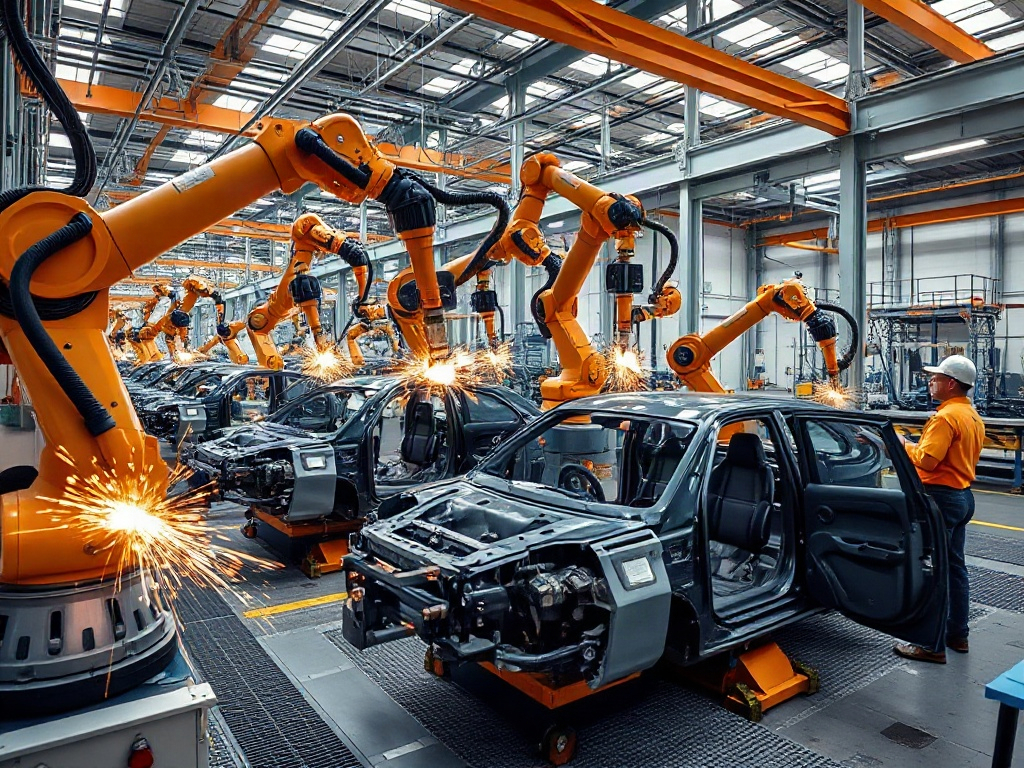
When I hear “humanoid robots” and “physical AI,” my immediate audit is not moral; it’s operational: who benefits first, who is left out, and what social friction is being purchased for the future. High-density energy makes deploying robots in factories, logistics, and services more viable. This viability accelerates decisions for partial task replacement, role redesign, and new training needs.
In that landscape, the greatest corporate error is to think adoption is solely an issue of engineering and purchasing. It’s social architecture. The deployments that scale are those transforming frontline supervisors, maintenance technicians, industrial safety personnel, and human resources into a part of the design, not late receivers of a “project” already sealed.
My lens of diversity and social capital here is cold: homogeneous teams tend to underestimate the cost of human integration. A uniform steering committee often coincides on the same assumptions regarding shifts, fatigue, incentives, operational language, and technology acceptance on the plant floor. The typical outcome is an implementation that works in pilot mode but breaks at scale due to resistance, incidents, or turnover.
Samsung SDI's move also compels scrutiny of the talent supply chain: technicians capable of operating, diagnosing, and maintaining systems with new chemistries, integrators who understand safety, and suppliers who meet standards. If that network is built as a transactional relationship, fragility appears at the first quality crisis or the first recall. If built as social capital—trust, early information exchange, shared learning—the system gains velocity.
The news does not mention robotics partners or integration agreements. This means the field is open for alliances, but also that execution will depend on how quickly Samsung SDI translates the prototype into validation programs with integrators, with shared metrics and clear governance. In emerging markets, the early winner is not the one who announces first; it is the one who reduces uncertainty for the buyer.
An Operational Mandate for Leadership Seeking to Capture Value Without Inciting Internal Chaos
The pouch type solid-state battery for humanoids is an advancement with serious industrial implications: higher energy density, reduced weight, promises of safety, and a production horizon of 2027. If realized, it changes the economics of automated labor and accelerates competitive pressure in manufacturing and logistics. Samsung SDI, by combining robotics, data centers, and monitoring software, is constructing a proposition where energy and operational continuity are sold together.
For C-Level executives, the correct step is to treat this wave as a portfolio and internal governance decision. Technology without disciplined social adoption becomes unproductive CAPEX, and adoption without energy security ends in incidents. The winning company is the one that aligns purchasing, operations, security, IT, and talent from the outset, with metrics on cost per operational hour, continuity, and learning.
In the next board meeting, the instruction is concrete: observe the small table and recognize that if everyone is too similar, they inevitably share the same blind spots, making them imminent victims of disruption.