
Solar Photocatalysis Against PFAS: It’s Not About Chemistry, But Who Captures Regulatory Savings
PFAS—commonly dubbed "forever chemicals"—have become the quintessential example of how a technical advantage can ultimately turn into a financial liability spread across the entire value chain. Designed for their persistence, PFAS compounds are found in everything from non-stick coatings and waterproof textiles to cosmetics and firefighting foams. This very stability, supported by robust carbon-fluorine bonds, leads to persistent contamination in water, soil, and organisms, while those profiting from the original products do not bear the costs.
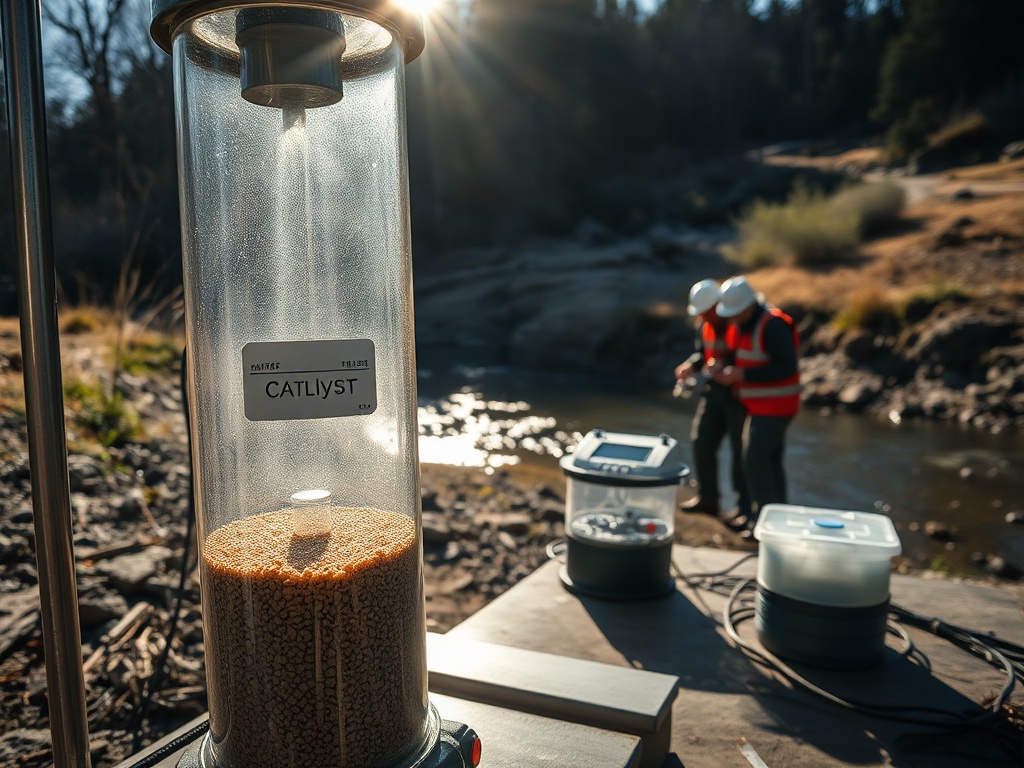
In this context, an international team led by Bath University published a breakthrough in RSC Advances: a solar-powered carbon-based photocatalyst prototype that degrades PFAS into carbon dioxide and fluoride. The design integrates carbon nitride with a rigid microporous polymer called PIM-1, which effectively “attracts” PFAS molecules to the catalytic surface, enhancing effectiveness—especially at neutral pH, the standard in real-world environmental conditions. A significant side benefit of this technology could be the future development of a portable sensor to detect contamination outside laboratory settings—a current limitation that the team aptly highlights, noting that detection typically requires expensive, specialized equipment.
This news is less a laboratory milestone and more a reflection of prevailing incentives. The strategic value of such technology lies not in its ability to “work” in a scientific paper but in how it alters the operating economics of water treatment, liability monitoring, and litigation. The crucial question becomes who converts that improvement into profit, who pays for it, and who gets stuck with residual risk.
From Activated Carbon to Real Degradation: The Cost Shift is Not Technical, but Accounting-Based
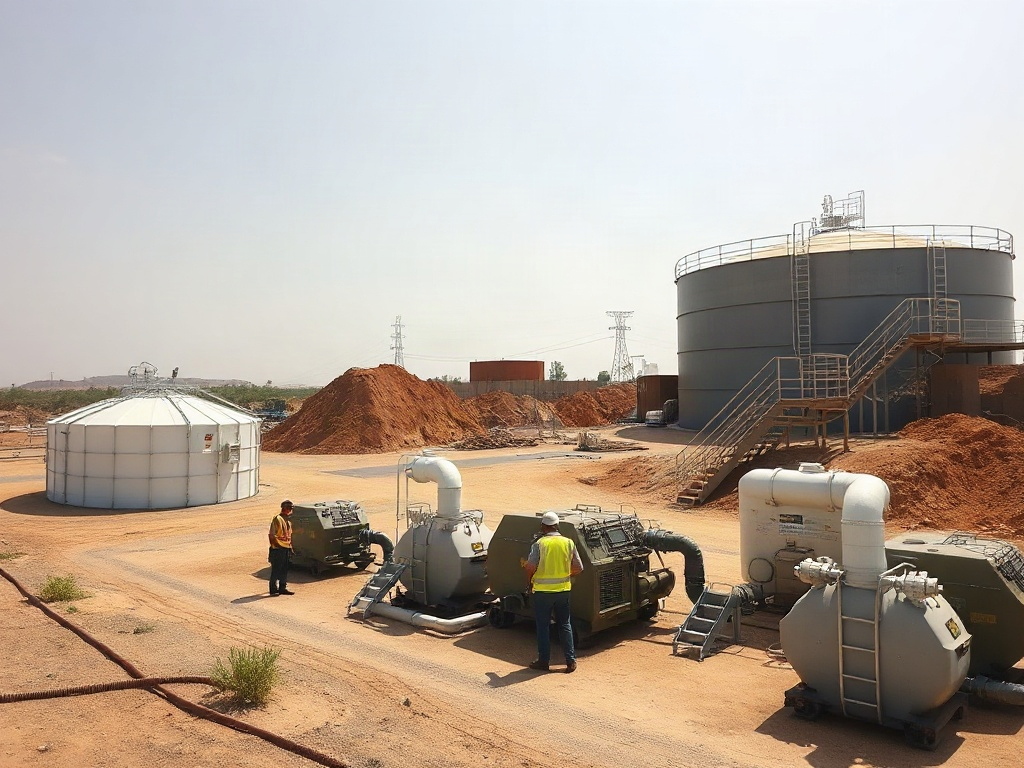
Much of current treatment relies on adsorption, utilizing solutions like granular activated carbon, which is relatively affordable and effective for water suppliers but has a structural drawback: it doesn’t destroy PFAS; it merely relocates them. This transforms the issue into an inventory of waste needing future management, transport, and disposal. In business terms, utilities buy an immediate reduction in reputational risk but retain deferred regulatory risk and a cost flow that could escalate if limits tighten.
The appeal of the Bath prototype is that it proposes degradation driven by “cheap and ubiquitous” energy—solar light—and operates in conditions closer to the actual environment, reporting performance at neutral pH. This aspect is critical since many advanced solutions become unfeasible when they demand artificial chemical conditions, costly inputs, or energy-intensive processes. If degradation can occur without converting the process into a complex plant, the cost structure changes: less reagents, potentially lower energy costs, and a more defensible narrative before regulators.
However, the risk of misinterpretation is immediate. “Solar” sounds like “free,” and such simplifications can doom projects when transitioning from academia to hands-on operations. While sunlight may be inexpensive, infrastructure is not. Contaminant capture, residence times, flow management, material upkeep, catalyst replacement, and analytical verification all remain tangible costs. The innovation of PIM-1 serving as a “catcher” near the catalyst is precisely an acknowledgment of that economic reality: efficiency depends on bringing PFAS close to the active site. If the material doesn’t capture effectively, the operator compensates with volume, surface area, or time, diluting the supposed “free” aspect.
Thus, the value leap won’t stem from "photocatalysis" itself but from its effects on the overall treatment cost line and compliance costs. If the technology lowers the cost per cubic meter treated or reduces compliance uncertainties, a willingness to pay exists. If it solely alters the method without reducing total costs or increasing reliability, it will remain a scientific curiosity.
The True Product Could Be the Sensor: Affordable Detection as a Power Lever
Professor Frank Marken's team emphasizes a point many underestimate: detecting PFAS is challenging and requires specialized laboratories. In a value chain where measurement is costly, the system inadvertently rewards opacity. The first market break does not always come from “better remediation,” but rather from measuring at a lower cost. As measurement costs decline, it enables mapping, comparisons, community pressure, investment priorities, and—most importantly—traceability to assign responsibilities.
Here, the potential for a portable sensor based on fluoride release poses a competitive threat to the status quo, even before an industrial degradation module is developed. A field sensor shifts power away from centralized laboratories toward operators, municipalities, insurers, and communities. It alters negotiations: a water supplier no longer depends on slow, expensive sampling campaigns; an industry with potential environmental liabilities loses leverage in discussing “uncertainty”; a regulator gains more granular evidence.
The key phrase is that the catalyst converts a difficult-to-track molecule into a more accessible signal. This reduces friction and, by extension, cuts coordination costs among stakeholders. In practice, the first scalable business model might be an integrated package: material cartridges + fluoride reader + sampling protocol. Large-scale remediation can follow, financed by the clarity that the sensor creates.
The strategic dilemma lies in governance: whoever controls the measurement standard and its interpretation captures a disproportionate share of the value. If the system remains in the hands of a single supplier, it becomes a tollbooth. If it’s designed with interoperability and reasonable costs, it accelerates adoption and minimizes litigation from lack of evidence. The difference isn’t ideological; it’s market survival. A chain that feels extorted seeks alternatives and slows down dissemination.
Scaling Without Becoming Extractive: The Industrial Partner Defines Value Distribution
The news clarifies that we’re confronted with an academic prototype and that the team seeks industrial partners to scale up. At this stage, the classic mistake is to assume that the partner is merely “buying technology.” In PFAS contamination, the partner is actually purchasing a reconfiguration of risk: regulatory, operational, and legal.
The international collaboration—Bath with researchers from the University of São Paulo, Edinburgh, and Swansea—shows scientific robustness and diverse capabilities, but the market demands something else: repeatability, production, certification, warranties, responsibility for failures, and field support. All of this requires capital, and investment comes with caveats. If the partnership is structured to maximize early margin extraction (such as high prices for cartridges or restrictive licensing), adoption diminishes right where the technology bears the most social value: small municipalities, vulnerable watersheds, operators with constrained budgets.
A robust strategy is one that lowers barriers without destroying incentives. A plausible path could involve pricing based on total savings generated: fewer costly samples, less redundant treatment, less compliance uncertainty. This aligns the manufacturer’s interests with the operator’s and avoids the game of “selling the problem piece by piece.” Another route involves enabling multiple manufacturers under clear specifications, maintaining a core of quality and verification to prevent bottlenecks.
There’s also a technical nuance with economic implications: the prototype reports efficiency at neutral pH, which reduces the need for chemical conditioning of the water. This detail may translate into lower peripheral CAPEX and less OPEX on reagents, thereby accelerating returns for an operator. Yet, this value only materializes if the material proves stable in real operations and its performance does not demand frequent replacements. Durability equals margin, and without durability data, the market will discount the promise.
Fluoride as a Signal and Byproduct: Potential Value, Ensured Accountability
The degradation into fluoride and CO₂ offers two readings. The first concerns safety: fluoride is common in products like toothpaste and fertilizers, as noted in discussions surrounding similar technologies. The second addresses accountability: converting PFAS into fluoride does not eliminate the necessity for traceability and effluent control; it merely changes the type of control.
In terms of the value chain, this could be advantageous. An operator prefers controlling a known and measurable variable rather than maintaining an inventory of persistent contaminants in saturated filters. However, the solution’s design must avoid the temptation to promise “magic disappearance.” In regulated markets, credibility is built with mass balances, monitoring protocols, and clear responsibilities. Each ambiguity raises financial costs via insurance, audits, and contingencies.
This presents a product design opportunity: to integrate verification from the outset. If the catalyst produces a measurable signal, that signal should become a standard service component, not an additional burden for the client. The provider that offers degradation alongside verification reduces the total compliance costs and gains negotiating power, provided the price does not absorb all savings and leave the client with no benefit.
Industry trends are clear: regulatory pressure and reputational costs push toward lower-energy and higher-traceability solutions. Solar photocatalysis fits this direction, but its competitive advantage will stem not from chemical elegance but from the contractual architecture that sustainably distributes savings.
The Advantage is Defined by Savings Distribution, Not Catalyst Novelty
The Bath University catalyst combines PIM-1 and carbon nitride to bring PFAS close to the active surface, degrading them using solar light under environmental conditions, while opening the door for portable sensors through fluoride release. The science is promising, yet the business case unfolds on another field: who converts that promise into operational standards.
When detection is expensive, the cost shifts to those least able to defend themselves: local operators and exposed communities. When remediation merely adsorbs, the cost gets deferred and turns into a liability. The solution that destroys pollutants while lowering measurement costs redistributes power toward those who operate, regulate, and live in the area.
Real value capture will consolidate around the player that successfully scales without imposing tolls that hinder adoption: if the industrial partner turns advancements into accessible products, the operator reduces risk and total cost; if they turn it into a rent-seeking model for measurement control and consumables, the margin shifts to the supplier, prompting the system to seek alternatives. In the world of PFAS, those who distribute regulatory savings in ways that keep all actors engaged will emerge victorious.