
The Japanese E-Methane Plant that Fits into the Network: When Decarbonization Depends Less on a Hero and More on a System
On February 24, 2026, INPEX and Osaka Gas launched operations at a CO2 methanation facility touted as the "world's largest test plant" in Niigata, Japan. The notable fact is not just the size, but the operational intent: converting 400 Nm³-CO₂ per hour into synthetic methane and injecting some of the result into an existing natural gas network. This declared scale is roughly equivalent to the annual consumption of 10,000 households. Previous tests had already achieved two key milestones: 96% methane concentration during trial operations and pipeline injection on February 20, 2026, from the Koshijihara plant. Additionally, the project received certification under the Japan Gas Association's system for "clean gas" on January 27, 2026, enabling environmental value certificates.
These elements combined illustrate a rare pattern in energy transition: an innovation that does not require building a market from scratch, but rather learning to operate within the infrastructure that already dominates the economy. Methanation does not intend to replace the network; it aims to earn its place from within.
As an organizational culture analyst, I view this case less as a story of technology and more as a story of managerial maturity. For such projects, the difference between an admirable demonstration and real social adoption rarely hinges on an inspiring speech. It depends on human architecture: clear roles, clean incentives, shared governance, and an obsession with safety and repeatable operation.
Methanation as an Adoption Strategy: Not Conquering the Network, but Integrating with It
The movement by INPEX and Osaka Gas has a concrete industrial logic: to produce e-methane from captured CO2 and react it with hydrogen via catalysis to yield a gas compatible with current systems. The relevant headline is that the final product can flow through the same pipes. In a sector where infrastructure is the biggest asset and the largest bottleneck, that compatibility is not a mere technical detail; it’s a lever for adoption.
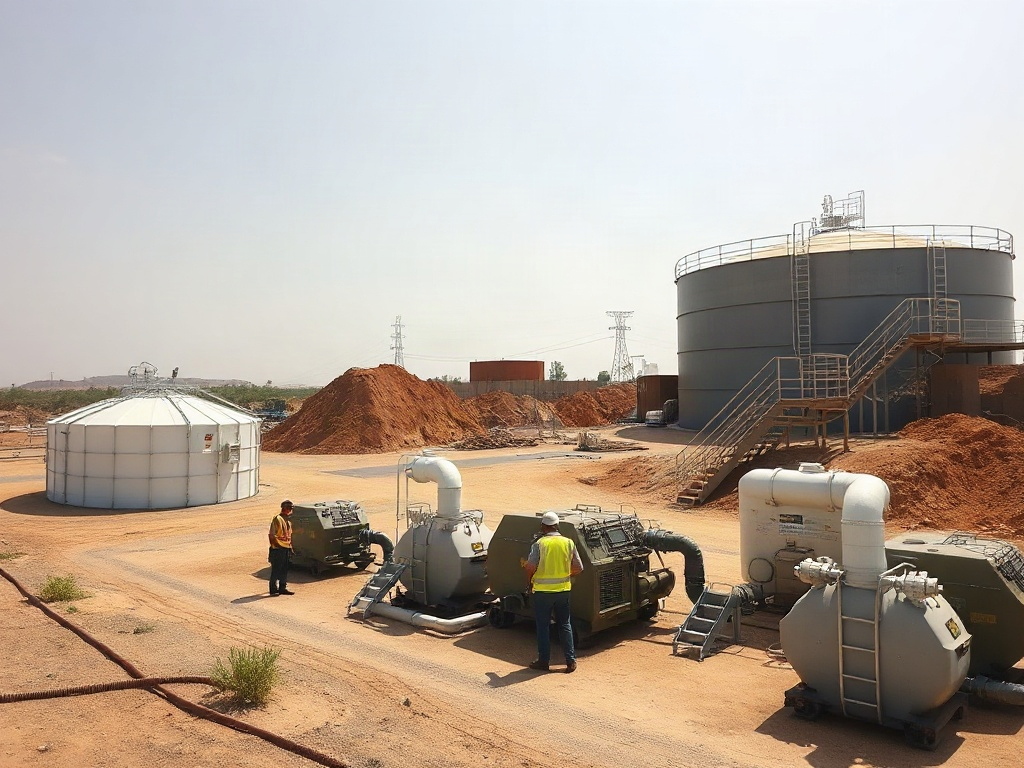
The Niigata facility is equipped with raw material supply systems, methanation reactors, and utilities. This underscores a point that is often overlooked: energy transition is not a contest of prototypes; it’s an industrial operation examination. Achieving a methane concentration of 96% during testing, aligned with the technical goal, means the equipment didn’t just “produce something”; it approached a specification that allows for operational continuity.
An even more decisive factor is the injection of e-methane into an INPEX JAPAN gas pipeline on February 20, 2026. Injecting into the network necessitates compliance with standards, procedures, and controls; it is a step that shifts the discussion from the laboratory to the arena where projects commonly falter: permits, safety, interoperability, and plant routine.
The certification on January 27, 2026, within the “Clean Gas” system adds an economic layer. Without cost numbers or margins (these are not available), the responsible reading is this: the project not only seeks to produce molecules, but also aims to generate verifiable attributes to enable environmental value certificates. That detail anticipates the market they are aiming for: one where the molecule and its traceability compete together.
What the Press Release Doesn’t Say, and C-Levels Should Still Hear: Economy, Hydrogen, and Risk Discipline
The publicly available information is strong in milestones and prudent in economics. There are no figures for CAPEX, OPEX, subsidies, hydrogen costs, or profitability projections. This absence doesn’t invalidate the project, but it does define the kind of conversation a serious executive committee should have internally: the bottleneck for methanation is rarely the chemical reaction; it’s usually hydrogen and its availability, cost, and footprint.
The project was selected for subsidy by NEDO and runs from the second half of fiscal year 2021 to the end of fiscal year 2026 (March 2026). This timeframe is typical of a public mandate demonstration: learn, collect data, demonstrate safety, and prepare for scaling. Risk materializes when an organization confuses "successful demonstration" with "ready business model". The leap requires supply contracts, standardization, maintenance, catalyst management, and financial engineering that tolerates volatility.
The corporate text emphasizes safety and environmental performance during the demonstration. Translated into governance, that implies: process controls, incident management, gas quality protocols, and a culture prioritizing reliability over speed. In energy transition, rushing without method does not translate into impact; it translates into overruns and loss of legitimacy.
There’s also a strategic detail: the facility uses captured CO2 from INPEX JAPAN operations as raw material. This reduces logistical complexity at this phase and turns the project into a more closed industrial circuit. For the business, this initial vertical integration can accelerate learning but creates a dependency: as it scales, a clear thesis on CO2 sources, optimal locations, and connection to demand is required.
The merit here is not in promising a universal solution. The merit lies in constructing a large experiment with network output and a certification framework. This brings the project closer to the operational reality where C-Levels dwell: compliance, continuity, reputation, and cumulative risks.
Two Companies, One Reactor: The Sign of Maturity is the Division of Roles, Not the Narrative
In many energy innovation stories, media focus shifts onto an executive figure or a corporate epic. In this case, the available information does not promote individual names, which is, paradoxically, a healthy sign. What does emerge is a clear division of responsibilities: INPEX manages the project, operates the plant, builds expertise, scales the reaction system, and evaluates deployments; Osaka Gas leads the development of reaction process technology with its catalytic knowledge.
This partition matters for a simple reason: it reduces the risk of the outcome depending on a single “brilliant mind” or an area that monopolizes decisions. Methanation at this scale demands a full chain of competencies: field operation, process engineering, quality control, mechanical integrity, safety, relations with regulators, and ultimately, commercialization under certification schemes.
The cooperation also reveals an interesting power dynamic. INPEX, being an upstream player and operator with assets and networks, provides the testing ground and production discipline; Osaka Gas, as a utility and gas specialist, brings process technology and a direct interest in the future of “city gas” under decarbonization pressure. Neither company, by itself, solves the entire puzzle. Together, they approach something that the market values more than the rhetoric: a route to integration.
For me, the central point is cultural. When a project is structured around roles rather than heroes, it becomes easier to sustain under stress. The demonstration will continue through the end of fiscal year 2026, focusing on scaling, catalyst durability, and simulation techniques. These goals may seem mundane, and precisely for that reason, they are strategic. Real energy transition is determined in repetition, not in announcement.
The Invisible Asset: Turning a Test into Repeatable Organizational Capability
The declared scale of 400 Nm³-CO₂/h is an eye-catching figure. However, the long-term asset is another: organizational capability. If, by the end of the program (March 2026), the consortium develops procedures, standards, learning curves, and an operating model that can be transferred to other locations, the investment will have built something that doesn’t show in a plant photo: a system.
That’s the difference between a company that "has a technology" and a company that "knows how to operate a business". The next steps mentioned aim for this: continue injecting a portion of the e-methane into the network, assess safety and environmental performance, study feasibility for large-scale systems, and apply knowledge to other regions.
The classic risk arises when visible milestones are rewarded more than the routine that supports them. Methanation connects with broader debates: the role of gas in a decarbonizing economy, social acceptance of synthetic gases, and the emergence of certification instruments to claim environmental attributes. None of that is resolved with charisma. It is resolved through governance that maintains coherence among engineering, finance, regulation, and reputation.
If this project gains traction, the signal to the market will not be just that Japan can produce e-methane. It will be that two incumbents can design a transition without relying on a saving figure and without turning sustainability into a campaign. The mature standard for C-Levels will be defined by structure: to build an organization so resilient, horizontal, and autonomous that it can scale into the future without ever depending on the ego or indispensable presence of its creator.