
TVA and the Return of Coal: When Governance Becomes Energy Strategy
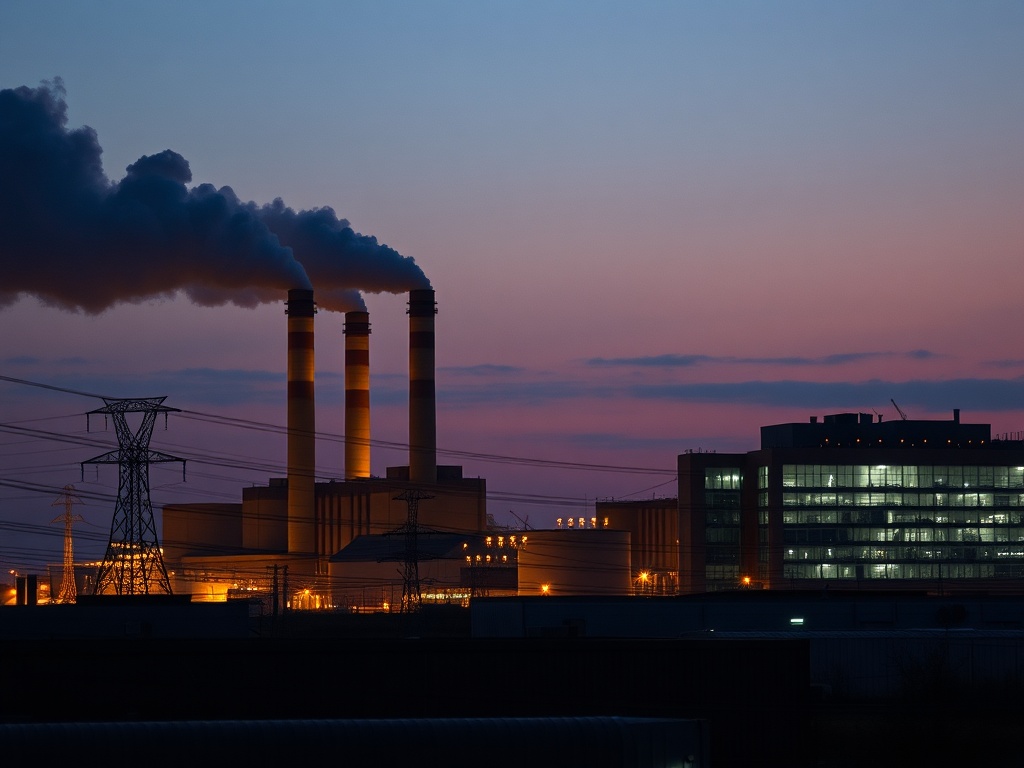
The Tennessee Valley Authority (TVA), the largest public electricity provider in the United States, has just signaled a shift that transcends the energy debate. On February 11, 2026, its board unanimously voted to keep two iconic coal plants, Kingston (1.4 GW) and Cumberland (2.4 GW), operational beyond their planned retirement dates of 2027 and 2028. This decision comes in conjunction with new natural gas capacity at each site, sidelining — at least in the current public narrative — the renewable and storage focus that its own 2025 plan had envisioned. The underlying point is not coal as a technology; it is coal as a symptom of governance.
Reportedly, the decision comes amid explicit political pressure from the Trump administration and a demand shock associated with data centers driven by artificial intelligence. TVA indicated that these data centers now represent 18% of its industrial load, and concurrently, the board approved xAI to increase its grid consumption. They framed this move in terms of reliability following the system's performance during Winter Storm Fern, where coal generation in the U.S. increased by 31%, reaching 21% of the national mix, according to cited EIA data. During the regional peak on January 27, TVA's coal fleet supplied over 3,000 MW, a compelling operational argument in an environment where miscalculating doesn't affect reputation but can lead to blackouts.
However, this shift does not occur in a vacuum. It comes after a reconfiguration of the board: President Donald Trump ousted three members appointed by Joe Biden, and subsequently, nominees aligned with his agenda were confirmed. Within this new framework, maintaining coal, building gas, and deprioritizing diversity and renewables present a "mandated" continuity driven by costs and reliability. My interpretation is more uncomfortable and significantly relevant for C-level executives: when the entity that should mitigate external volatility becomes a conduit for that volatility, strategy ceases being a plan and becomes an institutionalized reaction.
Reliability Is No Longer a Technical Attribute; It's a Power Argument
TVA justified the extension of Kingston and Cumberland with logic that, on paper, is hard to ignore: rising demand, the need for firm capacity, lessons from an extreme event like Winter Storm Fern, and the value of retaining over 3,000 MW while new assets are being built. CEO Don Moul defended the importance of “maintaining” this capacity while the future of the system develops. CFO Tom Rice openly linked this turnaround to the changing regulatory landscape and declared an “energy emergency,” positioning the retention as consistent with a low-cost mandate.
What is critical here is how "reliability" is redefined. By 2026, reliability is no longer just network engineering; it has become a common language for winning budgetary, regulatory, and reputational disputes. When political pressure mounts, the reliability argument serves as armor: it reduces the scope for exploring alternatives (demand management, storage, supported renewables, efficiency) and simplifies the debate into a binary of continuity versus risk.
The reported story adds a revealing nuance: the public event that opened the meeting celebrated TVA’s performance, spotlighting coal, nuclear, and hydro while omitting solar and renewables, despite the integrated resource plan of 2025 considering a different path. This omission is not anecdotal; it is communicative governance. A company — especially a federal corporation with a regional monopoly — not only decides on assets but also shapes narratives. In energy, the narrative precedes capex.
This pattern has practical consequences. If the dominant criterion turns into "available capacity today" over "total system cost over time," the portfolio tends to accumulate expensive infrastructure to operate. The note itself warns that, according to EIA estimates, the operating and maintenance cost of coal exceeds gas by 20% to 30% per MWh, opening the gateway to tariff tensions for 10 million customers. The real debate ceases to be coal versus renewables and becomes the following: how robust is the decision-making system in distinguishing between a transitory response and a structural return?
When Demand for AI Presses, the Portfolio Reveals System Maturity
The surge of data centers driven by AI appears here as a catalyst, but also as a cultural stress test. TVA reports that data centers are already 18% of its industrial load, and the expected growth in this segment tends to be abrupt, geographically concentrated, and politically sensitive due to employment and investment. In this context, extending coal and adding gas is a “straight” response: dispatchable capacity to sustain growth.
The issue is not the straightforwardness; it is the dependency. A utility accustomed to resolving demand shocks through the reopening or extension of cost-intensive and externality-laden assets ties itself to a path where each new growth cycle requires more exceptions. This dynamic is particularly perilous in publicly mandated entities because the reputational and health costs — due to emissions and environmental liabilities — do not remain on the plant's P&L; they distribute socially and come back as litigation, community opposition, and loss of legitimacy.
The case of Kingston intensifies this reading: the site is associated with the 2010 coal ash spill, described as the largest industrial disaster of its kind in U.S. history. Keeping “all nine units” operational is not just an energy supply decision; it signals a risk tolerance and institutional memory. Furthermore, in Cumberland, it is reported that one coal unit failed during the Fern storm. In terms of operational maturity, both plants serve as reminders that reliability does not simply mean "keeping the lights on" but sustaining performance and risk control in aging assets.
And here enters the angle that matters most to me as an organizational culture analyst: growth driven by AI pushes companies toward a reflection of the “savior” — the idea that a decisive choice, bolstered by political support and an emergency narrative, will resolve the bottleneck. In reality, AI-driven growth demands exactly the opposite: planning systems that do not rely on heroics but on institutional capacity to implement multiple solutions concurrently, with comparable metrics and accountability.
The Strongest Signal Is Not Coal; It Is the Board of Directors
The reported facts describe a board reconfiguration: following the ousting of three members appointed by Biden and the subsequent confirmation of Trump nominees, the board unanimously voted to extend coal, align priorities with the federal agenda, and emphasize regulatory relief. In the realm of governance, unanimity can be interpreted as strategic clarity or as rallying around the cause. In public utilities, moreover, the board is not just another actor: it represents the mechanism of relative independence from political cycles.
When the board composition changes and, almost immediately, the strategic direction visibly shifts, the organization sends a signal to the market and its stakeholders: the strategy is more sensitive to the political cycle than to the asset cycle. This decoupling is expensive. Power plants do not resemble software; they do not pivot in a quarter. The cycles of investment, permitting, and construction are measured in years. If the compass shifts with the winds of Washington, the outcome tends to be a hybrid portfolio not by design, but by accumulation: extended coal, gas in construction, renewables relegated, and eventually the risk of stranded assets if the regulatory environment tightens again.
The history itself reveals this friction: the integrated plan of 2025 identified Kingston as “high-cost and challenging condition” and Cumberland as “lacking flexibility.” The turnaround of 2026 does not eliminate those assessments; it simply subordinates them to a superior incentive, now termed reliability and growth. Even if the movement manages to avoid capacity deficits, it elevates exposure to future costs: maintenance of aging plants, possible environmental obligations, and uncertainties from climate policy over the next decade.
In parallel, reports indicate that the administration is pushing a pro-coal agenda through emergency orders, regulatory rollbacks, and financing, including $175 million from the DOE for retrofit projects in several states. This availability of support changes the short-term economic calculation and reinforces the logic of extension. But it also creates dependency: if part of the business case relies on a specific political environment, the risk of reversal becomes a financial risk.
Sustainability, Here, Is a Test of Institutions
Public debate often simplifies into moral terms: "bad" coal versus "good" renewables. This reduction is unhelpful for an executive who must make decisions under real constraints. A constructive conversation is institutional: how decisions are made when demand, reliability, costs, and political pressure clash.
TVA operates with a low-cost mandate and a public mission in a region with a natural monopoly. This demands a higher standard of governance, not a lower one. In this framework, sustaining coal might be a transitional measure; but it becomes problematic when communicated as a cultural victory or when it displaces, without transparent technical reasoning, the options that the previous plan considered.
There is also a human and community risk element that cannot be treated as an afterthought. Critical voices cited in the coverage — including that of former board member Michelle Moore and environmental organizations — emphasize the break from previous commitments and the public health impacts. Even if TVA disagrees, a mature institution does not respond to this tension with propaganda or selective silence; it responds with governance: metrics, audits, scenarios, mitigation plans, and a decision-making system that survives administrative changes.
In corporate sustainability, the goal is not purity; it is resilience. And the resilience of a utility is not measured merely by having megawatts available during a storm, but by its ability to maintain public legitimacy, tariff stability, and consistent direction as its industrial demand reconfigures due to AI.
The Energy of the Future Is Not Managed with Figures, It Is Managed with Systems
The media temptation is to personalize this story in a “leader” or “president” who saves plants. That framing is exactly what undermines institutions. The relevant signal is different: an organization crucial for 10 million people has just demonstrated that its compass can pivot rapidly when its governance architecture changes.
A C-level executive wanting to learn from TVA does not need to adopt its energy mix. They need to take note of the mechanism. When strategy is explained primarily by external pressure and an emergency narrative, the company becomes more vulnerable to cycles of reputation, litigation, and regulatory rollbacks. When strategy is explained by a stable planning system, with explicit assumptions and accountability, the company can absorb shocks like the rise of AI without turning each shock into a drastic pivot.
True corporate success is only achieved when leaders manage to build a system so resilient, horizontal, and autonomous that the organization can scale towards the future without ever depending on the ego or indispensable presence of its creator.