
Scottish Whisky Waste Funding the Green Economy
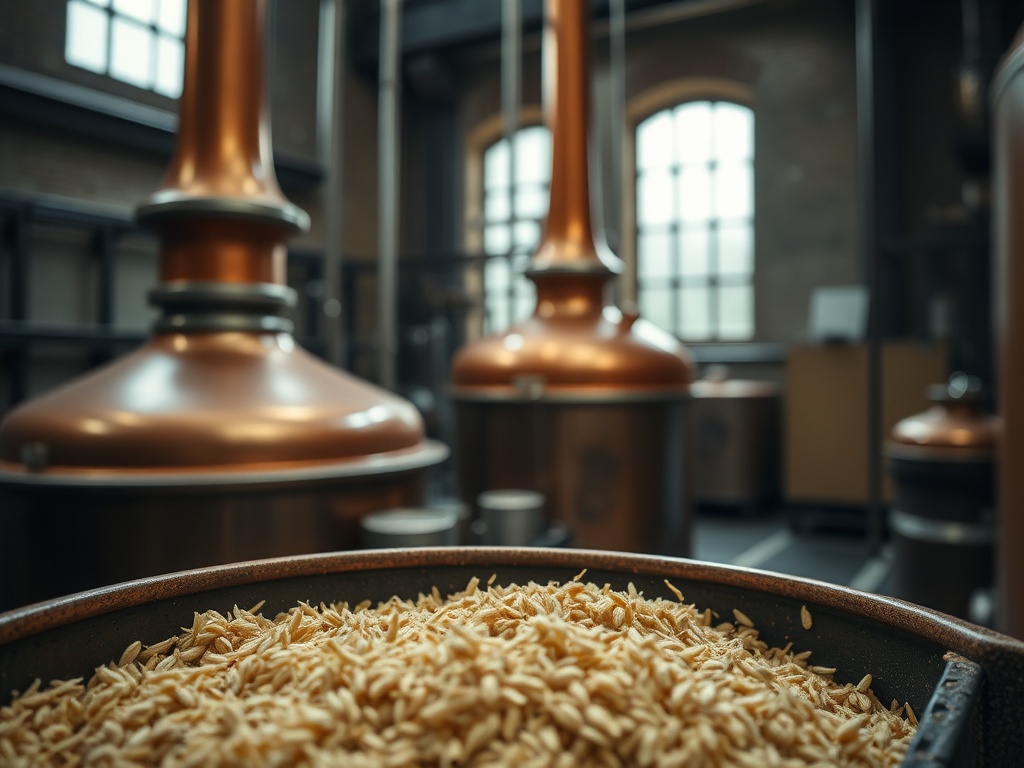
Scotland produces millions of liters of whisky each year, generating a corresponding amount of byproducts that the industry has managed as a cost problem for decades. The pot ale — the residual liquid from the first distillation — and draff — the exhausted grains — are bulky, perishable, and difficult to handle. Disposing of them comes at a price. Until someone decided that these wastes weren’t a liability, but rather the foundation for a business model.
Celtic Renewables has just renewed and extended its agreement with Rosebank Distillery to convert these byproducts into biofuel and biofertilizer. The news might seem modest. It’s anything but. Behind this contract lies a financial architecture that deserves dissection, as it replicates a logic that few industries have managed to execute with such clarity.
When Waste Becomes Income
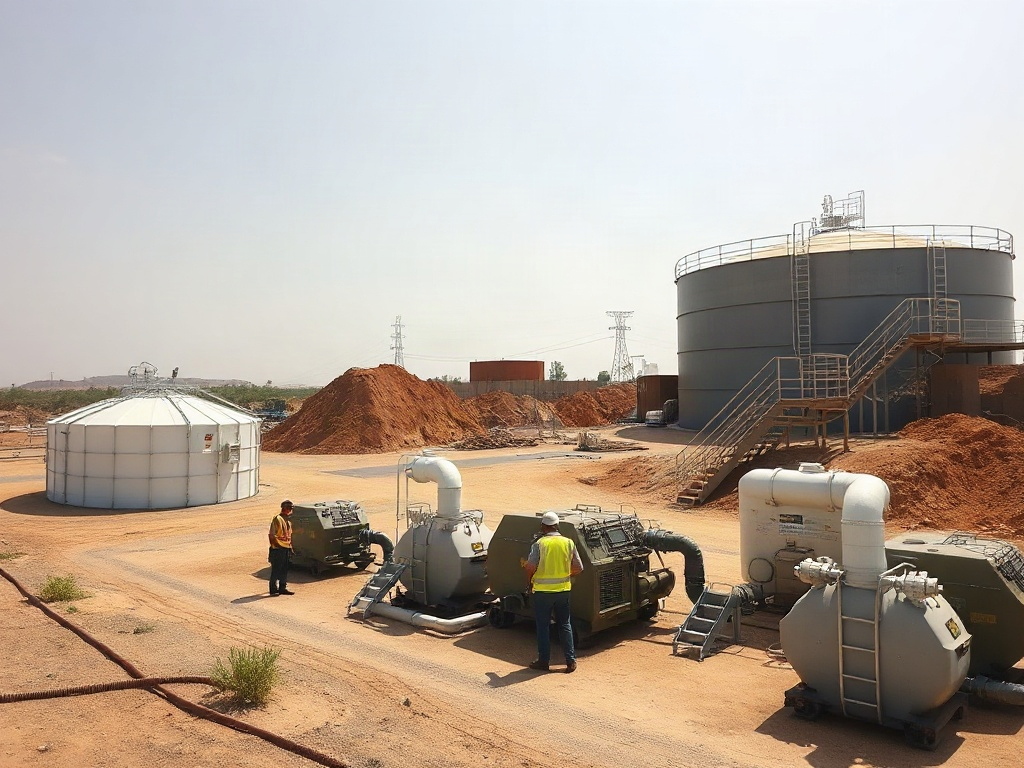
The model that Celtic Renewables has constructed operates on an inversion of the traditional value chain. The distillery does not pay to dispose of its byproducts; Celtic Renewables collects, processes them, and extracts biobutanol and biofertilizer. The waste ceases to be a management cost for Rosebank and transforms into raw material with market value for Celtic Renewables.
This isn’t green semantics. It’s a reconfiguration of who absorbs the industry’s variable costs and who captures the resulting margin. In terms of unit economics, the operation has a structural advantage over other biomass sources: the raw material comes with predictable cadence, tied to the distillery’s production cycle, not to climatic volatility or fluctuating agricultural commodity prices. Supply predictability is one of the hardest assets to build and one of the cheapest to maintain, particularly when a long-term contractual relationship already exists.
Bettina Brierley from Celtic Renewables described these local partnerships as "the foundation of Scotland's low-carbon green economy." The choice of the word foundation is not accidental. It speaks not of pilots or experimental projects but of infrastructure.
The Logic of Local Partnerships vs. Centralized Models
What is unfolding between Celtic Renewables and Rosebank illustrates a pattern that the energy transition took too long to internalize: the decentralization of the biomass supply chain reduces transportation costs and stabilizes operational margins more efficiently than large centralized plants dependent on extensive logistical networks.
Scotland boasts over one hundred forty active distilleries. If each of them has a similar agreement with a regional processor, the aggregated volume of available biomass — with acquisition costs close to zero or even negative, given that the distillery avoids management costs — is substantial. The model does not scale vertically by building larger plants; it scales horizontally by multiplying local agreements. This distinction matters because it radically changes the risk profile of investment: instead of a large capital bet on centralized infrastructure, a network of bilateral contracts is built that distributes exposure and generates more granular cash flows.
From a market disruption perspective, this is in a phase that we could call partial dematerialization: Celtic Renewables does not need to own agricultural fields or control grain production. It accesses the value of biomass without the burden of the assets that generate it. Capital is freed up for processing and conversion technology, which is where real differentiation lies.
The pattern has precedents in other industries. The world’s most efficient breweries have been selling their spent grains to local farmers for years. Certified palm oil processors have built waste collection models with small producers that allow them to ensure traceability without vertically integrating. In all these cases, operational intelligence lies in the design of the contract and geographical proximity, not in the raw scale of the plant.
Biobutanol and the Questions the Energy Industry Avoids
The final product from Celtic Renewables deserves specific attention. Biobutanol has transportation fuel properties that technically place it above bioethanol in energy density and compatibility with existing engines. It does not require modifications to conventional fuel distribution infrastructure, eliminating one of the biggest adoption bottlenecks that have hindered other biofuels.
However, biobutanol has remained on the margins of the energy debate for years, overshadowed by green hydrogen and electric vehicles. Part of the reason is industrial: large petrochemical groups produce butanol from propylene, a petroleum derivative, and have little incentive to accelerate the transition to biomass fermentation. The other part is financial: the cost of production via fermentation has historically been higher than that of bioethanol, though the gap has been narrowing with improvements in ABE (acetone-butanol-ethanol) fermentation processes.
What Celtic Renewables is building with contracts like that of Rosebank is a gradual reduction of raw material acquisition costs that enhances the competitiveness of biobutanol against its fossil alternatives without relying solely on subsidies. If the network of agreements with distilleries grows, the cost per ton of processed biomass decreases, and the margin per liter of biobutanol produced structurally improves. It is not a technological leap that makes this model viable; it is the patient accumulation of bilateral contracts with producers who already have the waste and do not know how to handle it.
The biofertilizer that emerges as a co-product of the process has its own market logic. Demand for non-synthetic fertilizers has grown in Europe, driven both by regulations and pressure from institutional buyers in food chains. A co-product that was once a waste to manage becomes a second revenue line that enhances the profitability of the entire process.
The Invisible Infrastructure of the Energy Transition
What Celtic Renewables and Rosebank are doing may not make headlines about gigafactories or venture capital investments in fusion technologies. It operates quietly, contract by contract, distillery by distillery. But this discretion does not reflect lesser strategic importance; it reflects that they are building essential infrastructure without which the more visible technologies have no supply chain to operate upon.
Scotland is leveraging its industrial identity — whisky, an industry with centuries of history and a global image — to finance its energy transition without exclusively depending on public funds or foreign investment. Every distillery that signs a similar agreement is transforming an inevitable by-product into an asset that finances local green infrastructure. The circular economy, when well designed, doesn’t require corporate altruism; it requires that economic incentives point in the right direction from the outset of the contract.
This case is in the phase of gradually demonetizing industrial waste management: what was once a net cost for the distillery begins to have market value, and that value is captured locally rather than evaporating in long logistical chains. The Augmented Intelligence that can accelerate this model is not in automating whisky production, but in optimizing matching algorithms between biomass generators and regional processors, thereby reducing transaction costs that still hinder replicability at scale. When that layer of digital coordination matures, the Celtic Renewables model will stop being a Scottish exception and become standard infrastructure for any industry with predictable waste flows.