
Polycab Rose 30% and Jefferies Just Asked for More: What the Cables Reveal About the India That Is Coming
There is a moment in the trajectory of certain companies where the market narrative and the operational numbers finally align. For Polycab India, that moment appears to have arrived with force in 2026, and Jefferies' decision to raise its price target to ₹10,920 per share — after a 30% rally so far this year — is not the enthusiasm of a late-arriving broker. It is a signal that the analyst is looking at something structural, not cyclical.
The stock rose as much as 4% on the day of the announcement, touching ₹9,994 on the Bombay Stock Exchange. The market took note. But the question that matters to any executive or investor with a medium-term perspective is not whether Polycab continues rising this week, but whether the business behind the price is built on empirical validation or on expectations that the market projected too quickly onto a company that, for now, has only delivered what it promised.
The distinction matters. Because when the price has already risen 30%, what sustains the bullish position must be more robust than momentum alone.
The Business That the Cables Won't Let Anyone Lie About
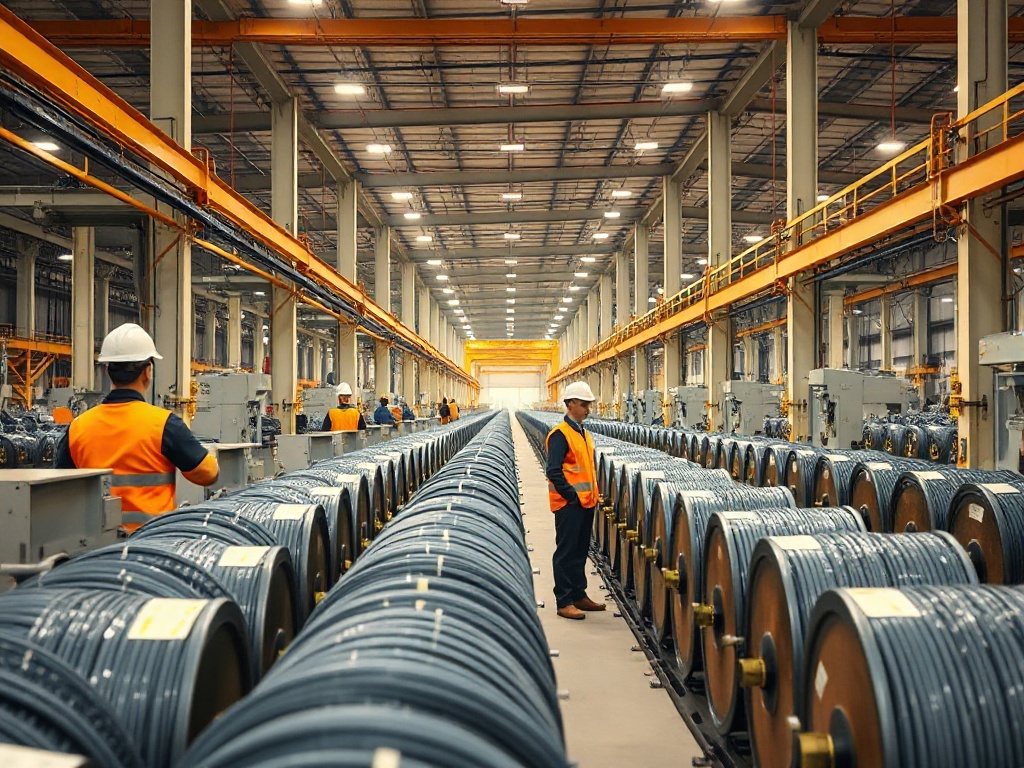
Polycab is not a story built on intangibles. Its core business — cables and wires, what the industry calls C&W — represents approximately 87% of revenues for fiscal year 2026, grew 33% year-on-year, and did so with a mix of 18% volume growth and 16% price growth. Those two levers firing simultaneously are unusual. Price growth in many processed commodity businesses tends to conceal volume weakness; when both rise at the same time, the manufacturer has genuine power over the market.
The company's share of the organised market grew from approximately 18% in fiscal year 2020 to 30–31% in FY26. In six years, Polycab absorbed between 12 and 13 percentage points of market share. Part of that displacement came from the unorganised segment — local manufacturers without scale or brand recognition — which technically represents the cleanest way to gain participation: not at the expense of an equally efficient competitor, but at the expense of one that is structurally weaker. The launch of the 'Etira' brand, oriented toward tier-2 to tier-5 markets, was the tactical instrument of that capture.
EBIT margins for the C&W segment have remained consistently in the range of 12% to 15% over the past 15 quarters. That is not sporadic profitability: it is margin architecture. And when a company can grow volume, price, and margin sustainability simultaneously, the analyst who elevates the valuation multiple is not betting on the narrative; they are reading the operating model.
Jefferies raised the valuation multiple to 41x earnings, approximately 10% above the company's five-year historical average of around 37x. That implies the market is no longer willing to pay only for what Polycab has been, but for what it appears capable of becoming. The difference between those two states is precisely where analyses tend to go wrong.
Three Vectors That Jefferies Sees and the Market Has Not Yet Fully Priced In
The first is the institutional order book. With an open order backlog of ₹11,300 crore as of March 2026 — composed primarily of projects under the government programmes RDSS and BharatNet — Polycab has revenue visibility that most of its competitors cannot match. BharatNet orders began to be executed from the December 2025 quarter, with an estimated revenue potential of ₹8,000 crore excluding taxes. The new extra-high voltage (EHV) cable plant is on track to be commissioned before the end of 2026, with expected revenue contributions beginning from fiscal year 2028. That is a predictable growth curve, not a speculative one.
The second vector is revenue diversification. Polycab's business does not depend on a single customer or a single economic cycle. B2B segments — energy, oil and gas, PLI projects, and data centres — account for approximately 35% of sales. Residential B2C demand contributes between 20% and 25%. Government-led projects account for around 30%. The fast-moving electrical goods (FMEG) business contributes 10%, and exports approximately 6%. Customer concentration is notably low: the top ten customers account for 21% of sales, and the largest single customer represents just 4%. For a risk analyst, that distribution is a safety net. For a growth strategist, it is a platform from which to scale without depending on any single bet.
The third is data centres as an emerging lever. Jefferies notes that Polycab is already involved in data centre projects through a relationship with Vertiv for Vodafone Idea. The cable intensity in a data centre project is substantially higher than in conventional industrial projects — Jefferies estimates that cables represent between 8% and 10% of the total capex of a data centre, compared to 3% in standard industrial projects. If investment in digital infrastructure in India continues at the pace that hyperscaler announcements suggest, Polycab holds a position of first entry, not a position of waiting on the sidelines.
Empirical Validation Versus Desired Projection: What the Data Actually Permits Us to Say
From a product analysis and market validation perspective, the Polycab case is relatively clean in something that is rarely clean: there are real payments, real contracts, and documented volume growth. We are not evaluating a startup that extrapolated the enthusiasm of a closed beta. We are looking at a company with ₹28,880 crore in revenues during FY26, net profit growth of 32% year-on-year, and a return on capital employed of 33.2%.
The empirical risk does not lie in whether the current business works — it clearly works — but in how much of the 41x multiple already discounts future execution that is still projection. The FMEG segment, which represents 10% of sales, has structurally lower margins than C&W and a slower brand-building curve. If the market expects that segment to contribute to the growth narrative, impatience may surface before the numbers catch up.
Jefferies' forecasts point to a 22% EPS CAGR between FY26 and FY29. That kind of three-year projection carries modest statistical precision in businesses where copper fluctuates, residential demand can cool, and private capex acceleration can be delayed. Jefferies itself lists those factors as risks: a slowdown in residential demand, reduced dynamism in private capex, slower-than-expected traction in FMEG, and copper price volatility.
What distinguishes serious analysis from market enthusiasm is not the price target, but the robustness of the model under adverse scenarios. Polycab has three things that make the model hold up better than most: low indebtedness (virtually debt-free according to public data), controlled working capital — working capital days reduced from 47 to 30 over recent years — and an order backlog that provides 12 to 18 months of revenue visibility without the need for significant new sales activity.
Cables as the Cognitive Infrastructure of the Indian Market
There is a way of viewing this case that goes beyond Polycab as an individual company. India is building physical and infrastructural capacity at a speed that few emerging markets have sustained simultaneously across so many fronts: urban housing, electricity transmission, rural connectivity through BharatNet, data centres, metro mobility, and industrial manufacturing under PLI schemes. All of those projects share one common denominator: they need cables. Many of them, and of multiple types.
In that context, the cable manufacturer with the largest share of the organised market, the most extensive distribution network, the most solid balance sheet, and the installed capacity to scale toward extra-high voltage cables is not competing for a slice of the existing pie. It is positioned to grow alongside the infrastructure of the country itself. That is not a guarantee of return; it is structural context. And the difference between the two is precisely what aggressive multiples tend to erase.
Jefferies is, in essence, arguing that ₹10,920 is the fair price for a company that executes in a structurally expanding market, with a competitive position that is difficult to replicate in the short term and revenue visibility above the sector average. The story of the next twelve months will reveal whether the projected 22% EPS CAGR was a conservative estimate, an accurate projection, or the point at which narrative certainty began to run faster than operational reality. For now, the data suggest that Polycab deserves the benefit of the doubt. That benefit, however, carries an entry price of nearly ₹10,000 per share, and at that level, execution cannot afford to take a holiday.