
The Pet Market Realizes Connectivity Can Be Overwhelming
The pet device industry followed almost unquestioningly the same playbook used by makers of smart TVs, robotic vacuum cleaners, and digital locks: connect the product to the internet, develop an app, and charge a monthly subscription. The argument seemed flawless. Increased retention, recurring revenue, user data, and a higher exit barrier. The problem is, a part of the market never asked for that complete package.
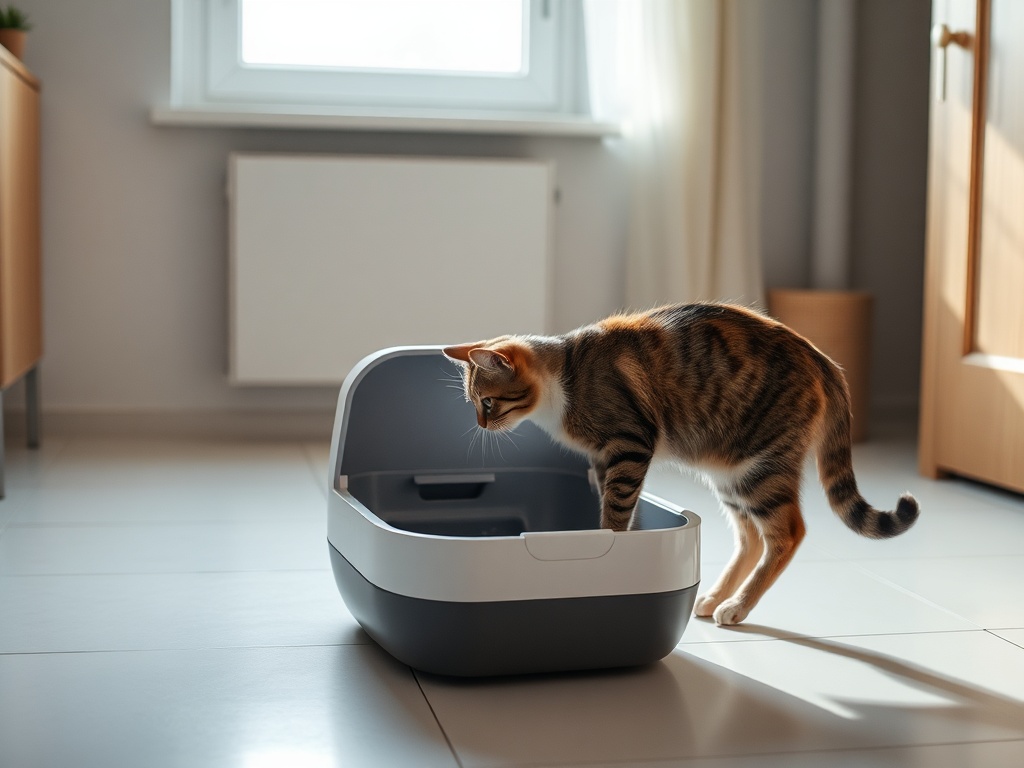
PetPivot, a U.S. based pet technology company, has just introduced its AutoScooper 12 to the UK, positioned at odds with that logic. No Wi-Fi connectivity, no mobile app, no reliance on external servers, and no monthly fees. The launch price is set below $150. The market availability in the UK was announced on April 8, 2026, just weeks after the initial U.S. launch in March, indicating a deliberately accelerated international expansion.
What makes this news analytically interesting isn’t the product itself; it’s the business architecture it reveals.
What PetPivot Understood About the Friction Others Ignored
There’s one variable that many home device manufacturers have stopped calculating honestly: the cumulative effort required from the buyer. I’m not talking about the effort to open the box on the first day. I’m discussing the invisible effort that builds week after week: updating firmware, reconnecting the device after a power outage, managing app permissions, remembering the account password, paying the subscription fee to prevent data loss. Each of these steps is a crack in the relationship between the product and the user.
The AutoScooper 12 eliminates that issue at its roots. Operation with physical buttons, no digital setup, no user account. It just plugs in and works. For certain segments—elderly individuals, households with more than one cat, users who value their data privacy—this isn’t a limitation of the product. It’s precisely what they wanted to purchase.
The device’s technical specifications are not rudimentary: it incorporates a total of 11 sensors, including 7 pairs of infrared sensors and 4 Hall effect sensors, with reaction times under 0.1 seconds. The waste drawer capacity is 10 liters, with an estimated duration of 7 to 10 days for a household with a single cat before requiring a bag change. A prior 5-minute cleaning cycle reduces urine waste. There’s an integrated step for kittens, elderly cats, or those with reduced mobility. The open-top design, in contrast to closed capsule models, reduces the risk of trapping.
None of those features required an app to exist. And that’s a design decision with direct financial consequences.
The No-Subscription Model Isn’t Generosity: It’s a Calculated Bet
When a company chooses not to charge a monthly fee, the superficial reading is that they are leaving money on the table. The more accurate interpretation is different: they are betting that the higher one-time price, lower return rate, and client acquisition through direct recommendations outweigh the value of the recurring revenue generated by a small, high-turnover subscriber base.
The low-price hardware subscription model has a structural problem that few companies openly acknowledge: the margin per subscriber is often insufficient to cover the technical support costs generated by connectivity. When the device fails to sync, when the app fails during a phone operating system update, when the server experiences downtime, the manufacturer absorbs the customer service costs. In a price category under $200, those costs can quickly erode the profitability of the recurring model.
By removing the digital layer, PetPivot also eliminates that source of operational friction. There’s no cloud infrastructure to maintain, no integrations with mobile operating systems to update, no user data to protect under privacy regulations like the GDPR, especially relevant for their expansion into the European market. The swift expansion into the UK shortly after the U.S. launch suggests that the company identified a consumer profile in Europe with heightened sensitivity to data privacy and greater resistance to subscription models in consumer goods. This isn’t an unfounded hypothesis: technology adoption surveys in European markets consistently show lower tolerance for the relinquishment of personal data in exchange for functionalities perceived as optional.
The Race for Low Prices is a Trap. PetPivot Isn’t In That Race.
There’s a distinction worth noting before reading this launch as a mere aggressive pricing strategy. Competing on price means reducing margin to gain volume. What PetPivot is doing is different: it’s repositioning the perceived value of the product by redefining what problem it solves.
The problem that competitors claim to solve is the management of the litter box with remote monitoring and connected intelligence. The problem that PetPivot states it resolves is more specific and more honest: eliminating the daily task of cleaning the litter box without requiring the owner to become the administrator of another smart device. That differentiation has a direct impact on the willingness to pay from a segment that connected competitors are neglecting.
The product evolution is also revealing. The AutoScooper 11, the direct predecessor, featured 5 infrared sensors plus a front step sensor. The AutoScooper 12 expands this to 7 pairs of infrared sensors and 4 Hall sensors, without advancing to a connected model. The company chose to invest its engineering budget in security redundancy and mechanical reliability, not in Wi-Fi radio and cloud processing. That resource allocation decision says more about the long-term strategy than any press release could.
The risks of the model are equally clear and deserve mention: if connected competitors succeed in radically simplifying their user experience and lowering their price, the space where PetPivot operates will contract. The advantage of simplicity is powerful but not permanent if the premium market manages to reduce friction to comparable levels. For now, evidence shows that this movement hasn’t occurred.
Well-Executed Simplicity Has a Fair Price, Not a Low Price
The segment of buyers that PetPivot is capturing isn’t the cheapest segment in the market. It’s the most demanding segment with one specific variable: the absence of complications. That’s not the same. A consumer willing to pay under $150 for an automatic litter box with 11 sensors, pre-cleaning cycles, and 10 liters of waste capacity isn’t buying the cheapest product on the market. They are purchasing certainty of operation without conditions.
That distinction matters because it defines the real price ceiling of the model. An offer structured around friction elimination can sustain a premium price within its segment as long as it maintains its promise of hassle-free operation. The moment the product fails and requires complex technical intervention, the proposition collapses. Trust in a non-connected device depends solely on mechanical reliability. There are no software updates to fix hardware issues.
That’s why the sensor expansion from AutoScooper 11 to 12 isn’t a marketing move. It’s an investment in the only guarantee that the model can offer: that the device detects and reacts correctly, always, without relying on an internet connection that can be interrupted.
Companies that succeed in markets with heterogeneous demand aren’t those that offer the most complex product or the cheapest. They are the ones that accurately identify which value variable matters most to a specific segment and eliminate anything that interferes with that variable. PetPivot identified that for a significant percentage of the cat owner market, the most important variable is that the device functions without demanding anything in return. They built their entire offer around that. Sustainable commercial growth is built exactly this way: minimizing perceived effort from the buyer, maximizing certainty that the promised outcome is achieved, and structuring a price that honestly reflects that value.