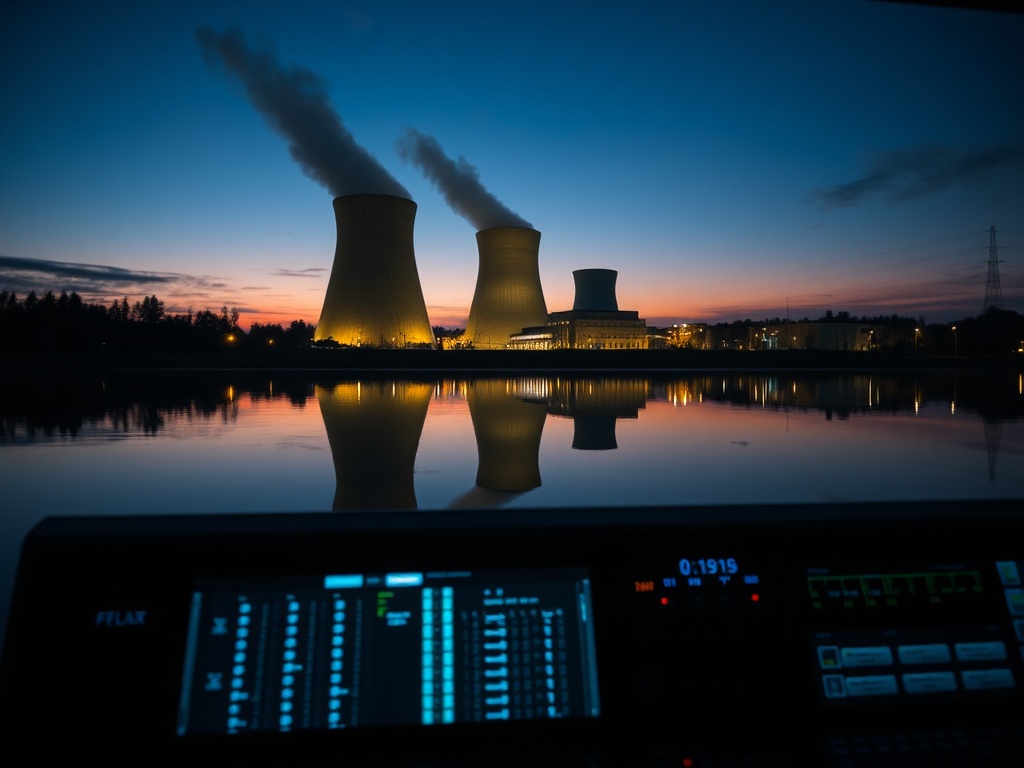

Microsoft and Nvidia Embrace Nuclear Energy, But the Bottleneck Isn't Technical
Microsoft and Nvidia have officially formed a partnership aimed at applying artificial intelligence and digital twins to the nuclear industry. Their stated goal: to reduce the bottlenecks that have paralyzed energy generation projects at a time when electricity demand—largely driven by data centers fueling that same artificial intelligence—is reaching unprecedented levels. The circular logic does not go unnoticed: AI consumes so much energy that it now needs to build its infrastructure to survive.
What intrigues me about this move isn’t the technology behind digital twins or the computational capacity of the deployed models. What interests me is the implicit diagnosis it contains: that one of the most regulated, slow-moving, and change-resistant sectors on the planet requires two technology companies from the outside to unlock a process that has been stalled for decades. This is not a story of innovation; it is a snapshot of institutional friction.
Why the Nuclear Industry Has Struggled to Scale for Decades
The dominant narrative around nuclear energy often centers on public fear: Chernobyl, Fukushima, and a collective imagination tainted by decades of dystopian fiction. Yet, while this analysis may hold valid points at surface levels, it obscures the true mechanism of paralysis. The central issue isn’t that the average citizen fears reactors; it’s that the institutional players who must approve, finance, and operate those reactors are also afraid and have very concrete incentives to remain static.
From an organizational behavior perspective, the nuclear industry is a textbook case of what happens when institutional habit becomes more powerful than any technical or economic argument. The permitting processes can stretch over decades. Regulatory audits generate layers of documentation that no one can process in a reasonable time. Projects incur cost overruns not because the engineers are incompetent, but because every regulatory change midway through the work resets the approval clock to zero. The result is a sector that has perfected the art of producing master plans that never convert into kilowatts.
When spokespersons for this alliance describe the industry as "trapped in a delivery bottleneck," they are being diplomatic. What they are really describing is a system where the fear of error consistently outweighs the cost of inaction. And from a behavioral economics standpoint, this is exactly the hardest scenario to intervene in, because inertia is perfectly rationalized by all parties involved.
What AI Can and Cannot Resolve in This Context
Digital twins and artificial intelligence models applied to permitting and operational efficiency have genuine potential. If a system can accurately simulate a reactor’s behavior under different conditions before it’s built, it reduces the uncertainty that fuels regulatory paralysis. If it can process what a team of engineers would take months to review in just days, it compresses approval cycles. This is the technical argument, and it holds water.
But there is a behavioral trap that this alliance risks overlooking: reducing process friction isn’t the same as reducing psychological friction. Regulators who have operated under a specific protocol for decades won’t adopt the recommendations of an AI model simply because it is statistically more accurate. They will need that model to have been validated across multiple jurisdictions, audited by independent peers, approved by their own legal frameworks, and, above all, for someone in their chain of command to take the first step without jeopardizing their position in the process.
Technology can compress the cost of analysis but cannot compress the political cost of being the first to trust it. And in a sector where an error is measured in generational consequences, the weight of habit and fear doesn’t disappear just because a tool is more efficient. Anxiety over the new, when institutionalized, defends itself with the language of prudence.
This explains why significant technological bets in hyper-regulated sectors—healthcare, critical infrastructure, energy—rarely fail for technical reasons. They fail because their proponents invest 90% of their capital in demonstrating that the technology works and 10% in understanding why key players prefer that it doesn’t work or, at the very least, prefer to wait for someone else to confirm it first.
The Real Risk of Arriving with a Solution Prior to Diagnosing the Problem
I often observe a pattern in significant technological transformation initiatives: the company that arrives with the solution assumes the problem is technical because the solution it has is technical. Microsoft and Nvidia are extraordinarily good at building tools. The more uncomfortable question is not whether their tools work but if the nuclear industry is organized in such a way that allows them to be adopted without the process of adoption becoming another bottleneck.
Digital twins require high-quality data. The nuclear industry has been operating for decades with record-keeping systems that were not designed to integrate with AI platforms. The permitting processes that are meant to be optimized are managed by agencies with their own budget cycles, their own legacy tools, and their own political incentives. Each layer of friction that AI aims to eliminate is being operated by people who derive no direct personal benefit for moving more quickly.
This does not invalidate the bet. It invalidates it if executed as a software implementation project rather than an institutional transformation project. The difference between the two strategies is not technical: it’s the understanding that the end-user of these tools isn’t the reactor; it’s the official, the regulator, the current operator who must trust a recommendation they don’t fully understand and who knows that if something goes wrong, the blame will fall on them, not the algorithm.
The Bottleneck That No Model Can Simulate
The demand for energy driving this alliance is, paradoxically, the same demand that makes resolving adoption issues more urgent than technical problems. The data centers fueling the planet’s most advanced language models are consuming electricity at a speed that energy markets did not anticipate. Nuclear energy, in this context, is one of the few sources that can provide sufficient energy density without relying on weather conditions.
But if the historical pattern repeats, the most promising projects in this new nuclear wave will not stumble over a lack of simulation technology. They will jam up because someone, at some point in the decision-making chain, will need to take a step that no one in their organization has taken before, and at that moment the magnetism of the new solution will collide directly with the combined weight of institutional habit and the fear of being responsible for an unprecedented error.
Leaders betting resources in this direction face a strategic choice that is rarely posed clearly: they can continue investing in making their technology brighter, more precise, faster, and cheaper, or they can invest a fraction of that capital in understanding and deactivating specific fears that will prevent someone from using it. The perfect technology that no one adopts does not solve the electricity problem. It creates another bottleneck, quieter and much costlier to diagnose.