
Lawsuit Against California Reveals Automotive Industry Blind Spot
On March 12, 2026, the Trump administration filed a federal lawsuit against the California Air Resources Board, questioning the state's authority to set its own vehicle emission standards and its zero-emission vehicle mandate. This mandate requires that by 2026, 35% of new models sold be electric, increasing to 68% by 2030, and reaching 100% by 2035. Attorney General Pam Bondi labeled this mandate as "oppressive" and in violation of federal law. Secretary of Transportation Sean Duffy warned that it would drive up vehicle prices. Governor Gavin Newsom's office responded by stating that California aims to give its citizens "more freedom and cheaper options," particularly as gas prices average $5.37 per gallon in the state compared to $3.60 nationally, a roughly 20% increase since the conflict with Iran started.
The legal debate has decades of history. A 1967 law grants California the authority to establish its own emission standards with EPA approval, and other states can adopt those rules, effectively creating a standard that manufacturers cannot ignore. During Trump’s first term, that authorization was revoked; the Biden administration restored it in 2022. What we're seeing now is a second round of the same conflict. The issue is that every iteration of this cycle comes with a cost that no one is focusing on: chronic regulatory uncertainty is, by itself, a value destroyer for the industry.
When the Playing Field Changes Every Four Years
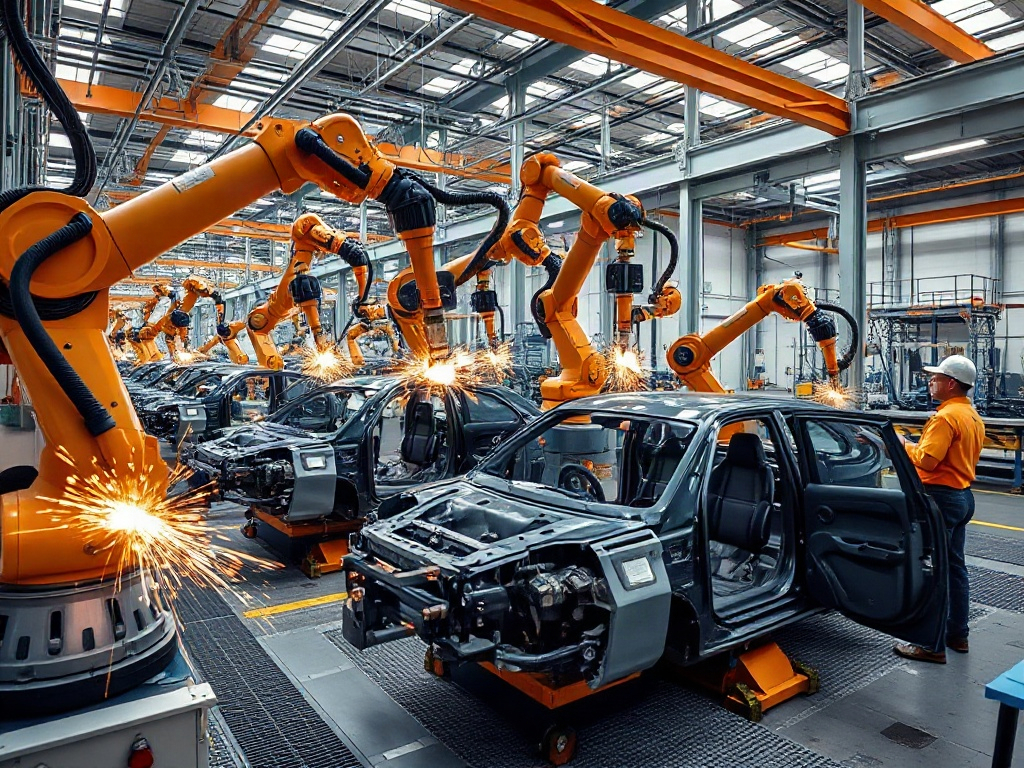
Automakers cannot design, homologate, and scale a vehicle platform in four years. Product development cycles in the industry range from five to eight years. This means that every investment decision in electric mobility made by an executive between 2022 and 2024, under California's restored authority, now faces a radically different legal landscape. This is not a marginal regulatory risk: it is a multi-billion dollar gamble that hangs in the balance depending on the outcome of a federal litigation whose conclusion no one can predict with certainty.
Dan Farber, faculty director at the Center for Law, Energy, and the Environment at UC Berkeley, pointed out the irony of the moment: the federal government questions emission standards just as consumers are most concerned about gas prices. This irony has a concrete financial translation. A Californian consumer paying $5.37 per gallon is not abstractly comparing the price of an electric vehicle with that of an internal combustion sedan. They are calculating their weekly expenses. The lawsuit comes at the worst possible political time for the "affordability" argument of gasoline vehicles.
However, the deeper fragility is neither political nor legal. It is organizational. The management teams that have run the automotive industry for the past thirty years built their competitive edge around a value chain dominated by the internal combustion engine: parts suppliers, transmission engineering, distribution networks, and financing models calibrated for that technology. When the regulatory map fragments between a state mandate promoting electric vehicles and a federal administration blocking it, organizations with less diversity of perspectives at their executive level take longer to correctly read the signal. Not because they are incompetent but because everyone in that room shares the same base assumptions.
The Hidden Cost of Homogeneity in Decision-Making
Trump's lawsuit against California forces corporate leaders in the automotive industry to make investment decisions under maximum legal uncertainty. This necessitates teams capable of processing simultaneously at least three conflicting dimensions: federal legal risk, commercial pressure from a significant Californian market, and the weekly changing energy price signals. A management team with similar profiles, forged in the same business schools and with backgrounds in the same industry segments, will tend to prioritize only one of these dimensions, typically the one in which they have the most historical experience.
This is not a moral argument about inclusion; it is an assessment of organizational architecture. Internal decision-making networks that operate with nodes very similar to each other have a reduced capacity to process weak signals from the periphery, precisely where the most disruptive market changes originate. An executive whose entire career unfolded in Detroit is unlikely to weigh with the same acuity what it means for a middle-class driver in the San Joaquin Valley to pay $5.37 per gallon every week. This perceptual distance is not a character flaw: it is a structural consequence of how the knowledge network in that organization was built.
California's regulatory history empirically confirms this. Manufacturers that quickly adapted their offerings to the Californian market in the years following 2022 were those with product and strategy teams that included profiles with experience in energy markets, subnational public policies, and consumer behavior in contexts of high price volatility. It was not coincidence; it was the result of having built broader and less concentrated knowledge networks.
What Litigation Cannot Resolve and Boards Must Decide
Regardless of the outcome of the legal process, the automotive industry will face the same structural issue: operating in a market where the federal regulatory signal and the state regulatory signal point in opposite directions for extended periods. This is not resolved in courts; it is managed by the internal decision-making architecture of each company.
Organizations that will emerge better positioned from this cycle are not necessarily those that are betting most heavily on electric vehicles or those that are staunchly defending the internal combustion engine. They are the ones that have the institutional capacity to maintain both bets calibrated simultaneously, adjusting resource allocation as the litigation progresses and energy prices fluctuate. This ability to recalibrate under ambiguity is not generated with more data; it is generated with more diverse perspectives at the levels where capital allocation decisions are made.
The next board of any company exposed to the North American automotive market should start with an internal question before analyzing the litigation: how many people in that room have ever managed a business under fragmented regulatory frameworks, with volatile price signals, and with a customer base whose behavior changes faster than the product development cycle? If the answer is few or none, the problem lies not in Sacramento or Washington. It lies in the composition of that board.