
Google's Drones Arrive in Silicon Valley Before Amazon
As Wall Street debates whether Alphabet can boost its stock with this move, I see something more significant unfolding at low altitude: a battle for control over the physical layer of the digital economy in the next twenty years.
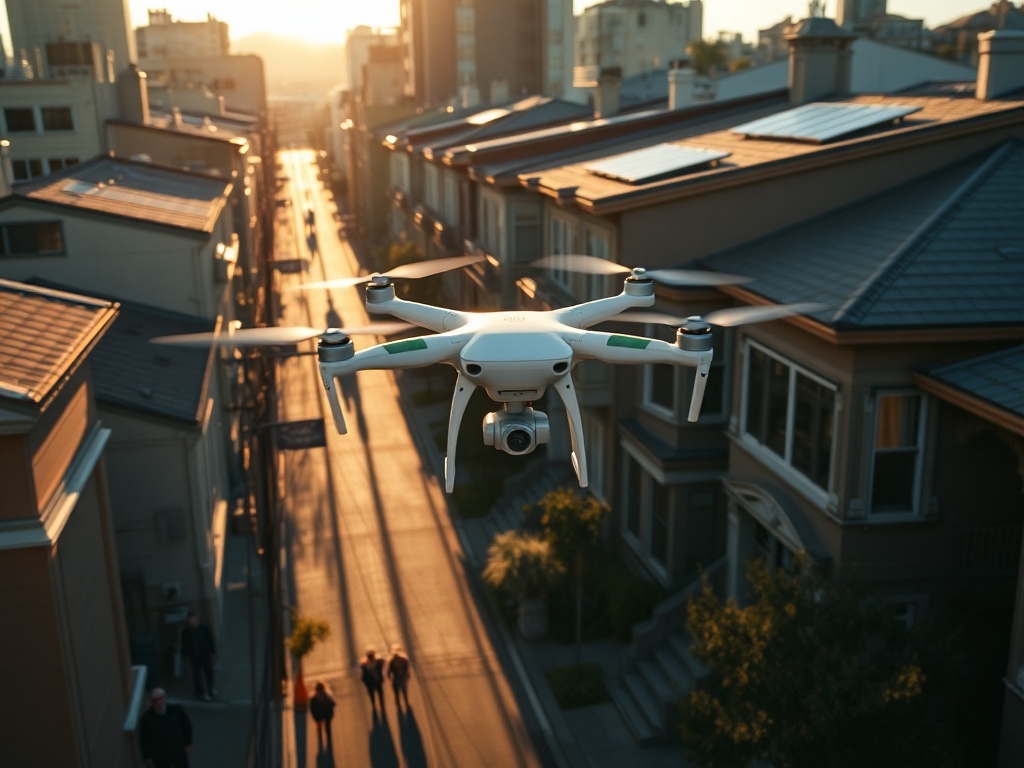
Wing, Alphabet’s aerial delivery division, has just landed in the San Francisco Bay Area, becoming the first commercial drone operation to reach that market ahead of Amazon Prime Air. The usual headline is easily crafted: "Google beats Amazon to the race." However, this comfortable and binary reading overlooks what this geographic expansion reveals about the power architecture being constructed in urban airspace.
A Race Not Measured in Speed but in Regulation
The Bay Area is not just any market. It is the world’s most demanding validation laboratory for the tech industry, with a dense regulatory environment, a culture of early adoption, and a telecommunications infrastructure that few cities globally can replicate. Arriving first here is not just a public relations whim; it is a strategic positioning play before the Federal Aviation Administration (FAA), the agency that defines who flies, at what altitude, and how often.
This detail is where Wing's real advantage lies. Each operational flight in a dense urban environment generates navigation data, obstacle avoidance patterns, and incident logs that become the most valuable asset in front of regulators. Amazon has spent years building its technical proposal, but Wing has spent more time amassing certified flight hours in real-world environments. In the aerospace industry, operational data is equivalent to years of case law in a legal firm: it defines who has the authority to speak when regulations are being designed.
The 6Ds model allows for an accurate reading of this moment. Drone delivery has been in the Disillusionment phase for a decade: grand promises, recurring headlines, and mass adoption that never seems to materialize. What Wing is executing in the Bay Area is the transition toward active Disruption. It’s not that the technological problem is solved; it's that the threshold for operational viability is beginning to be crossed in specific geographies, with constrained business models and within air corridors that regulators are starting to accept as routine.
The Question Wall Street Gets Wrong
Stock analysts wonder if this move can reverse the pressure on Alphabet’s share price. This is the wrong question, and the fact that it’s asked this way reveals how much the market still remains anchored in quarterly horizons when evaluating infrastructure.
Wing is not a mass consumer product with immediate adoption curves. It is last-mile infrastructure, the most expensive and hardest layer to scale in the global logistics chain. E-commerce margins are wiped out in the last leg of delivery, that kilometer between the distribution center and the customer’s door. Conventional parcel delivery companies charge between three and eight dollars per delivery in dense urban areas. A drone operating at scale, with optimized routes and predictable maintenance, can compress that cost sustainably once the initial investment in certification and fleet is overcome.
The impact on Alphabet’s stock price, if it comes, won't arrive from this week’s headlines. It will come when Wing proves positive unit economics per certified air corridor, something that no urban drone operation has yet managed to document publicly and verifiably at large scale. Until then, the stock market value of this move is primarily narrative: it signals to investors and regulators that Alphabet is willing to invest capital and tolerate a long-term horizon for physical infrastructure.
What might change in the short term is the competitive dynamic with Amazon. Every month that Wing operates in the Bay Area without a serious incident is a month that Amazon must justify its delay to the same regulators. The pressure is not market-driven; it’s institutional.
Democratizing Access or Building Another Aerial Monopoly
Here is where my analysis diverges from the standard corporate narrative. There is a tension that Wing and any urban drone operator will have to resolve before scaling: low-altitude airspace is a public asset managed as if it were private.
The urban air corridors that currently seem empty will not be in five years if drone adoption accelerates. The structural question is whether the FAA and its international counterparts will design a low-altitude air traffic management system that functions as open infrastructure, similar to the highway network, or whether they will allow early operators with enough lobbying capital to capture those corridors as exclusive assets.
If the latter occurs, Wing and Amazon will not be competing against one another. They will be constructing a duopoly over last-mile logistics that, in two decades, will replicate exactly the power structure that current large telecommunications operators have over connectivity: indispensable infrastructure, enormous barriers to entry, and margins that consumers pay with no visible alternative.
That’s not democratization of logistical access. It’s its capture.
The alternative requires regulators to act now, while the market is still forming, to ensure that low-altitude air traffic management protocols are open and interoperable. Not to stifle Wing or Amazon but to ensure that, in ten years, a specialized delivery startup or a local distribution cooperative can operate in the same airspace under the same technical conditions.
The Sky as a Testing Ground for Digital Physical Power
What Wing is installing in the Bay Area is not a faster delivery service. It is an operational, regulatory, and political precedent regarding who defines the rules of the physical economy of the immediate future.
Drone delivery is transitioning between the Disruption phase and the progressive phase of Demonetization of last-mile logistics costs. This process will take years to become visible in the ledgers of traditional operators, but when it does, it will be irreversible. The technology that empowers the global logistics system only fulfills its promise if the protocols governing it remain open to all market actors, not exclusively to those who arrived first with enough capital to negotiate with regulators.