
Eight Years in the Shadows to Sell the Same Logic as Uber
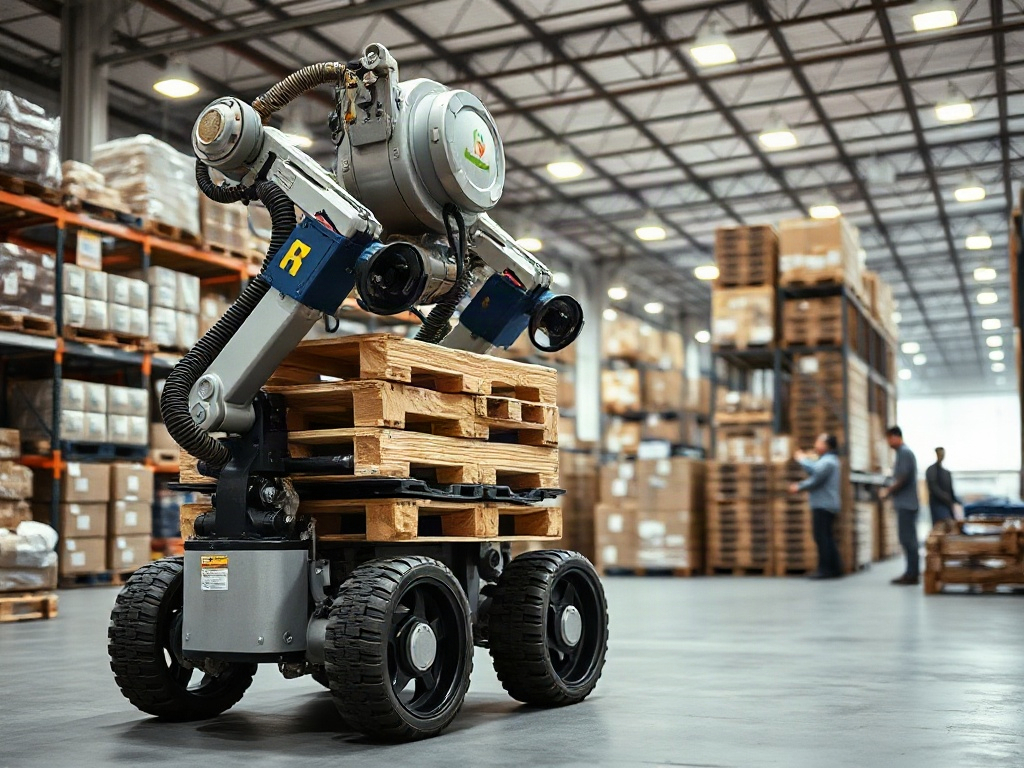
On March 13, 2026, Travis Kalanick ended eight years of covert operation and unveiled Atoms, the reincarnation of City Storage Systems. The narrative is compelling: the fallen founder who never actually left, quietly building an industrial robotics platform while the world chased humanoids. The manifesto published on his website literally states "I never left" and describes three divisions — Atoms Food, Atoms Mining, and Atoms Transport — all centered around a core product: a standardized chassis equipped with power, computing, and sensors serving as a base for purpose-built industrial robots.
The media hook works well enough. The problem lies in the underlying distribution mechanics that remain obscured by the narrative.
The Chassis Platform and the Question Nobody Is Asking
Atoms' thesis can be read as a bet on industrial modularity: instead of building complete robots and directly competing with Boston Dynamics, Figure, or Amazon's warehouse programs, Kalanick proposes a common infrastructure layer — the "wheelbase" — upon which different industrial operators mount specific solutions. The automotive analogy used by his own team is deliberate: a chassis platform that other manufacturers can capitalize on to build variants.
That architecture holds a coherent business logic on paper. A standardized mobility platform reduces development costs for each vertical because computing, power, and sensors are not reinvented for each contract. If Atoms can persuade mining companies, ghost kitchen operators, and logistics firms to adopt the same chassis, the learning curve is shared, and iteration costs decrease with each additional deployment.
However, there is a tension that the headlines are not capturing: Who has the power to set prices in this model, and on whom does margin pressure fall? In a physical infrastructure platform, the answer to that question determines whether the model can scale sustainably or whether it ends up being an extraction tool for operators dependent on it. Atoms would control the chassis, firmware, and presumably the operational data of each deployed robot. Its industrial clients — miners, food delivery operators, transport firms — would be reliant on that base layer to maintain their own operations. When an infrastructure provider concentrates that much technical control, willingness to pay on the part of clients tends to increase not because of the value delivered but due to exit costs. That difference matters.
CloudKitchens as a Laboratory, Not a Proof of Concept
By absorbing CloudKitchens into Atoms, Kalanick is engaging in something strategically interesting: he takes the physical infrastructure of existing commercial kitchens and transforms it into the first testing ground for Atoms Food. In other words, the real estate and logistical asset accumulated over years of operating ghost kitchens is recycled as a validation environment for food robotics.
This addresses a real hardware problem: industrial robots require intensive operation cycles to mature, and a network of kitchens already processing orders for multiple delivery brands provides exactly that environment. It's not an artificial laboratory; it's a production environment with real pressures on throughput, delivery times, and order variability.
However, CloudKitchens’ track history deserves a cold reading before celebrating the integration. The ghost kitchen model transferred operational risk to the restaurants and brands renting space: they absorbed demand variability, fluctuations from delivery platforms, and margins compressed by commissions. Atoms Food inherits that relationship base. If the robotization of those kitchens reduces costs but the capture of those savings concentrates in Atoms and is not shared with the operators who rent the space, the model reproduces the same compression scheme that characterized CloudKitchens from the beginning.
Integration with robotics could genuinely enhance the operational efficiency of those kitchens. But efficiency and value distribution are independent variables. A more efficient kitchen that extracts more rent from the operator using it does not improve the position of the weakest link in the chain; it merely makes the extraction mechanism more productive.
The Acquisition of Pronto and Levandowski’s Logic
The most revealing aspect of the announcement is not the manifesto or the rebranding. It’s the impending acquisition of Pronto, the autonomous vehicle startup for industrial and mining environments founded by Anthony Levandowski. Kalanick is already its largest individual investor. The move consolidates within a single corporate structure two individuals who share a history with Uber's autonomous vehicle bet — a venture that ended up sold to Aurora in 2020 after years of litigation and a tragic traffic incident.
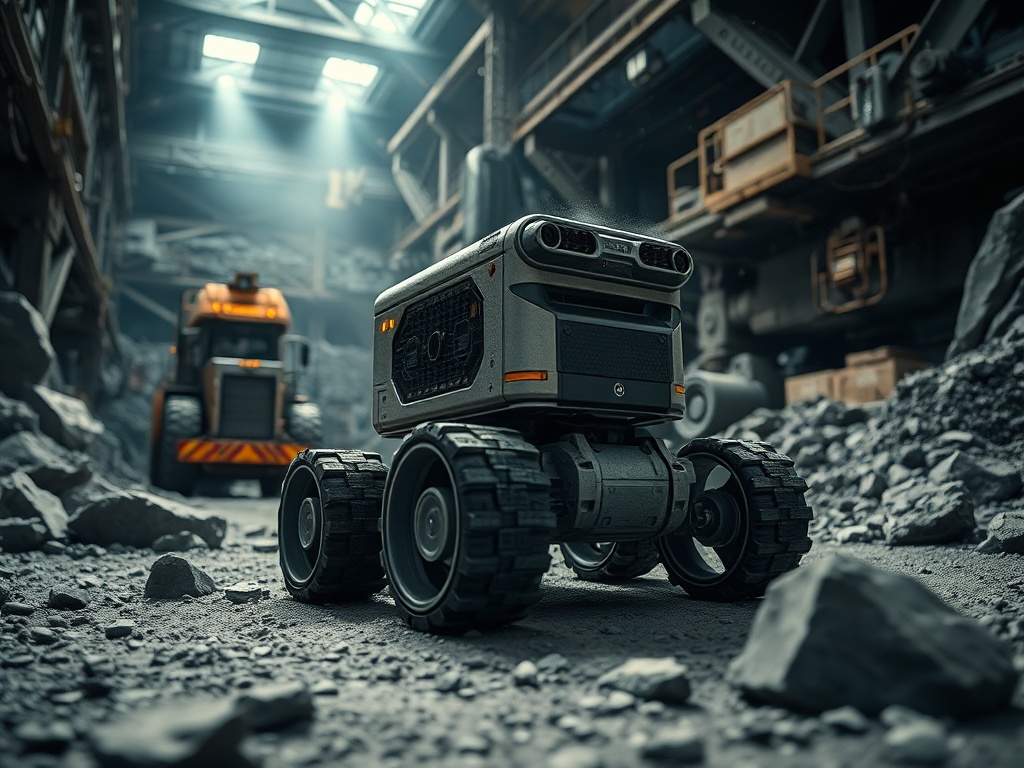
In terms of the value chain, the acquisition makes clear technical sense: Pronto brings validated autonomous navigation capabilities in unstructured industrial environments, exactly the type of operation Atoms Transport needs for its robot chassis to function in mines and complex logistical areas. This is not a talent or isolated patent acquisition; it’s the procurement of motion software that transforms the chassis into an operable product.
But there’s a power dynamic in this operation that warrants attention. When the largest investor in a startup is also the one negotiating its acquisition, the price and deal structure incentives are not perfectly aligned with the other shareholders of Pronto. Kalanick as an investor maximizes returns; Kalanick as a buyer minimizes acquisition price. This tension is not inherently an ethical issue, but it is a governance signal that future industrial partners of Atoms should consider when evaluating whom they are building long-term dependencies with.
The Platform Play Model and Its Sustainability Conditions
Atoms is positioning itself as infrastructure, not a solutions integrator. That distinction matters because infrastructure businesses generate lasting value when the adoption cost is low, the exit cost is reasonable, and the provider has structural incentives for its customers to grow. If these three conditions are met, the model is genuinely multiplicative: each customer that grows in productivity expands the total market from which Atoms captures a portion.
The historical problem with infrastructure platforms built under a rapid growth logic — and Kalanick has a documented history in that model — is that incentives invert once the platform reaches critical mass. At that point, the exit cost for the customer is already high, alternative competition takes time to mature, and the pressure to demonstrate returns to investors pushes towards fee increases or the capture of operational data as proprietary commercial assets.
Atoms' bet on non-humanoid industrial robots is technically coherent. Miners don’t need machines that walk on two legs; they need autonomous vehicles that operate 24-hour shifts in conditions of dust, temperature, and weight that no human operator would want to sustain. This specialization measurably reduces the customer’s operational costs, justifying adoption without the need for artificial subsidies.
But the question that Atoms has yet to publicly answer is how its pricing and data structure are designed for its industrial clients. A standardized chassis that also centralizes operational data from each mine or kitchen using it creates an information asset with independent commercial value. If that value flows back to the operators generating it, the model has a future as shared infrastructure. If it accumulates exclusively in Atoms, the chassis ceases to be a tool and becomes an industrial surveillance mechanism paid for by the customer themselves.
The only physical infrastructure platform that builds lasting competitive advantage is one that makes its industrial clients more profitable than they would be without it, not simply more dependent on it.