
The Day Global Logistics Lost Touch with Reality
On March 14, 2026, for the first time in modern energy commerce history, no vessels crossed the Strait of Hormuz. Zero confirmed transits by AIS. Under normal conditions, about 77 ships pass through this waterway each day, transporting around 20% of the world's oil supply and significant volumes of liquefied natural gas. All of that came to a standstill.
The trigger was the military escalation between the United States, Israel, and Iran that began on February 28, 2026. Iranian armed forces broadcast VHF warnings prohibiting vessels from passing. On March 1, the tanker Skylight was hit by a projectile north of Khasab, Oman, resulting in the deaths of two Indian sailors. On the same day, the MKD VYOM was struck by a drone, causing a fire in its engine room and another fatality. By March 12, Iran had executed 21 confirmed attacks on merchant vessels. On March 4, the Iranian Revolutionary Guard declared total control over the strait.
But there is a deeper layer to this collapse that goes beyond geopolitics. What the closure of Hormuz brings to the fore is a question that no supply chain director wanted to answer: At what point did the assumption that this corridor would remain open stop being an operational certainty and become an unsupported gamble?
What Contingency Models Never Tested
Maersk, CMA CGM, and Hapag-Lloyd suspended operations in the area. This was no minor tactical decision; it was evidence that their risk models, no matter how sophisticated on paper, had not been calibrated for total closure scenarios. War insurance was lifted by March 5, making any transit economically unviable regardless of the shipowner’s willingness. The strait was declared a high-risk zone, triggering additional pay premiums and rejection rights for crews.
Here’s the pattern I’m interested in analyzing: the three major shipping companies mentioned operated under a cost structure that assumed the constant availability of the Hormuz corridor as a fixed input, not as a variable to be managed. That’s not a geopolitical intelligence failure; it’s a business model design flaw. When a critical assumption goes untested under extreme conditions, it doesn’t just disappear: it becomes accumulated operational debt that is collected with interest at the worst possible moment.
Empirical evidence was available long before this incident. Houthi attacks in the Red Sea, which led to traffic being diverted from the Suez Canal to the Cape of Good Hope, had already revealed the structural vulnerability of Indo-Pacific routes. In fact, on February 28, 2026, the same day the escalation began in Hormuz, the Houthis announced the resumption of attacks on commercial vessels in the Red Sea. Two bottlenecks were simultaneously under threat. The scenario was not improbable; it simply wasn’t modeled with the level of commitment that a real infrastructure decision requires.
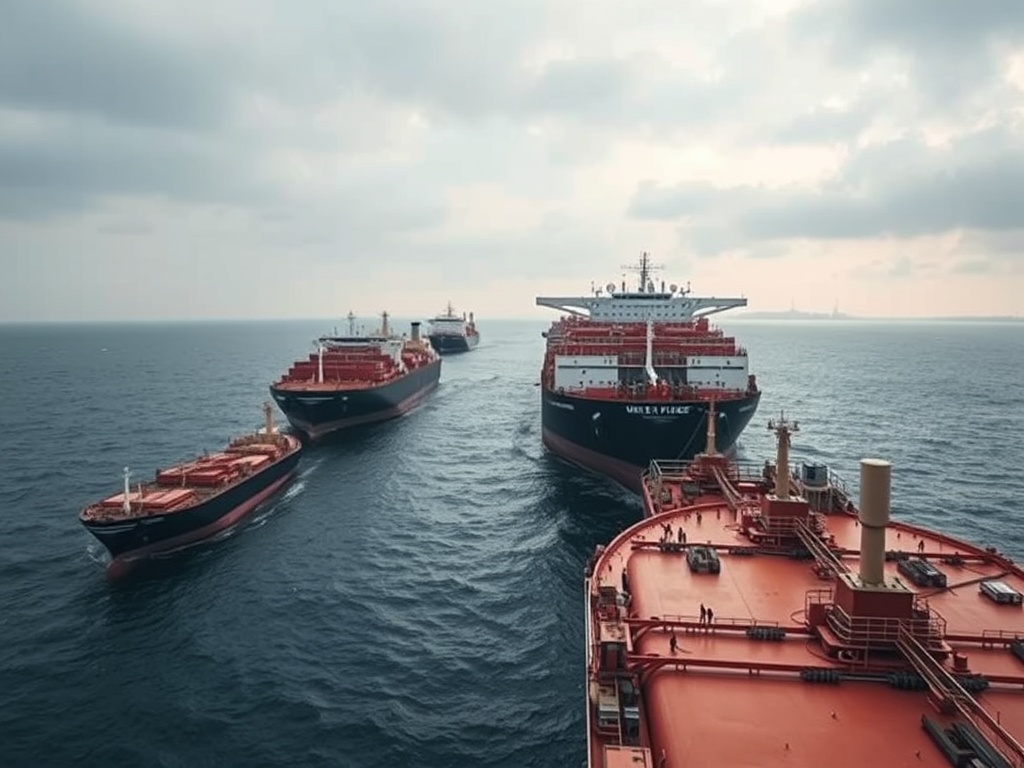
Some 400 ships became backed up in the Gulf of Oman, awaiting operational clarity. This is not a managed contingency; it is a queue of unmet hypotheses.
When the Alternative Route Comes at a Cost
Diverting to the Cape of Good Hope is not a solution: it’s a cost adjustment with structural consequences. Adding weeks of transit time to the Asia-Europe route not only increases freight rates — which according to UNCTAD analysis have already reached historic levels — but redistributes pressure on ports, terminals, and storage capacity that were not designed to absorb that redirected volume.
More revealing is what occurred on the margins of the conflict: a drone-related fire in the hub of Fujairah — located outside the strait, but within the operational impact radius of the conflict — temporarily halted crude loading operations at one of the Gulf’s main bunkering centers. Work on the 2Africa “Pearls” submarine cable segment in the Arabian Gulf was suspended due to force majeure. Digital infrastructure and physical logistics collapsed in parallel.
What this illustrates is that reliance on a single energy corridor is not just a transportation risk: it’s a systemic architecture risk. Saudi Arabia, the United Arab Emirates, Kuwait, and Iraq export through Hormuz. This means that diversifying origin routes is as urgent as diversifying transit routes. The East-West pipeline in Saudi Arabia has the capacity to divert some of the flow to the Red Sea, but even that alternative faces the simultaneous Houthi scenario. There is no clean exit because the system was optimized for efficiency under normal conditions, not for resilience under adverse conditions.
The selective authorization that intelligence sources began reporting around March 15 — where Iran would allow certain vessels to pass based on diplomatic or flag criteria — does not resolve the structural problem. It turns a standard trade route into a discretionary permitting system. For a shipowner, this is akin to operating in a market where the rules change in real-time without any right of appeal. No cost model can absorb that uncertainty profitably.
The True Cost of Building on Unvalidated Assumptions
The Hormuz crisis is not exceptional in its origin. It is predictable in its logic. For decades, the global logistics industry constructed routes, contracts, insurance models, and fleet structures based on the implicit assumption that certain corridors would remain operational. No one paid to test the opposite. No one put a visible price on the hypothesis of total closure because doing so would have forced a redesign of infrastructure, diversification of routes, and incurred costs that short-term competition penalized.
That’s exactly what happens when contingency plans become compliance documents instead of operational experiments with real evidence. A simulation exercise that never reached the market, that never tested whether bypass mechanisms worked under simultaneous pressure at multiple points, is not a resilience plan: it is an Excel sheet with decorative hypotheses.
The United States issued a sanction exemption to allow already loaded Russian oil shipments to complete their delivery. This foreign policy decision reveals the level of urgency: when logistical restrictions are severe enough, regulatory frameworks bend to compensate for the lack of physical redundancy. The market doesn’t wait for models to be updated; it charges the adjustment immediately and without discount.
The only way to build supply chains that can survive such disruptions is to iterate critical assumptions before the market forcefully invalidates them. Identify the inputs that are treated as fixed, price their absence, and make investment decisions based on evidence of real adverse scenarios. Leaders who wait for a crisis to discover their most fragile assumptions always pay the highest price.